Ten hours to press time for the book — a 4th and final edit

After 180 consecutive days of blogging, I posted the entire Introduction of our book while doing my final proofing on August 5, 2011. I spent a lot of time trying to make this all important section of the book the best that it could be…for it will determine whether the casual reader goes any further. This is precisely what you will see in the first few pages of our book.

Introduction

“It turns out that if we eat the way that promotes the best health for ourselves, we also promote the best health for the planet.”

—T. Colin Campbell, PhD., Author of The China Study
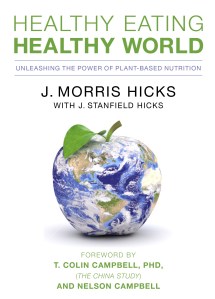
Fifty-five days until our book-launch party on September 29

Millions of creatures have evolved throughout the ages on our planet, and until recently, they have all lived in harmony with nature. During the past few hundred years—a mere blink of the eye in history—one species has unknowingly thrown the natural scheme out of balance. That species is us—the human race. Although we mean no harm for ourselves, for the planet, or for the other creatures, we have drifted far away from the natural diet for our species. We have started eating the wrong food—in great quantities. This change in diet has set in motion a series of chain reactions that has negatively affected the planet in many ways.

Our craving for the rich Western diet has intensified to the point that we have almost totally abandoned the type of fuel that nature intended for us to burn. Whereas animals in the wild with DNA closest to ours consume almost 100 percent raw plants, the humans of the Western world today are consuming virtually none. We now consume generous portions of meat, dairy, eggs and/or highly processed foods three meals a day and are deriving far less than 10 percent of our calories from whole plant foods. In addition, many of the plants that we do eat are french fries, which gain over 40 percent of their calories from the fat in the oil in which they are prepared. This love affair with a very unhealthy diet has begun taking its toll in myriad ways both within our bodies and without, affecting the whole world.

In the United States and other Western countries, obesity and diabetes are running rampant, while heart disease and cancer maintain their position as our top killers—and the top drivers of our health care costs. These out-of-control costs are choking our economy to death, prompting elected officials in the United States to frequently discuss health care cost as the single biggest problem facing our nation. In 1960, the cost of health care in the Unites States was 5.2 percent of the gross domestic product (GDP). In less than fifty years, it tripled to 16 percent, and U.S. officials now project that it will double again to 31 percent within the next twenty-five years. This cost is simply unsustainable, and we all know it, but we haven’t yet figured out what can be done to address the problem.

It turns out that much of this health care problem is food-driven. We are eating way too much of the wrong food. What is the optimal diet for humans? It’s one based on what your mother may have told you long ago: “You should eat more fruits and vegetables.” We rarely hear health officials, doctors, dietitians, or nutritionists advising us to eat more meat, dairy, eggs or processed foods. They’re all saying we should eat more vegetables, but with each passing year, we seem to be eating fewer. Why is that? The first part of the book explores this question, outlines the many health benefits of an optimal diet and addresses various arguments against the adoption of such a diet.

But health is just one of the issues. What you eat affects far more than just your body. You may already know about some of the environmental impacts of our rich Western diet, but you may not have heard much about other related problems, such as the rising cost and decreasing availability of energy (especially fossil fuels), the increasingly difficult challenge of feeding the growing population of the world, and the horrific suffering of 60 billion animals per year in the factory farms where they are raised. The second part of the book is devoted to an exploration of these four categories of critical global issues.

At some point during your reading, you may very well ask yourself, “Why haven’t I heard all this before?” That is a very good question, inviting us to look at the vast system that controls the flow of this kind of information in our society. The third part of the book explores this question in detail, helping you to digest all that you have read and decide how you will act on that information. Whatever you choose for you and your family, this book can help you execute your plan, providing you with information, helpful tips, and guidelines that you may need to reach your goals.

In a nutshell, this book is about the single most powerful move that we humans can make to promote health, reduce obesity, lower the cost of health care, nurture our fragile environment, conserve our energy resources, feed the world’s steadily growing population, and greatly reduce the suffering of animals in factory farms all over the world. This move is an aggressive push to consume more whole, plant-based foods—not necessarily becoming a vegetarian or a vegan. These “v” words only convey information about what a person does not eat; they do little to convey what the person does eat, and that is what is most important. A great many vegetarians eat an unhealthy diet and, as a result, fail to enjoy the host of benefits that result from eating a truly health-promoting diet. After all, one could consume nothing but Diet Coke and potato chips and call himself a vegan.

What about weight loss? While this is not specifically a weight-loss book, adopting a diet of whole plant foods will enable your body to seek its ideal weight effortlessly and permanently. Many health professionals and researchers cite the statistic that diets fail 95 percent of the time. Compare that to a near 100 percent success rate for those who make a commitment to a health-promoting diet for the right reasons—to achieve vibrant health. When vibrant health is your primary objective, effortless weight loss is simply a convenient by-product or fringe benefit.

The primary objective of this book is to outline in simple, everyday terms the extent of the problems we face, how we got ourselves into trouble, and what each of us can do to make things better. Fortunately, despite the incredible complexity of our current dilemma, the solution is refreshingly simple. All we have to do is educate ourselves, start making better choices about what we eat, and then share all that we have learned with everyone we care about. I am convinced that there has never been anything more important in the history of the world.

“Chase perfection. Settle for excellence along the way.”

Vince Lombardi, What It Takes to Be #1

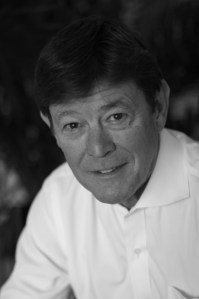
J. Morris Hicks, working daily to promote health, hope and harmony on planet Earth.

Since beginning my study of this topic in 2002, I have always been in search of credibility, legitimacy and authenticity — the kinds of integrity that I found with Dr. Campbell, Dr. Esselstyn and other professionals that you can read about in this post.

If you like what you see here, you may wish to join our periodic mailing list. Also, for help in your own quest to take charge of your health, you might find some useful information at our 4-Leaf page. From the seaside village of Stonington, Connecticut – Be well and have a great day.

If you’d like to order our book on Amazon,  visit our BookStore now.

—J. Morris Hicks…blogging daily at HealthyEatingHealthyWorld.com

PS: Occasionally an unauthorized ad may appear beneath a blog post. It is controlled by WordPress (a totally free hosting service). I do not approve or personally benefit whatsoever from any ad that might ever appear on this site. I apologize and urge you to please disregard. 
Posted in Book Promotion | 1 Comment

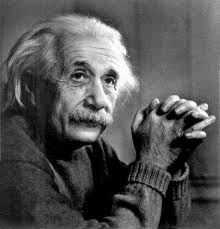
Einstein, Hippocrates, Thoreau…those guys had it right.

Some great thinkers have been on the right track for a long time.

Albert Einstein

Humankind lived in harmony with nature for several hundred thousand years until just recently — within the past few hundred years. And, according to the research for the movie HOME, we humans have inflicted more damage on the fragile harmony of nature in just the past fifty years than have all prior generations of humans combined — for the past 200,000 years. What happened?

During the past 100 years, the humans of the Western world have begun to live and eat in a manner that is simply not sustainable for very much longer.

While the focus of our book is on what we eat, we also devote an entire chapter to “the end of the era of cheap oil,” a phenomenon that has fueled the spread of the most destructive lifestyle in the the history of humankind. And a significant part of that lifestyle is the way we have chosen to feed ourselves in the Western world. Cheap oil has enabled us to produce a “meat and dairy” diet that requires twenty times more energy — per calorie — than does the natural diet for our species: whole, plant-based foods.

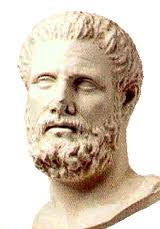
Hippocrates

Now, it’s impossible to determine what percent of that damage to nature has been caused by our modern Western diet, but we know that it has been substantial. We also know that it would be far easier to transform the way we eat, than it would be to rapidly change the way we live. So, what’s it going to take to get this process started? In the beginning, it is most likely going to be a grassroots revolution which will be followed by powerful leadership.

Some great thinkers have been talking about what we should be eating for a long time — providing us with a good place to start; with the words of Einstein, Hippocrates and Thoreau…

  • Albert Einstein. “Nothing will benefit human health and increase chances of survival for life on earth as much as the evolution to a vegetarian diet.”
  • Hippocrates. “Your food will be your medicine, and your medicine will be your food.”
  • Henry David Thoreau. “I have no doubt that it is a part of the destiny of the human race, in its gradual improvement, to leave off eating animals, as surely as the savage tribes have left off eating each other when they came in contact with the more civilized.”

Henry David Thoreau

Mark Bittman of the New York Times has described our Western diet as the most harmful, wasteful and unsustainable diet in the history of the world. It is harmful to our own health and the health of the planet, it is wasteful and inefficient with regards to the use of water, energy and land; and it is completely unsustainable for very much longer. Maybe  a few more words from other great thinkers of the past will help jolt us into action

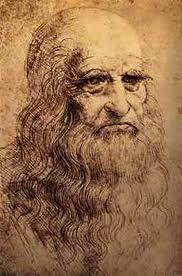
  • Leonardo da Vinci. “The time will come when men such as I will look on the murder of animals as they now look on the murder of men.”
  • Isaac Bashevis Singer. “People often say that humans have always eaten animals, as if this is some justification for continuing the practice. According to this logic, we should not try to prevent people from murdering other people, since this has also been done since the earliest of times.”
  • Thomas Alva Edison. “Non- violence leads to the highest ethics, which is the goal of all evolution. Until we stop harming all other living beings, we are still savages.”

Leonardo da Vinci

What we have now is a gigantic case of “out of sight — out of mind” in the Western world. Most of us consumers have no idea what is taking place behind the scenes. And, I’m not just talking about the slaughterhouses. I am talking about what is happening to the environment, world hunger, and the unsustainability of our current lifestyle. Modern era best-selling author, Michael Pollan, weighed in on the “out of sight” syndrome,

The lives of billions of animals on American feedlots and factory farms are horrible to contemplate, an affront to our image of ourselves as humane…To peer over the increasingly high walls of our industrial animal agriculture is not only to lose your appetite but to feel revulsion and shame.

When enough of us feel that revulsion and shame, perhaps more of us will be ready to join that grassroots revolution mentioned earlier…and heed the advice of Mahatma Gandhi:

“Be the change you want to see in the world…You may never know what results come of your action, but if you do nothing, there will be no result.”

J. Morris Hicks, working daily to promote health, hope and harmony on planet Earth.

If you like what you see here, you may wish to join our periodic mailing list. Also, for help in your own quest to take charge of your health, you might find some useful information at our 4-Leaf page. From the seaside village of Stonington, Connecticut – Be well and have a great day.

If you’d like to order our book on Amazon,  visit our BookStore now.

—J. Morris Hicks…blogging daily at HealthyEatingHealthyWorld.com

PS: Occasionally an unauthorized ad may appear beneath a blog post. It is controlled by WordPress (a totally free hosting service). I do not approve or personally benefit whatsoever from any ad that might ever appear on this site. I apologize and urge you to please disregard. 
Posted in Big Picture, Energy, Environment, Sustainability, World Hunger | Leave a comment

More sources of information, inspiration, and networking

It’s time to thank the many people who helped show me the way…

During the early days of my study on this topic in 2003, I learned from many people and wanted to publicly thank some of those people today. They include two scientists, five physicians, several authors and a Christian minister in North Carolina. The following five websites have all been very helpful to me and I wanted to share them with you now.

I should point out that there are some different opinions on a few topics within the following group, but I choose to focus on the vast amount of “common ground” about plant-based nutrition that they all share. Quite simply, they all agree on the simple words of Dr. Campbell, “The closer we get to a diet of whole plant-based foods, the better off we will be.”

1. The T. Colin Campbell Foundation website. I first learned about Dr. Campbell in 2003 before he wrote The China Study while I was searching for credibility, legitimacy and authenticity on this topic. And I found all three when I found Dr. Campbell. Over the years we have become friends and he and son Nelson were kind enough to write the foreword to our book. I have been a regular visitor to his website for years; it offers lots of great articles and videos for free along with user-generated recipes (approved by TCC staff), and now, a new social network that can be accessed from the home page at tcolincampbell.org. 

2. The website of Joel Fuhrman, MD. Some of my first great sources of information in 2003 were Joel’s enlightening books. It was those books that led me to his very extensive website that includes newsletters, medical advice, articles, and discussion forums. For several years, I worked with Joel and his team in New Jersey as they were exploring new ways of sharing the complete truth about nutrition with a larger audience. Much of his extensive site is free and there is a nominal charge for other services. There is also an online store with lots of educational material along with many plant-based foods and health products. Visit drfuhrman.com.

3. The website of John McDougall, MD. For the past eight years, John has been an exceptionally valuable source of information for me and my family. I have read his books, watched his videos, tried his recipes, attended his seminar in California and have benefited greatly from his knowledge. His website includes an extensive array of free information — lots of recipes, free videos, articles, testimonials — along with a very robust and active discussion forum. The only things you pay for on this site are educational and health-promoting products that you can order online. Featured prominently in The China Study, I strongly recommend that you visit drmcdougall.com.

4. Hallelujah Acres, the website of Reverend George Malkmus. As the founder of the Hallelujah Diet and Hallelujah Acres after being diagnosed with colon cancer thirty-five years ago, George has been spreading the word about the health-promoting power of plant-based nutrition to hundreds of thousands of people for many years. He recently posted his Weekly Health Tip #715, after some fifteen years of sharing. During one period back in 2005, he devoted several months of his weekly Health Tips to sharing information from The China Study with his many thousands of Christian followers. Visit hacres.com.

5. The website of Raymond Francis, scientist and author. I met Raymond in his northern California office in the spring of 2003, after reading his best-selling book, Never Be Sick Again. Since then, he has built quite a following for his Beyond Health website where he offers lots of helpful information in the form of videos, articles, recipes, and health-promoting products. Visit beyondhealth.com.

J. Morris Hicks, working daily to promote health, hope and harmony on planet Earth.

In addition to the five organizations listed above, I have also learned a great deal from the following individuals and have featured them in some of my blogs. All of them are featured prominently in our book, listed here in alphabetical order:

In closing, a great big heart-felt thanks to all of you; as you have all made a big difference in my life and have provided the foundation for the body of knowledge and the inspiration for writing our book.

If you like what you see here, you may wish to join our periodic mailing list. Also, for help in your own quest to take charge of your health, you might find some useful information at our 4-Leaf page. From the seaside village of Stonington, Connecticut – Be well and have a great day.

If you’d like to order our book on Amazon,  visit our BookStore now.

—J. Morris Hicks…blogging daily at HealthyEatingHealthyWorld.com

PS: Occasionally an unauthorized ad may appear beneath a blog post. It is controlled by WordPress (a totally free hosting service). I do not approve or personally benefit whatsoever from any ad that might ever appear on this site. I apologize and urge you to please disregard. 

Posted in Healthy Eating 101, Medical Experts, Testimonials | 1 Comment