The old 80-20 rule when it comes to sustainability

Pareto Principle — the 80-20 rule — and the Law of the “Vital Few”
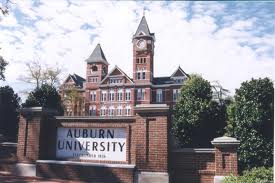
Here is where I first learned about the Pareto Principle; while studying Industrial Engineering in the late sixties.

One of the coolest and most powerful things that I learned as an undergraduate in Industrial Engineering was Pareto’s Law, which has come to be known as the 80-20 rule. It’s a common rule of thumb in business that 80% of your sales come from 20% of your customers, in the fashion business 80% of our inventory came from 20% of our styles, and so on.

Essentially, the most important thing is the identification of the “vital few,” regardless what you are studying. For there is always a “vital few” twenty percent of the items that will account for a disproportionately large portion of the total. And that is where you must focus your attention. So how does this theory relate to living green? Let me explain…

The "sunset" on the era of cheap oil on planet Earth. It's time to start living like we would if the price at the pump were already $10 a gallon or more.

Yesterday, I had an “energy audit” conducted in my home. They conducted tests, identified air leaks, made some repairs and replaced ten of my lamp bulbs with CFL’s (compact florescent light bulbs). Then, in my report, they identified the “vital few” things that I could do to save more energy (and money) on my electricity and heating bills.

Having already installed new windows throughout my home a few years ago, my “vital few” for saving energy was all about adding more insulation to my attic. It will cost about $1,000 and will pay for itself in about four years — or less, depending on the rising cost of heating oil.

Water, our most precious natural resource, is being wasted by the highly inefficient process of producing meat and dairy calories for human consumption.

So that experience got me thinking about how the Western world has completely ignored the “vital few” when it comes to our environment. Many scientists around the world are well aware of the following “vital” information regarding the way we eat. Compared to whole plant foods on a per calorie basis, our Western diet requires:

  • Twenty times more land
  • Twenty times more energy
  • Twenty times more water

Some of the folks at the United Nations also understand these “vital few” numbers and recently announced that “A global shift towards a vegan diet is vital to save the world from hunger, fuel poverty and the worst impacts of climate change.” But no mention of that was made on the evening news and I haven’t heard any of our world leaders talking about it.

Our land, topsoil and forests are primarily riding on how we choose to feed ourselves.

All we hear is the “politically correct” stuff that has nothing to do with changing the way we live. When it comes to saving water or energy, all we hear about are things like taking shorter showers, turning off our lights, etc.

All good things, but they’re almost insignificant (a drop in the bucket) when compared to walking away from our incredibly wasteful and harmful diet consisting of meat and dairy three meals a day. This blog and Chapter 8 in our book is full of information about “why no one has ever told you this before,” and it all boils down to one word — money.

The Bottom Line. Once one learns enough of the facts about the way we eat and the staggering amount of damage that it is causing — if she continues to eat the Western diet — then she may no longer refer to herself as an environmentalist. And, according to my own informal survey, 100% of the people in Connecticut claim to really “care” about the environment. But what does “care” mean to them?

Being politically correct?

Or taking decisive personal action to address the “vital few” causes of environmental damage?
My background in Industrial Engineering led to my own "blinding flash of the obvious" when I first began to learn about our harmful, wasteful, cruel and completely unsustainable Western diet.

Want to answer that question in your area? Just do your own “shopping cart survey” the next time you go to the supermarket. According to my survey, 95% of our fine Connecticut citizens fall in the “politically correct” camp.

If you like what you see here, you may wish to join our periodic mailing list. Also, for help in your own quest to take charge of your health, you might find some useful information at our 4-Leaf page. From the seaside village of Stonington, Connecticut – Be well and have a great day.

If you’d like to order our book on Amazon,  visit our BookStore now.

—J. Morris Hicks…blogging daily at HealthyEatingHealthyWorld.com

PS: Occasionally an unauthorized ad may appear beneath a blog post. It is controlled by WordPress (a totally free hosting service). I do not approve or personally benefit whatsoever from any ad that might ever appear on this site. I apologize and urge you to please disregard. 
Posted in Energy, Environment, Sustainability | 1 Comment

“4Leaf Restaurant Challenge;” creative chefs = great taste!

One World – One Dish – One Month

Let’s face it; for the Western world to embrace “4-Leaf eating” or to even give it a chance, the food has to taste good — real good. And we all know what that takes — it takes the energy and creativity of great chefs around the world. And that is exactly what we’re trying to do with the world’s first “4-Leaf Challenge,” beginning that whole process right here in the southeastern corner of Connecticut, USA.

The branding and marketing consultants (Thomas and Erica), who designed our 4-Leaf logo, have suggested that we organize a “4-Leaf Challenge” in area restaurants to coincide with the launch of our book, Healthy Eating – Healthy World, next month. Here’s how it will work:

Not your typical "vegetarian" option on the menu, the 4-Leaf Challenge leverages the power of whole, plant-based foods to help people everywhere learn how to take charge of their health - and so much more.

  1. Each restaurant designs one or more dishes to 4Leaf specs.
  2. That dish is run as the “Restaurant Name 4Leaf Special” for one month.
  3. Sponsoring local newspaper editor writes up 1) Challenge announcement, 2) Restaurants taking the Challenge, and 3)Reviews the dishes as far as possible.
  4. Sponsoring newspaper may donate a weekly space for all restaurants — and our book.

4Leaf Specs for the Chef. In an effort to promote the most creativity among the participating chefs, we tried to minimize the number of written specs. We want to make it simple and fun for the chef and simple, fun, delicious and nutritious for their dining customer. Hence, only “4 simple rules” for our healthy 4-Leaf dishes:

  1. All ingredients must be-plant based.
  2. The dish must contain at least 400 calories — and 80% of them (or more) must be from whole, unprocessed plant foods — still in nature’s package. (See note)
  3. Calories from fat must be less than 20% of the total calories of the dish. (See note)
  4. No butter, cheese, added sugar or white flour may be used in the preparation. Oil should be used sparingly, if at all.

Note: nutritiondata.com will be used to make these calculations: total calories, % calories from whole plants and % calories from fat. To clarify, whole plants are still in nature’s package and include all fruits, vegetables, grains, legumes, nuts and seeds. But, they don’t include processed foods like tofu, pasta or bread. Why not?

While plant-based, we decided not to include these in our formula after observing that many “vegetarians” who load up on these types of foods often do not achieve their goals in terms of weight-loss or health promotion. Some of these plant-based foods may be included in the 4Leaf dish, they just cannot be a part of the 80%. One more example; white rice has been refined and is not a whole plant; while brown rice and wild rice are great.

Not Just for Your Own Health. When it comes to promoting the Challenge in the newspaper and in  the restaurants, we will continue with our “4” theme and add four compelling reasons for eating 4Leaf — beginning with our own health:

  1. Health. 4-Leaf eating can reverse many chronic diseases and can lower our nation’s cost of health care by trillions of dollars. (Click here for the definition of 4-Leaf as compared to 3-Leaf and 2-Leaf, etc.)
  2. Green. Very “green” for the planet; saves water, land, topsoil, fossil fuels, trees, and other species — promoting harmony with nature for all of humankind.
  3. World Hunger. With food like this, over twenty people can be fed on the same amount of land required for one person to eat the typical Western diet of meat and dairy three meals a day.
  4. Animal Suffering. Today, 60 billion animals spend their entire lives in a virtual “hell on Earth” around the world each year so that we may enjoy eating their flesh. You can be a part of ending this morally disturbing human activity — with every meal that you choose.

J. Morris Hicks holds a Certificate in Plant-Base Nutrition from the Campbell Foundation and Cornell University.

If you would like to organize a 4Leaf Challenge in your area, you may contact me or our marketing consultants directly:

If you like what you see here, you may wish to join our periodic mailing list. Also, for help in your own quest to take charge of your health, you might find some useful information at our 4-Leaf page. From the seaside village of Stonington, Connecticut – Be well and have a great day.

If you’d like to order our book on Amazon,  visit our BookStore now.

—J. Morris Hicks…blogging daily at HealthyEatingHealthyWorld.com

PS: Occasionally an unauthorized ad may appear beneath a blog post. It is controlled by WordPress (a totally free hosting service). I do not approve or personally benefit whatsoever from any ad that might ever appear on this site. I apologize and urge you to please disregard. 
Posted in 4Leaf for Life, Book Promotion | 1 Comment

U.N. urges global move to meat and dairy-free diet

After learning enough facts, you will no longer be able to call yourself an environmentalist if you continue to eat the typical Western diet.

Almost five years ago (2006), the United Nations produced a 400-page report called Livestock’s Long Shadow — a report that implicated the livestock industry as one of the primary drivers of a host of categories of environmental damage around the globe.

United Nations Environment Programme (UNEP) -- like a voice in the wilderness as no one seems to be listening.

Although they knew at the time that the raising of livestock was causing a lot of damage, they didn’t actually come out and say that we should be moving toward a meat and dairy-free diet. But in a UNEP report in June of 2010, they reported the following powerful information. (See link to the Guardian article at end):

“A global shift towards a vegan diet is vital to save the world from hunger, fuel poverty and the worst impacts of climate change,” a UN report said today (June 2, 2010)

“As the global population surges towards a predicted 9.1 billion people by 2050, western tastes for diets rich in meat and dairy products are unsustainable,” says the report from United Nations Environment Programme’s (UNEP) international panel of sustainable resource management.

The article continues, “Impacts from agriculture are expected to increase substantially due to population growth increasing consumption of animal products. Unlike fossil fuels, it is difficult to look for alternatives: people have to eat. A substantial reduction of impacts would only be possible with a substantial worldwide diet change, away from animal products.”

How much more clear could they be? The problem is that not many people are listening — or heeding that advice. What we need is a lot more influential leaders of the world to start shouting this message to other leaders so that we can get serious about eliminating the extremely harmful, exceptionally wasteful, disturbingly cruel and grossly unsustainable Western diet with meat and dairy three meals a day.

Water, our most precious natural resource, is being wasted by the highly inefficient process of producing meat and dairy calories for human consumption.

Even now, millions of people in China and India are beginning to mimic our affluence by choosing our rich Western diet. What they don’t yet know is that that “rich” diet is going to destroy their health while taking a huge toll on the environment. Take water for example; consider this statement from a UNEP report in 2008. (See link below.)

 Agricultural water use accounts for about 75% of total global consumption – mainly through crop irrigation – while industrial use accounts for about 20%, and the remaining 5% is used for domestic purposes.

And most of that irrigation is dedicated to the feed crops for those 60 billion food animals that the world consumes each year. The numbers are mind-boggling. Agricultural water use is THREE times as much as ALL of the water used for industry and domestic use combined.

One of the UNEP's logos -- They've got the right message, but very few listeners.

While only five percent of our water is used in our homes, that is where our world leaders have placed most of the attention — focusing on things like water-saving devices for our toilets and showers — completely ignoring the far greater conservation opportunity in our food supply. As shown above, 15 times as much water is used for agriculture — as for domestic uses.

Eliminating meat and dairy from our diets would have an enormous impact on our conservation of water and fossil fuel energy — and an equally positive impact on our land, topsoil and forests of the world. Maybe you can help get the ball rolling by sharing this post with everyone you know.

If you like what you see here, you may wish to join our periodic mailing list. Also, for help in your own quest to take charge of your health, you might find some useful information at our 4-Leaf page. From the seaside village of Stonington, Connecticut – Be well and have a great day.

If you’d like to order our book on Amazon,  visit our BookStore now.

—J. Morris Hicks…blogging daily at HealthyEatingHealthyWorld.com

PS: Occasionally an unauthorized ad may appear beneath a blog post. It is controlled by WordPress (a totally free hosting service). I do not approve or personally benefit whatsoever from any ad that might ever appear on this site. I apologize and urge you to please disregard. 
UN urges global move to meat and dairy-free diet | Environment | guardian.co.uk.

UNEP Data on global water consumption — 2008

Posted in Environment, Food Policy, Sustainability, World Hunger | 1 Comment