Clinton or Cheney? Which heart treatment do you prefer?

Broccoli and Lentils OR Heart Transplant Surgery?
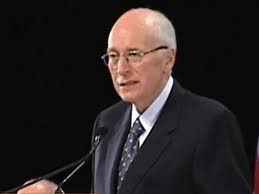
Last week, former Vice President Cheney was in the news—receiving a heart transplant that he’d waited 20 months to receive. A veteran of five previous heart surgeries (ages 37, 43, 47, 59 and 69), apparently he either thinks that the heart-disease reversing diet is too extreme OR maybe no one ever told him that he had a choice. (See USA Today article at end of this post)

Was Mr. Cheney lucky? The fact that Mr. Cheney was receiving a heart transplant at age 71 has raised a few eyebrows. Some feel that politics or money may have had something to do with him getting one of only 2300 available hearts per year. There are currently 3100 people on the list. Might he have been much luckier had he learned about how to easily reverse his heart disease back in his 30’s and 40’s when he first began having heart procedures?
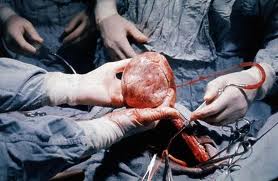
Heart transplant surgery is now considered common and routine—not extreme at all.

But he didn’t take that route and now that he  has his new heart, his life in the years ahead may not be that pleasant. The article reports that he may live another five years if he is lucky, but those five years will be no picnic; as the article reports:

The first year after transplant will involve intensive medical care and monitoring to make sure that Cheney’s body doesn’t reject the new organ. He will have to take drugs to suppress his immune system, to prevent it from attacking the new heart, and doctors will biopsy the transplanted heart to make sure it’s not being rejected.

But turning down the immune system carries its own risks, such as leaving the body vulnerable to infection. He will also be at risk of a specific type of heart disease in the long term, Walsh said….Prominent cardiologist Eric Topol, who consulted on Cheney’s care during his first run for vice-president, said that people of Cheney’s age “don’t generally do so well” after a heart transplant.

Now for the broccoli and lentils option
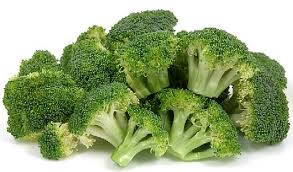
Eating broccoli and lentils is considered an “extreme” diet.

President Clinton, now 65, was the lucky one. While he had previous heart surgeries as well, he had the good fortune of learning about the life-saving information from Dr. T. Colin Campbell, Dr. Caldwell Esselstyn and Dr. Dean Ornish.

And, after learning that information, he decided that making the switch to a whole foods, plant-based (near vegan) diet was worth it. Since making the decision in 201o, Mr. Clinton is doing all that he can do to make sure that he gets to meet his grandchildren.
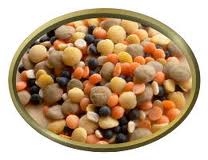
And I’ll have some “extreme” lentil soup with that broccoli…

Think you might prefer the Clinton approach with the broccoli and lentils compared to the nightmare that Mr. Cheney is suffering? Think your loved ones might like to hear more about the superior method of heart disease reversal?

If so, you might want to share this post with them, because they’re not likely to hear about the Clinton method from their cardiologist or from the American Heart Association website.

Take a few minutes, watch these two short videos and share this information with people that you care about. It could save their lives.

Ali Velshi of CNN interviews Dr. Gupta

Want to watch the entire 40-minute special? After watching the first video above, just click on the image on the right side of the screen after on the short video ends. If you don’t have time right now, take a look at the two-minute highlight below—featuring Dr. Caldwell Esselstyn and Sharon Kintz, one of his patients.

Two-minute highlight with Dr. Gupta and Dr. Esselstyn

Want more information? Here are a handful of blogs that I posted in the few weeks following that great CNN special.

Want to help eliminate heart disease? Share this post with everyone you know—not just people you think might be sick. As Dr. Esselstyn says, many millions of people (who think they’re in great health) already have coronary artery disease—they just haven’t had their first heart attack yet.

Got E.D.? While fixing your heart, those broccoli and lentils are likely also to eliminate your erectile dysfunction at the same time—for no additional charge. Erectile dysfunction can save your life. Who knew?

USA Today 3-25-12 Cheney recovering after heart transplant.

Handy 4-piece take-charge-of-your-health kit—from Amazon.com

Want to find out how healthy your family is eating? Take our free 4Leaf Diagnostic Survey. It takes less than five minutes and you can score it yourself. After taking the survey, please give me your feedback as it will be helpful in the development of our future 4Leaf app for smartphones. Send feedback to jmorrishicks@me.com

International. We’re now reaching people in over 100 countries. Follow us on Facebook and Twitter or get daily blog notices by “following” us in the top of the right-hand column. For occasional updates, join our periodic mailing list.

To order more of my favorite books—visit our online BookStore now

J. Morris Hicks, working daily to promote health, hope and harmony on planet Earth.

For help in your own quest to take charge of your health, you might find some useful information at our 4Leaf page or some great recipes at Lisa’s 4Leaf Kitchen.

Got a question? Let me hear from you at jmorrishicks@me.com. Or give me a call on my cell at 917-399-9700.

SHARE and rate this post below.

Blogging daily at hpjmh.com…from the seaside village of Stonington, Connecticut – Be well and have a great day.

—J. Morris Hicks, board member, T. Colin Campbell Foundation
Posted in Bill Clinton, Celebrities, Heart Disease | Tagged , , , , | 3 Comments

“Gently” promoting healthy eating on “The Food Channel”

How about that "apple" in the middle of their logo? Reminds me of that "big blue apple" globe on the cover of our book.

Monday—March 19, 2012. That was the day that my first article was published on The Food Channel at http://www.foodchannel.com. I have included that article below for your convenience, but first I wanted to describe more about how these articles will differ from the 412 that I have already posted on this site.

Addressing the “Mainstream.”  As a regular guest correspondent for The Food Channel, I  will be writing a weekly column—a great opportunity to reach “mainstream” people everywhere. By mainstream, I am talking about the 90 percent of Americans who have placed no dietary restrictions on themselves. As long as it tastes good, they will eat almost anything—all the while thinking that they are eating a fairly healthy diet.

Sadly, our overall “system” of government, food industry, medicine, pharmaceuticals, and media has kept the public in the dark and forever confused when it comes to what we should be eating. Consumers hear conflicting information everyday, so ultimately just decide to continue eating whatever tastes good to them or whatever their kids are asking for every evening for dinner.

Kay Logsdon, the editor of The Food Channel is the driving force behind their "Top Ten Trends" series.

But the owners and editorial staff of The Food Channel know that there are emerging trends in food that are important for their readers to understand. And with 400,000 visitors everyday, they have provided me with a huge opportunity to share our life-saving message with thousands of people everywhere who may be hearing this message for the first time.

With that in mind, you’ll understand why my “voice” may appear a little different on The Food Channel as I introduce this new audience to the awesome power of plant-based nutrition.

If you have friends or family that you’d like to “gently” introduce to plant-based eating, you may want to refer them to foodchannel.com and look for me on the News & Opinion page. The editors provided this introduction to my first piece:

At The Food Channel, we receive many requests for more information about healthy eating. We’ve invited this author to provide his perspective.

Healthier than Vegan!

by J. Morris Hicks

J. Morris Hicks

Every week we hear of another celebrity that has decided to adopt a vegan diet-style: Bill Clinton, Venus Williams, and Brad Pitt—to name a few. They typically make the switch for moral, environmental or health reasons. But is their vegan diet really healthier? That’s hard to say because we really don’t know what they ARE eating—as the definition of vegan only implies what they are avoiding.

Ask any vegan what they eat and they’ll likely begin with a list of what they don’t eat—meat, dairy, eggs, fish, etc. But unless we know what they ARE eating, we won’t have a clue how healthy their new dietary regimen truly is. For all we know, they may be pigging out on edible food-like substances: french fries, corn chips, sugary sweets, white pasta, bread dipped in olive oil, and Diet Coke; not “real food” as Michael Pollan (In Defense of Food) would say.

My observation is that many vegans eat a very unhealthy diet compared to the optimal diet for humans. For that definition, I refer to the wisdom of Dr. T. Colin Campbell of Cornell (The China Study): “The closer we get to a diet of whole, plant-based foods, the better off we will be.” Like our ancestors in the wild and the strongest animals in the world, our optimal diet simply means deriving 100% of our calories from whole, un-refined plants—still in Nature’s package.

So, how is the typical American doing on Dr. Campbell’s scale? Not so great. On average, we derive far less than 10 percent of our calories from whole plants. The vegetarians and vegans among us are probably consuming more, but I would bet that even their number is less than 20 percent? And that’s why many vegetarians get fat.

So what is much healthier than vegan? In our book, Healthy Eating, Healthy World, we describe it as the 4Leaf Program—leveraging the simple, yet powerful concept of maximizing the percent of your calories from whole plants. We shoot for 80% or more—and it’s not necessarily vegan or vegetarian. As Dr. Joel Fuhrman, author of Eat to Live, says, “Following a strict vegetarian diet is not as important as eating a diet rich in fresh fruits and vegetables.”

Want to take charge of your own health? You can learn how to do just that by following the simple 4Leaf Program guidelines. Be well with vibrant health, J. Morris Hicks

Click here to view this article on The Food Channel.

****************

Follow us on Facebook and Twitter. Want to receive some occasional special news from us? You may wish to Join our periodic mailing listFor daily updates you can choose to “FOLLOW” at the top of the right column>>>>>>>>>>>>

Also, for help in your own quest to take charge of your health, you might find some useful information at our 4Leaf page or some great recipes at Lisa’s 4Leaf Kitchen. Got a question? Let me hear from you at jmorrishicks@me.com.

If you’d like to order our book on Amazon,  visit our BookStore now.

J. Morris Hicks, working daily to promote health, hope and harmony on planet Earth.

From the seaside village of Stonington, Connecticut – Be well and have a great day.

—J. Morris Hicks…blogging daily at HealthyEatingHealthyWorld.com

SHARE and rate this post below…One more thing, occasionally an unauthorized ad may appear beneath a blog post. It is controlled by WordPress (a totally free hosting service). I do not approve or personally benefit whatsoever from any ad that might ever appear on this site. I apologize and urge you to please disregard.

J. Morris Hicks -- Member of the Board of Directors -- Click image to visit the foundation website.

Posted in Healthy Eating 101 | 3 Comments

World Water Day was Thursday, 3-22-12

The United Nations “gets it” when it comes to water.

Did you know that the amount of water in the world has been constant for billions of years? And all generations of of humans and other creatures have drunk the very same water—for hundreds of millions of years. I learned those factoids—and a great many others—from the movie HOME in February of 2012, the same month that I launched this blog.

After hearing about World Water Day, I found a United Nations website dedicated to the cause of saving our finite supply of water. Expecting to find the same old “penny-wise, pound-foolish” advice that we’ve heard for years, I was surprised—and delighted to see that the U.N. is focusing on the best bang for your buck when it comes to saving our most precious natural resource. The opening paragraph subtly points out that beef requires ten times as much water to produce as wheat:

There are 7 billion people to feed on the planet today and another 2 billion are expected to join by 2050. Statistics say that each of us drinks from 2 to 4 litres of water every day, however most of the water we ‘drink’ is embedded in the food we eat: producing 1 kilo of beef for example consumes 15,000 litres of water while 1 kilo of wheat ’drinks up’ 1,500 litres.

Water, our most precious natural resource, is being wasted by the highly inefficient process of producing meat and dairy calories for human consumption.

The reason they’re focusing on food is because this special “World Water Day” is coordinated by the Food & Agriculture Organization of the United Nations, an organization that has been advocating the global adoption of plant-based eating for a long time. The front page continued with even more emphasis on food:

When a billion people in the world already live in chronic hunger and water resources are under pressure we cannot pretend the problem is ‘elsewhere’. Coping with population growth and ensuring access to nutritious food to everyone call for a series of actions we can all help with:

  • follow a healthier, sustainable diet;
  • consume less water-intensive products;
  • reduce the scandalous food wastage: 30% of the food produced worldwide is never eaten and the water used to produce it is definitively lost!
  • produce more food, of better quality, with
    less water.

With an overall theme of “The world is thirsty because we are hungry,” their message gets right to the point that the best place to save water is by changing what we eat.

They even have a little game (in three languages) where you can place items on your dinner plate one at a time and watch the amount of water required continue to grow. Click here to visit the U.N.’s World Water Day page—one that you may wish to share with your children.

The Bottom Line. The only way we’re going to solve many of the world’s most urgent problems is by moving aggressively in the direction of a plant-based diet for humans. The number to remember is TEN. Our wildly popular meat & dairy Western diet requires ten times as much land, energy and WATER when compared to the same number of plant-based calories. And, as a bonus for saving all those natural resources, we get to avoid heart disease, obesity, type 2 diabetes, cancer and a host of other health maladies.

I would say that’s a pretty good deal.

A few of my other posts on the subject of saving our water—and keeping it clean…

When the Nile Runs Dry; NYT Op-Ed — pretty scary

It’s all about the WATER…huge problem – simple solution

Water…essential for life

One more thing, if you haven’t seen it yet, take some time this weekend and watch the great 2009 movie, HOME. It’s narrated by Glenn Close and is magnificent. Warning: It will leave you feeling differently about your responsibility as a human resident of our precious planet.

Follow us on Facebook and Twitter. Want to receive some occasional special news from us? You may wish to Join our periodic mailing listFor daily updates you can choose to “FOLLOW” at the top of the right column>>>>>>>>>>>>

Also, for help in your own quest to take charge of your health, you might find some useful information at our 4Leaf page or some great recipes at Lisa’s 4Leaf Kitchen. Got a question? Let me hear from you at jmorrishicks@me.com.

If you’d like to order our book on Amazon,  visit our BookStore now.

J. Morris Hicks, working daily to promote health, hope and harmony on planet Earth.

From the seaside village of Stonington, Connecticut – Be well and have a great day.

—J. Morris Hicks…blogging daily at HealthyEatingHealthyWorld.com

SHARE and rate this post below…One more thing, occasionally an unauthorized ad may appear beneath a blog post. It is controlled by WordPress (a totally free hosting service). I do not approve or personally benefit whatsoever from any ad that might ever appear on this site. I apologize and urge you to please disregard.

J. Morris Hicks -- Member of the Board of Directors -- Click image to visit the foundation website.

Posted in Water Pollution & Usage | Leave a comment