Academic “Unfreedom” at Cornell—T. Colin Campbell

The headline in the Cornell Progressive on March 8, 2012

With industry now controlling our schools of nutrition, is academic freedom dead?

We may no longer have academic freedom at Cornell or ANY of our schools of nutrition, but the first amendment is alive and well. And it was recently exercised by Dr. T. Colin Campbell (Nutritional Biochemistry) and Dr. Randy Wayne (Plant Biology).

We’re talking about some serious stuff here—we’re talking about suppressing the freedom of scientists to seek, identity and publicize the truth about nutrition. We’re talking about saving lives and we’re talking about saving the planet in the process. We’re also talking about blatant violation of our nation’s first amendment in a tax exempt, land-grant university.
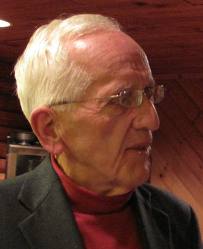
Dr. T. Colin Campbell, Professor Emeritus of Nutritional Biochemistry, Cornell University—author of The China Study

This blog contains key excerpts from a recent article; one that will probably damage the career of the younger author (Dr. Wayne) and will likely lead to further removal of the older author (Dr. Campbell) from the official presence of Cornell University. But these are not ordinary men, they are brave scientists who believe that scientific integrity is more important than fleeting status or personal income. (Link to complete article provided below) Excerpt:

At Cornell, life science professors do not necessarily profess their beliefs based upon evidence and critical thinking as our title implies;; rather, all too often, professors market an unwritten and unspoken syllabus to promote, if not a brand name, then a way of looking at the world that is sympathetic to corporate sponsors.

Sound incredulous? I thought so at first, but then I have witnessed it first-hand. In November of 2009, while enrolled in Dr. Campbell’s Plant-Based Nutrition course, I attended one of his lectures in Savage Hall on the campus of Cornell University. Speaking to a packed house in a large lecture hall, Dr. Campbell spoke to a crowd that seemed to be about equally split among students and PhD faculty.
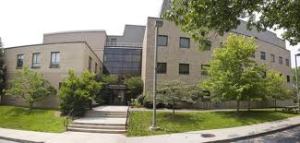
Savage Hall at Cornell University where Dr. Campbell earned his PhD and taught for many years

The students loved the lecture that focused on some of the most exciting information outlined in The China Study—five years earlier. But, with zero exceptions, the vocal few of the PhD faculty in attendance criticized Dr. Campbell’s science in front of the students—all but labeling him as an academic heretic. Also incredulous to me at the time was that not a single one of those faculty members had even read The China Study. Let’s move on to more from the article:

If we teach students to think critically, to explore assumptions, and in so doing, they lose faith in the authority of scientific results, especially those paid for by various industries or by acts of Congress whose members were lobbied by various industries, we may not churn out the type of consumers our corporate sponsors expect.

Look at the life science classes still in the course catalog. Ask yourself whose interests they serve? Do they serve the interests of the monocultural pharmaceutical, agrochemical, and agricultural giants like Pfizer, Monsanto, and  those represented by the American Dairy Council. Do they serve the interests of the students in their quest to design and build their future, to learn about themselves, their place in the world, the value and limitations of science and technology, or how to live an ethical life? While corporations and the organizations mentioned above have their value, the life sciences curriculum at a tax-exempt university must not be limited by their priorities.

Closing paragraph. We shall continue to fight for a science that is indifferent to profit as it serves mankind, to fight for a science that reveals the nature of the world, and to fight for a university true to its tax-exempt status. We are speaking truth to power at many levels. Do you honestly believe, along with a majority of the members of congress who fund life science research that the presence of tomato paste allows pizza to be classified as a vegetable? We, as a botanist and a nutritionist cannot go along with this one either.

—T. Colin Campbell,  PhD and Randy Wayne, PhD
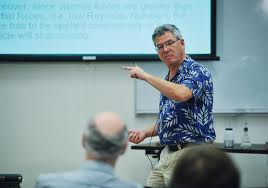
Dr. Randy Wayne, Associate Professor, Cornell University

What does all this mean? It is just further proof that the pathway out of the madness in our food-medicine-academia-goverment-media “system” is not through the halls of ivy at our most prestigious schools of nutrition. To be sure, there is not a single prominent university that offers course credit (toward graduation) for courses in plant-based nutrition.

Dr. Campbell’s course was originally a “for credit” course toward graduation at Cornell—until it was cancelled due to pressure from the dairy and beef folks, on whose financial support the school of nutrition depends. That course was resurrected in 2009 by the T. Colin Campbell Foundation and is administered by eCornell. And while it qualifies for continuing education credits for physicians and dietitians, it is no longer good for credit toward graduation from Cornell University.

So what is the pathway out of the madness? As I wrote in the book and have now blogged for 417 consecutive days, it is a grassroots revolution of people like you and me who are fed up with the nutritional “hogwash” we have been fed by our “system.” By educating ourselves, taking charge of our own health and sharing our knowledge with everyone we know—we will eventually have an impact. After all, what we have is grossly unsustainable longterm—for a host of reasons.

See link to the Cornell Progressive article below—along with a few of my earlier blog posts on this critical topic:

Follow us on Facebook and Twitter. Want to receive some occasional special news from us? You may wish to Join our periodic mailing listFor daily updates you can choose to “FOLLOW” at the top of the right column>>>>>>>>>>>>

Also, for help in your own quest to take charge of your health, you might find some useful information at our 4Leaf page or some great recipes at Lisa’s 4Leaf Kitchen. Got a question? Let me hear from you at jmorrishicks@me.com.

If you’d like to order our book on Amazon,  visit our BookStore now.

J. Morris Hicks, working daily to promote health, hope and harmony on planet Earth.

For help in your own quest to take charge of your health, you might find some useful information at our 4Leaf page or some great recipes at Lisa’s 4Leaf Kitchen.

Got a question? Let me hear from you at jmorrishicks@me.com.

Please SHARE and rate this post below

Blogging daily at hpjmh.com…from the seaside village of Stonington, Connecticut – Be well and have a great day.

—J. Morris Hicks, Board of Directors…

Posted in Academic Freedom, Scientific Integrity | Tagged , | 7 Comments

Fiber. More important than calories?

Truth is, neither is a problem if you’re eating the right foods.

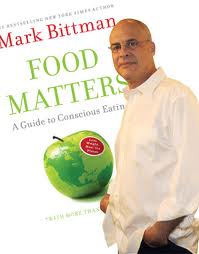
Marion Nestle and Malden Nesheim have written a new book, “Why Calories Count,” and Mark Bittman has featured that book in one of his recent columns in the New York Times. As you might expect, the topic is all about calories, but also includes some welcome information about fiber from these mainstream writers. From Bittman’s article, he quotes the authors: (See link below):
“Fiber is special because it’s not digested or digested incompletely. Most of its calories don’t get into the body, which is one reason why fruits and vegetables, which are high in fiber, help with weight loss.”

As we reported in our book and numerous times on this blog, fiber is a really big deal, and most of us don’t get nearly enough of it. Lots of people spend a lot of time counting calories (usually to no avail) and virtually no time thinking about fiber or worrying about getting enough. But if we’re eating the right foods for our species, we don’t have to worry about calories or fiber—our body will get what it needs and dispose of the rest. From Mark’s article:

An important question, then, is really something like, “What can I eat to keep from putting on weight?” and here the answer turns out to be not only easy but also expected. “If you’re eating a lot of fruits and vegetables,” Nestle says, “you’re not taking in as many calories as you would if you were eating fast food and sodas.” Yes, that’s a calorie issue; the latter group is way higher in calories than the former. But though there’s a difference between eat less and eating better, “eating better makes it much easier to eat less.”

I really like that last line. That’s because I like simplicity, clarity and consistency. That last line says it all; imagine what would happen if we were all told consistently by all of the pieces of our “system” that:

Eating better (whole plants with fiber) makes it much easier to eat less (calories that we don’t need).

Marion Nestle and Malden Nesheim

Like us, Ms. Nestle and Mr. Nesheim are interested in fixing the mess in which we find ourselves relative to our food and medical systems. They know that we’re eating the wrong foods and that our system is promoting confusion over clarity.

Ms. Nestle is featured prominently in Chapter 8 of our book—the chapter that is devoted to helping people everywhere understand why they have never been told the complete truth about nutrition. In that chapter, Ms. Nestle (Professor of Sociology and Nutrition at NYU) explains how “the system” works to influence the consumer in her book, Food Politics.

“We select diets in a marketing environment in which billions of dollars are spent to convince us that nutrition advice is so confusing, and eating healthfully so impossibly difficult, that there is no point in bothering to eat less of one or another food product or category.”

Toward the end of Mark Bittman’s article, he talks about how Nestle and Nesheim are thinking “big picture” as they outline the many aspects of our system that must be changed and how we can make that happen.
Their slogan: “Get organized. Eat less. Eat better. Move more. Get political…We need a farm bill that’s designed from top to bottom to support healthier diets, one that supports growing fruits and vegetables and making them cheaper. We need to fix school lunches so they’re based on fresh foods, and fix food assistance programs so people have greater access to healthier foods….Stop marketing food to kids. Period. Just make it go away…And get rid of health claims on food packages too….Unless they’re backed up by universally accepted science—which would get rid of all of them.”

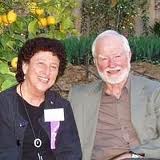
Alexandra Stoddard and husband Peter Megargee Brown inspired this blog when they told me about the Mark Bittman article. Just back from Paris, they posed for this photo after I joined them near the end of their 4Leaf breakfast.

Many thanks to Mark Bittman, Marion Nestle and Malden Nesheim for their contributions toward fixing our health care system. Still want more information about fiber? Here are a couple of my recent posts on that topic:

Getting enough fiber? 95% of Americans don’t. Most don’t even come close to the woefully low official guidelines. Yesterday, while thinking about my post for today, I got to thinking about fiber in our diet and why we have it. Then it occurred to me that it … Continue reading →

FIBER. How much should we be eating? An excerpt from our book and a new video added to an earlier blog. From Chapter 1 in our book on page 23, under the section entitled, “What is the Optimal Diet for Humans?” As it relates to fiber consumption: … Continue reading 

(Mark Bittman’s article) Is a Calorie a Calorie? – NYTimes.com.

Follow us on Facebook and Twitter. Want to receive some occasional special news from us? You may wish to Join our periodic mailing listFor daily updates you can choose to “FOLLOW” at the top of the right column>>>>>>>>>>>>

Also, for help in your own quest to take charge of your health, you might find some useful information at our 4Leaf page or some great recipes at Lisa’s 4Leaf Kitchen. Got a question? Let me hear from you at jmorrishicks@me.com.

If you’d like to order our book on Amazon,  visit our BookStore now.

J. Morris Hicks, working daily to promote health, hope and harmony on planet Earth.

From the seaside village of Stonington, Connecticut – Be well and have a great day.

—J. Morris Hicks…blogging daily at HealthyEatingHealthyWorld.com

SHARE and rate this post below…One more thing, occasionally an unauthorized ad may appear beneath a blog post. It is controlled by WordPress (a totally free hosting service). I do not approve or personally benefit whatsoever from any ad that might ever appear on this site. I apologize and urge you to please disregard.

J. Morris Hicks -- Member of the Board of Directors -- Click image to visit the foundation website.

Posted in Food Policy | Leave a comment

The 4Leaf Survey keeps getting better.

Leveraging the simple concept of maximizing our percent of daily calories from whole, plant-based foods.

And it may very well be the world’s first survey of its kind.

Twelve questions—2 or 3 minutes. A quick and easy way to estimate how healthy you are eating…without counting calories or computing percentages. (latest revision 3-26-12)

What are we measuring? The 4Leaf Program is based on the simple premise put forth by Dr. T. Colin Campbell, “The closer we get to eating a whole foods, plant-based diet, the better off we will be.” We know that the closest that we could possibly get would be 100% of our calories from those healthiest of foods.

So, for our 4Leaf Program, we set the top bar at 80%—meaning that if you consume 80% or more of your calories from whole plants, you’ll be eating at the 4Leaf level. From 60 to 79%, the score is 3Leaf and so forth. So where do most people score? How healthy is the typical Western diet?

Someday, this survey will be on a 4Leaf app for smart phones.

Our standard American diet is not very healthy. Most people in the USA and other Western countries are consuming the very un-healthy “typical Western diet,”  with meat, dairy, eggs and refined carbs at every meal. As you might guess, this harmful  diet does not score well on our 4Leaf scale.

We see six overall levels of eating—with the majority of the people not yet eating at the higher end of the scale—beginning with the 2Leaf level. With more information, we find that most people will voluntarily make improvements in their diet. Here’s our estimate of how the population of the USA is currently eating:

  1. 4Leaf level1% of the population (80 to 100% from whole plants)
  2. 3Leaf level—2% of the population (60 to 79% from whole plants)
  3. 2Leaf level—3% of the population (40 to 59% from whole plants)
  4. 1Leaf level—4% of the population (20 to 39% from whole plants)
  5. Better than Most—25% of the population (10 to 19% from whole plants)
  6. Unhealthy Diet—65% of the population (less than 10% from whole plants)

What about vegetarian? Is that 4Leaf? Not necessarily. Some vegans and vegetarians consume a very small percentage of their calories from whole plants. Although they’re not eating animal flesh, they’re getting most of their calories from refined carbohydrates (white pasta, bread, etc.), olive oil, cheese, salty snacks, soda—and none of those are health-promoting foods.

The key to vibrant health is consuming lots of the healthiest foods…whole plants.

Our survey measures what you ARE eating. It was designed to assess the approximate percentage of your calories that are derived from whole plants. The higher that percentage, the greater your chances of achieving vibrant health—while providing your body with the maximum amount of protection from chronic disease.

Take the 12-question survey now

for a printer friendly one-page form, complete with scoring instructions. It takes less than five minutes.

Then send me your score, comments or questions to jim@4leafprogram.com Let me know how accurate you think it was in assessing your approximate 4Leaf level. Here are links to two more printer-friendly PDF one-pagers that might be helpful as you move up the 4Leaf scale:

The 4Leaf Chart for your refrigerator

Two 4Leaf Top Ten Lists — the Why and the How

Tips for improving your score. In a recent blog, I commented that the 12 survey questions provide valuable tips for moving up the 4Leaf scale. Take a look: Using 4Leaf Survey results to improve your diet & health

The Bottom Line. We know that everyone may not care about reaching the 4Leaf level of eating. But, for those who do, we think that this incredibly simple tool will help. Check out this feedback from a reader on 3-27-12, just two months after reading our book:

Mr. Hicks, It is with pleasure that I fill out the surveys again. We are now solid 3Leaf-ers and very proud!  My husband, at first, was just a hostage to my cooking, but he has come around.  He now orders only veggies even when we go out to dinner.  I am totally committed.

We do still add milk to our coffee.  It amounts to approx 4 TBS/day of 1%.  We have switched to Almond Milk instead of dairy with meals. Our blood tests came back yesterday….my total cholesterol dropped 51 points from 202 to 151.  Dave’s dropped from 182 to 159.

Since we read your book, our goal has been to eat better for ourselves and our planet.  I think we are achieving this….even though I see spots that can certainly be improved upon.  One is milk with coffee.

Thanks for the improved survey, it makes much more sense to me and enables me to see the “holes” that I need to fill. Best, Darcy

More help needed? For additional help in your own quest to take charge of your health, you might find some useful information at our 4Leaf page or some great recipes at Lisa’s 4Leaf Kitchen. Got a question? Let me hear from you after you take the survey at jim@4leafprogram.com

Follow us on Facebook and Twitter. Want to receive some occasional special news from us? You may wish to Join our periodic mailing listFor daily updates you can choose to “FOLLOW” at the top of the right column.

If you’d like to order our book on Amazon,  visit our BookStore now.

J. Morris Hicks, working daily to promote health, hope and harmony on planet Earth.

From the seaside village of Stonington, Connecticut – Be well and have a great day.

—J. Morris Hicks…blogging daily at HealthyEatingHealthyWorld.com

SHARE and rate this post below…One more thing, occasionally an unauthorized ad may appear beneath a blog post. It is controlled by WordPress (a totally free hosting service). I do not approve or personally benefit whatsoever from any ad that might ever appear on this site. I apologize and urge you to please disregard.

J. Morris Hicks -- Member of the Board of Directors -- Click image to visit the foundation website.

Posted in 4Leaf for Life | 2 Comments