Promoting health and saving money at Whole Foods Market

Finally—a major CEO steps up to the plate.

That’s right, we now have the CEO of a very large, well known and highly respected company showing us how to increase productivity, save lives and lower the cost of health care—all at the same time.

John Mackey is featured in the powerful 13-minute video that is included below—the first prominent CEO to take the bold step of personally demonstrating how all of his 62,000 employees can take charge of their own health. Without a doubt, the video that follows is the best that I have ever seen on this topic—crisp, powerful, professional and credible.

John P. Mackey, co-founder of the Company, has served as Chief Executive Officer since 1980. As the company’s visionary, he has led the development of many innovative programs such as the $10 million in low-interest loans to local farmers and food producers to help them expand their businesses. Mr. Mackey’s most recent focus is re-invigorating Whole Foods Market’s emphasis on healthy eating and lifestyle choices.

When I first began learning the truth about nutrition in the spring of 2003, I wanted to leverage my consulting and process-improvement skills to help organizations of all sizes slash their cost of health care. After learning that things like obesity, heart disease and type 2 diabetes could be easily reversed by simply eating the right foods; I immediately knew that billions of dollars could be saved if we could help people change the way they think about food.
“Whole Plants”

Since 2003, I have been pursuing that dream and, as always, I have tried to make the transition as simple and easy as possible. What could be simpler than two words? Whole Plants. If we just focus on those two words, we can take charge of our health. And we don’t need a medical doctor, a registered dietitian or a nutritional scientist to show us how.

But we do need those professionals to provide legitimacy for the journey of simply returning to the natural diet for our species—the diet that Nature intended for us to eat in the first place.

Credibility, legitimacy and authenticity—necessary for major change. In a population where over 90% of the people are eating meat, dairy, eggs and refined carbohydrates three meals a day—365 days a year—that style of eating has become the accepted norm. And it is the kind of diet that is regularly eaten by most of our doctors, registered dietitians and nutritional scientists.

Even though they still don’t teach the powerful truths about nutrition in our medical schools or our schools of nutritional science, there is a growing army of professionals who have learned the truth on their own—and they are sharing that powerful information the best they can. Six of those individuals were featured prominently in our book—and one of them produced the video that follows.
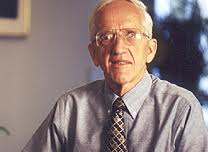
Dr. T. Colin Campbell (author of The China Study) provides the “scientific foundation” for the five medical doctors listed here.

  1. T. Colin Campbell, PhD, scientist, nutritional biochemistry, Cornell University, author of The China Study…and one of the three experts who influenced Bill Clinton to go plant-based.
  2. Caldwell Esselstyn, M.D., The Cleveland Clinic, former general surgeon, now Director of Cardiovascular Disease Prevention and Reversal at the Clinic’s Wellness Institute. Author of Prevent and Reverse Heart Disease.
  3. Dean Ornish, M.D., UCSF School of Medicine, former consulting physician for the White House and Air Force One, author of Spectrum.
  4. Neal Barnard, M.D., Founder and CEO of the Physicians Committee for Responsible Medicine, author of Dr. Neal Barnard’s Program for Reversing Diabetes.
  5. Joel Fuhrman, M.D., Family physician, author of Eat to Live and prominent speaker and educator in the field of health-promoting plant-based nutrition.
  6. John McDougall, M.D., Prominent pioneer in plant-based nutrition to promote health, author of The McDougall Plan, consultant, speaker and leader of change.

All of these professionals are featured prominently in our book and five of them have written endorsements for it. They all have a few things in common: None of them were taught the truth about nutrition during their formal education—they all learned it on their own. And their “common ground” of knowledge can be described as agreement on the following statement by Dr. Campbell: “The closer we get to eating a whole foods, plant-based diet, the better off we will be.”
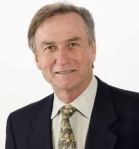
Dr. John McDougall

As for Dr. McDougall being listed last; it’s only because he is the one that produced the following video—highlighting the Whole Foods Market educational program at his Santa Rosa, CA, health center in October of 2011. I attended an “Advanced Study Weekend” there in 2007 and highly recommend his programs for anyone wanting to have the very best professional support and guidance during the process of taking charge of their health.

From my perspective, the big story in this video is that it features a prominent CEO—taking personal responsibility for the health and welfare of his employees. John Mackey has been a vegan since he was a young man but has only recently learned the complete truth about nutrition. And, like me,  he learned it from medical pioneers like those six professionals listed above.

Meet Dr. John McDougall, John Mackey, CEO, and their teams.


Summary. As this video so brilliantly reports; most of our chronic diseases need never exist—and if they do, many of them can be reversed within weeks or months. All we have to do to take charge of our health is make “whole plants” the number one source of calories in our diet.  But there are a tremendous numbers of barriers that one must overcome: traditional medical advice about protein, opinions of friends-family & co-workers, scarcity of healthy choices in restaurants, etc. But, with one simple ingredient, all that can change in a hurry….

Leadership. We need more leaders like John Mackey who are willing to personally lead the change within their organizations. This is not the kind of “human resource” program that can be relegated to the H.R. department. We’re talking major change—in a world of major barriers. For that kind of change, we need top management leadership. Click on this link if you’d like to learn more about an in-house health-promotion campaign within your organization.

Lowering costs and saving lives in your organization

Handy 3-piece take-charge-of-your-health kit—from Amazon.com

Want to find out how healthy your family is eating? Take our free 4Leaf Diagnostic Survey. It takes less than five minutes and you can score it yourself. After taking the survey, please give me your feedback as it will be helpful in the development of our future 4Leaf app for smartphones. Send feedback to jmorrishicks@me.com

International. We’re now reaching people in over 100 countries. Follow us on Facebook and Twitter or get daily blog notices by “following” us in the top of the right-hand column. For occasional updates, join our periodic mailing list.

To order more of my favorite books—visit our online BookStore now

J. Morris Hicks, working daily to promote health, hope and harmony on planet Earth.

For help in your own quest to take charge of your health, you might find some useful information at our 4Leaf page or some great recipes at Lisa’s 4Leaf Kitchen.

Got a question? Let me hear from you at jmorrishicks@me.com. Or give me a call on my cell at 917-399-9700.

SHARE and rate this post below.

Blogging daily at hpjmh.com…from the seaside village of Stonington, Connecticut – Be well and have a great day.

—J. Morris Hicks, board member, T. Colin Campbell Foundation

Posted in Activism & Leadership, M.D.s---Health-Promoting, Medical Experts, Testimonials | 2 Comments

Sugar Kills! — Dr. Sanjay Gupta on “60 Minutes”

Kills? — We’re talking heart disease, diabetes, and cancer.

Finally someone clarifies that ALL added sugar is bad---including honey and maple syrup.

Apparently CBS decided to declare war on the Sugar Industry for April Fool’s this year. And it wasn’t very funny. They had a feature story on both the CBS Sunday Morning as well as their iconic 60 Minutes show in the evening.

I preferred the evening show with Sanjay Gupta over the morning show featuring a partially informed “registered dietitian,” who stated that we should get our sugar only from natural, healthy sources like fruit and yogurt. Not. Here’s how the 60 Minutes segment began:

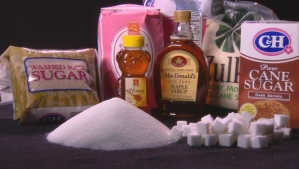
(CBS News) If you are what you eat, then what does it mean that the average American consumes 130 pounds of sugar a year? Sanjay Gupta reports on new research showing that beyond weight gain, sugar can take a serious toll on your health, worsening conditions ranging from heart disease to cancer. Some physicians go so far as to call sugar a toxin.

Are you “watching what you eat?” When it comes to sugar? You may think you are, but unless you’re religiously checking the “added sugar” on everything you buy, you’re not doing a very good job. Even people who are eating a fairly healthy diet of mostly whole plants are often unaware of the added sugar in almost every packaged food at even the healthiest of grocery stores.

Just last week, I had lunch with a very “food savvy” colleague who was not aware that the soy milk that he puts in his cereal every day has lots of added sugar. A quick check of two brands, Westsoy and Pacific, reveals 10g and 8g respectively in added sugar per serving of soy milk. I have found that it is next to impossible to find unsweetened soy, rice or nut milk in the average grocery. And since there is no Whole Foods nearby, I usually order my unsweetened soy or almond milk in bulk. It’s also next to impossible to find ANY cereals without added sugar? My “old fashioned” oatmeal is one of the rare few?

Do you want to learn how to “really watch what you eat?” You can start by taking our free 4Leaf  Diagnostic Survey. In less than five minutes, you can learn how healthy you are currently eating and how you can easily improve your score. It’s really all very simple—yet that simple message is not being delivered by our medical system. It really all boils down to two words—whole plants.

Meanwhile, back to the 60 Minutes segment. Dr. Robert Lustig of the UCSF Medical Center was the primary expert featured on the show. And Dr. Lustig has been preaching his message for over two years—beginning with his “Sugar, the bitter truth” video on YouTube—which has been seen over two million times. That 90-minute video is provided here for your convenience.

Dr. Robert Lustig, UCSF

The Bottom Line. Controlling added sugar in your diet is simple. It’s the same process as controlling the cholesterol, the fat and the many other toxins in our food supply. It’s a simple matter of maximizing the percent of your calories from whole plants. And, for packaged foods, don’t buy anything with added sugar.

“60 Minutes” segment on SUGAR—with Dr. Sanjay Gupta

Transcript and Video — 60 Minutes on Sugar

One more thing, if you take our 4Leaf Survey, please give me your feedback as it will be helpful in the development of our future 4Leaf app for smartphones. Send feedback to jmorrishicks@me.com

Follow us on Facebook and Twitter. Want to receive some occasional special news from us? You may wish to Join our periodic mailing listFor daily updates you can choose to “FOLLOW” at the top of the right column.

If you’d like to order our book on Amazon,  visit our BookStore now.

J. Morris Hicks, working daily to promote health, hope and harmony on planet Earth.

For help in your own quest to take charge of your health, you might find some useful information at our 4Leaf page or some great recipes at Lisa’s 4Leaf Kitchen.

Got a question? Let me hear from you at jmorrishicks@me.com.

Please SHARE and rate this post below

Blogging daily at hpjmh.com…from the seaside village of Stonington, Connecticut – Be well and have a great day.

—J. Morris Hicks, Board of Directors…

Posted in Health in General, Medical Experts, Video Included | Tagged , , | 9 Comments

“Drill Baby, Drill” is not the answer; nor is Newt’s $2.50/gal.

Good News and Bad News — an Update on Oil

We hear a lot about the price of oil and gasoline in the Western world—particularly during an election year in the United States. Four years ago, McCain and Palin were irresponsibly screaming, “Drill baby drill,” and now Newt Gingrich is (was) promising a plan for delivering gasoline for $2.50 a gallon if he is elected. Some of this kind of “madness” is necessary to get elected in a country like ours—where the electorate blames the sitting president for unemployment numbers and for the price of gasoline. But none of this kind of “madness” is going to solve the grim reality of our collective global dependence on oil.

All the talk about the price of gasoline during this election year—coupled with the latest article on the cover of Time (see link below)—has influenced me to write an update on this crucial topic. Crucial not just for getting elected, but crucial for the survival of our species if we mis-manage the finite resources that we have left.

A little background. Chapter 5 in our book is entitled “The End of the Era of Cheap Oil,” — not a chapter you would normally expect to see in a book about healthy eating. But our book goes far beyond our own health and takes a hard look at four other compelling categories of reasons that we should be eating whole plants—not animals and their products.

As for oil, it turns out the the way we eat is the single largest category of how we are “wasting” this finite resource. The small print on the cover of the magazine gives us a clue about the “good news and bad news” in the article:

“New breakthroughs are actually increasing U.S. supplies. But homegrown oil isn’t going to lower prices at the pump.”

Promoting health, hope and harmony on planet Earth

What's good for our health, is also good for the planet---and for conserving oil.

Many of my blogs have featured all of the five categories of compelling reasons and can be reviewed by hovering over the “Topics” tab above. This particular blog is an update on the “energy issues” topic—particularly the future availability of cheap oil. What do I mean by cheap? I mean “cheap enough” to squander in a process so insanely inefficient as producing food calories  in the form of meat and dairy. Insanely inefficient?

On average, meat and dairy calories require more than ten times as much fossil fuel energy to produce—on a per calorie basis—than do whole, plant-based foods.

Oh, we waste a lot of energy with our plant-based foods too, but that waste is a mere drop in the bucket compared to our meat and dairy production business. In our book, we reported that the process of “cycling” our grain through animals for our food is a process that wastes “90% of the protein, 96% of the calories, 100% of the fiber and 100% of the carbohydrates.” It also requires over ten times as much land and water—but this article is focused on the energy side of this mess.

Example of "peak oil." All countries, and eventually the world, will reach its peak oil production.

Back to the Time article. Bryan Walsh gives us a comprehensive “big picture” of what’s going on with our oil supply, although he hardly even mentions the “peak oil” phenomenon. Simply stated, peak oil means that eventually the world’s daily production of oil will peak and—no matter what we do—the grand total daily production of oil will steadily decline. What we’re now seeing in the Time article appears to be the reality of the early years of peak oil. Many experts believe that we’re at peak oil now.

What Mr. Walsh describes is five new “categories” of oil production that has been made possible by a combination of new technology and price. In other words, we now have the high-tech tools to dig deeper and differently—AND the higher prices are making those more expensive methods economically feasible.

Is peak oil a myth or a hoax? Like global warming, there is much debate surrounding this topic. But there is universal agreement on these three points:

  1. Oil is a finite resource (not renewable)
  2. So far, we have taken about a trillion barrels out of the ground.
  3. We have harvested the easiest, the safest and the cheapest trillion barrels first.

We can change the way we eat much quicker than we can change the way we live and travel. Eventually, we will have to do all of the above.

How much oil is harvestable in the future? My earlier research for the book seems to be corroborated by the Time article—that is that we have roughly one trillion barrels remaining. And since we’ve used the majority of our first trillion in less than fifty years, we know that the last trillion barrels are not going to last forever. From the article, Walsh sums up the “big picture:”

While unconventional sources promise to keep the supply of oil flowing, it won’t flow as easily as it did for most of the 20th century. The new supplies are for the most part more expensive than traditional oil from places like the Middle East, sometimes significantly so. They are often dirtier, with higher risks of accidents.

The decline of major conventional oil fields and the rise in demand mean the spare production capacity that once cushioned prices could be gone, ushering in an era of volatile market swings. And burning all this leftover oil could lock the world into dangerous climate change. “I’m less concerned about the absolute disappearance of fossil fuels than about the environmental consequences of pursuing what’s left,” says Michael Klare, an energy expert and the author of The Race for What’s Left. There will be oil, but it will be expensive, dirty and dangerous.

Gorilla in the room–NEW DEMAND. Although the USA and other Western nations are actually using less oil these days, demand continues to grow sharply in the developing world. Specifically, millions of people in China and India are just now beginning to drive automobiles. And the oil market is global—which means that we can’t control the prices. And that “we” means Newt, McCain/Palin, or Barack Obama. The price of oil—for as long as we have it—will fluctuate based on the global supply and demand.

The Bottom Line. The single largest opportunity to conserve this finite natural resource is to change the way we eat in the Western world. Certainly, it will also help if we change the way we live at the same time—it would just take a lot longer to to that.

As an added bonus for changing the way we eat, we’ll also lessen the future energy demand in the developing world as they follow our lead by choosing the healthier, more efficient and far greener option of eating whole plants. What could be simpler?

(An earlier post) Finite Fossil Fuels…3 ways to make them last longer

Want to learn more about the “energy issues?” Click here.  And for the Time article….

Time Article The Truth About Oil

*********************

Want to find out how healthy your family is eating? Take our free 4Leaf Diagnostic Survey It takes less than five minutes and you can score it yourself. After taking the survey, please give me your feedback as it will be helpful in the development of our future 4Leaf app for smartphones. Send feedback to jmorrishicks@me.com

Follow us on Facebook and Twitter. Want to receive some occasional special news from us? You may wish to Join our periodic mailing listFor daily updates you can choose to “FOLLOW” at the top of the right column.

If you’d like to order our book on Amazon,  visit our BookStore now.

J. Morris Hicks, working daily to promote health, hope and harmony on planet Earth.

For help in your own quest to take charge of your health, you might find some useful information at our 4Leaf page or some great recipes at Lisa’s 4Leaf Kitchen.

Got a question? Let me hear from you at jmorrishicks@me.com.

Please SHARE and rate this post below

Blogging daily at hpjmh.com…from the seaside village of Stonington, Connecticut – Be well and have a great day.

—J. Morris Hicks, Board of Directors…

Posted in Energy | Tagged , , , | 6 Comments