Titanic Sets Sail Once More—A different ending

If the ship is sinking, you best tell the passengers the truth about the gigantic hole in her hull. — J. Morris Hicks

Env NGOsA few days ago, I wrote about the tragedy of the world’s most prominent environmental groups not telling us the truth about the primary common cause of the vast majority of our environmental problems. Without a doubt, that leading cause (by far) is our massive global consumption of meat, dairy, eggs and fish.

With a mission of caring for our planet, how could the world’s top “environmentalists” possibly not be telling us the complete truth about the single leading cause of  global warming, water scarcity, deforestation, soil erosion, ocean acidity and many more? In a recent online movie trailer, Michael Pollan succinctly explains why:

I think they “focus grouped” it and it’s a political loser. They’re membership organizations you know; they’re looking to maximize the number of people making contributions. And if they get identified as being “anti-meat,” it will hurt with their fundraising. (See 90-second YouTube video near the end of this blog.)

Quite simply, the most affluent two billion people in the world (those who eat most of the meat & dairy)—it’s like they’re all “sleepwalking off of a cliff,” says James Cameron. And despite the civilization-ending consequences of not taking decisive action now, none of our environmental, scientific or political leaders have chosen to awaken the sleepwalking public. Maybe this new story will help.

The Story of Titanic II — a fable by J. Morris Hicks

Titanic at seaAfter the tragic sinking of the first Titanic in April of 1912, with the loss of over 1500 lives, the leaders of England set out to build a much larger and even more “unsinkable” ship and to dedicate her maiden voyage to the victims of the first disaster. And so they did.

So on the tenth anniversary of the first Titanic maiden voyage, following a gigantic memorial service for the victims, the mighty Titanic II set sail from Southampton on a glorious spring morning—this time carrying a new record 3,000 passengers and crew.

With massive celebrations being planned for her arrival in New York, the world’s most famous  ship was making record time for the first three days of the passage. As with the first Titanic, the new ship featured a star-studded passenger list who were enjoying the time of their lives for the first half of the voyage.

But that gleeful atmosphere ended suddenly when everyone onboard felt a bump as Titanic II struck a submerged iceberg. The captain immediately got on the p.a. system and advised everyone not to worry—that everything was under control.

TitanicThen he met with his five most senior officers and learned about the severity of the situation. There was a large hole in the starboard hull just under the waterline near the bow.

They’d already tried to isolate the problem but had concluded that the ship would almost certainly sink. The good news was that instead of having only a few hours (like the original Titanic), this time she was expected to float for another few days. Surely help would arrive in time to save everyone.

The captain asked his engineers if there was a possibility of saving the ship. Was there anything that could be done to keep her afloat? They all assured him that there was not—because they didn’t have all of the knowledge, the skills, the manpower or the equipment required to make the needed repairs.

So the captain made a plan—stating that the complete details of this predicament were not to leave this room. We don’t want the passengers to panic, so we’re going to do our best to do business as usual until help arrives in a day or so. We’ll tell them that we need their help and ask them to lighten ship, conserve power & water and try to stay on the port side of the ship—to help keep the ship level.

The ship’s crew began assisting passengers in all of the above and tried to use peer pressure to force everyone to start throwing most of their belongings overboard. The captain knew that all these actions would not save the ship, but it might keep her afloat for a few hours longer—and it would help keep the passengers busy. Plus, everyone would have that warm feeling that they were doing their part to save the ship—like when they recycle their newspapers back home.

Fast-forward 48 hours. Incredibly, help never came and the ship began to sink. As in 1912, women and children were loaded into limited lifeboats, but there were still over 1500 people left on the ship when the hull broke in half and Titanic II began to go down quickly.

Minutes later, the captain found himself floating among a group of hefty looking men from the 3rd class section. One of them asked what had actually happened to the ship. The captain explained the large hole in the hull and that there was nothing that could have been done to save her. When asked why, the captain replied that they lacked the necessary “knowledge, skills, manpower and equipment” to make the repairs needed.

If you'd just told us the truth, we could've saved the ship.

Captain, if you’d just told us the truth, we could’ve saved the ship and all onboard.

The stocky, blue collared man replied, “But Captain, I am traveling with a group of twenty shipbuilders on our way to New York for a project there. And we had all the tools & equipment onboard that would’ve been needed to repair that hole.”

As the captain drew his last breath and started to go down, the last words he heard were these:

If you had told everyone the truth, we could have easily saved the ship—and all onboard.

Former Amazon forest; now being used to grow soybeans to feed to pigs in China

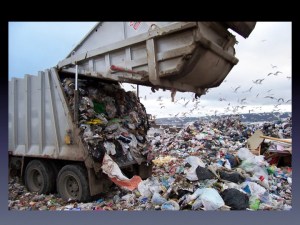
We’re now burning down the Amazon rainforest to grow soybeans to feed the pigs in China, now the world’s largest consumer of meat—destroying the lungs of the Earth.

Fast forward 92 years to 2014 and our situation is far worse than what the passengers and crew of Titanic II experienced in 1922. Today, we’re not just affecting the lives of 3,000 unlucky people, we’re systematically compromising the future of our entire civilization and ultimately, the human species.

Tragically, we’re not being told about three crucial truths that, if widely known, would save millions of lives, repair our fragile ecosystem and literally change the world:

  1. Leading Cause. Our unprecedented demand for animal-based foods is the leading cause of many environmental disasters that threaten our future as a species.
  2. Only Viable Solution. Changing what we eat is the ONLY possible solution to avert the worst consequences of global warming, water scarcity, deforestation and soil erosion—because it’s the only change that we could make quickly enough to make much of a difference. At this point, all other efforts are almost like rearranging deck chairs on the Titanic.
  3. The Protein Myth. We don’t need to eat ANY animal protein to be healthy. In fact, it’s just the opposite; we can reverse disease and achieve vibrant health by switching quickly to a diet consisting mostly of whole, plant-based foods. This myth has locked the brains of some of the world’s most intelligent and best educated leaders, scientists, physicians and journalists.

I mentioned the 90-second movie trailer above; it’s all about the failure of our “system” to alert the public to the leading drivers of our most urgent environmental crises.

For a more detailed look at our unprecedented dilemma, take a look at my recent blog entitled: NOTHING is more important than SUSTAINABILITY! I am convinced that nothing has ever been more important in the entire history of humankind.

Finally, there is one other blog I would like to share; it’s one that I wrote in 2011 about the chairman of the world’s largest food company. He has a great deal of knowledge about the unsustainability of our typical Western diet, but like most leaders, he probably still believes that we actually “need” to eat animal protein. World hunger, energy, water — and the “obvious” solution 

Early Comment & Question. Shortly after posting this blog, I received this comment: Did you just make that story about a Titanic II up? I can’t find a single reference to it anywhere. I then added “fable” to the title and replied to her:

Yes, Barbara, the story of Titanic II is my own creation, but that doesn’t make it any less relevant to what is happening today. Only now, its much worse—All seven billion human lives and the future of billions more are at stake. Yet those whom we’re trusting to take care of our environment are not telling us the truth—because it might hurt their fundraising efforts. Best to you and be well, J. Morris Hicks

Handy 5-piece take-charge-of-your-health kit—from Amazon.com

Why should we be eating mostly plants? The “big picture” in 4 minutes.

Want to find out how healthy your family is eating? Take our free 4Leaf Survey. It takes less than five minutes and you can score it yourself. After taking the survey, please give me your feedback as it will be helpful in the development of our future 4Leaf app for smartphones. Send feedback to jmorrishicks@me.com

International. We’re now reaching people in over 100 countries. Follow us on Facebook and Twitter or get daily blog notices by “following” us in the top of the right-hand column. For occasional updates, join our periodic mailing list.

J. Morris Hicks, working daily to promote health, hope and harmony on planet Earth.

To order more of my favorite books—visit our online BookStore now

For help in your own quest to take charge of your health, visit our 4Leaf page and also enjoy some great recipes from Lisa’s 4Leaf Kitchen.

Got a question? Let me hear from you at jmorrishicks@me.com. Or give me a call on my cell at 917-399-9700.

SHARE and rate this post below.

—J. Morris Hicks, board member since 2012; click banner for more info:
Nutrition Certificate

Posted in Activism & Leadership, Sustainability | Tagged | 5 Comments

NOTHING is more important than SUSTAINABILITY!

Things that we value most like family, health, freedom, peace, wealth, friends and happiness—do not exist without sustainability. In other words, if we don’t learn how to live sustainably, life will be nothing more than a hell on Earth for those few of us who survive. —J. Morris Hicks (1-25-14)

It took Mother Nature billions of years to create a rich state of complete harmony throughout the world; it took humans just a few hundred years to destroy it.

It took Mother Nature billions of years to create a rich state of complete harmony throughout the world; it took humans just a few hundred years to destroy it.

A little background. Mother Earth began supporting life four billion years ago. The first humans appeared just 200,000 years ago and it took us 199,800 years to reach the one billion population mark.

Then, in just the next 200 years, we added another six billion people. That’s just a mere blink in the eye of history and here’s how I recently explained that blink to a sixth grade class in New London, CT.

If we crammed that four billion years into just one year, we humans have been around for only the last 26 minutes of the last hour of that year. Even more alarming; in just the past two seconds, we’ve grown from one billion to seven billion. Finally, in just the last one half second, we have inflicted more damage on the fragile harmony of nature than all previous generations of humans combined.

An alien looking down from a spaceship might refer to us humans as the

An alien looking down from a spaceship might refer to us humans as the “infestation” of planet Earth.

How did we do so much damage? A combination of three things:

    • Overpopulation, exceeding the carrying capacity of our planet
    • The way we live, work, travel, and consume STUFF (See video below)
    • THE WAY WE EAT

Scientists now agree that Mother Nature cannot sustain the way we are living for very much longer. Many have predicted that our civilization will collapse before the end of this century unless we take some drastic actions soon—like within the next five or ten years. So, what can we do quickly about those three areas of human activity?

    • Curb overpopulation? We’re still adding over 200,000 people per day and it will take many decades, if not centuries, to get this situation under control.
    • Change the way we live? Once again, this will take many decades, if not centuries, to move our entire world economy back to working in harmony with Nature.
    • Change the way we EAT? Not only are our food choices the leading driver of most environmental issues, they are the ONLY major area of human activity that we can change quickly.

Like immediately! In fact, any meat-eating individual can change what they eat practically overnight. I did and I know that millions of others have done the same. And if enough people change quickly, I am confident that our free market system will deliver whatever they choose to eat.

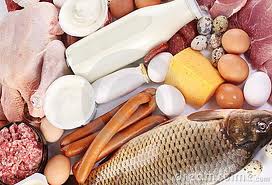
The typical western diet consisting of some form of meat, diary, eggs and/or fish three meals a day

The typical western diet consisting of some form of meat, diary, eggs and/or fish three meals a day

So what’s our diet got to do with sustainability? Almost everything. It turns out that our popular Western diet,  enjoyed by the most affluent two billion people in the world, is the leading cause of water scarcity/pollution, soil erosion, species extinction, global warming, deforestation, world hunger—and the cost of healthcare. You might ask, how could that be?

It begins with the fact that our popular Western diet includes some form of meat, dairy, eggs and/or fish at almost every meal. And, on a per calorie basis, it takes over ten times as much water, over ten times as much land and over ten times as much energy to produce than it does to produce plant-based calories.

In addition, a 2006 U.N. report concluded that livestock cause far more global warming than ALL transportation combined. And unlike transportation which continues to grow rapidly, we could easily eliminate the complete livestock sector—solving all sorts of problems at the same time.

In short, the way we’re eating is extremely harmful, incredibly wasteful and grossly unsustainable. Consider this: If all seven billion humans ate the way we do in the USA, we’d need two or three planet Earth’s to feed them all—we only have one—and she is in trouble.

What about our health? Will nothing but plant-based calories provide us with all the protein and calcium that we need? Don’t we need to at least eat some meat and dairy? Isn’t that what we’ve been told our entire lives? Yes, that is what we have all been told—but it simply is not true.

And even if it were true, it really doesn’t matter because that way of eating is simply not sustainable for very much longer.

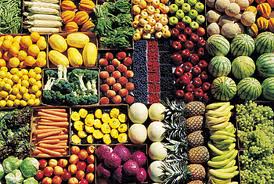
Whole plantsAn unprecedented Win–Win. Not only will a rapid move to a plant-based diet do wonderful things for all of our sustainability issues; it will also do wonderful things for our health—provided we consume the healthiest kind of plant-based diet. I am speaking of the one that derives most of its calories from whole, unprocessed, plant foods.

Cigarette smoking analogy. When I was growing up in the fifties, it seemed like almost all adults smoked cigarettes. But nowadays, after numerous massive awareness campaigns and billion dollar lawsuits spanning many decades, smoking is simply not cool anymore. Someday, eating animal-based foods will not be cool either—but our journey to that day is going to be far more arduous than it was with cigarettes. Why is that? Unlike our wildly popular habit of eating animal-based foods, which most still think is good for us…

  1. No one ever thought that smoking cigarettes was good for our health.
  2. No parent ever encouraged their children to smoke cigarettes.
  3. No doctor ever recommended that his/her patients smoke cigarettes.
  4. No schools ever displayed glossy posters urging kids to smoke. (Got Nicotene?)
Although a deadly habit, the collective damage of smoking pales in comparison to the incredibly harmful typical western diet.

Although a deadly habit, the collective damage of smoking pales in comparison to the incredibly harmful and unsustainable typical western diet.

How arduous will our journey be? To answer that, I am reminded of the three stages of truth: Ridicule, Violent Opposition, and Acceptance. Sadly, we are still in Stage One–Ridicule. Once Stage Two begins in earnest, it will take billions of dollars in legal fees to fight the mighty animal-based food industries as the truth about their products begins to take its toll on their revenues.

There will also be casualties as there have been in Brazil where brave citizens have been assassinated for simply being outspoken on behalf of the environment. Even so, this transition must happen and it must happen soon. No less than our civilization and our future as a species hangs in the balance.

Rapid change will require BOLD, well-funded, global ACTION soon!

At the 4Leaf level, you'd be deriving over 80% of your calories from whole, plant-based foods.

At the 4Leaf level, you’d be deriving over 80% of your calories from whole, plant-based foods.

Are we talking vegan or vegetarian? NO.  That would be a real tough sell in today’s world and would only hinder our progress. Our goal is to influence the world’s most affluent two billion people (who are eating over 80% of the meat) to replace the maximum number of their animal-based calories with plant-based calories. The more, the better. And, if they choose the whole food variety of plant-based, they will get the added bonus of vibrant health.

We encourage everyone to try to maximize the percent of their calories from whole, plant-based foods—as it will be a huge Win-Win-Win for the planet, for our collective health and for the out-of-control cost of healthcare that is strangling most Western nations. But I should add that ANY plant based calories (even chips and sweets) are far better for our ecosystem than ANY animal-based calories.

GreenPeace and the Sierra Club, with millions of supporters, are just two of the large groups not telling us the truth about the environmental impacts of our food choices.

GreenPeace; just one of many not telling us the truth about the single biggest cause of our environmental problems.

Most are “comfortably unaware.” Sadly, not a single one of our most prominent environmental groups or schools of sustainability in our universities is visibly sharing this alarming sustainability truth about animal-based food with the public.

In a recent online movie trailer, Michael Pollan explains why they don’t:

“I think they “focus grouped” it and it’s a political loser. They’re membership organizations you know; they’re looking to maximize the number of people making contributions. And if they get identified as being “anti-meat,” it will hurt with their fundraising.

Hurt with their fundraising? Are you kidding me? They’re not telling the public the truth about the most important issue in the history of humankind because of MONEY? Wonder why that is?

How about a little data?—$611,051 That’s what the highest paid CEO of a charitable environmental group was paid in 2012 (Reported by Charity Navigator).

Sounds to me like they’re in the “conscience laundering” business—making people feel good about donating to charity, keeping their own salaries intact; but not really making much of a difference. By not addressing the leading cause of global warming for example, we have no possible chance to avert those rapidly approaching tipping points.

Maybe they’re not telling us the truth because they don’t think the public can handle the truth. Reminds me of the movie, “A Few Good Men” and the famous courtroom scene when Marine Colonel Jessup shouted at Navy Lieutenant Kaffee:

You want the TRUTH?

YOU CAN’T HANDLE THE TRUTH!!

Jessup Truth

Our experts don’t think the public can handle the truth, so they water down the message—keep meeting their fundraising goals—all the while compromising the sustainability of our ecosystem, our civilization and ultimately the human species. It’s like this: as we’re all “sleepwalking off a cliff,” at least we’ll all be doing the politically correct thing as we plunge to our deaths together.

It is time for this madness to END! Some of our most prominent experts have shared more truths than others—but NONE of them are URGENTLY waking up the sleepwalking public. None of them are consistent in their message and none of them are “walking the walk.”

Please ask your favorite environmental group’s representatives to read this blog and then tell you why they’re not telling people what they need to know—and what they must do—to preserve our planet’s ability to sustain us indefinitely.

As for telling the truth. A few days after posting this blog, I published this one. Titanic Sets Sail Once More—A different ending. Even your third grade child will have no trouble understanding the connection.

**************

Finally, as mentioned earlier, here is the famous “Story of Stuff” video produced in 2007 and seen about three million times on YouTube. A really well-done video although there was not a single mention of the fact that we’re eating the wrong food.

After we fix the all important FOOD PROBLEM, we’ve eventually got to figure out a way to live in harmony with nature on our precious planet. As any third grader can tell you, our current system of unlimited consumption in a finite world is simply not going to work for much longer.

A few of my earlier blogs that touch on this crucial subject:

Handy 5-piece take-charge-of-your-health kit—from Amazon.com

Why should we be eating mostly plants? The “big picture” in 4 minutes.

Want to find out how healthy your family is eating? Take our free 4Leaf Survey. It takes less than five minutes and you can score it yourself. After taking the survey, please give me your feedback as it will be helpful in the development of our future 4Leaf app for smartphones. Send feedback to jmorrishicks@me.com

International. We’re now reaching people in over 100 countries. Follow us on Facebook and Twitter or get daily blog notices by “following” us in the top of the right-hand column. For occasional updates, join our periodic mailing list.

J. Morris Hicks, working daily to promote health, hope and harmony on planet Earth.

To order more of my favorite books—visit our online BookStore now

For help in your own quest to take charge of your health, visit our 4Leaf page and also enjoy some great recipes from Lisa’s 4Leaf Kitchen.

Got a question? Let me hear from you at jmorrishicks@me.com. Or give me a call on my cell at 917-399-9700.

SHARE and rate this post below.

J. Morris Hicks, board member since 2012; click banner for more info:

Nutrition Certificate

Posted in Activism & Leadership, Big Picture, Sustainability | 6 Comments

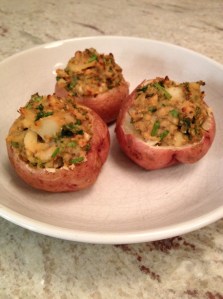
From Lisa’s 4Leaf Kitchen—Herb Stuffed Potatoes

Herb stuffed potatoesWith the new year, comes resolutions! My goal will be one recipe a month! I received an e-mail asking for more recipes today. Happy New Year from Lisa
This is one of our new favorites! They are delicious! With its crispy crust and creamy insides, they are sure to be a favorite at your house too! They can be reheated later in the week for a quick dinner.

Ingredients:

  • 1 cup raw cashews
  • 8-10 organic yellow or yukon gold potatoes
  • 6 Tbs. nutritional yeast (optional)
  • 4 Tbs. water
  • 4 Tbs. lemon juice
  • 3 Tbs. yellow or brown rice miso paste (or any variety)
  • 1 cup fresh chives, finely chopped
  • 1 cup fresh parsley, finely chopped
  • 1 cup hemp seeds or 1/2 cup chia seeds

Directions:

  1. Soak cashews in cold water for about an hour.
  2. Preheat oven to 400 degrees F. Bake potatoes for 45-60 minutes on a baking sheet until tender. Cool until you can handle them.
  3. Drain cashews. Blend them with nutritional yeast, lemon juice, miso and water in food processor until smooth. Transfer to large bowl.
  4. Slice off top one-third of each potato lengthwise and discard or eat top skin. Scoop inside of potato and add it to the cashew mixture, removing as much of the potato as possible without breaking or misshaping it. Repeat with remaining potatoes.
  5. Mix well to incorporate cashew mixture with potatoes while still leaving some texture. You may want to add water here to get the consistency you need.
  6. Add the hemp or chia seeds, chives and parsley. Stuff the mixture back into the potato skins.
  7. Place potatoes on baking sheet and bake 15-20 minutes or until tops are golden.
  8. Enjoy!

4Leaf Lisa VineyardFor a “printer-friendly” one-pager, ideal on your fridge with a magnet—Just click here for a PDF
Click here for the page containing all recipes.

Be sure to tell your friends about our easy-to-remember website at www.4leafprogram.com and if you like what you see here, you may wish to join our periodic mailing list.

Let me hear from you: lisa@4leafprogram.com

If you like what 4Leaf eating is doing for you and your family, you might enjoy visiting our new “4Leaf Gear” store. From the New England village of Holden, Massachusetts — Be well and have a great day.

If you’d like to order our book on Amazon,  visit our BookStore now. Also some great recipe books.

Posted in Recipes & meals | Tagged | 1 Comment