Land, Topsoil and Trees — livestock damage (Sound Bites)

The third edition of our Sound Bite Series…

The UN report, Livestock’s Long Shadow, came out in late 2006 and reported how the livestock industry is seriously damaging our environment in four separate categories: Land and Trees, Water, Climate Change and Biodiversity. All four were covered in Chapter 4 of our book; for your convenience, a few sound bites are presented here for the first one: Land Degradation and Deforestation.
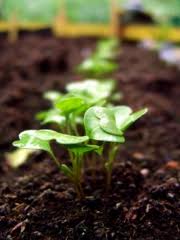
Our precious topsoil is being squandered around the world to grow livestock for us to eat.

Bite #1. In 1987, the U.S. Soil Conservation Service reported that over 4 million acres (an area about the size of Connecticut) of cropland were being lost to erosion in the USA each year, equating to an annual topsoil loss of 7 billion tons.

Of this staggering loss, 85 percent was associated with the raising of livestock. And, as you can see from the more recent data, many parts of the world are doing a lot worse then twe are in the United States when it comes to taking care of our land. We are rapidly squandering our precious topsoil around the globe and have no idea what kind of havoc we are wreaking for future generations of humans.

Bite #2. As a result of erosion (caused primarily by our farming practices) over the past 40 years, 30 percent of the world’s arable land has become unproductive. 

Dr. David Piementel of Cornell University reports: “The United States is losing soil 10 times faster—and China and India are losing soil 30 to 40 times faster—than the natural replenishment rate.”

Former Amazon forest; now being used to grow soybeans to feed to pigs in China

Bite #3. Seventy percent of previously forested land in the Amazon is occupied by pastures, and feed crops cover a large part of the remainder. 

In a recent post, we reported how they are now burning trees in the Amazon to provide land to grow feed for pigs in China. And the people in China and India are just now beginning to adopt our environmentally-destructive Western diet-style in a big way. At the current rate, the environment is going to get a whole lot worse before it gets better.

**************
By promoting your own health, you will also be doing your part to conserve our land, our topsoil and our trees.

All of the above is based on well-referenced information that appears in Chapter 4 of our book. While the U.N. Report was compelling in its findings, it offered precious little in terms of a recommended solution.

That’s because, it is very likely that a very large percentage, if not ALL, of the scientists working on the study still believe that we humans “need” to eat animal protein to be healthy. Until these great minds understand the complete truth about nutrition, they are not likely to recommend the obvious solution — a return to the natural diet for our species.

Sound bite series…

  1. Big Picture — First edition (7-21-11)
  2. Wasteful, Harmful and Cruel (7-26-11)
  3. Environment — Land & trees (7-27-11)
  4. Environment — Water (7-28-11)
  5. Environment — Climate change (7-29-11)
  6. Environment — Biodiversity (7-30-11)

If you like what you see here, you may wish to join our periodic mailing list. Also, for help in your own quest to take charge of your health, you might find some useful information at our 4-Leaf page. From the seaside village of Stonington, Connecticut – Be well and have a great day.

If you’d like to order our book on Amazon,  visit our BookStore now.

—J. Morris Hicks…blogging daily at HealthyEatingHealthyWorld.com

PS: Occasionally an unauthorized ad may appear beneath a blog post. It is controlled by WordPress (a totally free hosting service). I do not approve or personally benefit whatsoever from any ad that might ever appear on this site. I apologize and urge you to please disregard. 
Posted in Environment, Land, Trees & Forests, Sound Bites | 1 Comment

Wasteful, harmful and cruel — the Western diet. (Sound Bites)

Continuing with my “sound bite” series; this is the second in the series.

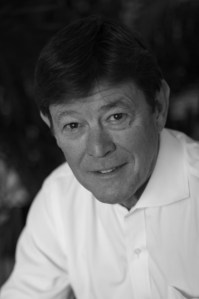
J. Morris Hicks, promoting health, hope and harmony on planet Earth

Bite #1 — Wasteful. On a per calorie basis, our typical Western diet requires twenty times more land, twenty times more energy and more than twenty times more water than does a whole foods, plant based diet.

As Mark Bittman has reported in the New York Times, it would be difficult to design a more wasteful, harmful and unsustainable diet than the one that we are consuming in the Western world. There is simply not nearly enough land, water or energy for this diet-style to continue for much longer. And the simple answer is right under our noses; it’s what we put in our mouths at every meal.

Bite #2 — Harmful to our health. Dr. Colin Campbell of Cornell estimates that up to 80% of our health care dollars are driven by our toxic Western diet. Want to save a quick $2 trillion?

There is now overwhelming scientific and clinical evidence that animal protein is associated with heart disease, cancer, diabetes, stroke and osteoporosis — just to name a few. We also know that heart disease and type 3 diabetes are easily reversible in 95% of the cases.  

Bite #3 — Harmful to our planet. The 2006 U.N. Report, Livestock’s Long Shadow, implicated the raising of livestock as one of the primary drivers of land degradation & deforestation, water shortage & pollution, global warming and the staggering loss of biodiversity. 

We are running roughshod over our precious planet in search of animal protein that we don’t “need” in the first place. Just in the USA, the solid waste from factory farms is 87,000 pounds per second (1.37 billion tons per year) and most of it eventually ends up in our water supply. As the world population grows and more people adopt this incredibly harmful diet-style, there is simply no sustainable model that can keep up with demand. 

Bite #4 — Cruel. Sixty billion farm animals are raised in horrid conditions for their entire lives so that less than one third of the world’s population can enjoy eating their flesh.

As Jonathan Foer reported in Eating Animals, if the whole world ate as much chicken per capita as does the United States, we would need to raise 165 billion chickens. The numbers are mind-boggling and completely unsustainable. Then, there are the sea creatures. He also reported that for every pound of shrimp that we eat, that there are twenty-six pounds of by-catch that die a miserable death in the process — creatures like dolphin, swordfish, and starfish.

*****************

It’s really mind-boggling to think about these numbers, especially when you realize that all of this madness is driven by our perceived “need” for animal protein in our diet. Not only do we not “need” that animal protein, it is literally killing us — driving our cost of health care to unprecedented levels — 17% of GDP in 2010 and projected to hit 31% by 2035. Harmful, wasteful, cruel and grossly unsustainable — what is the answer to this madness? When does it end?

It ends when this type of information is understood by enough caring and thinking people around the world. Up until now, all of these numbing statistics have been out of sight and out of mind for most. That will only change when we share this kind of information with another few hundred million people. Want more info?

NY Times Columnist Mark Bittman “gets it” about food

NY Times…getting it right when it comes to the cost of “disease care”

Unsustainable…by any measure…more from the NY TImes

Suffering of Animals — Remember Michael Vick?

It’s all about the WATER…huge problem – simple solution

Rethinking the Meat Guzzler by Mark Bittman, NY Times

Promoting vibrant health for ourselves while promoting vibrant health for the planet at the same time -- what could be better than that?

Sound bite series…

  1. Big Picture — First edition (7-21-11)
  2. Wasteful, Harmful and Cruel (7-26-11)
  3. Environment — Land & trees (7-27-11)
  4. Environment — Water (7-28-11)
  5. Environment — Climate change (7-29-11)
  6. Environment — Biodiversity (7-30-11)

If you like what you see here, you may wish to join our periodic mailing list. Also, for help in your own quest to take charge of your health, you might find some useful information at our 4-Leaf page. From the seaside village of Stonington, Connecticut – Be well and have a great day.

If you’d like to order our book on Amazon,  visit our BookStore now.

—J. Morris Hicks…blogging daily at HealthyEatingHealthyWorld.com

PS: Occasionally an unauthorized ad may appear beneath a blog post. It is controlled by WordPress (a totally free hosting service). I do not approve or personally benefit whatsoever from any ad that might ever appear on this site. I apologize and urge you to please disregard. 

Posted in Big Picture, Sound Bites | 2 Comments

“Common Ground” among medical experts…VegSource video

When I got to Starbucks at 0545 this morning, I watched today’s featured video at VegSource.com (where I am a regular blogger) and then went to Dr. McDougall’s discussion board and posted the following under the section controlled by Jeff Novick, a prominent nutrition expert.

J. Morris Hicks -- eating at the 4-Leaf level, deriving over 80% of my daily calories from whole plants -- still in nature's package.

Just watched today’s feature VegSource.com video where someone in the audience at Health Expo asks Jeff Novick “who is right” when our favorite veggie-doctors disagree on certain points.

Loved your answer Jeff, which was all about focusing on the “common ground” among those experts. That’s exactly what we did in our book — focused on maximizing the percent of our calories from whole plants – still in nature’s package.

In our book, we summarized that “common ground” with this simple statement by Dr. Campbell, “The closer we get to consuming a diet of whole, plant-based foods, the better off we will be.” And, like Jeff, I believe that I cheered when I saw that same Wolf Blitzer interview when Blitzer tried to get Dr. Esselstyn to argue with Dr. Dean Ornish about fish oil. As always, Ess took the high road.

You summed it up very well, Jeff. We, as vegans and vegetarians comprise less than 5% of the population in the USA and we should resist the temptation to argue and just focus on the 98% of the information on which we all agree. The natural diet for our species is whole plants and we should focus on deriving the vast majority of our calories from those most nutritious of all foods.

Leveraging the simple, yet powerful concept of maximizing the percent of your calories from whole plant foods -- still in nature's package

If you like what you see here, you may wish to join our periodic mailing list. Also, for help in your own quest to take charge of your health, you might find some useful information at our 4-Leaf page. From the seaside village of Stonington, Connecticut – Be well and have a great day.

If you’d like to order our book on Amazon,  visit our BookStore now.

—J. Morris Hicks…blogging daily at HealthyEatingHealthyWorld.com

PS: Occasionally an unauthorized ad may appear beneath a blog post. It is controlled by WordPress (a totally free hosting service). I do not approve or personally benefit whatsoever from any ad that might ever appear on this site. I apologize and urge you to please disregard. 

Posted in M.D.s---Health-Promoting, Medical Experts | Leave a comment