Biodiversity issues — driven by livestock (Sound Bites)

The sixth edition of our Sound Bite Series. Once again, livestock appears to be causing the most damage; from the U.N. Report:

The livestock sector may well be the leading player in the reduction of biodiversity.
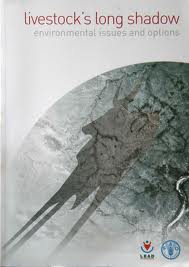
The 2006 U.N. Report

The UN report, Livestock’s Long Shadow, came out in late 2006 and reported how the livestock industry is seriously damaging our environment in four separate categories: Land and Trees, Water, Climate Change and Biodiversity. All four were covered in Chapter 4 of our book; for your convenience, a few sound bites are presented here for the last one.

But, first, a few words about what biodiversity is all about and why it is important. We are all familiar with land, trees, water and we’ve heard an awful lot about climate change, but not so much about biodiversity. In our book, we provided the following introduction:

Forests are crucial to the survival of a great many of the million plus species on planet Earth.

An environment’s biodiversity is determined by the number of different animal and plant species that live in it. Rich biodiversity is crucial to the structure of the ecosystems and habitats that support all living things—including wildlife, fish, and forests. The greater the number of different species of plants and animals, the healthier the ecosystem and the better able to withstand disaster it is. Biodiversity helps provide for our basic human needs such as food, shelter, and medicine, all of which are derived (directly or indirectly) from biological sources, and it fosters ecosystems that maintain oxygen in the air, enrich the soil, and purify the water. Strong ecosystems help to protect against flood and storm damage and reg- ulate climate. In a nutshell, biodiversity makes sustained living on planet Earth possible for all living creatures.

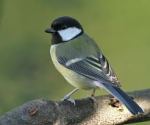
Two of every three bird species are in decline. After millions of species have existed on this planet for billions of years, the human race is the only one that has not lived in harmony with nature.

Bite #1. Human activities have raised the rate of extinction to 1,000 times its usual rate. If we continue on this path, Earth will experience the sixth great wave of extinctions in billions of years of history.

From our book, “According to the previously mentioned UN report, we are in an era of unprecedented threats to biodiversity. The rate at which we’re losing species is estimated to be fifty to five hundred times higher than historical rates found in the fossil record. Fifteen out of twenty-four important ecosystem services are assessed to be in decline.

The livestock sector may well be the leading player in the reduction of biodiversity, since it is a major driver of deforestation, land degradation, pollution, climate change, overfishing, sedimentation of coastal areas, and facilitation of invasions by alien species.”
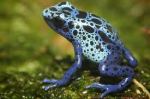
Many amphibians are in danger. After millions of species have existed on this planet for billions of years, the human race is the only one that has not lived in harmony with nature.

Bite #2. An estimated two of every three bird species in the world are in decline; one in every eight plant species is endangered or threatened; and one-quarter of mammals, one-quarter of amphibians, and one-fifth of reptiles are endangered or vulnerable.

Also in crisis are forests and fisheries, which are essential biological resources and integral parts of the Earth’s ecosystems. Forests are home to 50 to 90 percent of terres- trial species. They also provide services such as carbon storage and flood prevention, and they are critical resources for many culturally diverse societies and millions of indigenous people. The World Resources Institute estimates that only one-fifth of the Earth’s original forest cover has survived, and still deforestation continues, with 180 million acres in developing countries deforested between 1980 and 1995.
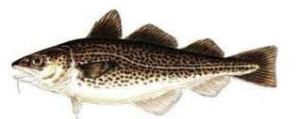
More than half of ocean fish stocks are exploited at or beyond capacity. After millions of species have existed on this planet for billions of years, the human race is the only one that has not lived in harmony with nature.

Bite #3. Overfishing, destructive fishing techniques, and other human activities have severely jeopardized the health of many of the world’s fish stocks along with associated marine species and eco-systems. 

The UN Food and Agriculture Organization estimates that more than half of ocean fish stocks are exploited at or beyond capacity. At the same time, our agricultural practices on land are beginning to foul the oceans as well.

************

All of the above was based on well-referenced information that appears in Chapter 4 of our book. While the U.N. Report was compelling in its findings, it offered precious little in terms of a recommended solution. That’s because, it is very likely that a very large percentage, if not ALL, of the scientists working on the study still believe that we humans “need” to eat animal protein to be healthy. Until these great minds become aware the complete truth about nutrition, they are not likely to recommend the obvious solution — a return to the natural diet for our species.

Click on the image to visit our 4-Leaf Page

Sound bite series…

  1. Big Picture — First edition (7-21-11)
  2. Wasteful, Harmful and Cruel (7-26-11)
  3. Environment — Land & trees (7-27-11)
  4. Environment — Water (7-28-11)
  5. Environment — Climate change (7-29-11)
  6. Environment — Biodiversity (7-30-11)

If you like what you see here, you may wish to join our periodic mailing list. Also, for help in your own quest to take charge of your health, you might find some useful information at our 4-Leaf page. From the seaside village of Stonington, Connecticut – Be well and have a great day.

If you’d like to order our book on Amazon,  visit our BookStore now.

—J. Morris Hicks…blogging daily at HealthyEatingHealthyWorld.com

PS: Occasionally an unauthorized ad may appear beneath a blog post. It is controlled by WordPress (a totally free hosting service). I do not approve or personally benefit whatsoever from any ad that might ever appear on this site. I apologize and urge you to please disregard. 
Posted in Biodiversity, Environment, Sound Bites | Leave a comment

Climate change – largely driven by livestock (Sound Bites)

The fifth edition of our Sound Bite Series…

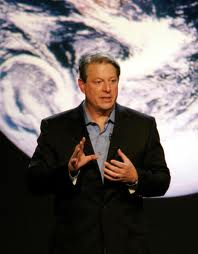
Al Gore, Nobel Prize Winner

Do you remember Al Gore’s movie for which he won the Nobel Prize? It was An Inconvenient Truth and it came out in 2006. The movie was all about global warming and how it is being driven by our harmful lifestyle. Yet, Mr. Gore failed to mention the #1 cause — the raising of livestock for our food. How does one win the Nobel Prize for a global problem and fail to mention the #1 cause of it?

My theory is that it’s because Al Gore, and probably the entire Nobel Prize Selection Committee, still believe that we humans truly “need” animal protein to be healthy. Why would they mention our livestock as a cause if they truly believe that we cannot live without that crucial source of protein?

The 2006 U.N. Report

Well, the UN report, Livestock’s Long Shadow, which also came out in 2006, did mention that livestock was a huge problem for four different categories of the environment — and Climate Change is one of them. The other three categories are   Land and Trees, Water, and Biodiversity. All four were covered in Chapter 4 of our book; for your convenience, a few sound bites relative to Climate Change:

Bite #1. According to the U.N. Report, the livestock sector is responsible for 33% more greenhouse gases than all transportation in the entire world — combined.

The report stated, “The livestock sector is responsible for 18 percent of all greenhouse gas emissions…compared to only 13.5% for ALL transportation.”

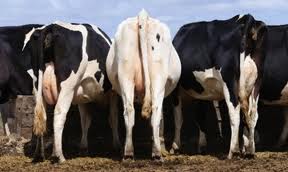
The source of a whole lot of methane in our air

Bite #2. The Report went on to say that, “Livestock create 9 percent of the CO2; 37 percent of all methane, a deadly gas with 23 times the global warming potential of CO2; and 65 percent of all nitrous oxide.

Nitrous oxide, by the way, has a global warming potential 296 times that of CO2 and also contributes to acid rain. Livestock are also responsible for almost two-thirds of anthropogenic (human-caused) methane emissions, mainly through belching and releases of intestinal gas, which contribute significantly to acid rain and acidification of ecosystems. According to Howard Lyman, every cow emits up to 400 quarts of methane gas per day.

************

All of the above is based on well-referenced information that appears in Chapter 4 of our book. While the U.N. Report was compelling in its findings, it offered precious little in terms of a recommended solution. That’s because, it is very likely that a very large percentage, if not ALL, of the scientists working on the study still believe that we humans “need” to eat animal protein to be healthy. Until these great minds understand the complete truth about nutrition, they are not likely to recommend the obvious solution — a return to the natural diet for our species.

Click on the image to visit our 4-Leaf Page

Sound bite series…

  1. Big Picture — First edition (7-21-11)
  2. Wasteful, Harmful and Cruel (7-26-11)
  3. Environment — Land & trees (7-27-11)
  4. Environment — Water (7-28-11)
  5. Environment — Climate change (7-29-11)
  6. Environment — Biodiversity (7-30-11)

If you like what you see here, you may wish to join our periodic mailing list. Also, for help in your own quest to take charge of your health, you might find some useful information at our 4-Leaf page. From the seaside village of Stonington, Connecticut – Be well and have a great day.

If you’d like to order our book on Amazon,  visit our BookStore now.

—J. Morris Hicks…blogging daily at HealthyEatingHealthyWorld.com

PS: Occasionally an unauthorized ad may appear beneath a blog post. It is controlled by WordPress (a totally free hosting service). I do not approve or personally benefit whatsoever from any ad that might ever appear on this site. I apologize and urge you to please disregard. 
Posted in Climate Change, Environment, Sound Bites | Leave a comment

Water shortage and pollution caused by livestock (Sound Bites)

The fourth edition of our Sound Bite Series…

For billions of years, the quantity of water on this planet has remained constant; but the human species has dramatically changed the way that this finite resource is being used.

The UN report, Livestock’s Long Shadow, came out in late 2006 and reported how the livestock industry is seriously damaging our environment in four separate categories: Land and Trees, Water, Climate Change and Biodiversity.

All four were covered in Chapter 4 of our book; for your convenience, a few sound bites are presented here for the second one: Water Shortage and Pollution.

Bite #1. The water required to produce just ten pounds of steak equals the water consumption of the average household for a full year.

The production of beef; one of the most wasteful uses of water in the history of the world.

As reported in the 2009 movie HOME, it takes 100 liters of water to produce one kilo of potatoes compared to 13,000 liters of water to produce one kilo of beef. On a per calorie basis, it takes over 20 times as much water to produce meat and dairy compared to whole, plant-based foods.

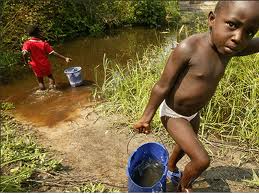
Bite #2. This incredible waste of our most precious natural resource is taking place while Water.org reports that nearly one billion people lack access to safe water.

More people in the world own cell phones than have access to a toilet. And as cities and slums grow at increasing rates, the situation worsens. Every day, lack of access to clean water and sanitation kills thousands and leaves others with a poor quality of life.

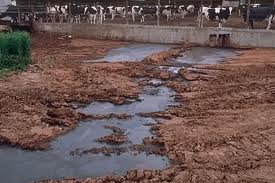
Animal waste polluting our water supply; a huge problem that gets worse every day

Bite #3. Agricultural runoff is the single largest source of water pollution in the nation’s rivers and streams according to the E.P.A. (reported in a September 2009 article in the New York Times)

The solid waste from factory farms in the USA alone is staggering — 87,000 pounds per second; equaling 1.37 billion tons per year. And what happens to all that waste? The short answer is that it ends up in our water supply.

************

As more people adopt the wasteful Western diet every day, the problems of water shortage and pollution continue to get worse.

All of the above is based on well-referenced information that appears in Chapter 4 of our book. While the U.N. Report was compelling in its findings, it offered precious little in terms of a recommended solution.

That’s because, it is very likely that a very large percentage, if not ALL, of the scientists working on the study still believe that we humans “need” to eat animal protein to be healthy. Until these great minds understand the complete truth about nutrition, they are not likely to recommend the obvious solution — a return to the natural diet for our species.

By promoting your own health, you will be doing your part to conserve our water.

Sound bite series…

  1. Big Picture — First edition (7-21-11)
  2. Wasteful, Harmful and Cruel (7-26-11)
  3. Environment — Land & trees (7-27-11)
  4. Environment — Water (7-28-11)
  5. Environment — Climate change (7-29-11)
  6. Environment — Biodiversity (7-30-11)

If you like what you see here, you may wish to join our periodic mailing list. Also, for help in your own quest to take charge of your health, you might find some useful information at our 4-Leaf page. From the seaside village of Stonington, Connecticut – Be well and have a great day.

If you’d like to order our book on Amazon,  visit our BookStore now.

—J. Morris Hicks…blogging daily at HealthyEatingHealthyWorld.com

PS: Occasionally an unauthorized ad may appear beneath a blog post. It is controlled by WordPress (a totally free hosting service). I do not approve or personally benefit whatsoever from any ad that might ever appear on this site. I apologize and urge you to please disregard. 

Posted in Environment, Sound Bites, Water Pollution & Usage | Leave a comment