Cornell decision to ax courses steps on academic freedom — Ithaca Journal
Since most of us grew up eating the typical Western, a.k.a. the Standard American, Diet we have all assumed that it was the healthiest possible way for humans to eat. We have trusted our “system” of government, medicine, academia, pharmaceuticals, food companies and media to deliver the most superior diet for humans on the planet. But, tragically, that “system” has failed us. In a single word, it all boils down to MONEY.
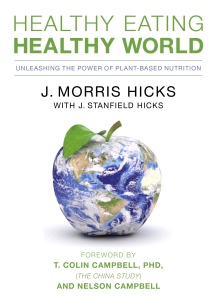
In a five-hour read, the average 8th grader can clearly understand “the big picture” about what we humans should be eating. Click image for a preview.
After covering a plethora of compelling reasons (beginning with our own health) for eating mostly whole plant-based foods in the first seven chapters of our book, we dedicated Chapter 8 to this provocative topic: Why Did No One Tell You This Before? In just seventeen pages with thirty-six footnotes, we present well-documented examples of how every piece of that highly complex, inter-connected system has failed us miserably — inflicting incalculable damage to our health and our planet in the process.
Beginning with a quote by Will Rogers, “Everyone is ignorant, only on different subjects.” Then, seventeen pages later, we ended that chapter with a quote by Saul Bellow, “A great deal of intelligence can be invested in ignorance.” Sadly that describes exactly what has happened with our “food system” in the USA — and there are 35 million jobs riding on keeping it that way. In The China Study, Dr. Campbell attributes this sad dilemma to a complex combination of money, ego, power and control.
In another blog, I have documented what happened at Cornell when Dr. Campbell’s course on Plant-Based Nutrition was suddenly canceled by the administration without even so much as a phone call to explain their decision. That blog is entitled: Cancer, cell phones, cow’s milk, and Cornell. Recently Dr. Campbell has gotten to know another Cornell professor who has had the same experience while he too was practicing academic freedom in search of the truth.

With industry now controlling our schools of nutrition, is academic freedom dead?
After much discussion, Dr. Campbell and Dr. Randy O. Wayne have co-authored an Op-Ed that appeared in the Ithaca Journal on August 4, 2011. Provided here in its entirety. In a phone conversation with Dr. Campbell yesterday, he told me that he had also sent a copy of this Op-Ed to Mark Bittman at the New York Times. Stay tuned.
Cornell decision to ax courses steps on academic freedom
by T. Colin Campbell, PhD and Randy O. Wayne, PhD
We are Cornell professors devoted to our university and to the pursuit of knowledge. Pushing the boundaries of knowledge, although often exhilarating, can be challenging.
We now find ourselves at odds between our scholarly responsibilities and our institution’s expectations. One of us has formulated a fascinating and intellectually elegant way of understanding nutrition. The other has become aware of an oversight in Albert Einstein’s special theory of relativity. Both of our interpretations profoundly challenge current paradigms, with far-reaching implications. Critique and challenge is something we welcome.
We recently met each other because both of our courses were removed from the Cornell course catalog without consulting us — effectively removing our perspectives from the curriculum and from further consideration by Cornell students. We now question the way that Cornell handles the teaching of scientific matters that do not conform to the status quo.
These assaults on academic freedom have not gone unnoticed outside of Cornell, and have been reported on in the June newsletter of the American Institute for Science and Technology Education and in the documentary film “Forks over Knives.”
Alarmingly, the elimination of our courses was performed without consulting us as instructors and with no explanation (except for one letter now being suppressed). We appealed the decisions only to find that the process was tightly controlled with no transparency. To this day, no reasons for the course cancelations have been given.
In one case, the decision to eliminate the course was crafted by an administrator having a personal association with an industry and companion government agency known to be unhappy with one of our professional views, as offered in the course.
In the second case, the possibility exists that the course was removed under the auspices of a dean who happens to be a geneticist because the students were taught to develop an active skepticism about the lucrative trends in genetics, such as modifying food crops using antibiotic-resistance genes and performing genetic tests for mental illness and athletic performance. Cornell University should be a “marketplace of ideas” as Justice William Brennan described the role of the American university, and not the ideas of the marketplace as it currently seems to be.
We wish to speak of the serious assault on academic freedom that these administrative actions represent. In both cases, single administrators acted in an arbitrary and capricious manner with no input from the instructor. Indeed, we question Cornell’s commitment to the concept of academic freedom, a serious matter that questions fundamental issues of university credibility and integrity.
We hold dear the concept of academic freedom and believe that challenging dogma is not only a right but a responsibility when we have observations and findings to support our views. Without intellectual freedom of inquiry and expression of opinion, the core mission of a university is eviscerated and the academy ceases to exist. Without having such academies, a society decays into autocracy. In such a scenario, we can no longer claim to have universities of, by and for free thinkers.
We are both sincere about our career findings. So are a growing community of people and institutions outside of Cornell. But our researches seem to be presenting serious challenge to Cornell. While we do not know the reasons why our courses were eliminated covertly, it has not escaped our notice that the administrators who made the decisions were, intentionally or not, serving the interests of their industry counterparts.
We both are proud to be Cornellian. One of us came to the Cornell faculty 23 years ago. The other did his graduate work at Cornell, returned to Cornell as a full professor 37 years ago and was then appointed to an endowed chair. He developed a highly productive research program that was generously funded by the U.S. taxpayer via the National Institutes of Health. It is our purpose to think, to explore new vistas and to share them with students and others in a manner that is consistent with human welfare and progress. We believe that most people support this view and we can only hope that Cornell will see the error of its ways.
The concept of academic freedom is essential to the mission of any university. Students and faculty must have the right to explore issues, including those that may be inconvenient to external political groups or to authorities, without being subjected to discriminatory practices and repercussions. We are a public institution and are obligated to share our views with students and with the public according to what our scholarship may reveal. It is not our purpose, as instructors and researchers, to speak for the academy as an institution. It is our purpose to share what we believe are ideas that can create a new public narrative benefiting Cornell, ourselves and our society.
Campbell is professor emeritus of nutritional biochemistry and Wayne is associate professor of plant biology. Both work at Cornell University.
********************
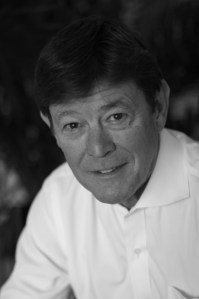
J. Morris Hicks, working daily to promote health, hope and harmony on planet Earth.
If you like what you see here, you may wish to join our periodic mailing list. Also, for help in your own quest to take charge of your health, you might find some useful information at our 4-Leaf page. From the seaside village of Stonington, Connecticut – Be well and have a great day.
If you’d like to order our book on Amazon, visit our BookStore now.
—J. Morris Hicks…blogging daily at HealthyEatingHealthyWorld.com
PS: Occasionally an unauthorized ad may appear beneath a blog post. It is controlled by WordPress (a totally free hosting service). I do not approve or personally benefit whatsoever from any ad that might ever appear on this site. I apologize and urge you to please disregard.


 J. Morris Hicks, engineer. writer. big picture guy.