Puberty Before Age 10 – A New ‘Normal’?

Not much help from this New York Times article

4 or my 5 grandchildren hiking in the White Mountains of New Hampshire. Nothing is more important than the children.

Over 5,000 words — not a single mention of diet as a possible cause. About all I could garner from this lengthy article was that “maybe early puberty is the new normal and we just need to learn to live with it.” Well, it is not the new normal, but it apparently is the natural or normal result of eating the wrong food for a few generations.

This article reinforces the central problem throughout  our entire “system” of medicine, academia, government, science, industry and media. The problem is a lack of knowledge, AND…

…When it comes to the children, I have no patience.

Want to learn the truth about nutrition? This is a good place to start.

Nor did Mrs. Colin Campbell when she insisted that her husband write his best-selling “China Studyfor the children of the world. But who knew that this book would end up changing the world? Certainly not the publisher back in 2004 just before the book was published in January of 2005.

With a first printing of only 3,000 copies, the publisher (BenBella Books) was hoping to make a meager profit on a risky piece of work that had been turned down by the more prominent publishing houses. It turns out those publishers were all looking for some catchy diet-type book whereby there would be a different recommended diet (and recipes) for all of the different diseases. What they didn’t recognize was that there is a huge market for integrity.

People everywhere crave integrity. And that’s exactly what the public has loved about The China Study. Fortunately, Glenn Yeffeth at BenBella was able to see the genius in Colin’s work and agreed to back the project. Now—over seven years after that first printing of only 3,000 copies—that great book is selling more than that every week and has been a consistent best-seller as it nears the one million mark.

So, what about early puberty in very young children?

Where is the integrity with regards to this problem? Why doesn’t our scientific and medical community tell us what is happening? I blogged on this topic over a year ago on 4-13-11. Extremely early puberty…Would you believe 6 years old? That particular blog was inspired by the following headline:

PUBERTY TOO SOON…Girls are maturing faster than ever, and doctors are not sure why. By Liz Szabo — USA Today

The headline includes this phrase: “doctors are not sure why.” That should be that “some doctors are not sure why.” My blog featured Dr. John McDougall who replied to my request for his input put it this way: “Interesting – I have been writing about this since the early 80s—and I know what the cause is.”

We’re eating the wrong food!

Another doctor friend of mine—Dr. Joel Fuhrman agrees, as you can see from this excerpt from his book, Disease Proof Your Child. 

Early puberty is obviously not due to any one factor, but rather to the combined effect of the modern diet of processed foods, cheese, daily animal products and the lack of fresh produce….Early puberty is strongly associated with breast cancer and the occurrence of breast cancer is three times higher in women who started puberty before age twelve.

As in my blog yesterday about cancer, many doctors do know why our kids are maturing much earlier than ever. But, just as with cancer, they didn’t learn that information in medical school. Now we have a HUGE article in the 3-30-12 Magazine section of the New York Times—about early puberty:

So why are so many girls with no medical disorder growing breasts early? Doctors don’t know exactly why, but they have identified several contributing factors.

Girls who are overweight are more likely to enter puberty early than thinner girls, and the ties between obesity and puberty start at a very young age….Researchers now believe that fat tissue, not poundage, sets off a feedback loop that can cause a body to mature. As Robert Lustig, a professor of clinical pediatrics at the University of California, San Francisco’s Benioff Children’s Hospital, explains, fatter girls have higher levels of the hormone leptin, which can lead to early puberty, which leads to higher estrogen levels, which leads to greater insulin resistance, causing girls to have yet more fat tissue, more leptin and more estrogen, the cycle feeding on itself, until their bodies physically mature.

Adding to the anxiety is the fact that we know so little about how early puberty works. A few researchers, including Robert Lustig, of Benioff Children’s Hospital, are beginning to wonder if many of those girls with early breast growth are in puberty at all.

So what are families of early bloomers to do? Doctors urge parents to focus on their daughters’ emotional and physical health rather than on stopping or slowing development. In this way, the concept of a new normal is not just a brushoff but an encouragement to support a girl who is vulnerable.
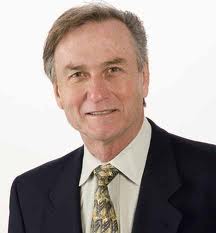
Dr. John McDougall does know the cause of early puberty.

No mention of diet in the HUGE article. To me, articles like these simply add to the confusion. So it appears from the article that obesity is a problem; so what is the cause of obesity? Incredibly, the entire article made no mention of the fact that our rich Western diet might be driving this problem of extremely early puberty. Here’s the article if you’d like to see for yourself.

Puberty Before Age 10 – A New ‘Normal’? – NYTimes.com

Want to prevent early puberty, cancer, heart disease, diabetes and stroke in the future generations of your family? Well the process begins with you. Take charge of your health and teach your children how to take charge of theirs. The solution can be summed up in two words: Whole Plants.

Want to find out how healthy your family is eating? Take our free 4Leaf Diagnostic Survey It takes less than five minutes and you can score it yourself. After taking the survey, please give me your feedback as it will be helpful in the development of our future 4Leaf app for smartphones. Send feedback to jmorrishicks@me.com

International. We’re now reaching people in over 100 countries. Follow us on Facebook and Twitter or get daily blog notices by “following” us in the top of the right-hand column. For occasional updates, join our periodic mailing list.

If you’d like to order our book on Amazon,  visit our BookStore now.

J. Morris Hicks, working daily to promote health, hope and harmony on planet Earth.

For help in your own quest to take charge of your health, you might find some useful information at our 4Leaf page or some great recipes at Lisa’s 4Leaf Kitchen.

Got a question? Let me hear from you at jmorrishicks@me.com. Or give me a call on my cell at 917-399-9700.

SHARE and rate this post below.

Blogging daily at hpjmh.com…from the seaside village of Stonington, Connecticut – Be well and have a great day.

—J. Morris Hicks, board member, T. Colin Campbell Foundation
Posted in Children | Tagged | 1 Comment

Ethical—what does it mean when it comes to our food?

And what can be done about it?

Mark Bittman of the New York Times recently did a piece featuring “the greatest living food writer,” Colin Spencer, a British citizen. And since the primary focus on the article challenged the ethics of our current factory farming industry—while reading the article (See link below), I looked up the word ethical:

Avoiding activities or organizations that do harm to people or the environment.

Colin Spencer — Renaissance Man

What about the critters? Given Mr. Spencer’s disdain for the harsh treatment of animals, I should think that we might want to add animals to the people and environment mentioned in the definition. So how is the human race doing when it comes to behaving in an ethical and humane manner? Before answering that question, let’s take a look at what a legendary historical figure had to say over 500 years ago:

“The time will come when men such as I will look on the murder of animals as they now look on the murder of men.”—Leonardo da Vinci

When Bittman asked Spencer how he became an ethical eater (he isn’t a strict vegetarian), he responded, “It was in the ‘70s, about 1975. It was the horror of factory farming. The other issue was the fact of the ecology.”

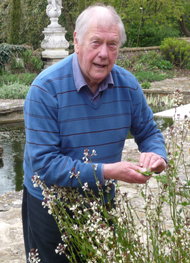
Mr. Spencer “gets it.” Mark went on to tell us more about this remarkable man. “Indeed, he’s as close to a Renaissance man as you can get, an accomplished artist, novelist, analyst, activist, playwright and journalist.” Spencer is the author of “From Microliths to Microwaves,” a history of food in Britain from pre-historic times to the present. Now for the part that convinced me that Mr. Colin Spencer does indeed see the big picture. Bittman continues:

But it is not just about ethics or animal rights, he reiterated, it’s also the cost to the environment and indeed humanity. There is the issue of sustainability, he reminded me — by some estimates it takes 30 times as much land to raise animals industrially as it does to raise vegetables — compounded by the fact that we’ll soon need to grow more food for ourselves rather than feeding it to animals.

And, he said, “The thought of the developing world and malnutrition and hunger — it’s a hard call that we use that food for animals. Certainly, by the end of this century, industrial livestock will be a thing of the past.”

Leonardo da Vinci

My Question is this. After over five hundred years of having our scholars like da Vinci, Spencer and Bittman talk about the ethical atrocities, when are they going to start SHOUTING about it and demanding change?

What would Leonardo da Vinci say now if he were alive today? What would he say after visiting one of our modern factory farms and then learning that we subject some sixty billion animals a year to this kind of torture so that the wealthiest 30% of the world’s seven billion people can eat their flesh?

How important is this topic? In our book, I summed up my feelings on that question in the last paragraph of the Introduction:

The primary objective of this book is to outline in simple, everyday terms the extent of the problems we face, how we got ourselves into trouble, and what each of us can do to make things better. Fortunately, despite the incredible complexity of our current dilemma, the solution is refreshingly simple. All we have to do is educate ourselves, start making better choices about what we eat, and then share all that we have learned with everyone we care about. I am convinced that there has never been anything more important in the history of the world.

Once again, I want to thank Mark Bittman for bringing these kinds of stories to the world. I just wish that he would become more of a consistent leader of change—consistently education the public about what must be done to fix the mess in which we find ourselves. Let’s face it, things have gotten exponentially worse since the days of Leonardo da Vinci, yet there are no prominent leaders out there who are consistently addressing this singular important topic.

**********************

Mark Bittman’s article: Talking to Colin Spencer – NYTimes.com

Want to find out how healthy your family is eating? Take our free 4Leaf Diagnostic Survey It takes less than five minutes and you can score it yourself. After taking the survey, please give me your feedback as it will be helpful in the development of our future 4Leaf app for smartphones. Send feedback to jmorrishicks@me.com

International. We’re now reaching people in over 100 countries. Follow us on Facebook and Twitter or get daily blog notices by “following” us in the top of the right-hand column. For occasional updates, join our periodic mailing list.

If you’d like to order our book on Amazon,  visit our BookStore now.

J. Morris Hicks, working daily to promote health, hope and harmony on planet Earth.

For help in your own quest to take charge of your health, you might find some useful information at our 4Leaf page or some great recipes at Lisa’s 4Leaf Kitchen.

Got a question? Let me hear from you at jmorrishicks@me.com. Or give me a call on my cell at 917-399-9700.

SHARE and rate this post below.

Blogging daily at hpjmh.com…from the seaside village of Stonington, Connecticut – Be well and have a great day.

—J. Morris Hicks, board member, T. Colin Campbell Foundation
Posted in Activism & Leadership, Suffering of Animals, Sustainability | 2 Comments

The “obvious” answer to health care is becoming more obvious.

As the mainstream media begins to ask more questions

Geoff Colvin, Fortune

One of the latest, and most prominent, to weigh in on this topic is Geoff Colvin, Senior Editor at Large of Fortune Magazine. In a recent article (See link below), he asks a simple question:

The central mystery in America’s health care crisis is a simple question: Why don’t people take better care of themselves? Like many simple questions, it leads into deep waters. It demands that we confront a profound new reality about health. Most important, it requires us to reframe the debate over paying for health care.

Later in the article, he acknowledges our “unsustainable health care cost trends” and suggests that “most of the debating will be over the wrong question.” Mr. Colvin is on the right track although he probably doesn’t fully comprehend the extent of our dilemma—particularly as it relates to the “Academic UnFreedom” at our premier schools of nutritional science like Cornell. But he does understand that most of our health care tab is spent on treating lifestyle diseases:

The great majority of America’s staggering $2.6 trillion health care tab (as of 2010) was spent treating lifestyle diseases. While we rightly worry about health care costs rising 8% or 9% a year, we spend well over 50% of our costs on diseases caused mostly by the way we choose to behave.

If we would smoke and drink a little less, walk a little more, eat a few more vegetables and fruits, and lose some weight, the effect would be far more dramatic than most people suspect.

“More than 90% of type 2 diabetes, 80% of coronary artery disease, 70% of stroke, and 70% of colon cancer are potentially preventable” by that combination of moderate behavior changes, reports Harvard epidemiologist Walter C. Willett. In other words, by making realistic changes that are entirely within our own control, we could end the crisis of unsustainably rising U.S. health care costs. Which brings us to that simple question: Why don’t we?

Good question. And I have written a 200-page book with 306 footnotes—and published 453 consecutive daily blogs trying to answer it. Yet the question remains why we don’t aggressively begin to “make realistic changes” within our own control. And my answer to that is the same as the one the late Dr. W. Edwards Deming often stated, the top three reasons nothing has happened is: Leadership, Leadership and Leadership.

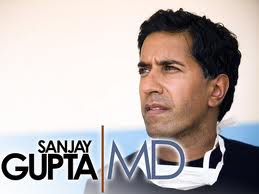
Dr. Sanjay Gupta, an emerging leader in the grassroots revolution to re-claim our health through plant-based nutrition. A part of the SOLUTION.

That’s right. What we need is committed, consistent leadership—not just an occasional article, news special or speech by prominent figures. Don’t get me wrong, I appreciate every single bit of support that we get—like these words from Mr. Colvin, but our dilemma demands so much more.

Like Mr. Colvin’s article, we occasionally hear from other prominent, mainstream individuals on this topic—but their message is soon forgotten due to the lack of continuity. The following come to mind:

  1. Dr. Sanjay Gupta and his “Last Heart Attack” CNN special last summer. This was about as good as it gets. Unfortunately, we’ve not heard much from CNN or any of the major networks since.
  2. Dr. Oz and his one show featuring Dr. Campbell, Dr. Esselstyn and Dr. Barnard. He also had one other show featuring the power of a plant-based diet to lower cholesterol in just 48 hours. But, over 90% of his airings feature some kind of fad diet or some other confusing message that contradicts his other good works.
  3. Mark Bittman and his occasional powerful piece on the harmful, wasteful, cruel and gross unsustainability of the typical Western diet. Then, he gets right back to featuring all forms of that same harmful and wasteful diet in most of his columns.

As for Mr. Colvin, he has the right idea and makes a good closing point. But when will we hear from him again on this all-important topic? What is he going to do next to help us “seize the enormous opportunity” to reduce our out-of-control cost of health care? His words below are brilliant; we just need so much more…

We need to reframe the debate: not how to share health care’s economic burden, but how to seize the enormous opportunity to reduce it.

In closing, a related 3-29-12 article reinforces the need for action. See links to both articles below:

NEW YORK (CNNMoney) — Three days of Supreme Court arguments have left the fate of the 2010 health care reform law uncertain. What is certain, however, is that health care costs are continuing to eat away at consumers’ budgets.

The cost to cover the typical family of four under an employer plan is expected to top $20,000 on health care this year, up more than 7% from last year, according to early projections by independent actuarial and health care consulting firm Milliman Inc. In 2002, the cost was just $9,235, the firm said.

The projected increase marks the fifth year in a row that health care costs will rise between 7% and 8% annually.

Question: When will a prominent & consistent leader emerge?

Colvin article in Fortune: We’re having the wrong debate about rising health care costs

CNN Money article regarding rising health care costs. 3-29-12

Want to find out how healthy your family is eating? Take our free 4Leaf Diagnostic Survey It takes less than five minutes and you can score it yourself. After taking the survey, please give me your feedback as it will be helpful in the development of our future 4Leaf app for smartphones. Send feedback to jmorrishicks@me.com

Follow us on Facebook and Twitter. Want to receive some occasional special news from us? You may wish to Join our periodic mailing listFor daily updates you can choose to “FOLLOW” at the top of the right column.

If you’d like to order our book on Amazon,  visit our BookStore now.

J. Morris Hicks, working daily to promote health, hope and harmony on planet Earth.

For help in your own quest to take charge of your health, you might find some useful information at our 4Leaf page or some great recipes at Lisa’s 4Leaf Kitchen.

Got a question? Let me hear from you at jmorrishicks@me.com. Or give me a call on my cell at 917-399-9700.

SHARE and rate this post below.

Blogging daily at hpjmh.com…from the seaside village of Stonington, Connecticut – Be well and have a great day.

—J. Morris Hicks, board member, T. Colin Campbell Foundation

Posted in Activism & Leadership, Celebrities, Cost of Health Care | Tagged , , | 4 Comments