Healthy Food Choices. Confusion still reigns over clarity.

Want more clarity? Think more whole plants—per Dr. T. Colin Campbell

The current Time Magazine (May 14 issue) contains an article by Alexandra Sifferlin that advises people to think twice about six foods that they’ve always thought were healthy. It reminded me of a group of six not-so-healthy foods that I covered in Chapter 10 of our book. The difference in our two lists of six boils down to a simple matter of confusion and clarity.

The Time article is entitled “Eat with Caution.” I say go the 4Leaf route and “Eat with Confidence.”

When it comes to learning about healthy eating, the mainstream media is probably the absolute worst place to look. That’s because there is apparently no one that you can consistently trust to tell you what you should be eating. And that includes the food writers and celebrity doctors—along with the plethora of dietitians and heart doctors that the food and drug companies hire to promote their products.

After seeing about a zillion labels and ads like this; it’s no wonder you may have concluded that yogurt was a pretty healthy food. Not.

As for Alexandra’s list of six foods, the confusion begins with her opening line, “Here are some ostensibly good-for-you foods that diet specialists look at with a skeptical eye.” Notice that there is not a single whole plant food on her list, although there are at least three items on her list that I would never deem “ostensibly healthy.” Those three, along with my comments, are highlighted in red

1. REDUCED-FAT PEANUT BUTTER — Taking out the fat sometimes means putting in artificial sweeteners. That can add up to a savings of just 0.5 g of fat and 10 calories per serving–along with a cloying flavor.

2. LOW-FAT YOGURT — It starts off fine, but as with its frozen cousin, high-fructose corn syrup and artificial flavorings and colorings add calories and yuckiness. Avoid the fruity kind and stick with plain. (dairy of all kinds is not fit for human consumption.)

3. FROZEN YOGURT — The probiotic bacteria that are part of fro yo’s appeal aren’t present in the same quantities in all brands. And in self-serve shops, it’s easy to overdo portions, pile on toppings and rack up calories. (dairy of all kinds is not fit for human consumption.)

4. GLUTEN-FREE FOODS — These are a must for people who are gluten-sensitive or who have celiac disease, an autoimmune condition. For everyone else, they’re just a food fad–one that often comes with extra sugar, saturated fats and preservatives.

5. HIGH-FIBER AND WHOLE-GRAIN CEREAL AND BREAD — A good idea–but be careful. Unless you’re buying these at a health-food store, you may be getting added sweeteners and caramel coloring. And not all the whole grains are actually whole.

6. PROCESSED SOY PRODUCTS — The problem is the processing part, which removes healthy carbs, fat and fiber and leaves only the protein isolate. Processed soy products are also linked to hormone imbalances in some people. (They are not whole plants, usually have excessive sodium—and they continually remind you of the foods you used to crave.)

Now for some clarity. The Hicks Six Not-So-Healthy Foods (from our book)

Perfect for baby cows—not for humans.

Although I had already covered these unhealthy foods in earlier parts of the book, I just wanted to highlight them one more time in the next to last chapter. That’s because most of us have been told our entire lives that these are all healthy foods—and we just felt like our readers needed one more reminder that they’re not.

  1. Cow’s Milk. Contains casein, which is associated with cancer, and it has no fiber. It’s also loaded with cholesterol and derives around 35 percent or more of its calories from fat.
  2. Yogurt of all kinds. Contains the same animal protein as milk and is associated with the same issues. It has no fiber and no phytonutrients that will help protect you against chronic disease.
  3. Granola. How could granola not be good for you? Two reasons: added sugar and too much fat.
  4. Cheese. Definitely not good for you. Too much fat, too much cholesterol, too much sodium and too much animal protein.
  5. Fish. While fish does contain the healthy omega-3 fatty acids that our bodies need, it also contains the fat, cholesterol, animal protein, and pollutants that our bodies don’t need. There are plenty of plant sources of omega-3s.
  6. Olive Oil. All oil derives 100 percent of its calories from fat (120 calories per tablespoon) and it has zero fiber. An optimal diet delivers less than 20 percent of its calories from fat, so choosing to use oil makes coming anywhere close to that number very difficult.

Olive Oil? Yes, any oil. And I saved it for last because of its ubiquitous reputation among medical and dietary professionals everywhere as a “heart healthy” food. Dr. Esselstyn vehemently disagrees and he is the only man on the planet with a near 100% record of reversing heart disease in his terminally ill patients. Bill Clinton listened to him; so should everyone else—in this four minute video…

As for my list of six foods in Chapter 10 of our book, I also published a group of six separate blogs on those foods. Here it is for your convenience:

Some “not-so-healthy” foods — a reminder (series of six posts)

Here is the article from Time. Eat with Caution – TIME.

Want to find out how healthy your family is eating? Take our free 4Leaf Diagnostic Survey It takes less than five minutes and you can score it yourself. After taking the survey, please give me your feedback as it will be helpful in the development of our future 4Leaf app for smartphones. Send feedback to jmorrishicks@me.com

International. We’re now reaching people in over 100 countries. Follow us on Facebook and Twitter or get daily blog notices by “following” us in the top of the right-hand column. For occasional updates, join our periodic mailing list.

If you’d like to order our book on Amazon,  visit our BookStore now.

J. Morris Hicks, working daily to promote health, hope and harmony on planet Earth.

For help in your own quest to take charge of your health, you might find some useful information at our 4Leaf page or some great recipes at Lisa’s 4Leaf Kitchen.

Got a question? Let me hear from you at jmorrishicks@me.com. Or give me a call on my cell at 917-399-9700.

SHARE and rate this post below.

Blogging daily at hpjmh.com…from the seaside village of Stonington, Connecticut – Be well and have a great day.

—J. Morris Hicks, board member, T. Colin Campbell Foundation
Posted in Dairy, cow's milk, Healthy Eating 101 | Tagged | 1 Comment

“The Weight of the Nation” HBO Special — A Preview

A grave situation for sure

Image from the HBO documentary

Last week, I blogged about a new HBO documentary that will begin airing on May 14. After mentioning in that blog that I didn’t have HBO, one of my readers (who chooses to remain anonymous) kindly sent me the DVD set complete with a discussion guide.

It arrived yesterday and I greatly appreciate it.  And last night, I watched Part I – Consequences and the beginning of Part II — Choices. The other two parts are Children in Crisis and Challenges.

This blog is my review before watching the entire documentary. Click here to see my final review.

First impression. They did a great job of describing the problem, but as for the solution…not so much. One particular phrase caught my attention as they described the

Waves of obesity leading to waves of diabetes leading to waves of medical problems—the likes of which we have never seen.

Here’s my take so far. While I didn’t expect much useful information in terms of what can be done to fight obesity, I will say that I was very impressed with the overall description of this unprecedented problem—not only in the United States but throughout the Western world. Lots of new information and statistics; one in particular caught my attention:

There was a list of seven factors that would predict ideal cardiovascular health; less than one percent of adult Americans meet all seven (less than 5% meet six of them):

  1. Optimal total cholesterol level
  2. Normal blood pressure
  3. Don’t have diabetes
  4. Lean BMI in the healthy range
  5. Does not smoke
  6. Exercises regularly
  7. Eats a healthy diet

As for the last one, I always have my doubts if the experts even have a clue what a healthy diet means. In the special, on the rare occasion when diet is mentioned, they always start talking about those lean cuts of meat, fish, turkey, etc. and that great health food known as low fat dairy.

Is this what we want for our children’s future?

Lots of pretty scary statistics:

  • One in three children born in the year 2000 in the USA will develop diabetes in his or her lifetime.
  • If that child is African-American or Latino, that number is one in two.
  • Of the ten states with the highest obesity rates, nine of them rank among the nation’s poorest.
  • Non-alcoholic fatty liver disease was largely undetected in society until recently. Now it’s estimated that as many as 25% of American adults have excess fat in their livers.
  • Autopsy studies reveal that 38% of obese children have excess fat in their livers.
  • 1 in 4 young Americans do not meet the weight requirement to join the armed forces.
  • Autopsy reports for children who died of other causes are showing that heart disease begins very early in childhood.
  • 94% of American schools served lunches that exceeded (not-so-healthy) federal guidelines for fat and saturated fat.

Calories and Exercise. So far in the special, I have not heard a single mention of the importance of eating the truly health-promoting foods. All of the emphasis seems to be on counting calories and exercising more. Yet they also point out that diets to lose weight (restricting calories) almost never work and note that the diet industry would be out of business if they did work. I also have not heard my favorite assessment of the primary driver of this grave situation:

We’re eating the wrong food!!!

Today’s “system” is all about money, power, ego and control—according to Dr. T. Colin Campbell.

Will this HBO special help? It certainly can’t hurt; the more we’re aware of this incredible problem, the better. And maybe that increased knowledge will lead to a gradual overhaul of our totally dysfunctional system of food-medicine-pharma-government-academia-media. Eventually, our system of the future must include:

  • Schools of nutrition that do not accept money from food suppliers.
  • Medical schools that are not controlled by the pharmaceutical industry.
  • A medical system that has a financial incentive for us to be healthy.
  • Dietary guidelines designed by an organization with an incentive to promote health vs. an incentive to maximize profits of food suppliers.
The Bottom Line. Until the above conditions are met, things are not likely got get much better anytime soon. Without meeting those conditions, our best chance to fix our toxic, wasteful, harmful, cruel and unsustainable Western diet is for the price of energy to go high enough that hardly anyone can afford it. Then, we’d return to the days of the yore when only the wealthy were stricken with those dreaded “diseases of affluence.”

90-second trailer of the HBO Special

Last week’s blog that mentioned the HBO special. Do you have a “family history” of heavy or obese people?

Want to find out how healthy your family is eating? Take our free 4Leaf Diagnostic Survey It takes less than five minutes and you can score it yourself. After taking the survey, please give me your feedback as it will be helpful in the development of our future 4Leaf app for smartphones. Send feedback to jmorrishicks@me.com

International. We’re now reaching people in over 100 countries. Follow us on Facebook and Twitter or get daily blog notices by “following” us in the top of the right-hand column. For occasional updates, join our periodic mailing list.

If you’d like to order our book on Amazon,  visit our BookStore now.

J. Morris Hicks, working daily to promote health, hope and harmony on planet Earth.

For help in your own quest to take charge of your health, you might find some useful information at our 4Leaf page or some great recipes at Lisa’s 4Leaf Kitchen.

Got a question? Let me hear from you at jmorrishicks@me.com. Or give me a call on my cell at 917-399-9700.

SHARE and rate this post below.

Blogging daily at hpjmh.com…from the seaside village of Stonington, Connecticut – Be well and have a great day.

—J. Morris Hicks, board member, T. Colin Campbell Foundation

Posted in Diabetes, Obesity | Tagged , | 2 Comments

Early Detection; then slash, burn and poison…

There has to be a better way—and there is!

President Richard Nixon signs the National Cancer Act on December 23, 1971.

Since Richard Nixon declared war on cancer back in 1971, a huge cancer business has gotten much bigger. In the past 41 years, the watchword of the day has become “early detection” followed by some combination of slash, burn and poison—more commonly known as surgery, radiation and chemotherapy.

Just this week, a friend of mine passed away after spending the last few years of his life suffering through the standard treatment paradigm for this horrible disease. I continue to ask myself, where would we be today if our leaders had focused on prevention instead of early detection and treatment of symptoms?

I recently blogged about a new book, How We Do Harm, highlighting many of the flaws within our current medical paradigm. While the author presented some very interesting information, he missed the main point in my opinion. In a book review of over 1,000 words, there was not a single mention of addressing our toxic diet as the primary driver of most of our diseases—including cancer. A direct quote from Dr. T. Colin Campbell (The China Study):

“The U.S. government should be discussing the idea that the toxicity of our diet is the single biggest cause of cancer.”

World’s 3rd Richest Man has prostate cancer at 81

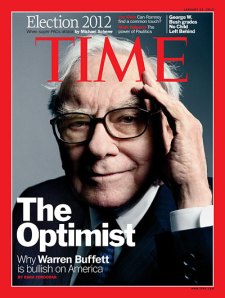
Almost every day, we hear news about our flawed medical system when it comes to cancer and other chronic disease. A few weeks ago, we heard about Warren Buffett’s decision to be treated for prostate cancer at the age of 81.

Then we heard a great debate in the media about whether or not that made any sense and was Mr. Buffett sending the wrong message to older men who had recently been advised against continuing to have the P.S.A. test. From a 4-24-12 article in USA Today (see link below):

The first question to ask: Should an 81-year-old even be screened for prostate cancer? The evidence says no. The U.S. Preventive Services Task Force, an independent panel of clinicians providing data-based practice guidelines, recommends against routine prostate cancer screening for healthy men of any age. Studies over the years, which have included participation of more than 300,000 men of various ages, have shown that harm from prostate cancer screening outweighs the benefits.

Dr. T. Colin Campbell, Professor Emeritus of Nutritional Biochemistry, Cornell University—says that our government should be discussing the idea that the toxicity of our diet is the single biggest cause of cancer.

An  earlier New York Times article (See link below) suggested the same thing. “A late outcry among many physicians and patients over a government panel’s recent announcement that healthy men should no longer receive P.S.A. blood testing to detect prostate cancer is rooted in a long and impassioned history among cancer screening advocates that early detection must always save lives. But as science has taught us, that’s not always the case.” The article continues:

As early as 1913, physicians and laypeople formed the American Society for the Control of Cancer, which later became the American Cancer Society, bearing this hopeful message: “With early recognition and prompt treatment, the patient’s life may often be saved.” The idea had some scientific basis.

Patients whose cancers appeared to be less extensive at diagnosis lived longer, on average, than those whose cancer was more widespread. The organization put this philosophy in action, publicizing a series of “danger signals” that suggested possible early warning signs of cancer, including breast lumps, irregular bleeding, sores that did not heal and persistent weight loss. “Delay kills!” posters bluntly warned.

Early detection continues to trump true prevention—the elimination of the cause. Maybe $10 billion a year would help get that word out there, with or without the support of the ACS.

Same Old, Same Old. In article after article, all of the emphasis continues to be on the management of the disease after it has been detected. That means learning more about how every single form of cancer in every part of the body grows, spreads and kills. Treatments are then designed to minimize the spread of each cancer and thereby lengthen the patient’s life. But questions remain:

  1. Do we ever know for sure if the treatment regimen actually extends the patient’s lifespan?
  2. Are there cases where the treatment regimen actually shortens the patient’s life?
  3. Is the pain, suffering, and mental anguish for all concerned worth a few more months of surviving—even if surviving in misery?

Are the results worth it?  What about the cost of early detection and subsequent treatment? In the USA Today article below we learn that the annual  cost of screening for just prostate cancer in just the United States is $3 billion. Are the results worth it? Even the inventor of the PSA test has his doubts:

The cost of PSA testing contributes $3 billion annually to health care spending, much of it paid for by Medicare and the Department of Veterans Affairs. In fact, Richard Ablin, the scientist who discovered PSA, calls the testing’s widespread use a “public health disaster.”

Then there’s screening for colon cancer which is a whopping $50 billion business in just the United States. If you include breast cancer, we’re probably talking about a total of over $100 billion that is spent for early detection on these three most common cancers.

My final question is this. What if we spent just ten percent of that number ($10 billion) on educating the public regarding the primary cause of cancer and how to prevent it in the first place. What if we used that money to let them hear the wisdom of Dr. T. Colin Campbell?

“The U.S. government should be discussing the idea that the toxicity of our diet is the single biggest cause of cancer.”

The bottom line. Address the cause and win the war on cancer. If we started spending $10 billion per year on educating the public about the cause—we’d win this war on cancer and it wouldn’t take another forty-one years. This message needs repetition, just like any other advertising message. People will have to hear it many times before they start believing it.

*****************

  1. The Shortfalls of Early Cancer Detection New York Times
  2. What’s right for Buffett may not be right for every man USA Today
  3.  Older Men Still Being Screened for Prostate Cancer New York Times
  4. An earlier blog on this topic: Early detection of prostate and breast cancer…

The first step in cancer prevention is addressing the toxicity of your diet. How do you do that? Take our free 4Leaf Diagnostic Survey. It takes less than five minutes and you can score it yourself. This survey will quickly tell you how far away your diet is from the optimal diet of whole, plant-based foods as advocated by Dr. Campbell.

After taking the survey, please give me your feedback as it will be helpful in the development of our future 4Leaf app for smartphones. Send feedback to jmorrishicks@me.com

International. We’re now reaching people in over 100 countries. Follow us on Facebook and Twitter or get daily blog notices by “following” us in the top of the right-hand column. For occasional updates, join our periodic mailing list.

If you’d like to order our book on Amazon,  visit our BookStore now.

J. Morris Hicks, working daily to promote health, hope and harmony on planet Earth.

For help in your own quest to take charge of your health, you might find some useful information at our 4Leaf page or some great recipes at Lisa’s 4Leaf Kitchen.

Got a question? Let me hear from you at jmorrishicks@me.com. Or give me a call on my cell at 917-399-9700.

SHARE and rate this post below.

Blogging daily at hpjmh.com…from the seaside village of Stonington, Connecticut – Be well and have a great day.

—J. Morris Hicks, board member, T. Colin Campbell Foundation
Posted in Cancer, Prevention | Tagged , | 4 Comments