Feeling good & being happy—not a bad combination

That’s what “vibrant health” is all about.
“The pursuit of vibrant health.” Click image to take a look at our brand new 4Leaf Program independent website. It’s still in the early stages but is looking good.

Let’s face it; most people change what they’re eating for one of two reasons: to lose weight or to help correct some medical condition. Also, many people choose to become vegan or vegetarian if they’re concerned about animal welfare.

But being vegan doesn’t necessarily mean that you’re eating healthy. There’s a lot of junk-food vegans out there that know what I’m talking about.

What about vibrant health? That’s the topic of the day. Why don’t more people choose a whole foods, plant-based 4Leaf kind of diet-style to promote vibrant health—and enjoy all of the many benefits of being as healthy as they can be?

I think it’s because “vibrant health” means different things to different people. It’s kind of like sex, it’s hard to describe it if you’ve never experienced it. A few days ago, I received a note from a reader who is fairly new to the wonderful world of whole foods, plant-based eating. Now scoring high in the 4Leaf range of our survey, she wrote to tell me about some new, unexpected benefits of eating this way. Karen wrote:

Karen racing in a 70-mile bike race in Mesa, Arizona

Dear Jim, You do a lot of research so I’m wondering if you’ve found anything on a question that I have. I’ve always enjoyed food as much as the next person but since I’ve been eating plant-based whole foods, I have such a good feeling when I’ve finished eating.  It’s like perhaps some endorphins have been released or something like that.

One of my daughters called me the other day after lunch.  She was so excited and wanted to tell me how good she felt after just finishing her simple lunch of sweet potatoes, a mango and a blueberry oat muffin (from The Happy Herbivore cookbook) and that her little 2 year old happily ate it all too.  She’s giving this way of eating a try for 6 weeks.  She mentioned that the good feeling is coming from inside.

I knew exactly what she was talking about because I experience that all the time too.  The way I used to eat, that good, or pleasurable feeling would be in my taste buds but it would stop at that point.  So I’m wondering, what is making us feel so good?  I realize it could be just a simple by-product of eating healthy, non-processed, whole plant foods but I just wondered if it could be something else too because I feel so happy when I finish eating!

Also, I took a look at your survey again.  I am trying to eat more salads and fruit for a snack and it seems like now I’m able to score a 44 on your survey on a consistent basis. Best regards, Karen Barnes

Bingo, Karen is talking about “vibrant health” and has shared a glimpse of what it means to her and her family. Click here for earlier blog about Karen. Perhaps some of you out there could help answer Karen’s question—from your point of view. If so, I would like to ask you to share some of your experiences by posting a comment…

telling us what vibrant health means to you!

I wrote Karen back and thanked her for the input and shared some similar vibrant health anecdotes from my family: Dear Karen, Thanks so much for your note; and thank you for sharing  what “vibrant health” means to you and your daughters.

Dr. Shawn Lankton, my nephew and fellow 4Leaf health enthusiast

As one moves toward an optimal diet, some pretty neat things start happening—and they may be a little bit different for everyone. I remember what my 27-year old nephew had to say and I put it in the book:

“Maybe the most interesting effect is that I feel ‘lighter’—sort of like having a clear sinus as opposed to being stuffed up, but for the whole body. It’s very refreshing.”

Karen, it’s great to hear that you’re doing so well on your new dietary regimen. If you’re scoring a 44 on our survey, you’ve obviously eliminated the vast majority of the processed foods from your diet—and are well on your way to optimal health. And, as a bonus, your daughter is following your lead. How cool is that? That’s how I felt when my son embraced my diet-style at the same high level of commitment that I did.

Another vibrant health anecdote from my family (in our book): Lisa, a thirty-six-year-old teacher and triathlete, reports faster healing, almost no need for deodorant, no cramping during her monthly period, and effortless weight loss (she went from size 8 to size 2 in the first six months).

Let us hear from you. Please post your own “vibrant health” anecdote below. And if you want to share your secret with others, you might recommend this handy package that will change their lives and show them how to find out exactly what vibrant health means to them.

Handy 5-piece take-charge-of-your-health kit—from Amazon.com

Want to find out how healthy your family is eating? Take our free 4Leaf Diagnostic Survey. It takes less than five minutes and you can score it yourself. After taking the survey, please give me your feedback as it will be helpful in the development of our future 4Leaf app for smartphones. Send feedback to jmorrishicks@me.com

International. We’re now reaching people in over 100 countries. Follow us on Facebook and Twitter or get daily blog notices by “following” us in the top of the right-hand column. For occasional updates, join our periodic mailing list.

To order more of my favorite books—visit our online BookStore now

J. Morris Hicks, working daily to promote health, hope and harmony on planet Earth.

For help in your own quest to take charge of your health, you might find some useful information at our 4Leaf page or some great recipes at Lisa’s 4Leaf Kitchen.

Got a question? Let me hear from you at jmorrishicks@me.com. Or give me a call on my cell at 917-399-9700.

SHARE and rate this post below.

Blogging daily at hpjmh.com…from the seaside village of Stonington, Connecticut – Be well and have a great day.

—J. Morris Hicks, board member, T. Colin Campbell Foundation
Posted in 4Leaf for Life, Happiness, Vibrant health | 5 Comments

Playing it “safe” with vitamin supplements? Think again!

Not only are those supplements not helping; they may be causing problems.

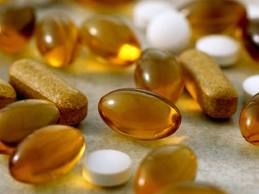
Americans take $27 billion worth of vitamin supplements every year, yet have by far the highest cost of health care (disease care) in the world.

Chances are the average American can name only four or five nutrients: protein, calcium, omega-3, vitamin C and Vitamin D. And, for the most part, they’re getting those five nutrients, and all the others, from the wrong sources.

According to Dr. T. Colin Campbell, Dr. Neal Barnard and other doctors featured in our book, we should be getting virtually all of our nutrients from whole plants. The only possible exceptions are Vitamin D (from the sun) and Vitamin B12.

Since beginning this blog in February of 2011, I have posted several times about the colossal waste of money ($27 Billion) known as the dietary supplementation business. In a country where some 90 percent of our calories are from meat, dairy, eggs or highly processed carbohydrates, most people turn to supplements to provide them with the nutrients that they are missing.

Sadly, vitamins delivered as supplements are just not getting the job done. While millions of Americans are taking daily multi-vitamins as well as concentrated vitamins; they’re thinking that they’re playing it safe by taking the supplements. That’s because, deep down inside, they know that they’re not eating a very healthy diet.

So what’s going on? We’re hearing more and more these days about the possible dangers of trying to get our vitamins from supplements. In this recent one-minute video from Dr. Michael Greger, he covers three of those dangers:

  • Elevated risk of esophageal cancer from taking folate supplements (but just the opposite when that folate came directly from plants)
  • Elevated risk of urinary tract infraction from taking Vitamin C pills (just the opposite when getting it from whole plants)
  • Greater risk of liver disease when consuming green tea extracts (just the opposite when consuming the tea itself)

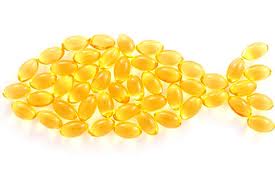
What about omega-3 from fish oil supplements? As Dr. Campbell says, it’s mainly about the ratio of omega-6 to omega-3 in our diet. And most Americans get too much of the omega-6 from their meat and dairy diet—making the ratio of omega-6 to omega-3 too high. When they replace all that meat and dairy with whole plants (including things like flaxseeds, walnuts and chia), that ratio gets quickly into balance—without the fish or fish oils. There is also a danger from taking those omega-3 fish-oil supplements. From our book:

Dr. Campbell also brings up a possible concern about consuming fish to get omega-3s. “If you’ve heard anything about omega-3 fatty acids, it’s that you need more of them to be healthy,” he says. Noting that you can’t always believe what you hear on the evening news, he offers the following from a 1999 Harvard study: “[C]ontrary to the predominant hypothesis, we found an increased risk of breast cancer associated with omega-3 fats from fish.”

The Bottom Line. The time has come to just say NO to vitamin supplements—with the possible exception of Vitamin B12 and Vitamin D. The sooner we all learn how to consume mostly whole plants, the better off we’ll all be. And our American consumers will save a cool twenty-seven billion dollars.

Want more information? Here’s a sampling of the previous nine blogs that I have posted on this topic.

In Closing. Saying good-bye to costly and dangerous vitamins is just one reason for you to switch to a whole foods, plant-based diet. There are many more compelling reasons and it’s not that hard to make the switch. Just learn all you can, give it 100% of your effort for 8 to 12 weeks and you’ll find that the positives in your health (and your weight-loss) will have you hooked for life. This will help you get the job done.

Handy 4-piece take-charge-of-your-health kit—from Amazon.com

Want to find out how healthy your family is eating? Take our free 4Leaf Diagnostic Survey. It takes less than five minutes and you can score it yourself. After taking the survey, please give me your feedback as it will be helpful in the development of our future 4Leaf app for smartphones. Send feedback to jmorrishicks@me.com

International. We’re now reaching people in over 100 countries. Follow us on Facebook and Twitter or get daily blog notices by “following” us in the top of the right-hand column. For occasional updates, join our periodic mailing list.

To order more of my favorite books—visit our online BookStore now

J. Morris Hicks, working daily to promote health, hope and harmony on planet Earth.

For help in your own quest to take charge of your health, you might find some useful information at our 4Leaf page or some great recipes at Lisa’s 4Leaf Kitchen. Got a question? Let me hear from you at jmorrishicks@me.com. Or give me a call on my cell at 917-399-9700.

SHARE and rate this post below.

Blogging daily at hpjmh.com…from the seaside village of Stonington, Connecticut – Be well and have a great day.

—J. Morris Hicks, board member, T. Colin Campbell Foundation
Posted in Video Included, Vitamins & Supplements | 4 Comments

The Terrific Tomato – A fruit or a vegetable?

The botanists call it a fruit—the U.S. Supreme Court calls it a vegetable.

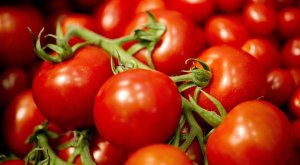
Whether fruit or vegetable, you can always find some of these dynamos in my refrigerator.

No matter what you call it, this product of nature packs a powerful punch when it comes to nutrition. Loaded with antioxidants, phytonutrients, and a host of other vitamins and minerals. With less than ten percent of its calories from fat, it also contains a little protein along with a healthy dose of the health-promoting carbohydrates.

And along with thousands of other whole plants, the terrific tomato is being used to reverse heart disease, diabetes and some cancers. So why are they trying to change it? Because there’s a consortium of scientists from 14 countries that think they can make it better. The New York Times reported earlier this week (See link below) that those scientists had decoded the full genome of the tomato—finding that it possesses almost 32,000 genes—far more than humans. From the article:

A consortium of plant geneticists from 14 countries has spent nine years decoding the tomato genome in the hope of breeding better ones. The scientists sequenced the genomes of both Heinz 1706, a variety used to make ketchup, and the tomato’s closest wild relative, Solanum pimpinellifolium, which lives in the highlands of Peru, where the tomato’s ancestors originated. Their results were published online Wednesday in the journal Nature.

My question is this? Why are so many people spending so much money to try to improve on a product that is working so well already? And why are so few scientists producing studies aimed at better understanding how whole plants protect us against cancer, heart disease and a host of other chronic diseases?

MONEY. The answer all boils down to money, which is why our schools of nutrition are controlled by the food industry and our schools of medicine by the pharmaceutical industry. Then, there’s the head of the National Institutes of Health (NIH), Francis Collins, who sees the future of health care in the realm of the complex human genome—rather than the simple world of leveraging current nutritional knowledge to lower our cost of health care by some $2 trillion.

Looking for clarity over confusion, read the works of Dr. T. Colin Campbell and Dr. Caldwell Esselstyn, Jr. — Bill Clinton did and it probably saved his life.

Why are more of our scientists and medical doctors not talking about the miracle of reversing heart disease with current information? Dr. Caldwell Esselstyn of the Cleveland Clinic has a near 100% success rate in reversing our nation’s number one killer and he’s simply using whole plants that are available today—including the terrific tomato.

Amazing stuff to be sure—but not deemed worthy of much ink in the New York Times or the evening news of any of the major networks. Meanwhile, we’re spending our time and money and featuring news stories about an obscure project involving tomato genetics. Maybe improving that tomato could be a good thing—-but is it more important than sharing life-saving information with billions of people every day? That is the question. Back to the article; the beat goes on…

Plant breeders have had more success breeding tomatoes with features of interest to producers, like long shelf life, than with the traits that matter to consumers, like taste and quality, Dr. Giovannoni said. The tomato genome sequence may help redress the balance, since plant breeders can now rely on DNA as well as physical traits to govern their breeding programs, he said.

For your convenience, I have provided a link to the full NY Times article along with a link to several of my disease-reversing blogs promoting current knowledge:

The bottom line. While our scientists are studying 32,000 genes in the tomato looking for answers, the good news is that you can take charge of your health today. I wonder how many of those scientists are eating anywhere near the 4Leaf level. My guess is that most of them are eating the toxic western diet—three meals a day.

Handy 3-piece take-charge-of-your-health kit—from Amazon.com

Want to find out how healthy your family is eating? Take our free 4Leaf Diagnostic Survey. It takes less than five minutes and you can score it yourself. After taking the survey, please give me your feedback as it will be helpful in the development of our future 4Leaf app for smartphones. Send feedback to jmorrishicks@me.com

International. We’re now reaching people in over 100 countries. Follow us on Facebook and Twitter or get daily blog notices by “following” us in the top of the right-hand column. For occasional updates, join our periodic mailing list.

To order more of my favorite books—visit our online BookStore now

J. Morris Hicks, working daily to promote health, hope and harmony on planet Earth.

For help in your own quest to take charge of your health, you might find some useful information at our 4Leaf page or some great recipes at Lisa’s 4Leaf Kitchen.

Got a question? Let me hear from you at jmorrishicks@me.com. Or give me a call on my cell at 917-399-9700.

SHARE and rate this post below.

Blogging daily at hpjmh.com…from the seaside village of Stonington, Connecticut – Be well and have a great day.

—J. Morris Hicks, board member, T. Colin Campbell Foundation

Posted in Scientific Integrity, Uncategorized | 3 Comments