“Rationing” the treatment of cancer has already begun.

From a 7-29-12 editorial in the Los Angeles Times, near the end of a piece about cancer, they mention the dreaded “rationing” word.

Access to healthcare already is being rationed to some extent by insurance companies, and not always in ways that make medical sense.

The editorial (See link below) provided an excellent review of what is wrong in the world of cancer treatment, but didn’t offer much of a recommended solution. While the medical system is ordering tests and conducting procedures at all-time record levels, the public remains skeptical when they hear the  calling for less screenings and less treatment. The public worries about the “rationing” of health care services.

They should also be worried about “secondary cancers,” the ones that are caused by the treatment of primary cancers. The recent news about these cancers was not mentioned in the L.A. Times piece, but I have provided a link below for your convenience.
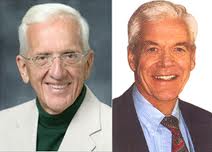
Looking for clarity over confusion, read the works of Dr. T. Colin Campbell and Dr. Caldwell Esselstyn, Jr. — Bill Clinton did and it probably saved his life.

The public should be worried about learning how to avoid all “disease care” services. They should be demanding to learn exactly how to prevent cancers in the first place. Dr. T. Colin Campbell and scores of enlightened medical doctors now know that, by far, the leading cause of cancer is our toxic Western diet—yet we hear almost nothing about that from our medical system or from the media.

This fact was not mentioned in the L.A. Times piece, but they did a pretty good job of describing an unsustainable mess with regards to the conventional method of detecting and treating cancer in a high-tech world. Describing part of the dilemma:

The public, though, seems a little doubtful about pronouncements that Americans are over-tested and over-treated, and it’s easy to see why. Our very nature tells us that if there’s a bad thing in us like cancer, we want it out.

Also, insurance companies and the government have been warning that runaway increases in medical costs are unsustainable. This makes patients worry that important medical tests and treatments will be withheld for financial rather than health considerations.

What many people fail to realize is that some unnecessary tests and treatments are currently being ordered for a different financial reason: in order to earn doctors money. Many procedures are profit centers for medical providers; in other cases, they are ordered to shield practitioners against possible malpractice suits, rather than because they are medically necessary and appropriate.
You will find zero clarity here. They don’t even mention that our toxic diet is even among the causes of cancer—not to mention the leading cause.

As for controlling further increases in the cost of health care, the article once again focused on treatment rather than prevention. Sorry, fellas, that’s just never going to work. Eventually, we must address the causes of these chronic diseases—and we must do it with clarity, instead of the confusion that reigns supreme today. The L.A. Times piece, which ended thusly, failed to do that:

And yes, healthcare expenses must be curbed as well. Along with studies on what works best medically, there will have to be research-based determinations of which medical treatments offer too little benefit for the cost.

Restrictions on such treatments will be hard for people to accept, but access to healthcare already is being rationed to some extent by insurance companies, and not always in ways that make medical sense. It will be easier for the public to trust tradition-defying findings if there is no hidden agenda, and it is made clear which recommendations are based on cost-benefit analysis and which are based on research that is concerned only with what ails us and what’s medically good for us.

The Bottom Line. Our current cost of health care is $2.7 trillion and accounts for almost 1/5th of our gross domestic product (GDP). That’s up from 1/20th in 1960. If our entire “system” got real clear about EXACTLY what we must do to take charge of our health, I truly believe that we’d see that number begin to drop dramatically in less than five years.

Comparing U.S. cost of health care as percentage of GDP with other developed countries.

Within fifteen years, I believe that we could cut our health care costs in half, and that those costs would be under one trillion dollars by 2032. A 70% reduction in twenty years. By comparison, since Nixon declared war on cancer 37 years ago, our cost of health care has tripled—and as you can see in the above graph, we’re spending about twice as much as the country that ranks second in health care spending.

Handy 4-piece take-charge-of-your-health kit—from Amazon.com

Want to find out how healthy your family is eating? Take our free 4Leaf Diagnostic Survey. It takes less than five minutes and you can score it yourself. After taking the survey, please give me your feedback as it will be helpful in the development of our future 4Leaf app for smartphones. Send feedback to jmorrishicks@me.com

International. We’re now reaching people in over 100 countries. Follow us on Facebook and Twitter or get daily blog notices by “following” us in the top of the right-hand column. For occasional updates, join our periodic mailing list.

To order more of my favorite books—visit our online BookStore now

J. Morris Hicks, working daily to promote health, hope and harmony on planet Earth.

For help in your own quest to take charge of your health, you might find some useful information at our 4Leaf page or some great recipes at Lisa’s 4Leaf Kitchen.

Got a question? Let me hear from you at jmorrishicks@me.com. Or give me a call on my cell at 917-399-9700.

SHARE and rate this post below.

Blogging daily at hpjmh.com…from the seaside village of Stonington, Connecticut – Be well and have a great day.

—J. Morris Hicks, board member, T. Colin Campbell Foundation
Posted in Cancer, Cost of Health Care, Sustainability | Tagged , | 2 Comments

More “confusion over clarity” from the mainstream media…

In an article featuring the surging popularity of vegan diets

As I began reading a 7-24-12 article by Angela Haupt in U.S. News & World Report, I found myself thinking that it might be the first “mainstream” article that I had ever seen that provided total clarity about what we should be eating for optimal health. Sadly, I was wrong. (See link below for full article.)

Just like every other mainstream publication or website, they end up favoring “confusion over clarity” every single time. Angela’s article about the surging popularity of vegan diets was no exception—even though she led off with my favorite vegan, Bill Clinton, and featured the likes of plant-promoting MDs Esselstyn, Ornish and Barnard.

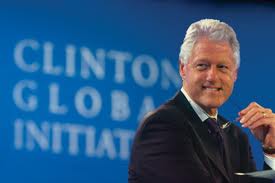
Bill Clinton went vegan in 2010 and it probably saved his life. He remains our most prominent spokesman for eating plant-based.

When you start off by telling someone how to reverse heart disease or diabetes and then end up by telling them that the superior diet required for making that happen is “nutritionally incomplete,” what have you done besides confusing the reader? Her article began with this accounting of President Clinton’s adoption of a vegan diet:

Former President Bill Clinton had a legendary appetite: Hamburgers and steaks. Barbeque. Chicken enchiladas. But after having two stents inserted in 2010—on top of quadruple bypass surgery six years earlier—he radically changed his diet in the name of saving his health. Now a vegan, the strictest type of vegetarian, he has cut out meat, dairy, eggs, and most oils in favor of a super-low-fat diet that revolves around whole grains, fruits, vegetables, beans, and nuts.

It appears to be working: He has said he’s dropped more than 20 pounds and has never been healthier. In a televised interview with film producer Harvey Weinstein in June, Clinton explained that he’d decided he wanted to live to be a grandfather. “So I just went all the way. Getting rid of the dairy was great, getting rid of the meat was—I just don’t miss it.”

After devoting several paragraphs to similar success stories involving Dr. Dean Ornish and Neal Barnard. She clearly pointed out, “Today, patients at hospitals and clinics nationwide can follow Ornish’s Program for Reversing Heart Disease, which is covered by Medicare and private insurance companies.” She also quoted Dr. Neal Barnard with the kinds of results he typically sees in his patients, “We’ve seen people whose chest pain has gone away within weeks, while their weight melts off, blood pressure goes down, and cholesterol plummets.”

Then the confusion begins. She rounds out the article by presenting quotes from the opposing experts with big titles and impressive resumes.

First Marion Nestle of NYU. Despite all the advantages, vegan diets aren’t a no-brainer move. There are downsides, from potential health risks to the challenge of sticking to such a restrictive eating plan. “Vegan diets are difficult to manage, and they’re nutritionally incomplete,” says Marion Nestle, a professor of nutrition at New York University and coauthor of Why Calories Count. “So you have to compensate for that in some way.”

Then David Katz of Yale. Diehard meat- and fish-lovers who aren’t trying to clean out their arteries can aim instead for what David Katz, a clinical instructor of medicine at Yale University and founding director of the Yale-Griffin Prevention Research Center, calls “an optimal omnivorous diet.” An eating plan on the Ornish spectrum is one good option. Another is the Mediterranean diet.

Looking for clarity over confusion, read the works of Dr. T. Colin Campbell and Dr. Caldwell Esselstyn, Jr. — Bill Clinton did and it probably saved his life.

The Bottom Line. As we were reminded from the recent Meatless Monday episode with the USDA (See link below), we’re many years away from having our vast “system” tell us what we should be eating—with clarity and simplicity. I explained all of this in Chapter 8 of our book, the chapter entitled “Why did no one tell you this before.” In The China Study, Dr. Campbell devoted over 100 pages to answering a similar question.

When I first started studying this topic in 2002, I was drawn to people with legitimacy, authenticity, credibility and integrity. I found it with Dr. Campbell, Dr. Esselstyn, Dr. Ornish and the other medical doctors featured in our book. Bill Clinton did the same thing and we know how that worked out. I recommend that you do the same. For your convenience, provided here are links to the source article along with a few of my recent blogs on this subject.

Handy 4-piece take-charge-of-your-health kit—from Amazon.com

Want to find out how healthy your family is eating? Take our free 4Leaf Diagnostic Survey. It takes less than five minutes and you can score it yourself. After taking the survey, please give me your feedback as it will be helpful in the development of our future 4Leaf app for smartphones. Send feedback to jmorrishicks@me.com

International. We’re now reaching people in over 100 countries. Follow us on Facebook and Twitter or get daily blog notices by “following” us in the top of the right-hand column. For occasional updates, join our periodic mailing list.

To order more of my favorite books—visit our online BookStore now

J. Morris Hicks, working daily to promote health, hope and harmony on planet Earth.

For help in your own quest to take charge of your health, you might find some useful information at our 4Leaf page or some great recipes at Lisa’s 4Leaf Kitchen.

Got a question? Let me hear from you at jmorrishicks@me.com. Or give me a call on my cell at 917-399-9700.

SHARE and rate this post below.

Blogging daily at hpjmh.com…from the seaside village of Stonington, Connecticut – Be well and have a great day.

—J. Morris Hicks, board member, T. Colin Campbell Foundation

Posted in Bill Clinton, M.D.s---Health-Promoting | Tagged , , | 4 Comments

Who is the most famous doctor in America?

Well, that depends on who you ask. If you ask me…

Without a doubt, Dr. Mehmet Oz is the most famous doctor in the country—but we all know that he is now in the entertainment business. Therefore, he is no longer working as a real doctor. As for the most famous real doctor in America, up until now, I have been referring to Dr. Dean Ornish—for lots of well-earned reasons.

But now I have decided to award that moniker to Dr. Sanjay Gupta, the associate chief of neurosurgery at Grady Memorial Hospital and the chief medical correspondent for CNN. As if he is not busy enough already, he has also authored three books in the past four years, a novel, Monday Mornings in 2012, Cheating Death in 2010 and Chasing Lives in 2008.

I’m not sure how much time he spends as the “associate chief of neurosurgery,” but it is his through his work as a journalist that he has earned my sincere respect. While I have been reading and watching Sanjay for years, it was his CNN Special, The Last Heart Attack (August 2011), where I really think he hit the ball out of the park. (See link below) And I could tell by the way he answered questions from other reporters, that he really “gets it” when it comes to knowing how to reverse heart disease.

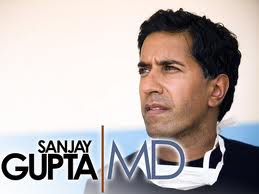
Dr. Sanjay Gupta, an emerging leader in the grassroots revolution to re-claim our health through plant-based nutrition. A part of the SOLUTION.

Earlier this year, (April 2012) Sanjay did a piece called “Sugar Kills” on 60-Minutes and further secured his place as the “most famous real doctor in the America.” Now, just this past week (7-31-12), he published an Op-Ed piece in the New York Times entitled More Treatment, More Mistakes. It was that article that inspired me to write this one. He led off thusly: (See link below for full article)

DOCTORS make mistakes. They may be mistakes of technique, judgment, ignorance or even, sometimes, recklessness. Regardless of the cause, each time a mistake happens, a patient may suffer. We fail to uphold our profession’s basic oath: “First, do no harm.”

A reasonable estimate is that medical mistakes now kill around 200,000 Americans every year. That would make them one of the leading causes of death in the United States. Why have these mistakes been so hard to prevent?

He went on to talk about the status of American medicine which features a staggering number of tests and procedures. He quotes a statistic, “Since 1996, the percentage of doctor visits leading to at least five drugs’ being prescribed has nearly tripled, and the number of M.R.I. scans quadrupled.” He went on to say that:
Many procedures, tests and prescriptions are based on legitimate need. But many are not. In a recent anonymous survey, orthopedic surgeons said 24 percent of the tests they ordered were medically unnecessary. This kind of treatment is a form of defensive medicine, meant less to protect the patient than to protect the doctor or hospital against potential lawsuits.

Herein lies a stunning irony. Defensive medicine is rooted in the goal of avoiding mistakes. But each additional procedure or test, no matter how cautiously performed, injects a fresh possibility of error. CT and M.R.I. scans can lead to false positives and unnecessary operations, which carry the risk of complications like infections and bleeding. The more medications patients are prescribed, the more likely they are to accidentally overdose or suffer an allergic reaction. Even routine operations like gallbladder removals requireanesthesia, which can increase the risk of heart attack and stroke.

Finally, Sanjay poses the question, “So what do we do to be safer? ” In my opinion, we must begin a new era of health-promotion. The more we promote health, the less disease we will have. And the less disease we have, the fewer tests, the fewer procedures and the fewer chances for mistakes. But, since the bulk of  the revenue of our current health care system is derived from disease management, our doctors have no financial incentives for us to be healthy.

It has been said that if we were starting a new health care system from scratch, that it would be easy to devise one that rewarded doctors for making their patients healthy. Unfortunately, changing what we have today from the inside is probably impossible. But changing it with a grassroots revolution of people taking charge of their own health is possible. Difficult, but possible.

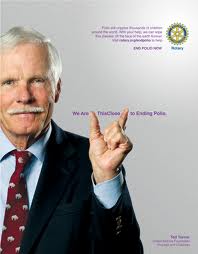
Ted Turner, founder of CNN. He and Sanjay both live in Atlanta; maybe they should get together and talk about kicking our grassroots revolution up a few notches.

And I happen to think that Dr. Sanjay Gupta would be the ideal person to lead that revolution. All he needs to change the world is a super-wealthy sponsor who would pony up a few billion dollars to get the program off the ground—and convince everyone in the world that we really don’t “need” to eat ANY animal protein to be healthy. How about the guy that created his current employer, CNN? We all know that Ted loves a cause.

Here is one final quote from Sanjay’s article that caught my eye:

Hospitals are supposed to take care of the sickest members of our society and uphold the highest standards of patient care. But hospitals are also charged with teaching doctors, and every doctor has a first mistake.

So why not take charge of your health today and lower your risk of being the innocent victim of one of those inevitable mistakes that humans make while doing their work? For your convenience, I have provided the source article here along with a few of my earlier blogs on this topic.

Handy 4-piece take-charge-of-your-health kit—from Amazon.com

Want to find out how healthy your family is eating? Take our free 4Leaf Diagnostic Survey. It takes less than five minutes and you can score it yourself. After taking the survey, please give me your feedback as it will be helpful in the development of our future 4Leaf app for smartphones. Send feedback to jmorrishicks@me.com

International. We’re now reaching people in over 100 countries. Follow us on Facebook and Twitter or get daily blog notices by “following” us in the top of the right-hand column. For occasional updates, join our periodic mailing list.

To order more of my favorite books—visit our online BookStore now

J. Morris Hicks, working daily to promote health, hope and harmony on planet Earth.

For help in your own quest to take charge of your health, you might find some useful information at our 4Leaf page or some great recipes at Lisa’s 4Leaf Kitchen.

Got a question? Let me hear from you at jmorrishicks@me.com. Or give me a call on my cell at 917-399-9700.

SHARE and rate this post below.

Blogging daily at hpjmh.com…from the seaside village of Stonington, Connecticut – Be well and have a great day.

—J. Morris Hicks, board member, T. Colin Campbell Foundation

Posted in Medical Experts | Tagged , , | 5 Comments