Last week, a reader posted a personal account of a recent visit with her meat-eating family in Iowa. It turned out to be a depressing experience for her, prompting her to opt out of the next family gathering to which she was invited. Summing up her feelings, she wrote:
I had to endure a bit of a lecture from my cousin about accepting the food choices of others…So perhaps my absence and my further silence are the stongest statements I can gracefully make.
After dealing with that, then I have been able to gradually dig myself out of the funk. I suppose I should look at this as missing an opportunity to proselytize, but it feels more like self preservation at the moment. I need to go reread The Politics of Optimism. Donna.
First of all, thanks for sharing that story, Donna. It gives me an opportunity to say a few words about proselytizing. We all sincerely want to share our knowledge with others, but oftentimes, we find that many people are simply not ready to hear our message. As for proselytizing, I really don’t think it serves any purpose — and often it even backfires. For what it’s worth, here’s how I have chosen to handle the delicate issue of sharing our story with the other 95 percent who still eat meat.

My house with the flag is one of the smallest in the entire village — the kind of town where you eventually get to know almost everyone.
I moved to the small village of Stonington (less than 1,000) almost nine years ago, shortly after having my “blinding flash of the obvious” about what we should be eating. So, as I got to know people here, they would see me ordering my special meals in restaurants or packing my own healthy lunch when going out sailing for the day.
At first, people would occasionally ask me about my diet, but now everyone already knows what I eat and why. Quite a few of them have been influenced to make some changes in their own diet, but most of them have not. For that majority who have made no changes, if they want more information about eating from me, I am confident that they will ask me.
Of course, now that I have a daily blog and have published a book on the subject, people are more aware of how I eat. And, if they want to know more, they can check out one of the six copies of my book that I donated to our Stonington Free Library. Nowadays, people are coming up to me and telling me about changes that they are making in their diets after reading our book. When that happens, it is always a great feeling to know that my work has had a positive impact on one’s life.
So, when it comes to proselytizing; let’s start with the definition of the word from my online dictionary:
Convert or attempt to convert (someone) from one religion, belief, or opinion to another.
My guidelines on proselytizing are similar to my thoughts about selling. No one likes to be “sold” something. I prefer the word “marketing,” which can be a subtle process of creating a desire to purchase something. Our book and our blog are examples of just writing about things that I believe to be important. The information is out there for people who are ready to listen. So, here’s a list of my behavioral guidelines on this delicate topic:
- Never offer unsolicited advice to anyone.
- Never comment on an unhealthy looking meal that someone else is eating.
- Never talk about health or diet with anyone unless they ask for my opinion on something.
- When they do ask for information, I try to keep my initial response to a minimum. If they want to know more, they will ask.
- Try to keep delicate discussions one-on-one. If someone asks me about my eating philosophy in front of a lot of people, I try to offer a very short, courteous response and then continue the conversation later in private, if appropriate.
- If someone seems genuinely interested in hearing more, I will encourage them to give me a call later.
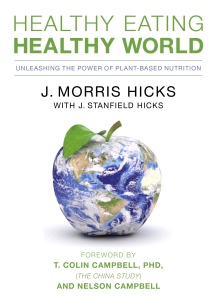
Now that all my friends and family know that I have a published book; if they’re interested in what I have to say, they will simply read the book or my blog.
The Bottom Line. I simply don’t like proselytizing, and I don’t think other people like being on the receiving end of it either. And since at least 90% of my local friends still eat meat and dairy, I must remember that I am still in the very small minority here and try to minimize uncomfortable situations for all concerned. But, I will say that when a yacht club friend walked up to me the other night at the party and told me how much he liked my book, it felt really great.
A former CEO of Reebok, he said he wanted to tell me why he liked my book — and he did so in front of several other people, saying: It was simple, not too long, easy to read and compelling — without being full of “zealotry.” He then added that he would be making some changes in his own diet after what he had learned from reading our little book. I simply thanked him deeply for the feedback and told him that I was glad he liked the book.
We all know that food is a very important and a very personal topic for everyone. Hopefully, this blog will help in terms of how we share our message without causing any discomfort or resentment. Here’s an earlier post that might be helpful. Friends…the fine line between caring and proselytizing.
If you like what you see here, you may wish to join our periodic mailing list. Also, for help in your own quest to take charge of your health, you might find some useful information at our 4-Leaf page.

No more sailing until spring, but I still like to look at this picture. Merry Christmas.
And if you like what 4-Leaf eating is doing for you and your family, you might enjoy visiting our new “4-Leaf Gear” store. From the seaside village of Stonington, Connecticut – Be well and have a great day.
If you’d like to order our book on Amazon, visit our BookStore now.
—J. Morris Hicks…blogging daily at HealthyEatingHealthyWorld.com