By popular demand, the first in a series of 4-Leaf recipes from Lisa’s Kitchen Not being that handy in the kitchen myself, I decided up front that I would not include recipes in our book, but rather refer my readers … Continue reading →
Some think that healthy eating costs more. I disagree.
On the surface, it might appear that healthy eating might cost a lot more than our standard meat, dairy and egg diet. And since most people never get beneath the surface, the perceived high cost of plant-based eating just gives them one more reason not to give up their typical Western diet.
But for me, a 66-year old man enjoying vibrant health, I see things much differently. For a person who prepares his own food up until 6 p.m. and goes out to eat almost every night, I have actually saved money. Since I made the switch to plant-based eating nine years ago, I figure that I have saved around $300 per month — adding up to a total of over $30,000 saved during the past nine years. More on my own experience later, but first, let’s hear from Linda Dale on this topic. Last week, she wrote:
Until the subsidies given to meat manufacturers end or are greatly reduced, getting more people to eat whole food plant foods is going to be very difficult indeed. Most people aren’t interested in changing the way they eat because they can’t imagine not having cooked flesh every day, and the cost of eating nothing but whole plant foods gives them another excuse.
Because of subsidies, beef sells for an average of around $4.00 per pound and turkey this year averaged 45 CENTS per pound! Meanwhile, I’m paying $4.99 per pound for mushrooms, $5.99 per pound for red peppers and $7.00 a pound for kale and collard greens. Linda.
The cost per calorie varies widely among plant-based foods, but fortunately there are some real bargains out there.
First, I will respond to Linda’s concerns; then, following my remarks, is a recent 2-minute video on this subject from Dr. John McDougall.
Linda is absolutely right, on a pound for pound basis; bacon and turkey costs much less than mushrooms, red peppers, kale, collards and spinach. And if she compared those same foods on a cost/calorie basis, the difference would have been even greater. She’s also right about those subsidies for meat and dairy that are not likely to end anytime soon. What to do?
Let’s take a look at the big picture. In her note above, Linda was comparing vegetables that are among the lowest in caloric density; therefore, fresh greens don’t look like much of a bargain when compared to bacon and eggs. For example, fresh spinach in my local market costs about ten times as much per calorie as bacon or chicken. So, how did I save that $30,000? Read on…
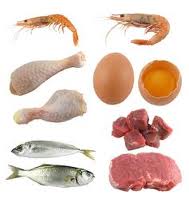
Animal-based foods include many items at almost every price that you can imagine — and some are priced lower because of government subsidies.
In preparation for this blog, I visited my online grocer at PeaPod.com, where you can find the price, calories, percent fat, and fiber for every food that you can imagine. So, I took a few minutes and analyzed fourteen common foods; then ranked them from least expensive to most expensive on a cost/100 calories basis:
Food $ Cost %Fat Fiber?
Brown Rice .08 7% A
Black Beans .21 3% A+
Eggs .28 57% None
Cream Cheese .30 80% None
Wieners .38 85% None
Bacon .38 75% None
Chicken breast .55 17% None
Apples .62 3% A
Cantaloupe .69 5% A
Oranges .69 2% A
Broccoli, frozen .83 10% A
Frozen Spinach .93 10% A
Broccoli, fresh 2.42 10% A
Fresh Spinach 4.33 10% A
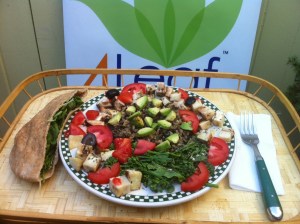
My 4-Leaf Sailors Super Lunch with 500 to 700 calories for less than $5
Also, a Big Mac costs over four times as much per calorie as an order of rice and beans. It derives over half its calories from fat and has hardly any fiber from whole plants. Not a bargain at any price.
What do we see here? The first thing I see are my two plant-based heroes at the top of the chart — my daily staple of almost every lunch and dinner that I prepare for myself — my trusty combination of beans and rice. At an average of just fifteen cents per 100 calories, I can have an extra large serving (200 calories) for just thirty cents. See my Sailors Super Lunch for the recipe. What else do we see?
Fresh spinach is not the best place to get the bulk of your calories; in fact, it would be impossible to consume all of your calories from just spinach.
Frozen spinach is a much better bargain than fresh and still delivers a nutrient-rich product.
The five animal-based foods average close to 80% fat — compared to an average of less than 5% for the plant-based. Americans average nearly 40% of their calories from fat; less than half that amount is optimal.
All five of the animal-based foods have ZERO fiber. We need fiber — and we need much more of it than most of us are getting. The so-called experts recommend 25 to 35 grams per day, the average American gets less than ten from whole plants, and a near-optimal plant-based diet will deliver more than 50 grams/day.
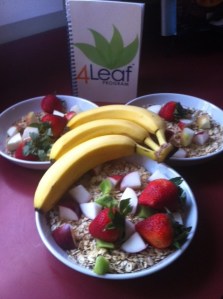
My son’s version of the Sailors Super Oatmeal; he calls it the Hikers Oatmeal — a hearty meal for less than $4.
Let’s summarize. I need to eat 2200 calories a day, I need fiber and I need to keep my percent of calories from fat below 20%. As Dr. McDougall has always said, “people have eaten a starch-based diet for thousands of years;” deriving the bulk of their calories from grains, legumes and potatoes while eating as many fresh fruits and vegetables as they could find. So, we need to feature some of those starches in most of our meals; otherwise, we’ll be starving within a few hours after eating a plate of just fruits or just vegetables.
So, this is how plant-based eating has saved me money. In the old days, I used to eat out more for both breakfast & lunch and I consumed more take-out food. Nowadays, when I do eat out (almost every night) and occasionally for breakfast or lunch, I find that my “creative” meal ends up costing about half the price of the entrees on the menu that I may have had in my prior life. At 30 or 40 meals outside the home per month, I easily save $300 or $3600 per year. Nine years = $32,400.
As a 66-year old man, I am probably in the less than 5% of my age group that takes ZERO drugs.
The Hidden Costs of Animal Foods. In addition to that 30 grand, I have also saved lots of money on medical bills, prescription drugs, vitamins, lost work and income due to illness, and so much more. If we add up all the factors involved, eating a whole foods, plant-based diet is one of the best bargains that we will experience for our entire lives. Then, when you consider the many benefits of “vibrant health,” there is simply no comparison.
According to Crown Financial, the suggested percentage of disposable income for a family of four to spend on food is 12%. That’s much less than we’re spending on our cost of health care in this country as a percent of GDP (17%). That would suggest that in the long run, by eating a health-promoting diet, you will save more in medical bills than your entire food budget.
Establishing your routine. Everyone is different and must establish a healthy eating regimen that is right for them. But, regardless of income level, number of people involved, or size of our food budget; we should plan our meals around the calorically-dense starches recommended by Dr. McDougall. Then add in all the fresh fruits and vegetables that we can afford.
Throw in some great seasoning along with bit of culinary skill in the kitchen and this way of eating becomes far more enjoyable than what we thought was great eating in our past. Here is a 4-minute video featuring Ellen Jaffe Jones, who talks about her book, “Eat Vegan On $4 A Day.”
Let’s assume a hypothetical family of four that requires a combined total of 8,000 calories a day. If all meals were eaten at home, I am confident that we could feed everyone a VERY healthy diet of whole, plant-based foods for an average of forty cents per/100 calories. Food budget = $32/day or around $1,000 per month.
The Tarahumara are famous for their long-distance running, their superb health and their longevity.
I always like to remind myself of the Tarahumara peoples of northern Mexico; they survive and thrive on nothing but beans, corn and squash — frequently living 100 years with near zero incidence of ALL of our chronic diseases. My estimate of their family food budget is much less than half that $1,000 a month.
Two final points. When you eat mostly whole plants, you will automatically be eating less calories than you have eaten in the past. Even if you eat all you want at every meal, you will still eat far less calories. That’s because you will fill up long before you reach your previous daily total — that’s how you lose weight effortlessly. Finally, there is one area that will cost you more money. You will probably need to buy some new (smaller) clothes in about six months — but of course, that will be a one-time-only expense and one that is welcomed with open arms.
So please consider all of the above when contemplating the move away from the harmful, wasteful, cruel and grossly unsustainable typical Western diet. Not only will you spend far less money in the long run, but you’ll be doing some wonderful things for your heath, your planet and all living beings that follow you in this world.
The Bottom Line. I agree with Linda that most people will not switch to plant-based eating until they are forced to do so because of high prices. Those high prices will be driven by a combination of more expensive fuel, less subsidies, and more food scarcity. Meanwhile, the thinking people of the world will start making better choices now — saving money and promoting their health at the same time.
Want to find out how healthy your family is eating?Take our free 4Leaf Diagnostic Survey. It takes less than five minutes and you can score it yourself. After taking the survey, please give me your feedback as it will be helpful in the development of our future 4Leaf app for smartphones. Send feedback to jmorrishicks@me.com
International. We’re now reaching people in over 100 countries. Follow us on Facebook and Twitter or get daily blog notices by “following” us in the top of the right-hand column. For occasional updates, join our periodic mailing list.
J. Morris Hicks, working daily to promote health, hope and harmony on planet Earth.
For help in your own quest to take charge of your health, you might find some useful information at our 4Leaf page or some great recipes at Lisa’s 4Leaf Kitchen.
Got a question? Let me hear from you at jmorrishicks@me.com. Or give me a call on my cell at 917-399-9700.
SHARE and rate this post below.
Blogging daily at hpjmh.com…from the seaside village of Stonington, Connecticut – Be well and have a great day.
—J. Morris Hicks, board member, T. Colin Campbell Foundation
Lisa, Andrew and Jason -- during our "harmony hike" to Brown Hill next to Wachusett Mountain.
My healthiest Thanksgiving ever — and one of the most enjoyable. The day began with me sitting beside Jason’s new pellet stove with my MacBook Pro at 0600; publishing my daily blog at the crack of dawn.
Later, when the rest of the family came downstairs, we began a 4-Leaf Thanksgiving to remember. Everything was absolutely perfect: the weather, the food, the hike, the fellowship, the fine dining by the pellet stove, the sharing, the wine and the vegan cookie after my best Thanksgiving dinner of all time. And, I’ve got photos to share all of the above; along with some guidelines that might help you enjoy a 4-Leaf Christmas-to-remember for your family in less than four weeks.
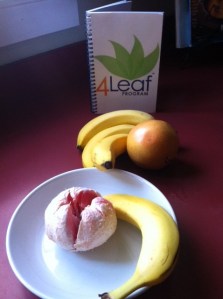
Can't be much simpler than this; grapefruit and banana for breakfast.
Key to 4-Leaf Eating. Establishing a routine for certain meals like breakfast and lunch — and keeping things as simple as possible. If you can get into a routine of deriving almost ALL of your calories from whole plant-based foods for those first two meals of the day, then maintaining a 4-Leaf daily score will be a snap — even if you have an occasional 2-Leaf or 3-Leaf dinner (all plant-based of course).
As I have said many times before, the healthy 4-Leaf routine does not mean a lot of calorie counting. For once you get into your routine, you simply know whether your meal is 4-Leaf or not. Our Thanksgiving was a good example.
Breakfast. We started the day with an extremely simple 4-Leaf meal. How much easier does it get than one whole grapefruit and a banana? Jason peeled the grapefruit using just his hands — without losing any of the healthy portions of the fruit (See the healthy white stuff in the picture). I peeled my own banana and thoroughly enjoyed my first several hundred calories of Thanksgiving Day — and I didn’t need a reference book or a calculator to know that ALL of those calories were comprised of whole, plant-based foods, still in Nature’s package.
I was doing a little creative photography while Jason was preparing our brunch.
Brunch. Since we were planning to have our main Thanksgiving Dinner meal during the mid-aftrnoon, we chose to have a big 4-Leaf Brunch before leaving for the mountain for our harmony hike. While I call my oatmeal the Sailors Daily Oatmeal, my son calls his the Hearty Hikers Oatmeal. So, when in Rome…we enjoyed Jason’s version of this family favorite at his home in Holden, MA.
The main difference between my Sailors and his Hikers is that he uses more ingredients (all plants), uses more oatmeal and doesn’t use as much liquid as I do. Yesterday, he began preparing brunch for the four of us by adding anywhere for 3/4 cup (for me and Andrew) to almost two cups of oatmeal for himself. Then he added raisins and poured some cold rice milk over the top.
Jason's Hearty Hikers Oatmeal -- Now ready-to-eat with walnuts on top.
While all of that soaked, he began cutting up all kinds of fruit: apples, pear, banana, strawberries, and kiwi — adding each of them to the top of his soaking whole grain oats. He then topped off his masterpiece with a few English walnuts and we were ready to eat. Ranging in calories from 300 to 700, the meal derived 95% of its calories from whole plants — only the rice milk was not in Nature’s package.
We had that meal at 10:30 before leaving for a hike, and I was not hungry again until sitting down for dinner at 3 p.m. — and the only calories I had in between was one cold Budweiser and a handful of almonds following our 4-mile hike.
Adult beverages sidebar. We all know that beer and wine are plant-based but we also know that they are processed and therefore are not 4-Leaf. People sometimes misunderstand our 4-Leaf formula, thinking that we’re recommending up to 20% animal-based calories. NOT.
To be very clear — we never recommend ANY animal-based calories but just wanted our system to have some built-in flexibility for the foods that are not whole plants in nature’s package: bread, pasta, oil, potato chips, wine, etc. Even with my beer, scotch or an occasional piece of cheese at someone’s home, I manage to post a 4-Leaf score almost every day. And I am quite confident that no matter where you get that “other 20 percent” of your calories, if you’re eating at the 4-Leaf level, you will be among the top one percent of the healthiest eaters in the Western world.
Salad course for four -- notice the glow of the pellet stove AND the the warm sunbeams across the table.
Now for Dinner. A 4-Mile Hike followed by a hot shower and a 4-Leaf Dinner. Since Jason and Lisa installed their pellet stove in the living room two months ago, they have not enjoyed a single meal in that room. So, yesterday was our first meal next to the warm glow of the pellet stove; while basking in the glorious rays of sunshine from the southwest.
We pulled an old table out of the garage, put four chairs around it, lit some candles and sat down for a most enjoyable dinner that Lisa had prepared the previous day.
From 2-Leaf to 4-Leaf. Her new recipe for this great meal began with the Raise-the-roof Lasagna from the Engine 2 Diet book by Rip Esselstyn. We had all enjoyed Rip’s version of this meal at our yacht club last year (when Dr. Esselstyn spoke there) and were looking forward to having it again. But, like most recipes in even the healthiest of cookbooks, the original version of this meal derives well over half of its calories from tofu and the whole grain lasagna — neither of which are “in nature’s package.” Once again, we’re not saying these foods are bad for you, we’re just trying to help you understand what kind of eating is going to deliver the “most vibrant” level of health for you and your family.
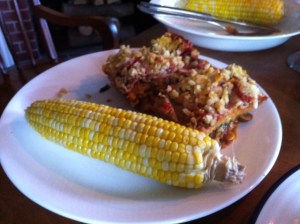
The lasagna was exceptional delicious and the corn was crisp and sweet. I savored very bite.
So Lisa wanted to prepare this great meal in her own “4-Leaf style.” She began by eliminating the tofu completely and cutting way back on the amount of pasta in the dish. She then doubled or tripled the amount of whole veggies in the recipe and ended up with one of the healthiest Thanksgiving meals in the history of New England.
We haven’t run the numbers yet, but if you add the green salad with cucumber and dill dressing, the wine, the vegan cookie and a small slice of vegan chocolate cake — this entire feast was probably a solid 3-Leaf meal, deriving more than 60% our calories from whole plants.
Score for the entire day. 4-Leaf without a doubt. We didn’t measure the calories of a single item, but we know that up until 3 p.m., over 90% of our calories were from whole plants. So even if the total dinner came in at 65% whole plant calories, we’d still be over 80% for the day.
Thanksgiving 2011. 4 people, 4-mile hike, 4-Leaf eating and living in harmony with nature on this wonderful holiday.
So what’s so special about 80%? Three words. Simplicity, flexibility and superiority. Is it the healthiest diet-style in the world? Maybe not, but I’d bet a lot of money that it’s in the top one percent. And, it’s so easy to do. It’s also a lot fun to eat all you want, when you want and NEVER have to worry about counting calories.
It’s also nice to spend the entire day harmonizing with nature and not harming another single creature on this special holiday of thanks-giving.
Here’s hoping that there’s a Merry and Healthy 4-Leaf Christmas in your future next month.
If you like what you see here, you may wish to join our periodic mailing list. Also, for help in your own quest to take charge of your health, you might find some useful information at our 4-Leaf page.
Jason and Lisa. Can you believe these people eat over 3,000 calories a day? My favorite 4-Leaf poster kids for sure.
And if you like what 4-Leaf eating is doing for you and your family, you might enjoy visiting our new “4-Leaf Gear” store. From the seaside village of Stonington, Connecticut – Be well and have a great day.
SHARE and rate this post below…One more thing, occasionally an unauthorized ad may appear beneath a blog post. It is controlled by WordPress (a totally free hosting service). I do not approve or personally benefit whatsoever from any ad that might ever appear on this site. I apologize and urge you to please disregard.


 But for me, a 66-year old man enjoying vibrant health, I see things much differently. For a person who prepares his own food up until 6 p.m. and goes out to eat almost every night, I have actually saved money. Since I made the switch to plant-based eating nine years ago, I figure that I have saved around $300 per month — adding up to a total of over $30,000 saved during the past nine years. More on my own experience later, but first, let’s hear from Linda Dale on this topic. Last week, she wrote: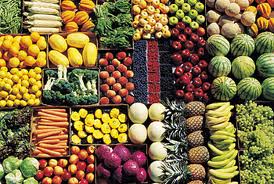









 J. Morris Hicks, engineer. writer. big picture guy.