Protein—There’s only one way not to get enough of it…

By not getting enough calories

Our fellow herbivore in the wild ---the strongest animal in the world---getting plenty of protein while eating nothing but raw plants.

Essential nutrient? Yes. More important than complex carbohydrates? No. Earlier this week, I blogged about the importance of fiber in the diet of herbivores. Today, I want to revisit the old question about protein—because this is a concern that is not likely to disappear during my lifetime.

Even Bill Clinton, who has reversed his heart disease by following the dietary advice of Campbell, Esselstyn and Ornish, still thinks he needs a protein shake to make sure he gets enough. That’s fine, as long as he has a plant-based protein shake—he definitely doesn’t need to consume ANY animal protein—EVER.

My “Fiber Blog” included an analysis of 13 foods that I consume on a regular basis. They include a few from each category: fruits, vegetables, grains, legumes, and nuts. Once again, I went to nutritiondata.com and determined how many grams of each macronutrient there were in 100 grams of product. A few showed zero protein and/or fat because the amount was less than one gram. So, in those cases, I checked the chart in the back of “The McDougall Plan” book and, sure enough, every single food had at least some of all three macronutrients.

Two of my 13 foods below feature fat as their #1 source of calories. If you want to lose weight, you should go easy on foods such as avocado, nuts and olives.

Grams of macronutrients/100 grams for 13 of my routine foods. (Macronutrients are where we get our calories.) Notice that every single one of these 13 foods has protein in it—some more than others.

Same for carbs and fat—every single one has some of both. And Mother Nature has made sure that all three macronutrients contain just the right amount of all three of our macronutrients. This bears repeating:

    • All 13 foods have protein
    • All 13 foods have carbohydrates
    • All 13 foods have fat 

Protein-Carbs-Fat (grams per 100 grams)

Another great source of protein, carbs AND fat.

    • 1 — 10 — .5 —Carrots
    • 2 — 7 —- .5 —Broccoli
    • 3 — 4 —- .5 —Spinach
    • 2 — 9 —- 15 —-Avocado
    • 9 — 24 —- 1 —-Black Beans
    • 11 — 10 — 5 —Edamame Beans
    • 21 — 22 — 49 –Almonds
    • 1 — 14 — .5 —- Blueberries
    • 1 — 15 —-  1 —-Pear
    • .2 — 15 — .5 —Apple
    • 5 — 27 —  1 —-Whole grain pasta
    • 13 — 69 —7 —Oatmeal
    • 3 — 23 —-1 —Brown Rice

 *As you may have guessed, water makes up much of the weight of many of these foods—especially the first three.

*Avocado and almonds are in red only because of their high fat content. If you’re trying to lose weight, you might want to go easy on these very healthy, whole foods.

Nature's ONLY approved source of animal protein in our diet.

Animal sources of protein. The only animal source of protein that we should ever consume is the milk from our own mother. Did you know that her milk is only 5% protein, and that is during the period of our lives when we are growing most rapidly.

By comparison, the typical adult in the Western world is deriving over 15% of her calories from animal protein—and it is literally killing us. On the other hand, it’s impossible to consume too much protein when your only sources are whole, plant-based foods.

By the way, even Dr. Spock learned the truth about milk and animal protein before he died. Two final points to remember:

  • We are the only species in history that ever consumes the milk of another spices.
  • We are the only species in history that consumes ANY milk after weaning.

Still have questions about protein? Visit our Protein Page

Follow us on Facebook and Twitter. Want to receive some occasional special news from us? You may wish to Join our periodic mailing listFor daily updates you can choose to “FOLLOW” at the top of the right column>>>>>>>>>>>>

Also, for help in your own quest to take charge of your health, you might find some useful information at our 4Leaf page or some great recipes at Lisa’s 4Leaf Kitchen. Got a question? Let me hear from you at jmorrishicks@me.com.

If you’d like to order our book on Amazon,  visit our BookStore now.

J. Morris Hicks, working daily to promote health, hope and harmony on planet Earth.

From the seaside village of Stonington, Connecticut – Be well and have a great day.

—J. Morris Hicks…blogging daily at HealthyEatingHealthyWorld.com

SHARE and rate this post below…One more thing, occasionally an unauthorized ad may appear beneath a blog post. It is controlled by WordPress (a totally free hosting service). I do not approve or personally benefit whatsoever from any ad that might ever appear on this site. I apologize and urge you to please disregard.

J. Morris Hicks -- Member of the Board of Directors -- Click image to visit the foundation website.

Posted in Dairy, cow's milk, Protein Concerns | 3 Comments

4Leaf Survey—for estimating your 4Leaf level…

…without counting calories or computing percentages.

4Leaf App for Smart Phones—The First Step. Since creating the 4Leaf concept two years ago, we have known that we would eventually want to have a handy app for helping people get the most out of their new 4Leaf lifestyle. And from the get-go, one of the must-haves was a simple and easy tool for determining approximately where someone stood on our scale—from NoLeaf to 4Leaf. 

And today, we’re asking for your help in developing that tool. We invite you to take our simple survey and email us the results. Then, depending on the volume received, we promise to email your score back to you within a few days—along with two 4Leaf charts that will help explain the results and help you improve your score. After you receive your survey score from us, we welcome your feedback, comments, suggestions, etc.

It’s TIME to start developing our 4Leaf App—and you can help.

Keeping it simple as always. This post is all about estimating your level of eating on the 4Leaf scale without counting calories. And this is something that we’ve been thinking about for a long time.

We’re in the process of creating a quick and easy way to determine your approximate level of eating by answering ten easy “yes or no” questions. Later, after validating our scale, we’ll include something like this questionnaire in our 4Leaf App that we hope to develop soon.

But right now, we need your help to get started.

Simplicity is paramount. We like to think of 4Leaf as a concept, a mentality, an attitude or a state of mind—-not an agonizing and never-ending chore of counting calories. I have felt for a long time that trying to calculate the exact percentage of calories from whole plants would be nearly impossible for most of us. And it would drive many people away.

What ARE you eating? From the beginning, we have stressed that the 4Leaf Program is all about what you ARE eating, not what you’re avoiding. And we also have maintained that 4Leaf should never require the routine counting of calories.

Now, we have concluded that if we ask the right questions and have the right algorithm that we can easily estimate approximately where you currently stand on the 4Leaf scale.

This was my GREEN lunch on 3-8-12; just before heating it in microwave and adding sliced tomato, olive and avocado. Loved it.

And this simple and easy method may very well turn out to be even more accurate than asking people to try counting all those calories. Today, we’re asking for your help in this first step of developing our future 4Leaf App.

Specifically,  I need these three items: 

  1. Please answer the following ten “yes or no” questions—and send me your answers.(See list of questions below—and please be honest.)
  2. Also, tell me the estimated percent of your average total daily calories that you think are derived from whole plants, still in Nature’s package?______%
  3. Regarding your response to question #2; have you ever actually measured that percentage for a few days? (Yes or No)

With the word, “Survey” in the subject line please email your responses to me at: jim@4leafprogram.com. Please include your name, sex and return email address if you would like—but it is not required.

Also, if possible, please administer this survey to others and submit their responses to all the questions as well.

The Survey—What ARE you eating? Ten “Yes or No” Questions.

Whole Plants, 4Leaf and Simple Health for you and the planet

  1. Do you eat 3 or more servings of fresh fruit almost every day?
  2. On most days, do you eat any foods made with white flour?
  3. Do you eat 2 or more servings of whole grains almost every day? (oatmeal, brown rice, etc.)
  4. Do you eat any cheese or yogurt at least once a week?
  5. Do you eat one or more servings of whole beans/legumes almost every day?
  6. Do you eat a few walnuts or ground flaxseeds 3 or more times each week?
  7. Do ANY of your “routine” meals include meat, chicken or fish?
  8. Do you use any milk or eggs in foods that you prepare at home? 
  9. Do you eat 3 or more servings of whole vegetables almost every day?
  10. Do you use any oil (including olive), added sugar or table-salt in some of the foods that you prepare at home?

Scoring your survey. After receiving your responses, we will use our algorithm to estimate where you stand among the following six levels of our 4Leaf scale:

  • 4Leaf (80% to 100% of your calories from whole plants)  Est. 1% of USA
  • 3Leaf (60% to 79% of your calories from whole plants)———2%
  • 2Leaf (40% to 59% of your calories from whole plants)———3%
  • 1Leaf (20% to 39% of your calories from whole plants)———4%
  • Trying (10 to 19% of your calories from whole plants)———-25%
  • The S.A.D.*  (Less than 10% of calories from whole plants)—65%

*The Standard American Diet—meat & dairy three meals a day

With the word, “Survey” in the subject line please email your responses to me at: jim@4leafprogram.com. Please include your name, sex and return email address if you would like—but it is not required.

Also, if possible, please administer this survey to others and submit their responses to all the questions as well.

Bear in mind that even our 1Leaf level is pretty darn healthy when you compare it to the typical Western diet. As a 1Leaf-er, you’d be getting around 30% of your calories from whole plants—about five times as many as the average American.

For the record, even the 4Leaf level is not necessarily vegan or vegetarian—although we never recommend that you include any animal products in your diet. And if you choose to routinely include them in your diet, you’ll have a tough time achieving and maintaining the 4Leaf level. We encourage you to adopt the level that is right for you and your family—meaning one that you can stick with.

Analysis and feedback? I have already set up a spreadsheet for recording and analyzing all of your responses. When finished, I will give you some feedback and will include our determination of where you fall on our 4Leaf scale.

We know that everyone may not care about reaching the 4Leaf level of eating. But, for those who do, we think that this incredibly simple tool will help.

The emerging Lifestyle Choice of health-seeking people everywhere

Eureka moment. We have been searching for an easy way to estimate the percent of calories from whole plants for a long time and got the idea for this survey approach from watching one of Dr. Walter Veith’s videos a few weeks ago. His most powerful video is included under our Video tab, it is entitled Udderly Amazingand you can guess what it’s all about.

The Bottom Line. This simple survey is consistent with our commitment to helping you achieve vibrant health by focusing on improving what you ARE eating—without having to count calories or measure portions. Looking forward to hearing from you and…

Thank you in advance for your help!

The overall results of this initial survey will be presented in a future post.

Follow us on Facebook and Twitter. Want to receive some occasional special news from us? You may wish to Join our periodic mailing listFor daily updates you can choose to “FOLLOW” at the top of the right column>>>>>>>>>>>>

Also, for help in your own quest to take charge of your health, you might find some useful information at our 4Leaf page or some great recipes at Lisa’s 4Leaf Kitchen. Got a question? Let me hear from you at jmorrishicks@me.com.

If you’d like to order our book on Amazon,  visit our BookStore now.

J. Morris Hicks, working daily to promote health, hope and harmony on planet Earth.

From the seaside village of Stonington, Connecticut – Be well and have a great day.

—J. Morris Hicks…blogging daily at HealthyEatingHealthyWorld.com

SHARE and rate this post below…One more thing, occasionally an unauthorized ad may appear beneath a blog post. It is controlled by WordPress (a totally free hosting service). I do not approve or personally benefit whatsoever from any ad that might ever appear on this site. I apologize and urge you to please disregard.

J. Morris Hicks — Member of the Board of Directors — Click image to visit the foundation website.

Posted in 4Leaf for Life | Leave a comment

Getting enough fiber? 95% of Americans don’t.

Most don’t even come close to the woefully low official guidelines.

Our fellow herbivore in the wild ---the strongest animal in the world---getting plenty of protein and fiber and eating nothing but raw plants.

Yesterday, while thinking about my post for today, I got to thinking about fiber in our diet and why we have it. Then it occurred to me that it would appear that most creatures consume only one of two kinds of food in their natural diet—the diet that Nature intended for them to eat:

  • Food with fiber—herbivores
  • Food without fiber—carnivores

Herbivores get plenty of fiber — Carnivores get none (they don’t need any). Consider this:

Everything a herbivore eats has fiber; for the carnivore, there is zero fiber in any of their food.

In our case, most humans in the Western world have concluded that we’re omnivores because we will eat almost anything. But, while there are some omnivores in the wild; humans, and our ancestors, are not among them. Oh, our ancestors probably ate both meat and plants—because they could—not because it was what Nature intended for them to eat.

And as Michael Pollan says, this omnivorous tendency has gotten completely out of control—as our diets are now primarily comprised of “consumable food-like substances—not real food.” But Michael and I disagree on what is considered real food for humans. While he recommends mostly plants, he also thinks we need some animal protein and omega-3s from the animal kingdom.

Lion kills zebra and eats him while the blood is still warm---now that's a real carnivore. And he doesn't need to worry about fiber in his diet.

But, ultimately, I think that Michael Pollan will join me, Dr. Campbell, Esselstyn and others in declaring that we should be eating exclusively plants. That’s because of the massive energy requirement, environmental impact and the sheer unsustainability of trying to supply meat for all humans. It just ain’t gonna happen long-term.

There is no doubt in my mind that we are herbivores by design and that we will all be much healthier if we eat only whole plants, still in Nature’s package. And if we do that, we’ll all easily be getting well above the recommended guidelines for fiber in our diet.

Recommended guidelines. The Mayo Clinic and the American Dietetic Association agree on the following daily levels of fiber in the diet: 25 grams for women and 38 grams for men. The ADA acknowledges that the average consumption is only 15 grams, with less than half of that being delivered by whole plant foods, still in Nature’s package.

So, how can anyone be expected to be able to come close to those recommended numbers—even though they’re low? Simple Answer. By consuming a wide variety of whole plants each day, one can easily exceed fifty grams a day or more. As I stated in Chapter 1 of our book:

The American Dietetic Association reports that most of us don’t even come close to the recommended intake of twenty grams to thirty-five grams of fiber a day. While thirty-five grams of fiber would be a dramatic improvement for most people eating the typical Western diet, the fiber in a truly health-promoting optimal diet would be more than double that amount. On NutritionData.com, an analysis of a near 100 percent whole-foods, plant-based diet demonstrates that it typically delivers well over seventy grams of fiber per day. I simply added up the fiber in all of my meals of whole plants (fruits, vegetables, legumes, grains, nuts, and seeds) for my typical day. The total always exceeds seventy grams.
Want to see how? Take a look at the following list of foods, several from each category of the various plant-based, whole foods. I went to nutritiondata.com yesterday and did this analysis of 13 of my favorite foods:

Grams of fiber per 100 calories

  • 7.70 — Carrots
  • 9.18 — Broccoli
  • 8.70 — Spinach
  • 4.04 — Avocado
  • 4.15 — Black Beans
  • 4.23 — Edamame Beans
  • 2.09 — Almonds
  • 5.13 — Blueberries
  • 3.37 — Pear
  • 4.31 — Apple
  • 3.45 — Whole grain pasta
  • 2.61 — Oatmeal
  • 1.85 — Brown Rice

4.67 grams/100 calories — the average of 13 items

At 2,000 calories/day of whole foods like these, one would consume an average of 93 grams of fiber—consistent with what I reported in our book. But what about the fiber content of other foods that you might be eating?

Lovely and tasty, olive oil is 100% fat and, has zero fiber and it is not a whole plant.

Foods with zero fiber per 100 calories:

  • 0.00 — Olive oil (all oils)
  • 0.00 — Cheese
  • 0.00 — Chicken
  • 0.00 — Fish
  • 0.00 — Eggs
  • 0.00 — Pork
  • 0.00 — Beef

Zilch. All animal foods AND olive oil contain zero fiber. Dr. Esselstyn says that all oils (including olive) damage the endothelial cells of the arteries and should not be a part of a heart-healthy diet.

Even if we don’t “plan” to include olive oil in our diet, we’ll still get way too much of it without even trying. So, one of the real keys of 4Leaf eating is to not “plan” to have olive oil or animal products in our diet.

What do I mean by “planning?” I mean putting it in your grocery cart, keeping it in your home and ordering it in restaurants. In my case, I am occasionally guilty of dipping a small piece of whole wheat bread in a saucer of olive oil that the waiter has brought for the table without being asked. To be clear—I am not planning to have any olive oil, but sometimes it just happens.
How important is fiber? Here’s what the Mayo Clinic has to say—followed by a link to their site:

  1. Normalizes bowel movements. Dietary fiber increases the weight and size of your stool and softens it. A bulky stool is easier to pass, decreasing your chance of constipation. If you have loose, watery stools, fiber may also help to solidify the stool because it absorbs water and adds bulk to stool. For some, fiber may provide relief from irritable bowel syndrome.
  2. Helps maintain bowel integrity and health. A high-fiber diet may lower your risk of developing hemorrhoids, and small pouches in your colon (diverticular disease). Some fiber is fermented in the colon. Researchers are looking at how this may play a role in preventing diseases of the colon.
  3. Lowers blood cholesterol levels. Soluble fiber found in beans, oats, flaxseed and oat bran may help lower total blood cholesterol levels by lowering low-density lipoprotein, or “bad,” cholesterol levels. Epidemiologic studies have shown that increased fiber in the diet can reduce blood pressure and inflammation, which is also protective to heart health.
  4. Helps control blood sugar levels. Fiber, particularly soluble fiber, can slow the absorption of sugar, which for people with diabetes can help improve blood sugar levels. A diet that includes insoluble fiber has been associated with a reduced risk of developing type 2 diabetes.
  5. Aids in weight loss. High-fiber foods generally require more chewing time, which gives your body time to register when you’re no longer hungry, so you’re less likely to overeat. Also, a high-fiber diet tends to make a meal feel larger and linger longer, so you stay full for a greater amount of time. And high-fiber diets also tend to be less “energy dense,” which means they have fewer calories for the same volume of food.
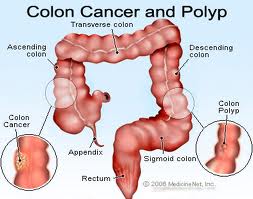
What about colon cancer? The Mayo Clinic said the results are mixed, but that’s because they don’t ever test a truly high-fiber diet—over 60 grams a day—from whole plants. Meanwhile, the following info on colorectal cancer was reported in an 11-11-11 article in USA Today.

British and Dutch researchers analyzed 25 studies that included a total of nearly 2 million people. Compared with the lowest levels of fiber consumption, each 10 gram per day increase in intake of total dietary fiber and cereal fiber was associated with a 10 percent reduced risk of colorectal cancer.

Lower your risk of cancer by up to 70%. So, if you run the numbers on that finding, how much will your cancer risk be lowered if you went from the national average of 15 grams of fiber a day to 85? Looks to me like you’d reduce your risk by 70 percent. Pretty good deal, huh?

Wonder what it would be if those researchers had been reviewing studies where all of the fiber was coming from whole plants? We know that cultures of people like the Tarahumara who eat a very high-fiber, whole plant diet—have about a zero incidence of colon cancer…and they have no reading material in their restrooms.

(Mayo Clinic website) Dietary fiber: Essential for a healthy diet – MayoClinic.com

A related post from 10-11-11 FIBER. How much should we be eating?

Follow us on Facebook and Twitter. Want to receive some occasional special news from us? You may wish to Join our periodic mailing listFor daily updates you can choose to “FOLLOW” at the top of the right column>>>>>>>>>>>>

Also, for help in your own quest to take charge of your health, you might find some useful information at our 4Leaf page or some great recipes at Lisa’s 4Leaf Kitchen. Got a question? Let me hear from you at jmorrishicks@me.com.

If you’d like to order our book on Amazon,  visit our BookStore now.

J. Morris Hicks, working daily to promote health, hope and harmony on planet Earth.

From the seaside village of Stonington, Connecticut – Be well and have a great day.

—J. Morris Hicks…blogging daily at HealthyEatingHealthyWorld.com

SHARE and rate this post below…One more thing, occasionally an unauthorized ad may appear beneath a blog post. It is controlled by WordPress (a totally free hosting service). I do not approve or personally benefit whatsoever from any ad that might ever appear on this site. I apologize and urge you to please disregard.

J. Morris Hicks -- Member of the Board of Directors -- Click image to visit the foundation website.
Posted in Colon Health | 2 Comments