Athletic performance & a whole foods, plant-based diet

And yes, you can get all the protein that you need from plants.

Timothy Bradley (vegan), new world welterweight champion—June 2012

Just last week, the New York Times ran an article entitled, “Can athletes perform well on a vegan diet?” The short answer is YES. (See link to article below) For the most part, the article provided some reassurance to serious athletes who might be considering a vegan diet.

But none of the experts mentioned the natural diet for the animals whose DNA is almost identical to ours—the gorilla and the chimpanzee. They eat only raw plants and don’t have a team of doctors, nutritionists, and dietitians coaching them on their diet. They also become very strong without resorting to protein shakes.

So what about protein? Here’s what two of their experts had to say to this question: Is it hard for someone who’s training vigorously to get enough protein on a vegan diet?

  • David Nieman: The foods that vegans like Scott Jurek avoid, like dairy products and eggs, are the easy ways to get protein in a plant-based diet, obviously. But you still have grains, nuts, soy. Eat enough of that and you’ll be fine. The one issue is vitamin B12, which is found only in meat; B12 is important for endurance athletes, since it affects red blood cell production. But many cereals and soy milks are fortified with B12 now, or you can take supplements.
  • Nancy Clark: You do have to be diligent about protein intake if you’re vegan. I have clients, especially women, who say, ‘Oh, I put a few chickpeas in my salad.’ But that’s not going to do it. Women need about 60 to 90 grams of protein a day, and athletes are on the high end of that. That means you have to eat cupfuls of chickpeas. And you can’t eat a quarter of that cake of tofu. You need to eat the whole thing. It’s not that there aren’t good sources of vegan protein. But it’s not as bioavailable as meat. So you need to have more.

Not as bioavailable as meat? That’s the problem with most of our nutritional experts in this country—they have been trained in a meat & dairy based system, and it will take many more decades for them to understand what the gorilla already knows. And not only the gorilla—the strongest animals in the world eat nothing but raw plants. Elephants, horses, hippos, etc. I have dedicated 14 separate blog posts on the topic of “protein concerns” because it is a genuine concern for over 90% of our population. For a review, you can visit my Protein Page. 

But what about protein and the serious athlete? Once again, there is some disagreement among some of the experts. Some think juices and smoothies are great and others disagree. My position is basically the 4Leaf mantra as stated by Dr. Campbell, “The closer we get to eating a plant-based diet, the better off we will be.” All five of the medical doctors in the first chapter of our book agree with that, but they have differences of opinion on some of the details.

But I have observed that people have been successful with many different forms of a whole foods, plant-based diet. Ultimately, it’s a matter of personal choice and choosing a diet-style that you can stick with. If you cannot maintain it indefinitely, then it really doesn’t matter what your theory is.

On the topic of smoothies. I have written about Brendan Brazier before. (See link below to his book) He is an extreme athlete who has written books on this topic and has attracted the attention of two very serious athletes in my family: my son Jason and his wife Lisa. In response to a friend just yesterday on this question, Jason wrote:

Hey Clark – first, thanks for joining the cause. We can’t have too many bright young minds on the case.

  • It’s all about lean muscle mass; bulk will only slow you down and limit and your long term flexibility.
  • You are on the right track with the vegan protein (stay away from the whey)
  • 5 days a week is ok as long as you are not working the same muscle groups on consecutive days.
  • Sleep – at least 7-8hrs is a must to effectively repair/rejuvenate.
  • Smoothie – make a 32 ounce plant/protein smoothie every morn first thing: drink 16oz when you wake and the rest immediately after your workout (our daily recipe below)

Jason’s Protein Smoothie—In a vitamix in the following order:
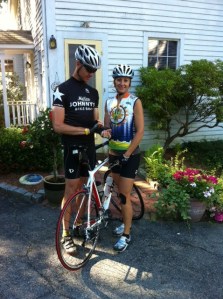
Here’s Jason and Lisa heading out for a 50-mile bike ride.

  1. Add cup of your favorite unsweetened nut milk (soy, almond, rice or hemp)
  2. 2 scoops of plant protein blend (Pea, Hemp, Rice with Chia Seed; amazon link)
  3. 1 banana (very ripe is the best)
  4. 2 tsp chlorella (amazon link)
  5. 1 sliced apple
  6. 5 kale leaves or 2 cups of spinach
  7. 1 cup of frozen blueberries
  8. 4 pitted dates
  9. 1 tbsp of flax
  10. 2 cups of water
  11. Blend and enjoy!

I should point out that Jason gets most of his daily calories from whole plants, chewing every bite, complete with all the digestive juices involved. But, like Brendan Brazier mentioned below, he has had success with his fruit and veggie smoothies. “It’s working for him and Lisa.”

The New York Times article: Can Athletes Perform Well on a Vegan Diet?
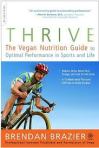
Brendan Brazier’s book, Thrive, The Vegan Nutrition Guide to Optimal Performance in Sports and Life by Brendan Brazier. My son and co-writer, Jason Hicks, and many of his friends have found this great book invaluable in helping them deal with the high calorie requirements of the seriously active lifestyle of many athletes.

One of Jason’s friends, an M.D., had this to say, “As a triathlete myself, the idea that a whole foods plant-based diet could allow an athlete to compete and do well at such a high level was very exciting. I bought the book and devoured every word. Brendan’s words were right in line with the research I had done for my thesis. The lifestyle he promotes is one in which the body utilizes nutrient-rich foods in their natural state, as opposed to the refined, processed foods of the traditional Western diet.” Click here to purchase Thrive on Amazon. To visit the website of the marathon-running M.D. who is quoted above, click here for Dr. Charlotte Moriarity’s website.

Three previous blog-posts about athletic performance

Handy 4-piece take-charge-of-your-health kit—from Amazon.com

Want to find out how healthy your family is eating? Take our free 4Leaf Diagnostic Survey. It takes less than five minutes and you can score it yourself. After taking the survey, please give me your feedback as it will be helpful in the development of our future 4Leaf app for smartphones. Send feedback to jmorrishicks@me.com

International. We’re now reaching people in over 100 countries. Follow us on Facebook and Twitter or get daily blog notices by “following” us in the top of the right-hand column. For occasional updates, join our periodic mailing list.

To order more of my favorite books—visit our online BookStore now

J. Morris Hicks, working daily to promote health, hope and harmony on planet Earth.

For help in your own quest to take charge of your health, you might find some useful information at our 4Leaf page or some great recipes at Lisa’s 4Leaf Kitchen.

Got a question? Let me hear from you at jmorrishicks@me.com. Or give me a call on my cell at 917-399-9700.

SHARE and rate this post below.

Blogging daily at hpjmh.com…from the seaside village of Stonington, Connecticut – Be well and have a great day.

—J. Morris Hicks, board member, T. Colin Campbell Foundation
Posted in Athletic performance, Protein Concerns | Tagged | 1 Comment

Professor of medicine says NO to the PSA test…

And writes up his story in Forbes

The “prostate cancer” Blue Ribbon

It’s really great to see the super-smart, educated physicians of mainstream medicine coming to their senses regarding our huge $100 billion disease-screening business in this country. The most recent is Steven Salzberg and the headline of his article was: “PSA tests might hurt a lot more than you think.” (See link below) But before getting into the article, let’s take a look at his impressive credentials: (from his website)

Professor of Medicine and Biostatistics in the Institute of Genetic Medicine at Johns Hopkins University’s School of Medicine. B.A. and M.S. at Yale University, and Ph.D. at Harvard University, published over 200 scientific papers.

His Bottom Line on PSA testing. After reviewing the risks and rewards of having the test, he finished his well-written article thusly,

“At my last checkup, my doctor asked if I wanted a PSA test.  I told him no thanks.”

So what led him to that decision? A simple review of the facts from an independent task force that doesn’t benefit financially from you having the PSA test done every year—unlike the urologists who perform the procedure. The U.S. Preventive Services Task Force stated their conclusions succinctly:

“There is moderate certainty that the benefits of PSA-based screening for prostate cancer do not outweigh the harms.” (USPSTF, Annals of Internal Medicine, 22 May 2012)

They seem to  pretend the risks of long-term incontinence or E.D. are non-existent.

The reaction from the American Urological Association? What do you think? They had the same reaction that any business executive would have if Consumer Reports had condemned their most profitable product. They howled in protest and released a blunt statement:

“The AUA is outraged and believes that the Task Force is doing men a great disservice by disparaging what is now the only widely available test for prostate cancer, a potentially devastating disease.”

What about the risks? As Dr. Salzberg reported in his article: “The effects of treatment are serious: 20-30% of men treated with surgery and radiation suffer from long-term incontinence and erectile dysfunction.” Pretty serious stuff that the AUA seems to ignore. Of course, they do have a lot of money on the line.

What about screening for colon or breast cancer? I am confident that if Dr. Salzberg knew all the facts about those two diseases and the risk reduction that was possible with a whole foods, plant-based diet that he would probably say “No thanks” when his doctor asks him if he would like to have a colonoscopy.

How so? Like PSA testing, the colonoscopy has become ubiquitous and is accepted without question by almost everyone. That’s because there is a 7% risk of dying from colon cancer in this country. But what if that risk of dying was less than one percent? One also must consider the risks of the colonoscopy itself. Complications occur in some 60,000 people per year in the USA; things like a perforated colon, excessive bleeding or death.

After studying about the power of whole foods, plant-based nutrition since 2002, my decision is to say “No thanks” to all forms of screening. I simply do not wish to be a customer of that $100 billion + business in this country. That’s because I believe that I have lowered my risks to less than one percent AND I doubt that I would submit myself to the surgery if cancer were detected anyway.

Dr. Steven Salzberg

My bottom line. Screening for cancer and heart disease is big business and will continue to grow until people learn the facts about what is happening. Until people realize that early detection is not the same as true prevention, the screening business will continue to flourish. For true prevention, we must address the causative factors before they trigger disease.

Since Dr. Salzberg didn’t mention the power of whole foods, plant-based eating to prevent, slow, stop or reverse cancer—I assume that he has not yet been enlightened. His background summary on his website would suggest otherwise. It appears that he is into high-tech medicine, most of which would be unnecessary if everyone was eating an optimal diet. Nevertheless, his article was an excellent summary of all the latest news about PSA testing and I encourage you to read it:

Handy 4-piece take-charge-of-your-health kit—from Amazon.com

Want to find out how healthy your family is eating? Take our free 4Leaf Diagnostic Survey. It takes less than five minutes and you can score it yourself. After taking the survey, please give me your feedback as it will be helpful in the development of our future 4Leaf app for smartphones. Send feedback to jmorrishicks@me.com

International. We’re now reaching people in over 100 countries. Follow us on Facebook and Twitter or get daily blog notices by “following” us in the top of the right-hand column. For occasional updates, join our periodic mailing list.

To order more of my favorite books—visit our online BookStore now

J. Morris Hicks, working daily to promote health, hope and harmony on planet Earth.

For help in your own quest to take charge of your health, you might find some useful information at our 4Leaf page or some great recipes at Lisa’s 4Leaf Kitchen.

Got a question? Let me hear from you at jmorrishicks@me.com. Or give me a call on my cell at 917-399-9700.

SHARE and rate this post below.

Blogging daily at hpjmh.com…from the seaside village of Stonington, Connecticut – Be well and have a great day.

—J. Morris Hicks, board member, T. Colin Campbell Foundation

Posted in Cancer, Medical Experts | 2 Comments

Preponderance of evidence for “mostly plants”

The mountain of evidence continues to grow.

A recent late spring photo of sailing vessels in our quaint New England village of Stonington, CT

Shortly after our book came out in 2011, I was asked two questions in an online interview for a magazine. As an introduction to this blog post, I have provided those two questions and my answers:

What piece of information did you come across that surprised you the most while writing the book? The overwhelming preponderance of evidence supporting a whole foods, plant-based diet for humans—coupled with the almost unanimous belief within the western world that we truly need to eat animal protein to be healthy.

Are you optimistic that we as a world population will be able to solve the environmental and nutritional crisis’ we face? My feeling is that in the long run, a return to the natural diet for our species (whole plants) is inevitable. The question is whether we’ll make that transition voluntarily or if we’ll have to be forced. It will probably be a little of both. I’m optimistic that millions of people will start moving in the right direction once they are provided with the necessary information. Unfortunately, I think that the masses will have to be forced to change — either by the cost or simply to avoid starvation in a world where the population grows by 200,000 people per day and we’re losing a chunk of arable land about the size of South Carolina every year.

Promoting health, hope and harmony on planet Earth

What’s good for our health, is also good for the planet — and all of her creatures.

Preponderance of evidence. Oftentimes, people will take issue with one or two minor aspects of plant-based eating. They will say things like:

  • We’ve evolved to eat meat as hunter-gatherers and we need to eat some meat to be healthy. 
  • What about the absence of B12 in a plant-based diet? Surely we can’t believe that we should eat only plants if that diet is missing at least one essential nutrient.
  • Without eating animals, we would not have developed the superior cognitive niche that we have today.

While there are generally simple explanations for all of these these kinds of objections, I choose to focus primarily on the preponderance of evidence supporting a whole foods, plant-based diet. Note there is no such “preponderance” supporting our continued consumption of meat, dairy, eggs and fish.

My Top Five List — Preponderance of Evidence for a Plant-based Diet

  1. Entire cultures of people in many regions of the world who eat mostly whole plants—suffer almost none of the chronic diseases that plague the wealthier nations.
  2. Migrant studies show clearly that when the above “peoples” move to the west that, after adopting our diet-style, they soon experience the same frequency of chronic diseases as we do.
  3. The animals in the wild with DNA almost identical to human (gorillas and chimpanzees) eat nothing but raw plants.
  4. There is a mountain of clinical and scientific evidence proving disease prevention and/or reversal of heart disease, type 2 diabetes, osteoporosis and some cancers.
  5. Not only is eating lots of meat, dairy, eggs and fish taking its toll on our health, it’s also extremely wasteful of our natural resources and harmful to our environment—well on its way to destroying the delicate harmony of nature that provides life. For all of these reasons, it is simply unsustainable: not enough land, not enough water and not enough energy.

In the following 3-minute video, Dr. Michael Greger reviews a Dr. Dean Ornish paper describing the “convergence of evidence” for mostly plants—including the fact that whole plants contain 100,000 phytonutrients that are found ONLY in plants.

For your convenience, I have provided a few of my earlier blogposts on this

Handy 4-piece take-charge-of-your-health kit—from Amazon.com

Want to find out how healthy your family is eating? Take our free 4Leaf Diagnostic Survey. It takes less than five minutes and you can score it yourself. After taking the survey, please give me your feedback as it will be helpful in the development of our future 4Leaf app for smartphones. Send feedback to jmorrishicks@me.com

International. We’re now reaching people in over 100 countries. Follow us on Facebook and Twitter or get daily blog notices by “following” us in the top of the right-hand column. For occasional updates, join our periodic mailing list.

To order more of my favorite books—visit our online BookStore now

J. Morris Hicks, working daily to promote health, hope and harmony on planet Earth.

For help in your own quest to take charge of your health, you might find some useful information at our 4Leaf page or some great recipes at Lisa’s 4Leaf Kitchen.

Got a question? Let me hear from you at jmorrishicks@me.com. Or give me a call on my cell at 917-399-9700.

SHARE and rate this post below.

Blogging daily at hpjmh.com…from the seaside village of Stonington, Connecticut – Be well and have a great day.

—J. Morris Hicks, board member, T. Colin Campbell Foundation
Posted in Big Picture, Video Included | Tagged , | Leave a comment