The Great Organic Food Debate of 2012

So what’s the story with organic foods?

Are they worth the extra money? Are they healthier for us? For the planet? In recent weeks, you’ve probably heard and/or read about a recent study at Stanford University that stirred up quite a controversy. You may also have heard that Monsanto was reportedly one of the sponsors of the study.
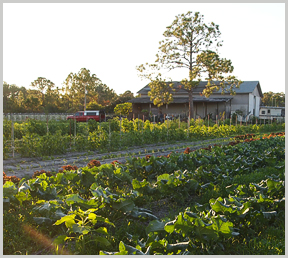
An early morning view of the Oakes organic farm in Florida — this is the kind of place that I like to think my food is grown — without harming the environment or a single creature.

A week or so after the news came out, I mentioned the organic controversy briefly in one of my blogs—as just another example of the “confusion over clarity” mentality that exists throughout our extended system of food, government, academia, medicine, insurance and media.

Confusion over clarity is what helps maintain the status quo for the 35 million people working in our extended “system.” And it’s the status quo that is killing our people, bankrupting our nation, and destroying the ecological harmony of our planet.

In this post, I will share a few excerpts from Roger Cohen’s Organic Fable piece—followed by a few selected comments about his column that were featured in a subsequent New York Times article entitled Organic Food – Truths and Fables.  Links to both are provided below. Let’s begin with a few sarcastic quotes from Mr. Cohen (regular NY Times columnist) on the topic of organic:

An effective form of premium branding rather than a science, a slogan rather than better nutrition, “organic” has oozed over the menus, markets and malls of the world’s upscale neighborhood at a remarkable pace. In 2010, according to the Organic Trade Association, organic food and drink sales totaled $26.7 billion in the United States, or about 4 percent of the overall market, having grown steadily since 2000. The British organic market is also large; menus like to mention that bacon comes from pampered pigs at the Happy Hog farm down the road.

So I cheered this week when Stanford University concluded, after examining four decades of research, that fruits and vegetables labeled organic are, on average, no more nutritious than their cheaper conventional counterparts. The study also found that organic meats offered no obvious health advantages. And it found that organic food was not less likely to be contaminated by dangerous bacteria like E.coli.

Logically, the organic movement should favor genetically modified produce. If you cannot use pesticides or fertilizers, you might at least want to modify your crops so they are more resilient and plentiful. But that would go against the ideology and romance of a movement that says: We are for nature, everyone else is against nature.

Organic is a fable of the pampered parts of the planet — romantic and comforting. Now, thanks to Stanford researchers, we know just how replete with myth the “O” fable is.
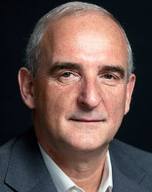
Roger Cohen of the New York Times

My reaction. Mr. Cohen does not understand the big picture. Organic farming is all about growing food for humans in a sustainable, Earth-friendly manner. He doesn’t understand that the vast majority of our agriculture is part of the process of growing food for animals that we eat. He also doesn’t understand that we shouldn’t be eating all those food animals in the first place.

Now, he has taken the results of one lopsided study and used them to vent all of his previous frustrations about a process that he doesn’t come close to understanding. And, in so doing, he has generated an avalanche of opinions in direct opposition to his. From the 9-13-12 article shown below; a few selected comments from readers:

Roger Cohen’s column “The organic fable” (Views, Sept. 6) dismisses the benefits of small-scale organic farming, casting proponents of organic food as narcissistic and elitist. The narcissistic view is in fact the one that assumes humanity can continually grow its population, along with its food supply, by using techniques that rely on finite and depleting resources for fuel, pesticides and other inputs even while contributing to climate change and other ecological harms that threaten to upend agricultural systems around the world.

Cohen does a disservice to his stated goal of feeding the world by avoiding questions of sustainability and assuming “conventional” agriculture can continue in perpetuity.

Jeremy Abramowitz, Washington

Mr. Cohen speaks with apparent ignorance of the impact of the chemical farming system on our world and especially our health. He also has been sold a bill of goods about organic farming’s low yields. Quite to the contrary, all of us who have grown food with a nonchemical approach recognize that by building the soil with “organic” materials such as compost, yields can be quite competitive. And the land won’t have to abandoned after years of chemical dumping.

All the solutions to our hunger challenges are right in front of our noses. We just refuse to see them, because they are not convenient. What if we subsidized local farming instead of big oil, big agriculture and big chemicals?

Bill Alstrom, York, Maine

Who knew that a single Stanford meta-analysis could provide a human being with the wealth of generalizations and conclusions that Mr. Cohen was able to sift from it. I sure hope he uses his ability to extract so much from so little to lead the charge to feed the world’s 9 billion people. The sky is the limit when you are unhindered by pesky elitist worries for the health of farm workers and their families, small farm owners, unpatented seeds, viable soil, manageable weeds, overly influential multinational corporations, biodiversity, links to cancer, rampant childhood autoimmune disease, untested genetically modified organisms being tested on all of us, and so forth.

Doug Rankin, West Hartford, Connecticut

Consecutive Daily Blogs (numerals provided today by a highway sign in Italy)

For your convenience, I have provided links to the two articles featured above. Also there is a link to my recent article about confusion over clarity.

The Bottom Line. As for clarity, it’s all about growing healthy food for people—by farmers who care about the land. And the closer to home the better. Then, by simply eating these nutritious foods, we can take charge of our own health and so much more.

Handy 4-piece take-charge-of-your-health kit—from Amazon.com

Want to find out how healthy your family is eating? Take our free 4Leaf Diagnostic Survey. It takes less than five minutes and you can score it yourself. After taking the survey, please give me your feedback as it will be helpful in the development of our future 4Leaf app for smartphones. Send feedback to jmorrishicks@me.com

International. We’re now reaching people in over 100 countries. Follow us on Facebook and Twitter or get daily blog notices by “following” us in the top of the right-hand column. For occasional updates, join our periodic mailing list.

To order more of my favorite books—visit our online BookStore now

J. Morris Hicks, working daily to promote health, hope and harmony on planet Earth.

For help in your own quest to take charge of your health, you might find some useful information at our 4Leaf page or some great recipes at Lisa’s 4Leaf Kitchen.

Got a question? Let me hear from you at jmorrishicks@me.com. Or give me a call on my cell at 917-399-9700.

SHARE and rate this post below.

Blogging daily at hpjmh.com…from the seaside village of Stonington, Connecticut – Be well and have a great day.

—J. Morris Hicks, board member, T. Colin Campbell Foundation
Posted in Organic, local produce | 3 Comments

Don’t want to be obese? Try moving to the city.

“Rural living could be an obesity risk factor.”

People living in the country have about a 19% greater chance of being obese than city-dwellers.

That was the headline of a 9-14-12 article in the Los Angeles Times. Here we go again—talking about risk factors—more “confusion over clarity.”

In a previous blog, I wrote about the fact that there are now 12,000 named diseases in the United States. And with ten risk factors for each, all we have to do is manage 120,000 risk factors in order to be healthy.

It is clear that this never-ending focus on risk factors is not working. Obesity, diabetes, and the cost of health care continue to go up every year. And why is that? To put it simply, we’re eating the wrong food—in the country and in the city.

Let’s first take a look at the data from the article: “About 70 million Americans, or 23% of the population, live in rural areas. The researchers found that 39.6% of them are obese, while 33.4% of urban residents were obese. Including overweight people as well, the comparative totals were 70.8% and 67.1%, the study said.”

The factors at work could be the “cultural diet” of rural America, as well as the isolation that often exists, said the lead researcher, Christie Befort, assistant professor of preventive medicine and public health at the University of Kansas Medical Center.

That diet includes “rich, homemade foods,” with lots of meat and desserts, she said. Rural Americans typically consume more fats than their urban counterparts, the study found.

Another factor could be the increased mechanization of farm work, Befort said. Older generations showed less disparity in weight than younger ones – older farmers would have put in more manual labor, she said.

Consecutive Daily Blogs (Numerals courtesy of the Pennsylvania Railroad Museum)

To me, this article was a joke—just another example of the steady stream of confusing articles about our food and our health. It’s time to get real simple and clear up all the confusion. How much simpler can you get than two words? WHOLE PLANTS!

The Bottom Line. Whether you live in the city or the country and whether you get a lot of exercise or you’re sedentary—if you want to avoid obesity, you need to start by eating the right food. That’s the food that nature intended for us to eat—whole, plant-based foods, still in nature’s package. This handy kit will get you started.

Handy 4-piece take-charge-of-your-health kit—from Amazon.com

Want to find out how healthy your family is eating? Take our free 4Leaf Diagnostic Survey. It takes less than five minutes and you can score it yourself. After taking the survey, please give me your feedback as it will be helpful in the development of our future 4Leaf app for smartphones. Send feedback to jmorrishicks@me.com

International. We’re now reaching people in over 100 countries. Follow us on Facebook and Twitter or get daily blog notices by “following” us in the top of the right-hand column. For occasional updates, join our periodic mailing list.

To order more of my favorite books—visit our online BookStore now

J. Morris Hicks, working daily to promote health, hope and harmony on planet Earth.

For help in your own quest to take charge of your health, you might find some useful information at our 4Leaf page or some great recipes at Lisa’s 4Leaf Kitchen.

Got a question? Let me hear from you at jmorrishicks@me.com. Or give me a call on my cell at 917-399-9700.

SHARE and rate this post below.

Blogging daily at hpjmh.com…from the seaside village of Stonington, Connecticut – Be well and have a great day.

—J. Morris Hicks, board member, T. Colin Campbell Foundation

Posted in Obesity | 5 Comments

Slashing the cost of health care in businesses…

Slashing the cost of healthcare in businesses or public/private organizations—anywhere from 10% to 50%—depending on leadership

J. Morris Hicks — Prepared to help business executives lead their associates in taking charge of their health.

J. Morris Hicks — Prepared to help business executives lead their associates in taking charge of their health.

Background. For most businesses in the United States, disease and the cost of health care are huge problems. Not only does “disease care” cost a lot of money, it also takes its toll on employee productivity, creativity,  absenteeism and morale. And the numbers are staggering.

4Leaf Wellness. One-page brief for CEOs

According to a Towers Watson survey (See link below) of 512 medium to large American companies, the average total health expenditures per employee in 2011 was $10,982. So for an organization of 1,000 people, that’s an annual medical bill of  roughly $11 million, most of which is paid by the company. If you’ve got 10,000 employees, then the bill is about $110 million.

What about traditional corporate wellness programs?  Virtually all of the 512 companies in the survey already have a wellness program in place—yet the cost of healthcare keeps going up. That’s because those programs are missing the single most important ingredient—The FOOD. By simply helping people improve what they’re eating, those health care bills can be cut in half. We estimate that for any organization—the cost of health care can be cut by 10 to 50% or more. Why the wide range in the estimate? Leadership. That’s the big variable.

The question is, “How important will this health promotion initiative be in your organization?”

Leadership is key. We have concluded that the degree of success for this type of project hinges on the understanding and the degree of leadership from the top executive in the organization—the CEO, the President, the mayor or the governor. So we are committed to finding those special business leaders out there who are ready to do something great for their employees, the families of those employees and the bottom line of their business—by teaching everyone in the organization how to take charge of their health.

To see a Fortune 200 company who truly “gets it” about food, scroll to the end of this blog for a compelling five-minute video. John Mackey (CEO), after showing that their annual $200 million cost of healthcare at Whole Foods Market has started dropping since 2010, states, “If a program works—get more of it, and this program works!”

The most important three ingredients for program success: Leadership, Leadership & Leadership

But will the people actually change? It is our experience that when people become educated about the “big picture” impact of their food choices—many of them will voluntarily change—for any number of reasons. But, by offering an opportunity to participate in a well-organized corporate program, the odds of that positive change rise sharply. Five reasons:

  1. Leadership. With a CEO and executive team that truly “gets it” about food, they are in a position to influence behavior in a group setting. They can also celebrate successes with many forms of positive reinforcement. They can make truly healthy eating an integral part of the company culture.
  2. Education. The leaders of the enterprise can organize and conduct training far beyond what the employees might do on their own. They can even arrange for that training to be conducted at the place of business—during working hours. Many companies have employee cafeterias that can become a huge asset during the process.
  3. Peer support. By organizing program participants into groups or teams, each employee will have the benefit of receiving support and encouragement from their teammates—and they will all be accountable to each other.
  4. Incentives. The CEO has the ability to provide financial incentives to participate and to achieve success. Examples: discounts on company products, lower cost of health coverage, discounts in company cafeteria, and even cash bonuses.
  5. Green Initiative. Most corporations already have green initiatives but are missing the single biggest opportunity to truly make a difference. This element is a motivator for the individual and is a way for the company to enhance their public image.

Most companies are striving to build their “green” image these days. And there is nothing greener than consuming an earth-friendly, plant-based diet.

More good news. Certainly the opportunity for a medium-sized corporation (10,000 employees) to save $30 or $40 million a year on health costs would be fantastic! But there are other benefits from such a program that might be even more important to the long-term success of the enterprise. For example:

  1. Less absenteeism
  2. Higher productivity
  3. Better morale
  4. Less employee turnover
  5. Better public image (most admired, best place to work, greenest company, etc.)

A strategic business advantage. As the first wave of CEOs begins to take advantage of the many benefits that come from a healthier workforce, their primary competitors may have trouble competing with them unless they launch similar initiatives. As such, true health promotion improves the ability of the enterprise to gain market share—yet another reason why it must be led by the CEO. We’re talking about a strategic advantage as powerful as having an automobile company that doesn’t have to pay a dime for all of its steel.

GM spent $4.6 billion on health care in 2007, more than the cost of steel used in their vehicles.

Real world examples. The medical doctors featured in our book have been reversing chronic disease for decades by simply introducing their patients to a health-promoting diet that features mostly whole, plant-based foods, still in nature’s package. But, as we know, you don’t really need to have an M.D. to take charge of your health; you just need to start getting the vast majority of your calories from whole, plant-based foods.

CEO John Mackey is helping his 62,000 employees learn how to take charge of their own health.

Recently, these powerful principles have been harnessed by two very large organizations. The latest one is the City of Chicago, under the leadership of their triathlete mayor, Rahm Emanuel, former White House Chief of Staff. Now we have two CEO role models for healthy eating; Mr. Emanuel and John Mackey of Whole Foods Market.

A little background. For most of my business career, I have been involved in managing change, raising productivity, reducing costs and increasing profits in a host of organizations. As a president, general manager or as a management consultant, I have employed the same “process-improvement” skills to identify waste and increase profitability—in a wide variety of business settings. 

I now wish to leverage my business background with more recently acquired knowledge of the whole, plant-based diet-style to help businesses reduce costs and improve productivity. The beauty of this opportunity is the simplicity. In a nutshell, we want to help employees learn the “why” and the “how” for greatly increasing the amount of whole, plant-based foods in their diets. And we want to give them an incentive to move in that direction as rapidly as possible.

J. Morris Hicks and the Ansley Consulting Group are now offering hefty referral fees for client introductions.

Project details. Our role in these projects will be to help educate, facilitate, organize, train, administer, report, celebrate and assist the top executive in every possible way to help all of the employees decide to take charge of their own health.

Realistically, we know that many of the employees will not take advantage of this opportunity, but a great many of them will—enough of them to make a sizable dent in the overall cost of health care for the enterprise. Further, their energy, enthusiasm and morale boost will be felt throughout the entire organization.

And it all begins with providing the opportunity for ALL employees to take charge of their own health. In so doing, they help themselves, their families, their planet and their employer who would be making all of this possible.

Meet. Dr. John McDougall. In the following 13-miniute video, he talks about projects at Blue Cross-Blue Shield, Publix Markets and the latest (2012) at Whole Foods Market. CEO John Mackey talks candidly about the benefits of the process.


While we might very well employ an intensive program like the one described above for certain high-risk/cost employees, our primary effort is to work with our client in developing an employee health promotion program that can be executed by company employees in perpetuity. We’re talking about weaving this program into the cultural fabric of the organization.

Dr. McDougall talks about savings of 44% (of healthcare expenditures) in the test groups of employees at Blue Cross (1999-2001). We’re talking about making the changes permanent and making it available to ALL employees—even the part-timers who’re not receiving health care benefits.

Finally, Whole Foods CEO John Mackey shares with us how he began conducting the “immersion” programs. He called it part of creating a “wellness culture” at Whole Foods— a win-win for all concerned: the employees, their families and the shareholders of the corporation. At one point in the following 5-minute video, he showed a graph clearly indicating that the overall cost of health care had peaked and was beginning to come down at their company.

As he says, “If a program works, get more of it.” The proposition is simple: Promote health and the cost of health care comes down!

I used the word “we” a few times in this article. That’s because we have a team of highly experienced consultants, dietitians, doctors, nurses and health educators who are ready to tackle even the largest of organizations. Please contact me to discuss further.

Do you know any business leaders who might be interested? Please give me a call at 917-399-9700. Or send me an email at jmorrishicks@me.com. For a summary of our expertise in food-based wellness, see Consulting Credentials—J. Morris Hicks

  1. Printer-friendly 4Leaf Wellness. One-page brief for CEOs
  2. Related blog. Are corporate wellness programs working?
  3. Referral fees? Reaching the leaders who save $$ when we get healthy
  4. Related blog. Cost of healthcare: Top concern for small business CEOs…
  5. Related blog. When the vast majority of people are obese…
  6. Related blog. Health insurance of the future; an idea that can work.
  7. Letter to Walmart CEO. World’s largest company. World’s largest healthcare bill.
  8. Letter to CEO of CostCo. CostCo spending one billion dollars on healthcare (est.)
  9. Letter to CEO of CVS. Rx for slashing the cost of healthcare at CVS
  10. Letter to Chairman of Ford Motor Co. Urgent letter to Bill Ford
  11. Passionate executive leadership. Here’s what it looks like. (10-minute video)
  12. Data source. Towers Watson 2013 Survey on Purchasing Value in Health Care
  13. Health costs in general. Health spending still going up—with no end in sight.
  14. Healthcare $PIE. A look at the cost of health care PIE—in the USA
  15. “Seriously Impressive” Corporate Wellness Programs — coming up short.
  16. Kaiser Permanente Spring 2013 Journal. Article on Plant-Based Diets.
  17. Teaching medical doctors all about whole foods, plant-based nutrition. pbnhc.com
  18. 4Leaf Corporate Wellness Vision Document. Click here (eleven pages)
  19. J. Morris Hicks. Experience and qualifications for this kind of consulting

Want to find out how healthy your family is eating? Take our free 4Leaf Diagnostic Survey. It takes less than five minutes and you can score it yourself. After taking the survey, please give me your feedback as it will be helpful in the development of our future 4Leaf app for smartphones. Send feedback to jmorrishicks@me.com

Want to find out how healthy your family is eating? Take our free 4Leaf Diagnostic Survey. It takes less than five minutes and you can score it yourself. After taking the survey, please give me your feedback as it will be helpful in the development of our future 4Leaf app for smartphones. Send feedback to jmorrishicks@me.com

International. We’re now reaching people in over 100 countries. Follow us on Facebook and Twitter or get daily blog notices by “following” us in the top of the right-hand column. For occasional updates, join our periodic mailing list.

To order some of our favorite books—visit our online BookStore now

J. Morris Hicks, working daily to promote health, hope and harmony on planet Earth.

For help in your own quest to take charge of your health, you might find some useful information at our 4Leaf page or some great recipes at Lisa’s 4Leaf Kitchen. Got a question? Let me hear from you at jmorrishicks@me.com. Or give me a call on my cell at 917-399-9700.

Blogging daily at hpjmh.com…from the seaside village of Stonington, Connecticut – Be well and have a great day.

—J. Morris Hicks, board member, T. Colin Campbell Foundation

Posted in Activism & Leadership, Corporate Wellness | 1 Comment