After Oprah, not much news about Lance these days

Lance and OprahAbout four weeks ago, I posted a blog about Lance Armstrong shortly after his tell-all interview with Oprah. At that time, I announced that I had forgiven Lance and would give him the benefit of the doubt as he moved forward.

My blog was somewhat controversial, which is not surprising—as many people expressed their anger at Lance for betraying all of his fans, cancer victims, etc. But now the dust has settled a bit, and I see in the New York Times that the Livestrong Foundation is feeling the effect of the scandal—maybe people will be more willing to forgive Lance; particularly if he focuses on truly helping people.

From the Times article (See link below):

Regarding Livestrong. David Reibstein, a professor of marketing at the University of Pennsylvania, said, “I think there’s no question that some people are going to be disillusioned and therefore are not interested in continuing their support.”

He added, “But people still care about fighting cancer, so I don’t think we’ll see it totally disappearing.”

So, how are you feeling about Lance now? Let’s find out. Please select one of the three answers below that best describes how you feel:

Why did I forgive Lance? First of all, I have always been a very forgiving person. I don’t think anger and holding grudges is healthy and I try not to judge anyone for anything. Secondly, I am now in the business of pursuing a world-changing mission that is extremely short on prominent leadership.

This should be required reading for all members of Congress.

Has been read by over one million people. Imagine if one billion read it.

While billions of people are talking about finding the cure for cancer; hardly anyone is talking about sharing the complete truth about prevention of cancer with everyone in the world. In a recent blog about cancer, I quoted some “astounding truths” from The China Study. For your convenience, here are five of them:

  1. [C]asein (the protein in cow’s milk) and very likely all animal proteins, may be the most relevant cancer-causing substances that we consume.
  2. There is enough evidence now that the U.S. government should be discussing the idea that the toxicity of our diet is the single biggest cause of cancer.
  3. There is enough evidence now that doctors should be discussing the option of pursuing dietary change as a potential path to cancer prevention and treatment.
  4. Our institutions and information providers are failing us. Even cancer organizations, at both the national and local level, are reluctant to discuss or even believe this evidence.
  5. Food as a key to health represents a powerful challenge to conventional medicine, which is fundamentally built on drugs and surgery.
J. Morris Hicks, the "big picture" guy

J. Morris Hicks, the “big picture” guy

So, what if Lance Armstrong made true cancer prevention his next big mission? How many people could he reach? Well, it depends on the poll above. My bet is that most people would end up forgiving him if he got real serious about a noble cause. As for the “cancer prevention” cause, his actions would not only fight cancer—but they would simultaneously promote the longterm sustainability of the human race.

Do you know of any causes more important than that?

I figure that around two billion people have heard of Lance Armstrong. If over half of them forgive him and will once again listen to him—Lance could play a huge part in changing the world. I look forward to seeing the poll results and hearing your comments.

Handy 4-piece take-charge-of-your-health kit—from Amazon.com

Want to find out how healthy your family is eating? Take our free 4Leaf Diagnostic Survey. It takes less than five minutes and you can score it yourself. After taking the survey, please give me your feedback as it will be helpful in the development of our future 4Leaf app for smartphones. Send feedback to jmorrishicks@me.com

International. We’re now reaching people in over 100 countries. Follow us on Facebook and Twitter or get daily blog notices by “following” us in the top of the right-hand column. For occasional updates, join our periodic mailing list.

To order more of my favorite books—visit our online BookStore now

J. Morris Hicks, working daily to promote health, hope and harmony on planet Earth.

For help in your own quest to take charge of your health, you might find some useful information at our 4Leaf page or some great recipes at Lisa’s 4Leaf Kitchen.

Got a question? Let me hear from you at jmorrishicks@me.com. Or give me a call on my cell at 917-399-9700.

SHARE and rate this post below.

Blogging daily at hpjmh.com…from the seaside village of Stonington, Connecticut – Be well and have a great day.

—J. Morris Hicks, board member, T. Colin Campbell Foundation
Posted in Activism & Leadership, Athletic performance, Cancer, Celebrities, Poll included | 8 Comments

Weight-Loss. Effortless and Permanent?

Some readers disagree. I would like to hear your story.

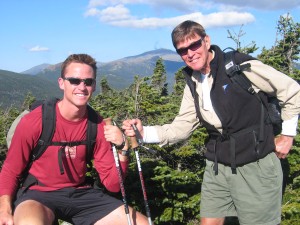
Unless we have an accident, these two 4Leaf-ers don't visit physicians very often.

My son Jason and I both experienced effortless, permanent and somewhat unexpected weight-loss.

Here’s mine. My personal experience since starting a near optimal, whole foods, plant-based diet in 2003 has been that the weight-loss was effortless and permanent. My peak weight was around 180, although at 6 feet tall, I looked okay in my clothes and never really considered myself overweight.

But, as I began to learn about the optimal diet for humans and started making some big changes in my eating habits—the weight started dropping pretty quickly. Within six months, I was down to my current weight of around 155 pounds. That weight-loss was effortless and permanent.

Since 2003, I have seen lots of people experience the same results that I did—effortless and permanent weight-loss when thy started eating the right food for our species. Many were surprised at results—losing weight quickly that they didn’t even know they had to lose. Their goal was vibrant health; weight-loss was a bonus.

You can say goodbye to your bathroom scale; after effortlessly reaching your ideal weight on the 4-Leaf Program, why would you ever need it again?

I no longer have a scale. In my case, vibrant health is the goal, weight-loss is just a by-product or fringe benefit.

But in the past few weeks, I have heard from Nicole and Stephen—who shared experiences that were much different than mine.  Nicole writes:

The real problem I’m having is that I commit for a few weeks, get freaked out that I’m not losing any weight, get very hungry and feel guilty for eating whole wheat bread or so many carbs and end up binge eating for a few days, get back on track etc. Obviously this is contributing to weight gain and I need to be patient to let the plan work when I am on track.

Then a few weeks later. I am very frustrated, sad and depressed about this because I wanted this lifestyle so badly but I am uncomfortable at this weight and feel I have to go back to my high protein, low fat, no carb Dukan Diet  because I maintained my weight between 112 and 114lbs on this plan over a 7 month period until I gave up on it for this new Vegan/plant based way of life.

I urged Nicole not to go back to the gimmick diets like Dukan and reached out to several of my family members who might be able to help her. Then, I heard from Stephen:

May I add my kudos to the many you have received for your past tireless blogging efforts.  I have read every one and have searched hard and long to find something to disagree with without success—until NOW.

Having dealt with the many issues of optimizing weight on two separate occasions I must point out that weight loss for me was neither “automatic” or “permanent.”

The record shows that weight loss in general and optimizing weight in particular is neither “effortless” or “permanent” for almost everyone.  That is why there is a multi-billion dollar and expanding weight loss industry today.

Leveraging the simple, yet powerful concept of maximizing the percent of your calories from whole plant foods -- still in nature's package

With vibrant health as a goal, our bodies tend to seek their ideal weight.

We need your help. As you know, our book talked about effortless and permanent weight-loss and I have been blogging about the same phenomenon for the past two years. But, apparently the road to their body’s ideal weight has not been as quick and easy as it was for me.

Maybe some of you can share your experiences in comments below—but first I would like for you to take this short survey:

Please only take the poll if you have switched from some form of the SAD to a mostly whole foods, plant-based diet. In other words, you’ve gone from eating meat, dairy and processed foods at most meals to a near-optimal 3 or 4Leaf level of eating.

We want to hear about your weight-loss experience since improving your diet. Check all that apply.

Please comment. Maybe you could also share your story in the comments below. This is how we help each other in our journey. With weight-loss and vibrant health as an incentive, our better food choices will go a long way toward helping the human species move back into living in harmony with the rest of nature. “No less than our future as a species hangs in the balance.” —T. Colin Campbell.

13 blogs in the weight-loss “category” (out of a total of 23)

  1. Why do we like foods that aren’t good for us? (Dr. Doug Lisle on “The Pleasure Trap”)
  2. Eric, inspired by President Clinton, shares his story
  3. A tale of two diet-styles; choose the one that’s right for you.
  4. Weight-loss pills. Miracle solution or just more confusion?
  5. Atkins, South Beach, Dukan—now “The Paleo Diet”
  6. 2 words for health beats 1,083 words for “miracle diet.”
  7. In the quest for “vibrant health,” weight-loss is just a bonus.
  8. Effortless weight-loss — on the “4-Leaf” road to vibrant health
  9. Eating 4-Leaf for “vibrant health” — with weight-loss as a bonus
  10. Weight-loss targets; not recommended — Here’s why
  11. Weight-loss or vibrant health? What is your goal?
  12. Dr. Oz and his mixed signals…a reader speaks out
  13. Why do some vegetarians get fat?

Handy 4-piece take-charge-of-your-health kit—from Amazon.com

Want to find out how healthy your family is eating? Take our free 4Leaf Diagnostic Survey. It takes less than five minutes and you can score it yourself. After taking the survey, please give me your feedback as it will be helpful in the development of our future 4Leaf app for smartphones. Send feedback to jmorrishicks@me.com

International. We’re now reaching people in over 100 countries. Follow us on Facebook and Twitter or get daily blog notices by “following” us in the top of the right-hand column. For occasional updates, join our periodic mailing list.

To order more of my favorite books—visit our online BookStore now

J. Morris Hicks, working daily to promote health, hope and harmony on planet Earth.

For help in your own quest to take charge of your health, you might find some useful information at our 4Leaf page or some great recipes at Lisa’s 4Leaf Kitchen.

Got a question? Let me hear from you at jmorrishicks@me.com. Or give me a call on my cell at 917-399-9700.

SHARE and rate this post below.

Blogging daily at hpjmh.com…from the seaside village of Stonington, Connecticut – Be well and have a great day.

—J. Morris Hicks, board member, T. Colin Campbell Foundation
Posted in Weight-Loss | 19 Comments

Leather? Vegan? Hypocrite? Realist?

My first blog after the end of the 737 streak

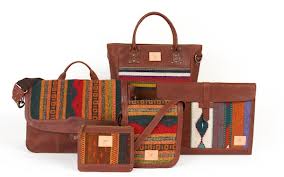
Leather seems to be everywhere these days.

Leather seems to be everywhere these days.

From time to time, one of my readers asks me about our use of animal products—other than their food products like flesh, milk or eggs. I am primarily talking about their skins for our shoes, hand-bags, coats, car seats, furniture, etc.

Recently I received this note from Linda after she posted this comment under my recent blog: A reader’s question gets to the heart of “4Leaf for Life.”

“Actually, Jim and anyone else who is curious, the leather goods business is one of the primary reasons that beef and pork prices stay low. More affordable means more accessible to more people and we’re all in favor of as many people as possible eschewing meat. Plus, for me anyway, it’s hypocritical and expedient to rationalize wearing flesh when I would never eat it.” Linda D.

Hi Jim.

I’ve been reading your blog for a long time and my perception is that you’re not adverse to learning from your readers.  So, I’d like to elaborate a little on my comments about leather.

First, as I said, the leather industry actually subsidizes the beef industry and, to a lesser degree, the pork industry.  Beef prices would be much higher if the hides weren’t sold for leather goods.  Without the domestic leather business, in fact, beef would be beyond the average person’s budget.  More expensive beef = less consumption = improvement in our collective health and less environmental damage.

In addition, the process of tanning hides for leather is very bad for the environment.  Not only does it require a lot of energy, it requires the use of dangerous chemicals including formaldehyde, coal-tar derivatives, arsenic, and chromium, which results in particularly hazardous waste.

Thanks for listening.  And thank you for the daily posts over the last two years.  I’ve enjoyed them, as well as the comments from other readers.

Sincerely and thank you, Linda D.

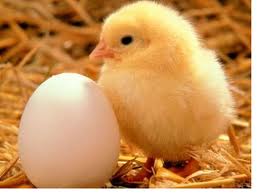
Which came first? The chicken or the egg?

Which came first? The chicken or the egg?

My response. Dear Linda, You bring up some interesting points in your memo about leather—so interesting that I would like to share my thoughts in this blog. While reading your note, I was thinking about the age old question, “Which came first? The Chicken or the Egg?

As for cattle and leather? Which came first? Raising them for their meat or for their hides? As I mentioned in the earlier blog referenced above:

My work is all about diet, health, and the environment—I pay no attention to the leather coats, shoes, car seats, etc. I figure that they’re by-products of the meat industry and would be outrageously expensive if there were no meat industry. When the meat industry goes away, so will my leather purchases.

So it’s probably that comment that triggered your suggestion that I can learn from my readers. I can—and I do. I must confess that there’s a lot I don’t know about the economics of selling meat without the leather products or selling leather products without using the meat for food. No doubt, each of them make the other more affordable.

Just another form of exploitation of other "Earthlings" for our pleasure.

Just another form of exploiting other “Earthlings” for the pleasure and entertainment of humans

Personally, I think that all of our industries built on the exploitation of animals are disgusting and would like to see all of them go away—even horse racing. But, I am also a realist and realize that they won’t all be going away anytime soon.

And, as a realist, I must package my message so that it will not only reach the non-vegan masses—but that it will also influence millions of them to move toward more plant-based eating. If I come out against horse-racing, hardly anyone would ever listen to me—about anything.

I mentioned a 4Leaf business model that’s in the works. We must develop healthful products that are attractive to a large percentage of the population. Once we reach them with our products, we can gradually and gently educate them relative to the staggering consequences of our food choices all over the planet. I truly believe that there’s never been anything more important in the history of the world. “No less than our future as a species hangs in the balance.” —T. Colin Campbell, PhD. From my earlier blog:

It’s all about marketing. If we want to change the world by moving people toward a diet-style of mostly plants, we’d better figure out an attractive way to package our product. We decided that we need a POSITIVE  and attractive way to define a healthful diet. We also want it to be flexible, simple, delicious, inexpensive and easy—with no calorie counting, etc. That’s why we came up with 4Leaf for Life.

As you know, I sometimes describe myself as an activist, blogger, speaker and author. I am also a businessman. And, like John Mackey at Whole Foods Market, our business has to make money if it is to survive and grow. That doesn’t mean that we will compromise our core beliefs—but it does mean that we will strive to produce health-promoting products that will appeal to most of the carnivores out there. How will we do that? Stay tuned.

Thank you very much for your comment and your note, Linda. We’re on the same page. By the way, my current car has leather seats and my living room furniture is mostly leather (from the old Ralph Lauren offices in NYC–where I once worked). I also have some leather shoes and jackets.

My Sperry boat shoes---with zero animal products.

My Sperry boat shoes—with zero animal products.

I am not going to throw all that stuff out (that would be wasteful), but—because of what I have learned from you—I will be buying much less leather in the future.

FYI, my last pair of boat shoes were 100% man-made fiber—as is the ski jacket that I am wearing at this moment as I type this blog.

Sincerely, be well and continue to be considerate of all creatures, Jim

PS: Anyone know what they do with all those chicken feathers—from the nine billion dead chickens a year in just the United States? I bet they don’t just throw them away.

Other blogs dealing with animal rights. I notice that I have published 29 other blogs that relate to the “exploitation of animals” topic. Here are a few of them; you can find the rest under the “Suffering of Animals” category in the upper right column.

Handy 4-piece take-charge-of-your-health kit—from Amazon.com

Want to find out how healthy your family is eating? Take our free 4Leaf Diagnostic Survey. It takes less than five minutes and you can score it yourself. After taking the survey, please give me your feedback as it will be helpful in the development of our future 4Leaf app for smartphones. Send feedback to jmorrishicks@me.com

International. We’re now reaching people in over 100 countries. Follow us on Facebook and Twitter or get blog notices by “following” us in the top of the right-hand column. For occasional updates, join our periodic mailing list.

To order more of my favorite books—visit our online BookStore now

J. Morris Hicks, working daily to promote health, hope and harmony on planet Earth.

For help in your own quest to take charge of your health, you might find some useful information at our 4Leaf page or some great recipes at Lisa’s 4Leaf Kitchen.

Got a question? Let me hear from you at jmorrishicks@me.com. Or give me a call on my cell at 917-399-9700.

SHARE and rate this post below.

—J. Morris Hicks, board member, T. Colin Campbell Foundation

Posted in Activism & Leadership, Suffering of Animals, Vegan or vegetarian? | 4 Comments