My One-Hour Sustainability Presentation for Mainstream Audiences
This blogpost is a six-part outline for a sustainability speech that I am comfortable delivering with or without PowerPoint slides. It is all about global depletion and what we can do about it. Some prominent scientists are predicting the collapse of our civilization unless drastic action is taken. But that drastic action is not happening, despite the widespread obsession with all things “green” around the world. This speech is all about the single most powerful (and most ignored) step we can take to reverse the negative trends and begin to bring humankind back to living in harmony with nature.
ONE. Executive Summary
“When one tugs at a single thing in nature, he finds it attached to the rest of the world.”—-John Muir
Sustainability is a hot topic these days, everyone’s talking about it, corporations are busy launching initiatives and many universities have added sustainability curriculums and degrees.
The problem is that sustainability means different things to different people. And with all this attention, we’re still “sleepwalking off of a cliff” (says James Cameron) with regards the most crucial sustainability issue of all—the sustainability of our civilization and ultimately our very species.
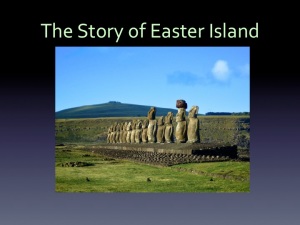
Once a lush tropical island with a thriving population of 15,000, they consumed their finite resources and their civilization collapsed.
Despite the unprecedented obsession with all things green, many noted scientists and thinkers don’t believe we’ve even scratched the surface when it comes to resolving the impending crises they predict.
- Noted scientists and global thinkers predict the collapse of our civilization before the end of this century. (Emmott, Brown, and Oppenlander)
- Dr. Stephen Emmott. Description of his book, Ten Billion: Deforestation. Desertification. Species extinction. Global warming. Growing threats to food and water. These driving issues of our times are the result of one huge problem…US.
- Lester Brown. “In addition to some of the most severe soil erosion in human history, we are also facing newer trends such as the depletion of aquifers, the plateauing of grain yields in the more agriculturally advanced countries, and rising temperature.”
- Richard Oppenlander. We continue to lose over 30 million acres of rainforest every year and we lose an area the size of South Carolina to erosion every year.
- Certain food crisis. While all of this is happening, Dr. Emmott notes that we will have to produce an unprecedented amount of food in the next forty years—an amount greater than ALL food consumed during the entire 200,000-year history of humankind
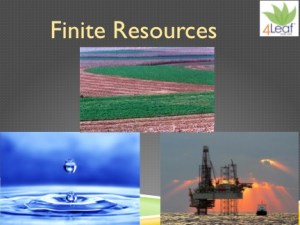
- Bottom Line. All of this leads us to two HUGE problems: Not enough Land and not enough Water.
- No apparent solution. Much has been written about the collective environmental problems but no plausible solution has been put forward by the mainstream thinkers and scientists. They talk about numerous things that we MUST do to avoid disaster but there is no plan for making that happen.
- We have a plan, developed by a former senior business executive.
Industrial Engineering, always looking for “the best bang for the buck.”
TWO. Business Background of J. Morris Hicks. Trained as an Industrial Engineer (Auburn 1968) and later earning an MBA (University of Hawaii, 1971), I have always been what I like to call a “big picture” guy.
As an IE, I was taught to always consider the “big picture” of any “system” before trying to modify and/or improve it. We were also taught that any system can be improved and that we should always look for the “best bang for the buck.” And that’s why I have focused on the food that we eat.
Since 2002, I have invested the requisite 10,000 hours in the study of sustainability, particularly the human activity that determines how most of the world is used—what we put at the end of of our forks. Requisite? According to Malcolm Gladwell, this authorizes me to consider myself an expert on this crucial topic. And with my engineering and business background, coupled with my newfound knowledge, enables me to enjoy an almost unique understanding of the “big picture” of this vast, interconnected system on which we depend for our future as a species.
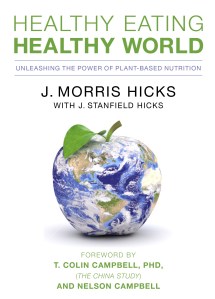
“If we eat the way that promotes the best health for ourselves, we also promote the best health for the planet.” —T. Colin Campbell, PhD
I began my study of this topic in November of 2002 after becoming curious about the optimal diet for humans. One thing led to another and I finally decided to write a book. That book is entitled “Healthy Eating, Healthy World” and was published by BenBella Books in late 2011.
Most recently, I have been leveraging my general management and executive search background in an effort to develop a plausible solution to many of the world’s most pressing problems and to recruit powerful leaders to execute that solution.
THREE. Sustainability of the Ecosystem. All areas of our ecosystem are in trouble and continue to worsen at an unprecedented rate. The scariest of all is Global Warming (F), where we might be reaching a tipping point.
- Land. Six billion football fields of arable land. The SAD requires two FF to feed one person. As more people choose the SAD, we can feed a maximum of three billion people. We’ve got four billion people now, on our way to ten billion or more. A 3rd grader can quickly figure out that this is not going to work.
- Fresh water. Our most precious natural resource. We’ve proven that we can survive 200,000 years without oil and we can survive 40 days or more without food, but we can’t survive three days without water. Today, over one billion people are thirsty and three billion lack access to proper sanitation. Yet, we in the western world squander water like never before. There are currently 18 countries comprising over half the world’s people that are drawing down their water reserves (in underground aquifers) to grow food for livestock and for people. (Includes USA, China and India)
- RainForests. Described as the lungs of the Earth, the RFs take CO2 out of the air and replace it with Oxygen. We’ve already destroyed over 70% of them and continue to destroy over 30 million acres a year. “Destroying rainforest for economic gain is like burning a Renaissance painting to cook a meal.” E.O. Wilson.
- Oceans. Oppenlander states, “Our oceans are a mess. The rate of depletion, human-induced extinction, and environmental degradation in our oceans is most likely greater than anything witnessed on land. While global warming trends are measurably affecting our oceans, it is the indiscriminate, unregulated overfishing of our seas that will have the most profound and long-lasting effect on all of the complicated intertwining of fragile ecosystems.”
- Species. Primarily due to the loss of habitat, the rate of extinction is running 1,000 times faster than historical norms.
- Global warming. Exacerbating all of the above is this highly controversial problem that isn’t going away. Bill McKibben presented the simple math in his 2012 Rolling Stone article with three numbers:
- 2 degrees Celsius. “The target that has been talked about in international negotiations for two degrees of warming is actually a prescription for long-term disaster.
- 565 Gigatons. Scientists estimate that humans can pour roughly 565 more gigatons of carbon dioxide into the atmosphere by midcentury and still have some reasonable hope of staying below two degrees.
- 2795 Gigatons. The number describes the amount of carbon already contained in the proven coal and oil and gas reserves of the fossil-fuel companies, and the countries (think Venezuela or Kuwait) that act like fossil-fuel companies. In short, it’s the fossil fuel we’re currently planning to burn. And the key point is that this new number – 2,795 – is higher than 565. Five times higher.
- Already behind schedule and still slipping. In fact, study after study predicts that carbon emissions will keep growing by roughly three percent a year – and at that rate, we’ll blow through our 565-gigaton allowance in 16 years, around the time today’s preschoolers will be graduating from high school.
- Energy. As you can see from the above, our main problem is not that we’ll someday run out of fossil fuels, it’s that we’ll actually use what we’ve already discovered. Here’s the fly in the ointment. How do we maintain a comfortable lifestyle without using so much fossil fuels that we pass the tipping point regarding global warming? And how do we replace the fossil fuels, on which our entire civilizations have depended on completely for the last 100 years? With Earth-friendly renewables? See Part FIVE.
Nature is party to all our deals and decisions, and she has more votes, a longer memory, and a sterner sense of justice than we do.—E.O. Wilson
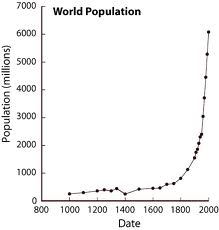
From one to seven billion in just 200 years. What is the carrying capacity of the planet? Scientists believe we may have passed it.
FOUR. Sustainability of Humankind. If the entire history of life on Earth was just one year—humankind has been here for just the last 26 minutes. Jesus Christ lived 20 seconds ago, we’ve grown from one billion to seven billion people in the last 2 seconds and, in just the last 1/2 of one second (fifty years), we humans have inflicted more damage on the fragile harmony of nature than all previous generations of humans combined for the last 200,000 years.
We’ve basically got three big problems with regards to our human contract with nature. As the only species in the history of the world that does not live in harmony with nature, it boils down to three big issues—all of which must be addressed if we’re going to survive. We must address these issues in order to move humankind close enough to living in harmony with nature—close enough to preserve Nature’s ability to sustain us as a species.
- Our out-of-control population numbers and continued growth.
- The way we live: Parts A., B., and C. (Our homes, our overconsumption and our travel)
- The elephant in the room—the way we eat.
The first two will take decades, if not centuries to make much of a difference. But the last one is the big winner for two reasons.
- Changing what we eat will do more to sustain our species than all other initiatives combined.
- Any single individual can change what they eat overnight. With enough money, power and leadership behind the message—significant positive change can occur very quickly.
 FIVE. The “Not-So-Obvious” Solution. Dr. Stephen Emmott writes in his book about an almost certain collapse of our civilization before the end of this century—UNLESS we make some SERIOUSLY RADICAL CHANGES in the way that we live and consume in the very near future. He says that as a scientist, he spends his life trying to prove his theories wrong; but in this case, he doesn’t believe he’s wrong. He wishes he were.
He would like to think that our leaders would come together and head off this horrible disaster. But he doesn’t think that they will and has concluded that we as a species are F_ _ _ _ D! Likewise, Lester Brown does an outstanding job of describing the approaching disaster but offers no plausible plan for preventing it. What are they both missing?
Even though they know that meat and dairy calories require over ten times as much land, water and energy as plant-based calories, they don’t even suggest the possibility of trying to move everyone toward a plant-based diet. This, despite the fact, that doing so would have an incredibly powerful impact on our land, water and energy issues. Why is that?
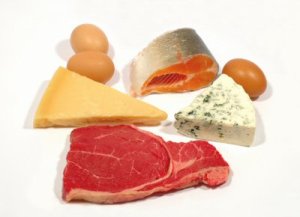
Even “Google” thinks that “protein” means meat, dairy and eggs. Try for yourself.
They appear to be missing the not-so-well-known fact that humans simply do not NEED to eat ANY animal products—EVER. It is indeed those animal products and other highly processed foods that are driving our troubling chronic disease trends and the accompanying out-of-control cost of healthcare; now approaching 20% of our GDP in the USA.
I call this widespread misunderstanding the “protein myth.” And once it’s dispelled, we’ll be able to unlock the best and brightest minds of the world to the civilization-saving power of a simple shift of food choices. A simple, yet aggressive move in the direction of whole, plant-based foods—-accompanied by a shift away from all meat, fish, dairy, eggs and processed foods.
Not an easy task to be sure, but with enough money, power and leadership, it can be done. All we have to do is help people understand that it is in their best interest to simply change what they eat. We do that with a combination of education, motivation and legislation.
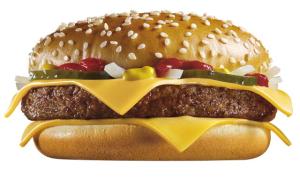
How yummy is this going to look when it costs $60? When the food companies start paying for water, that’s what will happen. Suddenly the veggie burger is more attractive.
If we can’t win them over with the first two, we’ll have to make the wasteful SAD unaffordable for the vast majority of people. Eventually, everyone will need to climb on board.
We’re on a sinking ship and those who’re not part of the solution—someday (maybe fifty years from now) may be found guilty of a crime worse than murder and be executed. At one point, you’re either part of the solution or you’re part of the problem.
As stated earlier, changing what we eat won’t solve all of our problems, but since our food choices determine how the entire Earth is used—I have concluded the following:
Shifting to a whole food, plant-based diet will do more to ensure the long-term survival of our species than ALL other possible initiatives combined.
By focusing on the initiative that yields the “biggest bang for the buck,” we buy ourselves time to work on the joint issues of over-population and the way we live and consume in general.
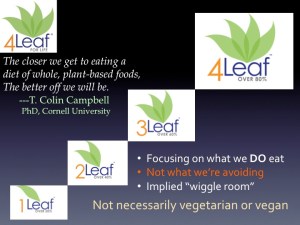 Note that we’re not suggesting that everyone should become 100% vegan overnight. No, we’re suggesting that everyone focus on maximizing the percentage of their daily calories that are derived from whole plants.
We call it 4Leaf for Life and encourage people to try to get over 80% of their calories from whole plants. Doing so will likely result in vibrant health for themselves and will enable them to contribute mightily toward saving our civilization.
SIX. Leadership and a PLAN for moving forward. As an executive recruiter for the past one third of my career, I have specialized in what I call “the leadership business.” No matter what the problem, no matter what the mission, and no matter where, when or who—the three most important ingredients for success in ANY initiative are Leadership, Leadership and Leadership. (I stole that line from the late Dr. W. Edwards Deming)
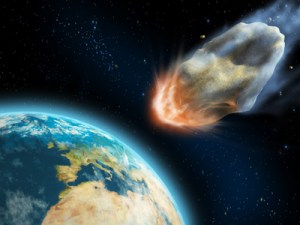
What would our world leaders do if they knew that a huge asteroid would collide with our planet on June 3, 2072?
And I also stole an idea from Dr. Stephen Emmott. The Asteroid Project. We need an asteroid type project of our own—a project to quickly and aggressively tackle the “biggest bang for the buck” when it comes to saving our civilization. In order to do that, we will need leadership, power, and wealth.
And it all starts with leadership; choosing and recruiting the overall Champion or Sponsor of our SOS Global Initiative. That person must have knowledge, conviction, name recognition and wealth. And he/she must be willing to truly “walk the walk,” and not just talk the talk.
Names like Oprah, Clinton, Bloomberg, Zuckerberg and Cameron have been discussed. In my live speeches, I will be able to bring my audience up-to-date with regards to the status of our “executive search” for champions, sponsors and leaders.
Note: This presentation can be delivered with our without PowerPoint slides and can be scheduled as quickly as needed. I am always ready to tell this story to any audience, anywhere, anytime. — J. Morris Hicks (See my Speaking Page for details.) I drafted this blog while flying back from Tucson on 9-22-13. My speech to the Healthy You Network the previous day inspired me to get all my latest thoughts documented. Here’s a 5-minute glimpse at that 75-minute presentation.
From the Fox Theater in Tucson, Arizona — September 21, 2013
- My PowerPoint slides from my 9-21-13 presentation in Tucson. (large online PDF file with 74 color slides)
- My 8-22-13 blog. S.O.S. (Saving Our Species) — An urgently needed PLAN
Handy 5-piece take-charge-of-your-health kit—from Amazon.com
- The movie that’s changing the lives of millions: Forks Over Knives DVD
- Healthy Eating, Healthy World, The “big picture” about food (our book)
- An essential scientific resource: The China Study by Dr. T. Colin Campbell
- Dr. McDougall’s new book, The Starch Solution, with lots of great recipes.
- Dr. Campbell’s new book: WHOLE, Rethinking the Science of Nutrition
Why should we be eating mostly plants? The “big picture” in 4 minutes.
Want to find out how healthy your family is eating? Take our free 4Leaf Survey. It takes less than five minutes and you can score it yourself. After taking the survey, please give me your feedback as it will be helpful in the development of our future 4Leaf app for smartphones. Send feedback to jmorrishicks@me.com

 International. We’re now reaching people in over 100 countries. Follow us on Facebook and Twitter or get daily blog notices by “following” us in the top of the right-hand column. For occasional updates, join our periodic mailing list.

J. Morris Hicks, working daily to promote health, hope and harmony on planet Earth.
To order more of my favorite books—visit our online BookStore now
For help in your own quest to take charge of your health, visit our 4Leaf page and also enjoy some great recipes from Lisa’s 4Leaf Kitchen.
Got a question? Let me hear from you at jmorrishicks@me.com. Or give me a call on my cell at 917-399-9700.
SHARE and rate this post below.
—J. Morris Hicks, board member, T. Colin Campbell Foundation
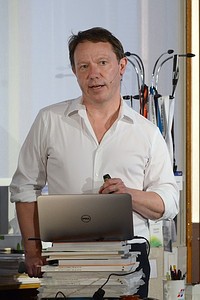
 J. Morris Hicks, engineer. writer. big picture guy.