Eating for health or sustainability? Why not BOTH?

Most people don’t think about either one when making their food choices.

They simply eat what tastes good. With so much confusion around what we should be eating, they figure that they’ll just eat what they want—and enjoy it. I was pretty much that way until 2002. That’s when I got curious about the optimal diet for humans. I wanted to find out what nature had in mind for us to eat.
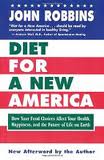
Diet New AmericaAfter reading 30 or 40 books about diet and health, I read two books over Memorial Day weekend in 2003 that focused primarily on the environmental impact of our food choices. That’s when I had my blinding flash of the obvious when I suddenly realized that we humans were eating the wrong food. Those two books were Diet for a New America by John Robbins and Mad Cowboy by Howard Lyman.

Later, in 2005, Dr. Campbell stated in The China Study, “It turns out that if we eat the way that promotes the best health for ourselves, we also promote the best health for the planet.” That sounded like a pretty cool win-win proposition to me and I’ve eaten a mostly whole foods, plant-based diet ever since.

But over the years, I have gradually evolved from eating primarily for my health—to eating primarily for the sustainability of our civilization and, ultimately, the human species.
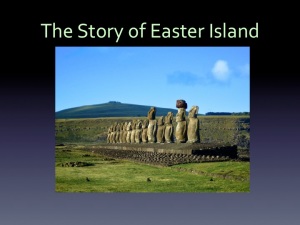
Once a lush tropical island with a thriving population of 15,000, they consumed their finite resources and their civilization collapsed.

Once a lush tropical island with a thriving population of 15,000, they consumed their finite resources and their civilization collapsed. The same thing is happening today on planet Earth.

Why sustainability and “saving the planet?” During the past few years, I have concluded that it’s really not about “saving the planet” as we so often hear. It’s more about preserving her ability to sustain us. Mother Earth is going to be just fine.

She’s been supporting life for four billion years and has seen many species of creatures come and go—and she will survive indefinitely; regardless of how much damage we inflict. It’s the future of our species that’s in jeopardy.

I specifically remember an article, Endless Summer, by Mark Bittman in the New York Times in July of 2012 (See link below). This is the part that caught my attention:

Climate Central’s projections show that the biggest cities in Florida, and a great deal of the Northeast coastline (including New York City), will be underwater by 2100, when almost everyone now alive will have “managed” to leave the scene. Of course, the calamities won’t be limited to North America, nor is 2100 some magical expiration date; the end isn’t in sight.
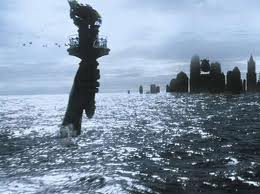
It won't likely be this bad in the year 2100, but it will be headed in that direction.

It won’t likely be this bad in the year 2100, but it will be headed in that direction.

Seeing the year 2100 in print struck a chord. Realizing that I have six grandchildren who will be in their 80’s and 90’s in 2100. What kind of life are we leaving for them and their children when we talk about our major cities being underwater?

What other horrors will they also experience? So I posted a blog on 8-12-12 entitled Forget “saving the planet.” Think great grandchildren. (See link below).

Since then, I have been thinking more and more about the sustainability of our civilization and our species and less and less about my own health. Why? Because it’s much more important. After all, what could possibly be more important for humans than the longterm sustainability of our species? It’s also a more powerful argument for influencing people to shift to eating more plants.
The 4Leaf level is reached at over 80% of your calories from whole plants.

Eating at the 4Leaf level simply means deriving over 80% of your calories from whole plants. The average American gets far less than ten percent.

Most people feel like what they eat affects only themselves; therefore, what they choose to eat is no one else’s business. True, what you eat only affects “your” health, but it also affects our planet’s longterm ability to sustain us. And that is important to everyone.

Here’s my short list of just four “sustainability” reasons for eating mostly plants:

  1. Calories from meat, dairy and eggs require over ten times as much land, water and energy as do calories from plants. And we’re about to run out of enough land and water to feed us. (Eating fish is no bargain for the environment either.)
  2. If all seven billion people on our planet were to eat our typical western diet, we’d need two planet Earths to feed us all. And we only have one.
  3. Raising livestock for our dinner tables is the largest single driver of global warming and may even produce more greenhouse gases (GHG) than all other human sources combined.
  4. Things continue to get worse, not better. We add another 230,000 people for dinner every single day. We lose an area the size of South Carolina to erosion and we destroy another 30 million acres of rainforest each year—all so that we can meet the growing  global demand for meat, dairy, eggs and fish.

Given all of the above, my own conclusion is this. “Shifting to a whole food, plant-based diet will do more to ensure the long-term survival of our species than ALL other possible initiatives combined.”

Here is where I will be speaking in Tucson. The fabulous Fox Theater.

Check out the 5-minute video demo below of my 9-21-13 speech at the Fox Theater in Tucson, AZ.

The Bottom Line. If what you choose to eat affected ONLY your health, then it’s none of my business what you eat. But when it affects the future of my great grandchildren, then it is my business.

And I believe that as people become fully aware of what’s at stake, that more of them will choose to eat more plants in the future. Saving your great grandchildren may very well be the biggest motivator of all.

More Public Speaking. Now that I have re-packaged myself as more of a “sustainability” guy than a “healthy eating” guy, I have engaged an environmental speaking agency to help me find more audiences around the world that will benefit from my hopeful message of promoting health, hope and harmony. You can find me on their website at ExploreGreen.com

Violet at Trader Joe's

Violet (4), currently my youngest grandchild, will be 91 in the year 2100. Her baby sister Evelyn (still in utero) will turn 86 that same year.

For your convenience, I have included links to several of my earlier blogs on this topic. I have also provided a five minute video demo of my 75-minute presentation to an enthusiastic crowd of 500+ in Tucson on 9-21-13.

From the Fox Theater in Tucson, Arizona — September 21, 2013

Handy 5-piece take-charge-of-your-health kit—from Amazon.com

Why should we be eating mostly plants? The “big picture” in 4 minutes.

Want to find out how healthy your family is eating? Take our free 4Leaf Survey. It takes less than five minutes and you can score it yourself. After taking the survey, please give me your feedback as it will be helpful in the development of our future 4Leaf app for smartphones. Send feedback to jmorrishicks@me.com

International. We’re now reaching people in over 100 countries. Follow us on Facebook and Twitter or get daily blog notices by “following” us in the top of the right-hand column. For occasional updates, join our periodic mailing list.

J. Morris Hicks, working daily to promote health, hope and harmony on planet Earth.

To order more of my favorite books—visit our online BookStore now

For help in your own quest to take charge of your health, visit our 4Leaf page and also enjoy some great recipes from Lisa’s 4Leaf Kitchen.

Got a question? Let me hear from you at jmorrishicks@me.com. Or give me a call on my cell at 917-399-9700.

SHARE and rate this post below.

—J. Morris Hicks, board member, T. Colin Campbell Foundation
Posted in Big Picture, Sustainability | Leave a comment

Getting philanthropy RIGHT requires SYSTEMIC fixes.

Not just “feel good” money thrown at problems caused by the wealthy

Ideally, the greatest philanthropic wealth in the world would be spent addressing the leading CAUSES of the world’s biggest problems. That requires “fixing the system” that caused the problems in the first place, not just relieving the suffering of the victims. For example, sending food to the hungry does not address the root cause of world hunger.

Global warming causing rivers where they're not supposed to be.

Global warming causing rivers where they’re not supposed to be. Messing with nature.

So what are the world’s most urgent problems? Depends on who you ask. Here’s my top five:

One. Global warming. To me, this is the elephant in the room. It’s the single problem that can exacerbate all of the other problems that follow. Yet how many of the wealthiest philanthropists have made it their #1 priority. And of them, how many are addressing the number one cause?

TWO. Water Shortage. We survived 200,000 years without oil and we could survive for forty days without food. But we can’t live for three days without water. Not only do we need it to drink, but we also need it to grow our food. Lack of water is rapidly becoming a HUGE problem for humans.

THREE. World Hunger. One billion people go to bed hungry every night. And it’s only going to get worse as we run out of land and water to grow food. Sending CARE packages to Ethiopia is not going to fix the problem.

Stephen Emmott BookFOUR. Overpopulation. According to Dr. Stephen Emmott, we passed the sustainable carrying capacity of the planet long ago. While he predicts that we’ll grow to TEN BILLION by the end of the century, we’re currently on a pace to hit 28 BILLION by then.

FIVE. Our Unsustainable Lifestyle. This one doesn’t seem as urgent as the first four, but in reality, it is the silent problem that may be causing the most damage. For unless we learn to live sustainably, our future as a species is in jeopardy. And the way we eat is the single biggest piece of our grossly unsustainable lifestyle.

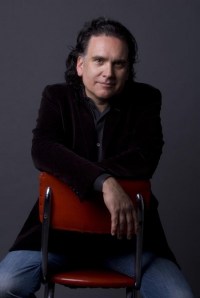
Peter Buffett

Peter Buffett

So what are the big-time philanthropists doing? Lately, the Buffett brothers, Howard and Peter, have been making the news as they begin to share the philanthropic limelight with their famously wealthy father. Peter wrote an Op-Ed for the New York Times back in July, 2013 and Howard published a book about his war on world hunger a few months later in October.

Peter’s Op-Ed was entitled the Charitable Industrial Complex (See link below)and was one of the articles that inspired me to start thinking about whether or not ANY of the big charities were making a dent in addressing the causes of the world’s biggest problems. They certainly haven’t made a dent in any of my list of problems mentioned above. This phrase in the article caught my attention and I’ve been talking about it ever since:

Inside any important philanthropy meeting, you witness heads of state meeting with investment managers and corporate leaders. All are searching for answers with their right hand to problems that others in the room have created with their left.

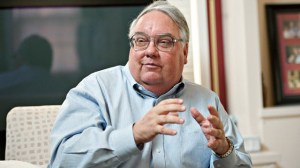
Howard Buffett. Chances are he's not eating a whole foods plant-based diet.

Howard Buffett. Chances are he’s not eating a whole foods plant-based diet.

Howard’s book is entitled 40 Chances: Finding Hope in a Hungry World, with the 40 referring to the number of growing seasons in a typical farmer’s career.

I haven’t read the entire book, but after scanning the table of contents and reading a few of the pages supplied on Amazon, my conclusion is that while Howard’s efforts are noble, he clearly doesn’t know enough to “fix” the systemic problems of world hunger.

To do so, he would have to acknowledge that it makes no sense whatsoever to produce meat and dairy calories in a world of starving people. On a per calorie basis, they require over ten times as much land, water and energy as do plant-based calories. And given the carnivorous preferences of his father, it would be real surprising to see the Buffett family suddenly give up their meat and dairy in order to feed the poorest billion people on Earth.

And that’s not likely to happen anytime soon. In a January 2012 issue of TIME (See link below), the elder Buffett had this to say about what he is eating these days:

Buffett, who has a soft elderly face but moves briskly, stacks a plate high with waffles, bacon and roast beef. Despite his Eisenhower-era diet, which includes 60 oz. of Coke (preferably Cherry) a day, Buffett remains surprisingly thin. “I haven’t had a taste of broccoli or asparagus in years!” he boasts. “I formed my thoughts on eating at the age of 5, and I haven’t changed them.”

Bill and Melinda Gates control the largest philanthropic fund in the world.

Bill and Melinda Gates control the largest philanthropic fund in the world.

What about Gates? How could I write a blog about philanthropy without mentioning Bill Gates?” In January, 2013, (See link below) he was featured in a WSJ article with this title: Bill Gates: My Plan to Fix The World’s Biggest Problems

Again noble efforts to be sure, although I found that he had none of my top five on his list. And he never once mentioned that our civilization may collapse or that the human species could become extinct in the next thousand years—a mere blink in the eye of history.  The article read:

“From the fight against polio to fixing education, what’s missing is often good measurement and a commitment to follow the data. We can do better. We have the tools at hand.”

The Bottom Line. Unless we’re working on sustainable living for humankind, we’re just wasting our time and money. Borrowing part of a line from General Patton on war, I have drafted a similar quote about sustaining our species.

"Compared to war, all other forms of human endeavor shrink to insignificance."

“Compared to war, all other forms of human endeavor shrink to insignificance.”

“Compared to sustaining our species, all other forms of human endeavor (including war) shrink to insignificance.” —-J. Morris Hicks

The problem is that most of our leaders and philanthropists are comfortably unaware of where we’re headed as a civilization.  Even the large, well established environmental groups are clueless to the connection between our food choices, the environment and sustainability.

That means we must help them become aware. A key element of our S.O.S. (Saving Our Species) Global Initiative must be a highly focused effort to help the world’s top philanthropic groups understand exactly what’s at stake in this game of “Living Dangerously” that we’ve been playing for the past fifty years.

J. Morris Hicks, promoting health, hope and harmony on planet Earth

J. Morris Hicks, promoting health, hope and harmony on planet Earth

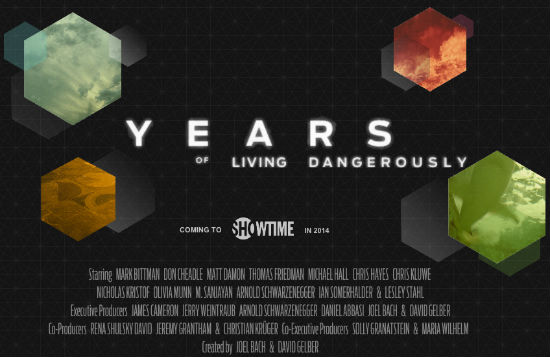
See the last link below featuring James Cameron’s upcoming Years of Living Dangerously documentary that will be aired on Showtime in April of 2014. It focuses on my #1 problem, global warming.

One final point. An urgent shift to eating mostly plants would make a serious dent in four of my top five problems mentioned at the beginning of this blog. The only one it wouldn’t help is overpopulation—although a collapse of our civilization would take care of that one quickly. Hopefully, we’ll figure out a more acceptable solution.

Ending on a positive note, I am convinced that if the world’s leading philanthropists were to completely understand what our Western diet-style is doing to our health, our planet and the future of our species—that they would begin to apply their mighty wealth to making things right. And under the leadership of highly influential and enlightened individuals like James Cameron, I believe that this will happen.

Handy 5-piece take-charge-of-your-health kit—from Amazon.com

Why should we be eating mostly plants? The “big picture” in 4 minutes.

Want to find out how healthy your family is eating? Take our free 4Leaf Survey. It takes 2 or 3 minutes and you can score it yourself. After taking the survey, please give me your feedback as it will be helpful in the development of our future 4Leaf app for smartphones. Send feedback to jmorrishicks@me.com

International. We’re now reaching people in over 100 countries. Follow us on Facebook and Twitter or get daily blog notices by “following” us in the top of the right-hand column. For occasional updates, join our periodic mailing list.

J. Morris Hicks, working daily to promote health, hope and harmony on planet Earth.

To order more of my favorite books—visit our online BookStore now

For help in your own quest to take charge of your health, visit our 4Leaf page and also enjoy some great recipes from Lisa’s 4Leaf Kitchen.

Got a question? Let me hear from you at jmorrishicks@me.com. Or give me a call on my cell at 917-399-9700.

SHARE and rate this post below.

—J. Morris Hicks, board member since 2012; click banner for more info:

Nutrition Certificate

Posted in Big Picture, Celebrities, Climate Change, SOS (Saving Our Species) | 1 Comment

James Cameron, Lester Brown—Beating the Drum

Global Warming. Water Shortage. ONE Common Cause.

ONE Common Solution—Our Food Choices

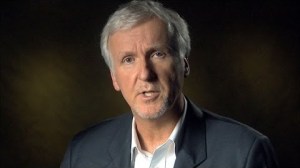
James Cameron as he appears in the upcoming documentary, "Years of Living Dangerously."

James Cameron as he appears in the upcoming documentary, “Years of Living Dangerously.”

In the news this week. Global warming documentary (April 2014) by James Cameron and latest remarks by Lester Brown about our water shortages. Scroll down for 2-minute video narrated by Cameron.

By far, the number one driver of water shortages and global warming is one and the same. It is our demand for the toxic western diet of meat and dairy three meals a day by the top two billion people in the world. Our food choices are also the number one driver of the cost of health care, world hunger, soil erosion and deforestation.

Ultimately, we’re talking about the future of our civilization and even our future as a species. We’re hearing about water issues and global warming almost everyday, yet these issues have never become a top priority for our global leaders. But they have become a top priority for people like James Cameron and Lester Brown.

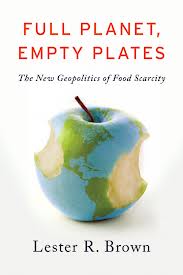
Like ours, Mr. Brown's book features a single apple on the cover. And like our apple, his tells a story.

Like ours, Mr. Brown’s book features a single apple on the cover. And like our apple, his tells a story.

The most powerful common solution to all these problems is the rapid shift to eating more whole plants by the people who are causing most of the damage—the top two billion people in the world.

As for water shortages, this was posted yesterday on the Peak Oil website. (See link below).

Forget peak oil. It’s peak water we should worry about, says Lester R. Brown. “Water is far more important than oil,” according to the prolific author, founder of the Worldwatch Institute, and now president of the nonprofit Earth Policy Institute.

His point: It’s not that we will run out of water to drink; it’s that we won’t have enough to grow the food to feed the world.

Then there’s global warming. Also released yesterday was news about the 8-part climate change documentary that Showtime will be airing in April 2014 and has just released the trailer (see 2-minute video below) this week. From the documentary website:

Years-Living-Dangerously

“This multi-part television event tells the biggest story of our time: climate change and the impact it’s having on people right now in the U.S. and all over the world. Over the course of eight episodes, we’ll report on the crippling effects of climate change-related weather events and the ways individuals, communities, companies and governments are struggling to find solutions to the biggest threat our world has ever faced,”

Take two minutes to watch this trailer narrated by James Cameron, who put together a star-studded line-up of actors, experts and journalists for this exceptional documentary.

The 8-part series is produced in part by James Cameron and Arnold Schwarzenegger.

Everyone remembers the first big documentary on climate change—An Inconvenient Truth featuring Al Gore and released in 2006. He then went on to win the Nobel Prize for his movie about global warming, although he failed to mention the #1 cause.

But now things are different. We now have James Cameron—who I have concluded is the most influential person in the world who “totally gets it” about the food connection with our health, our environment and our future as a species. And with the top two highest grossing films of all time on his resume (Titanic and Avatar), one could argue that he is the world’s best story teller.

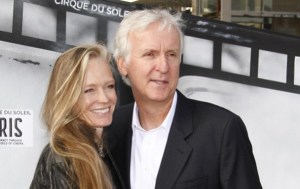
Suzy and James Cameron are truly "walking the walk" when it comes to teaching the world about sustainability.

Suzy and James Cameron are truly “walking the walk” when it comes to teaching the world about sustainability.

It has been my privilege to get to know Suzy and Jim Cameron in recent months and I now have first-hand knowledge of their passion, conviction and sense of urgency for addressing the most critical issues in the history of humankind.

The Bottom Line. Many authors, experts and producers of documentaries have their heart in the right place. They’re trying to make the world a better place.

But most of them haven’t connected the dots relative to the number one cause of the world’s most urgent problems. That is probably because of the “protein myth” that is believed by over 90% of the population in the western world—the myth that we actually “need” to eat some animal protein to be healthy.

But James Cameron is different. He and his wife Suzy totally “get it” about the food connection and are busy doing all that they can to tell the world about that connection—before it’s too late. And with great leaders like James Cameron “walking the walk” and telling people everywhere the truth about our food choices; our civilization and our human species may have a fighting chance after all.

See my July blog post: James Cameron—on “Walking the Walk”

Handy 5-piece take-charge-of-your-health kit—from Amazon.com

Why should we be eating mostly plants? The “big picture” in 4 minutes.

Want to find out how healthy your family is eating? Take our free 4Leaf Survey. It takes less than five minutes and you can score it yourself. After taking the survey, please give me your feedback as it will be helpful in the development of our future 4Leaf app for smartphones. Send feedback to jmorrishicks@me.com

International. We’re now reaching people in over 100 countries. Follow us on Facebook and Twitter or get daily blog notices by “following” us in the top of the right-hand column. For occasional updates, join our periodic mailing list.

J. Morris Hicks, working daily to promote health, hope and harmony on planet Earth.

To order more of my favorite books—visit our online BookStore now

For help in your own quest to take charge of your health, visit our 4Leaf page and also enjoy some great recipes from Lisa’s 4Leaf Kitchen.

Got a question? Let me hear from you at jmorrishicks@me.com. Or give me a call on my cell at 917-399-9700.

SHARE and rate this post below.

—J. Morris Hicks, board member, T. Colin Campbell Foundation

Posted in Big Picture, Celebrities, SOS (Saving Our Species) | 2 Comments