Pomp, Circumstance and Beyond–“You’ve got to find what you love.”

But you don’t have to find it today.
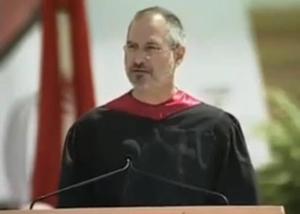
Steve Jobs -- "Stay Hungry, Stay Foolish" speech. Stanford 2005.

“Stay Hungry, Stay Foolish” Steve Jobs Stanford University Commencement speech–2005.

In June of 2005, Steve Jobs delivered his famous “You’ve got to find what you love” speech at Stanford University. A video and full text of that speech can be found under the Video tab of this website.

In 2005, Steve was talking about the importance of finding your passion in life. And I am sure that, in the past 11 years, his speech has inspired millions to search for that passion.

But you may be wondering, “What should I do NOW to find that passion?” A few days ago, an article in the New York Times (Graduating and looking for your passion? Just be patient) addressed that question and got me to thinking about how long it took me to find my passion. From the article:

If you’re relying on a commencement speaker to set your compass, you may still be confused at day’s end. In my experience, it’s common to hear “Follow your passion” from the podium. This is great counsel if, in fact, you know what that passion is. But what if you don’t?
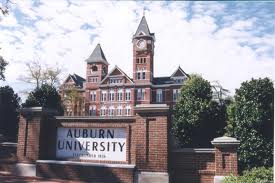
At Auburn, I studied industrial engineering, where we're always looking for "the biggest bang for the buck."

At Auburn, I studied industrial engineering, always looking at “the big picture.”

In June of 1968, I graduated from Auburn University with a bachelor’s degree in Industrial Engineering, during the height of the Vietnam War. And I had no idea what my “passion” was at the time. But it didn’t really matter, because my immediate future was already decided–by the United States government. All I had to decide was in which branch of the military I wanted to serve.

Forty-eight years ago today, I was somewhat happy that I didn’t have to make any huge career decisions. I had already applied to officer programs in the Navy, Air Force and Coast Guard and was almost certain that I would be serving in one of them by year’s end. And I was right–about seven months later, I was a newly-commissioned ensign in the U.S. Coast Guard, on my way to serve my three-year tour in Honolulu.

But what about finding that passion that Jobs talked about? As the Times article points out, that process started long before I graduated from college. As I read the article this morning, I was reminded of the career-forming decisions I had made in high school, in college, in the Coast Guard and in the first few jobs of my business career. The article featured three sections:

  1. Move toward what interests you.
  2. Seek purpose.
  3. Finish strong.
My three years in the Coast Guard were spent at USCG Base Honolulu in the shadows of Aloha Tower.

My three years with the Coast Guard in Honolulu played a huge part in my later career & life.

Looking back on my career, I could never have imagined back in 1968 that my passion would be working on the most important issue in the history of humanity: our food choices in the 21st century. The article inspired me to think about eight steps I have taken on my path to discovering and embracing that passion:

  1. Because I was comfortable with math and solving problems, I took advanced math courses in high school and chose to major in engineering in college.
  2. Because I liked “big picture” stuff more than details, I changed my college major from mechanical to industrial engineering at the end of my sophomore year.
  3. Wanting to broaden my perspective beyond engineering, while based in Honolulu, I earned an MBA at the University of Hawaii.
  4. Knowing that I liked solving problems more than I did sales, I left my first job as a sales engineer with Alcoa to become a consulting engineer with a consumer goods management consulting firm in 1972.
  5. Knowing that I wanted more continuity instead of an endless series of projects in my work, I left the consulting firm after nine years to become one of the division presidents of a Fortune 1,000 corporation in 1981.
  6. Knowing that I was not in love with the fashion industry where I was working, I ended up as an executive search consultant with my own firm in 1999–a career that has provided me with the freedom to explore other interests–for the past 17 years.
  7. Finally, after becoming curious about the optimal diet for humans in 2002, within six months, I realized that I had found my passion in life and that it drew heavily upon my personality, education, personal interests, sense of purpose and career.
  8. In May of 2003, after six months of studying the global feeding model, I had what I call my “blinding flash of the obvious–we’re eating the wrong food.”

Finally, I understood what Steve Jobs was talking about. I had found my passion and set about devoting 10,000 hours to that passion over the next thirteen years. Now, after publishing two books and over 900 articles on my website, the title on my business card reads: Writer. Speaker. Consultant. Activist. with the following tagline:

Promoting health, hope and harmony on planet Earth

Graduation DayHappy Graduation to all who will be walking to the tune of Pomp and Circumstance as you receive your diplomas this month. Hopefully, some of the information covered here will help you in your quest for finding your passion. For if you’re doing what you love, you’ll never have to work a day in your life.

One final bit of advice. Adopt a simple life, live within your means and beware of getting trapped by a high salary in a career you don’t enjoy. Keeping things simple now will raise your chances of finding what you love in the future. I didn’t find it until I was 58 years old–and I wouldn’t want to have it any other way.

Referenced in this piece:

The following six books can be purchased on Amazon for a grand total of less than $60—and will enable you to understand the overwhelming challenges we face—along with the single most-powerful solution of all.

Six-Pack from Hicks—for health, hope & harmony on planet Earth

  1. 4Leaf Guide to Vibrant Health, powerful new book by Kerry Graff, MD and yours truly
  2. Healthy Eating, Healthy WorldThe “big picture” about food (my first book)
  3. An essential scientific resource: The China Study by Dr. T. Colin Campbell; the primary book that influenced Bill Clinton to adopt a whole food, plant-based diet.
  4. Primary cause of cancer is not bad luck. Stop Feeding Your Cancer, by John Kelly, MD
  5. A horrifying wake-up call for leaders. TEN BILLION by Dr. Stephen Emmott
  6. Food choices are the primary cause of our environmental problems, yet our world leaders, scientists & experts are Comfortably Unawareby Richard Oppenlander.

Why should we be eating mostly plants? The “big picture” in 4 minutes.

Want to find out how healthy you are eating? Take our free 4Leaf Survey. It takes about two minutes. eCornell is now using our survey in their plant-based nutrition course.

International. We’re now reaching people in over 100 countries. Follow us on Facebook and Twitter or get daily blog notices by “following” us in the top of the right-hand column. For occasional updates, join our periodic mailing list.

J. Morris Hicks, working daily to promote health, hope and harmony on planet Earth.

To order more of my favorite books—visit our online BookStore now For help in your own quest to take charge of your health, visit our 4Leaf Program website, which is now being used by an ever-growing army of enlightened medical doctors who are fed up with “disease care” and want to promote true health for their patients.

Got a question? Let me hear from you at jmh@4leafglobal.com

—J. Morris Hicks, board member since 2012; click banner for more info:
Nutrition Certificate

Posted in Activism & Leadership, Big Picture | Tagged | 4 Comments

“Alternative” Cancer Remedies

Are not taken seriously by mainstream medicine

Mainstream medicine is focused on the big three  money makers when it comes to cancer: chemo, surgery and radiation.

Mainstream medicine is focused on the big three money makers when it comes to cancer: chemo, surgery and radiation.

And they won’t EVER be taken seriously until there are a sufficient number of credible, peer-reviewed, randomized clinical trials supporting their efficacy for treating cancer.

Even then, it will be a difficult road ahead when it comes to the “establishment” endorsing any treatments that don’t contribute financially to the mainstream medical system.

How widespread are “alternative” cancer remedies? I just googled “alternative” cancer remedies, and there were fifteen million results. “Alternative cancer treatments” yield over 200 million. 

And right there you have 200 million reasons why I have not heard from VP Joe Biden’s office after reaching out to them five times since early January, when President Obama and the VP first announced their “Moonshot Cancer Initiative.” Mr. Biden’s cancer team no doubt perceives that a food-based approach to fighting cancer is just one of millions of alternative medicine approaches that simply do not pass muster with mainstream medicine.

Google’s definition of alternative medicine: “Any of a range of medical therapies that are not regarded as orthodox by the medical profession, such as herbalism, homeopathy, and acupuncture.”

Pile of MoneyMy definition of alternative medicine. “Any approach to medicine whose ultimate cure, even if it were 100% successful, would not provide much revenue for the medical industry.”

Let’s face it, mainstream medicine is big business. In just the United States, it generates almost $3 trillion worth of revenue for millions of medical professionals and organizations–most of whom sincerely believe that they are providing the best possible care for their patients. Those innocent providers are just performing the therapies that have been approved by their industry and that they have been taught.

Okay, I get it. With the entire “cancer industry” in lock-step agreement with the orthodox approach (chemo, radiation, immunotherapy and surgery) to fighting cancer, how can Biden’s team possibly take seriously the thousands of suggestions that, on the surface, appear to fall in the alternative medicine category. But there’s something very different about the plant-based approach that I am asking them to consider–and explore further.

With industry now controlling our schools of nutrition, is academic freedom dead?

After citing Dr. T. Colin Campbell’s professionally researched, thorough and alarming scientific findings about taming cancer in his lab at Cornell University over three decades ago–I included this question in all FIVE of my attempts to reach Mr. Biden:

“In the eleven years since The China Study was published in 2005, why hasn’t the NIH (or any other cancer research organization in the world) conducted a single formal human study aimed at determining if Dr. Campbell’s lab findings were transferable to human cancer patients?”

Sadly, I think I know the answer to that question. Although they would never admit it, deep down inside, I don’t think that a single one of the world’s 1,000 most powerful healthcare leaders would be happy to hear that a simple, painless and FREE cure of cancer was now available for everyone. The main problem is the word FREE. We have a clear case of the fox guarding the hen house when it comes to fighting chronic disease. The next paragraph supports this theory.

Dean Ornish, M.D., along with Esselstyn, influenced President Clinton to walk away from meat and dairy, eat whole plants and reverse his heart disease.

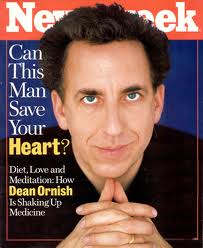
Dean Ornish, M.D.

What about heart disease and the most common form of diabetes? Unlike cancer, there have already been many scientific studies conducted on those diseases and we know that they can both be prevented or reversed in over 90% of the cases–simply by having the patient shift to a whole food, plant-based diet.

Dr. Dean Ornish (shown here) led many of those studies and appeared on the cover of Newsweek two decades ago–talking about reversing heart disease. He also worked in the Clinton White House and aboard Air Force One.

Yet, even with high profile success stories like former President Bill Clinton’s heart disease reversal, not a single one of our top healthcare providers are actively promoting the simple, painless and FREE cure to the leading cause of death in the developed world. And those simple, scientifically proven cures are still NOT being featured by ANY of our schools of medicine as the first step in preventing and reversing heart disease or type 2 diabetes. Reason:

There is no money to be made by millions of people learning how to quickly reverse their heart disease and type 2 diabetes.

With cancer, our problem is much worse–because the successes on record are only anecdotal.  Unlike the many scientific studies supporting plant-based cures for heart disease and diabetes, the only data supporting the power of whole, plant-based foods to stop cancer growth is anecdotal. And that is exactly why there is an urgent need for some responsible, truth-seeking, cancer research organization to step up to the plate and launch enough human studies to either reinforce or disprove Dr. Campbell’s findings in the Cornell laboratory.

The Bottom Line. The world deserves to know the truth about cancer. And we’ve got to figure out a way to deliver that truth in a legitimate format that can be enthusiastically endorsed by our government. Do you know someone who knows someone who can get this article in VP Biden’s hands?

A few of my earlier blogs on this sad topic:

The following six books can be purchased on Amazon for a grand total of less than $60—and will enable you to understand the overwhelming challenges we face—along with the single most-powerful solution of all.

Six-Pack from Hicks—for health, hope & harmony on planet Earth

  1. 4Leaf Guide to Vibrant Health, powerful new book by Kerry Graff, MD and yours truly
  2. Healthy Eating, Healthy WorldThe “big picture” about food (my first book)
  3. An essential scientific resource: The China Study by Dr. T. Colin Campbell; the primary book that influenced Bill Clinton to adopt a whole food, plant-based diet.
  4. Primary cause of cancer is not bad luck. Stop Feeding Your Cancer, by John Kelly, MD
  5. A horrifying wake-up call for leaders. TEN BILLION by Dr. Stephen Emmott
  6. Food choices are the primary cause of our environmental problems, yet our world leaders, scientists & experts are Comfortably Unawareby Richard Oppenlander.

Why should we be eating mostly plants? The “big picture” in 4 minutes.

Want to find out how healthy you are eating? Take our free 4Leaf Survey. It takes about two minutes. eCornell is now using our survey in their plant-based nutrition course.

International. We’re now reaching people in over 100 countries. Follow us on Facebook and Twitter or get daily blog notices by “following” us in the top of the right-hand column. For occasional updates, join our periodic mailing list.

J. Morris Hicks, working daily to promote health, hope and harmony on planet Earth.

To order more of my favorite books—visit our online BookStore now For help in your own quest to take charge of your health, visit our 4Leaf Program website, which is now being used by an ever-growing army of enlightened medical doctors who are fed up with “disease care” and want to promote true health for their patients.

Got a question? Let me hear from you at jmh@4leafglobal.com

—J. Morris Hicks, board member since 2012; click banner for more info:

Nutrition Certificate

Posted in Activism & Leadership, Cancer | Tagged | 1 Comment

Hillary describes Bill as “open-minded vegan” to Colbert

To end the confusion about the former president’s diet

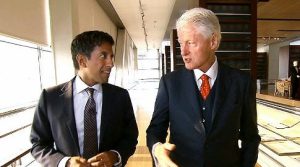
Dr. Sanjay Gupta with President Clinton---scene from "The Last Heart Attack."

Dr. Sanjay Gupta with President Clinton—scene from “The Last Heart Attack.”

I never thought that I would hear Secretary Clinton use the word “vegan” to describe the diet of anyone in her family–certainly not until after the election. Because, as I have often said, “She knows that this country is not ready for a vegan in the White House–even if that vegan is the first gentleman.” 

So, on April 18 of this year, I was stunned to hear Mrs. Clinton answering candidly a question posed by Stephen Colbert on the Late Show. Take a look for yourself during the first minute of this 4-minute video:

Stephen Colbert Interviews Hillary Clinton At Carnegie Deli

NY Times LogoBack to my statement about this country not being ready to have a vegan in the White House. Could it be that just the mention of the word vegan by a leading presidential candidate could cause her to lose her polling lead against big time steak merchant, Donald Trump, the presumptive Republican nominee?

Maybe so. Consider these statements from a New York Times Op-Ed piece by Thomas Edsall this morning:

In theory, Donald Trump is eminently beatable. His negative ratings are stratospheric. He is reckless, ignorant of rudimentary policy matters and all too ready to speak without forethought or deliberation.

Still, as we near the close of the primary season, Hillary Clinton has somehow succeeded in turning the election into a close contest that she could conceivably lose. She retains key advantages in areas where Trump is vulnerable, but she has also ceded ground to him on the visceral terrain of nativism and anti-immigrant fervor, of a yearning for a return to the days of America’s unquestioned global pre-eminence.

White HouseSo am I planning to vote for Clinton? My answer is that I prefer to keep politics out of this article but will tell you that I am in that majority of Americans who find neither candidate particularly attractive this year. Having said that, when it comes to my quest to promote a world-wide shift to plant-based eating, there are many advantages to having a vegan first gentleman in charge of the kitchen at The White House.

Maybe he will improve on the plant-based initiatives of his predecessor, Michelle Obama and actually promote a diet that reverses heart disease and diabetes–a whole food, plant-based diet. Maybe he will even publish a White House 4Leaf Cookbook, create videos of himself cooking delicious, heart healthy meals–chock full of whole, plant-based foods.

But what about those rumors of late that Bill has drifted away from the healthy way of eating that he learned from Esselstyn, Ornish and Campbell? This fairly recent 5-minute interview with Bill Clinton (December 2015) says otherwise:

Also in the news back in February of this year while he was campaigning in Las Vegas; from the Politico article, more proof that our former president is still practicing an almost vegan lifestyle, admitting that his doctor advises him to eat fish from time to time.

Bill Clinton perusing the vegan menu at the Simply Pure restaurant in Las Vegas

Bill Clinton perusing the vegan menu at the Simply Pure restaurant in Las Vegas

“I am not alone!” Clinton exclaimed with delight as he walked into the vegan eatery. “This is amazing. I love this place.”

Excited to discuss the vegan diet he adopted in the wake of his heart troubles, Clinton said the lifestyle “changed my life. I might not be around if I hadn’t ‘become a vegan. It’s great.”

Back to the advantages of having a “vegan first gentleman.” Just as with Michelle Obama, if someone is living in The White House, he/she wields a great deal of influence around the world, whether they are president or not. Also consider for a moment what would happen if Bill Clinton became fully enlightened to the power of plant-based eating to combat the host of sustainability issues facing our world today.

Love him or hate him, millions of people will listen to what former president Bill Clinton has to say about food choices–and their consequences to our health, our environment and out future as a species. So take your pick:

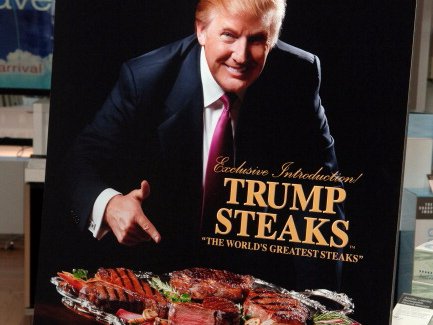
“Meat-Peddling Donald”

Trump Steaks

OR

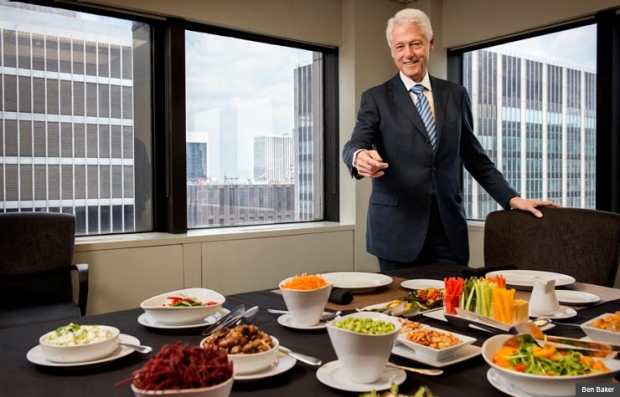
“Plant-Eating Bill”

Bill Clinton Vegan AARP

The Choice is Yours–And Mine

Just in case you missed it, here is a 9-minute video (September 2010) of former president Bill Clinton on CNN with Wolf Blitzer, who also interviews Dr. Caldwell Esselstyn and Dr. Dean Ornish. If the Clinton’s move back to The White House, many millions of people will be seeing this video and others like it. FYI, I love the way Dr. Esselstyn chooses to stress common ground truths with Dr. Ornish instead of turning the interview into a debate.

The following six books can be purchased on Amazon for a grand total of less than $60—and will enable you to understand the overwhelming challenges we face—along with the single most-powerful solution of all.

Six-Pack from Hicks—for health, hope & harmony on planet Earth

  1. 4Leaf Guide to Vibrant Health, powerful new book by Kerry Graff, MD and yours truly
  2. Healthy Eating, Healthy WorldThe “big picture” about food (my first book)
  3. An essential scientific resource: The China Study by Dr. T. Colin Campbell; the primary book that influenced Bill Clinton to adopt a whole food, plant-based diet.
  4. Primary cause of cancer is not bad luck. Stop Feeding Your Cancer, by John Kelly, MD
  5. A horrifying wake-up call for leaders. TEN BILLION by Dr. Stephen Emmott
  6. Food choices are the primary cause of our environmental problems, yet our world leaders, scientists & experts are Comfortably Unawareby Richard Oppenlander.

Why should we be eating mostly plants? The “big picture” in 4 minutes.

Want to find out how healthy you are eating? Take our free 4Leaf Survey. It takes about two minutes. eCornell is now using our survey in their plant-based nutrition course.

International. We’re now reaching people in over 100 countries. Follow us on Facebook and Twitter or get daily blog notices by “following” us in the top of the right-hand column. For occasional updates, join our periodic mailing list.

J. Morris Hicks, working daily to promote health, hope and harmony on planet Earth.

To order more of my favorite books—visit our online BookStore now For help in your own quest to take charge of your health, visit our 4Leaf Program website, which is now being used by an ever-growing army of enlightened medical doctors who are fed up with “disease care” and want to promote true health for their patients.

Got a question? Let me hear from you at jmh@4leafglobal.com

—J. Morris Hicks, board member since 2012; click banner for more info:

Nutrition Certificate

Posted in Activism & Leadership, Sustainability | Tagged | 5 Comments