Weight-loss targets; not recommended — Here’s why

In our 4Leaf Program, we always stress “vibrant health” as the primary goal. Fortunately, along with that vibrant health for ourselves; as we eat at the 4Leaf level, we also enjoy that wonderfully warm feeling of knowing that we have:

  • Inflicted no damage on the environment
  • Used as little fossil fuels as possible
  • Efficiently used our limited land resources
  • Done our part to end the needless suffering of 60 billion animals a year for our dinner tables

These are all wonderful things — and the kinds of powerful motivators that will keep you committed to the 4Leaf lifestyle forever — but if you have a lot of weight to lose, the effortless weight-loss that accompanies all of the above is certainly going to be a welcome fringe benefit.

But, if weight-loss is your primary motivator, then what will motivate you after you achieve your desired weight? Weight-loss should be no more than a one-year process for any of us, and it’s just a fringe benefit of never-ending progress toward a much greater goal — vibrant health for ourselves AND our planet.

A before picture: Dr. Hurley with his wife during Thanksgiving of 2010, just before beginning the 4-Leaf Program with my son J. Stanfield Hicks

And that’s the fringe benefit that is being enjoyed right now by everyone who has shifted to a 4Leaf way of eating for the right reasons. For those who try it for the sole purpose of weight-loss, it just doesn’t seem to work nearly as well.

Speaking of weight-loss, today I would like to share a success story of one of our 4Leaf clients in Boston — Dr. Brian Hurley.

Working with my son, Jason Hicks, Brian was reminded in writing and/or in coaching sessions — every day for several months to not worry about weight and simply focus on “vibrant health.” And Dr. Hurley did just that. Now, with his new diet-style firmly implanted in his life forever, he has revealed a fringe benefit that we know will be permanent — losing 40 pounds in six months and hitting 170 pounds for the first time since he was 14 years old — over thirty years ago. From an earlier post, Brian says…

Dr. Hurley at a recent event, sporting a vibrantly healthy body that just happens to weigh 40 pounds less than it did just six months ago.

This week, for the first time in my life, I had two different individuals tell me that I looked great and SHOULD NOT lose anymore weight. I am asked more and more about what I am doing to lose weight.

The other question I get is, “what is my goal weight?” I explain to them I do not have a goal weight, I am letting my body determine it for me. Ironically, if you had asked me at the beginning of my lifestyle change to 4 Leaf, I would have said I would love to get to 182 to 184 lbs. Well, I achieved that in March and today I can tell you that I just reached 170 lbs.

How about that? If Jason had asked Brian his target weight six months ago, Brian might have said 184. Then, after reaching 184, he might have started drifting back into some of his pre 4Leaf eating habits. And we all know what that means. Goodbye vibrant health and hello gradual weight-gain back to his previous weight. But Brian bought into the vibrant health goal from the beginning, made 4Leaf eating an enjoyable and healthy part of his life — and will never have to worry about being over-weight again.

The following five books and one DVD can be purchased on Amazon for a grand total of less than $60—and will enable you to understand the overwhelming challenges we face—along with the single most-powerful solution of all.

Six-Pack from Hicks—for health, hope & harmony on planet Earth

  1. Healthy Eating, Healthy WorldThe “big picture” about food (our book)
  2. A life changer for millions, including James Cameron. Forks Over Knives DVD 
  3. An essential scientific resource: The China Study by Dr. T. Colin Campbell; the primary book that influenced Bill Clinton to adopt a whole food, plant-based diet.
  4. What have we done to our planet? Full Planet, Empty Plates by Lester Brown
  5. A horrifying wake-up call for leaders. TEN BILLION by Dr. Stephen Emmott
  6. Food choices are the primary cause of our environmental problems, yet our world leaders, scientists & experts are Comfortably Unawareby Richard Oppenlander.

Why should we be eating mostly plants? The “big picture” in 4 minutes.

Want to find out how healthy your family is eating? Take our free 4Leaf Survey. It takes 2 or 3 minutes and you can score it yourself. After taking the survey, please give me your feedback as it will be helpful in the development of our future 4Leaf app for smartphones. Send feedback to jmorrishicks@me.com

International. We’re now reaching people in over 100 countries. Follow us on Facebook and Twitter or get daily blog notices by “following” us in the top of the right-hand column. For occasional updates, join our periodic mailing list.

J. Morris Hicks, working daily to promote health, hope and harmony on planet Earth.

To order more of my favorite books—visit our online BookStore now For help in your own quest to take charge of your health, visit our 4Leaf page and also enjoy some great recipes from Lisa’s 4Leaf Kitchen.

Got a question? Let me hear from you at jmorrishicks@me.com. Or give me a call on my cell at 917-399-9700.

—J. Morris Hicks, board member since 2012; click banner for more info:
Nutrition Certificate

Posted in Testimonials, Weight-Loss | 1 Comment

Who owns the planet anyway?

Since seeing the movie HOME earlier this year, I have been pondering the above question. If you haven’t seen it yet, you are not alone. Although over 500 million people have seen it since it opened almost two years ago, a very slim percentage of that number reside in the United States. It is 93 minutes and you can view it for free today — See link at the end of this post.

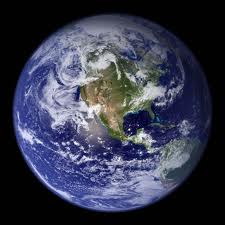
Planet Earth from Space - Who owns it?

Among many other environmental factoids, the movie reports that life began on this planet 4 billion years ago and that humans appeared on the scene just 200,000 years ago. So we have been involved far less than 1/1000 of one percent of the time. Humans began to settle down about 20,000 years ago and since then have become the “infestation” of planet Earth. Now — for the most powerful statistic in the movie:

In just the last fifty years, the human race has inflicted more damage on the fragile harmony of nature on this planet than in all previous generations of humans combined — for the past 200,000 years.

That’s right, during our lifetime, most of the damage has been done — to a planet that has had life for over 4 billion years. To me, this all begs the question, “Who owns this planet, anyway?” And why is nature’s smartest species doing such a horrible job of taking care of our “HOME?”

Regardless of your religious faith, we all need to stop and consider what we humans have done to this planet — and for what purpose? A few more stats we uncovered while researching for our book:

  1. In just the past 350 years, our population has grown from less than one billion to the seven billion that we have today — in a mere blink of history.
  2. How much land do we need to live, eat and take care of ourselves? And how much land is there?
  3. There are approximately 8 billion arable acres that can be farmed to produce food — a little over one acre per person.
  4. PROBLEM: It takes over three acres to feed one person the typical western diet of meat and dairy three meals a day.
  5. What does that mean? If you passed 3rd grade arithmetic, you know that everyone simply cannot eat our diet; there’s not nearly enough land.
  6. PROBLEM: While less than 20% of the world’s population is eating our diet today; millions in the developing world are trying their best to be just like us.
  7. Also, part of our 8 billion acres is being lost each year — an area about the size of South Carolina.
  8. And the population is still growing — at the rate of 197,000 people per day — a number equal to a city the size of Grand Rapids, Michigan — EVERY DAY.
  9. The obvious answer to this mess: A plant-based diet, the natural diet for our species enables us to feed twenty times as many people on the same amount of land. It won’t solve all our problems, but it would be a pretty good start.

Not only are we using way too much land to feed ourselves, we’re also using way too much land to live and entertain ourselves. In my post yesterday, I showed an aerial view of our incredibly inefficient lifestyle in this country — miles upon miles of suburban sprawl.

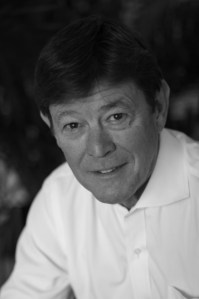
J. Morris Hicks, the "big picture" guy

Where does all this end? When responsible citizens grasp “the big picture” of what is happening and demand that our leaders work together to help the so-called “smartest species” understand that we DO NOT own this planet — we’re only residents — just like the other millions of species. The only problem is that we, in all of our wisdom, are the ONLY species in the history of the world that has not lived in harmony with nature. I’ll leave you today with one final question?

Do you really think that our current dilemma is what the creator had in mind? If you do, what do you think is his plan for the future?

One more thing; I would like to hear from you about how you feel about all of this. What is your take on things? What do you think should happen next. I started connecting the dots 8 years ago — when I had my…

My “blinding flash of the obvious” in 2003…

Once again, from the best outdoor coffee shop in Old Naples, Florida (Tony’s) – Be well and have a great day…Get you popcorn and click here for

HOME – a 2009 film — a powerful eye-opener

If you like what you see here, you may wish to join our periodic mailing list. Also, for help in your own quest to take charge of your health, you might find some useful information at our 4-Leaf pageIf you’d like to order our book on Amazon,  visit our BookStore now.

—J. Morris Hicks…blogging daily at HealthyEatingHealthyWorld.com

PS: Occasionally an unauthorized ad may appear beneath a blog post. It is controlled by WordPress (a totally free hosting service). I do not approve or personally benefit whatsoever from any ad that might ever appear on this site. I apologize and urge you to please disregard. 

Posted in Big Picture, Environment, Sustainability | 2 Comments

Cheap burgers, suburban sprawl and the end of an era

The way we eat and the way we live have a great deal in common — they’re both harmful, inefficient and unsustainable. 

The American dream of a big private yard, a two-car garage, heated pool and cheap burgers is on its final legs. All, of course, are products of the era of cheap oil that began around 1900. In the past 110 years, as humankind learned to exploit this powerful new energy resource, lots of things became affordable for the average person — and unfortunately many of those things were not very good for us or for the planet.

Because energy was cheap, and seemingly infinite in supply, man has developed some of the most inefficient processes in the history of the world — particularly the way we eat and live. In a February 1 article in the New York Times, Mark Bittman said this about our good old American diet of meat and dairy at every meal,  ”It would be hard to devise a more wasteful, damaging, unsustainable system.” The same thing could be said about the way we live.

Yesterday, while flying into Atlanta from Connecticut, I was struck by the 100 continuous miles of suburban sprawl from the moment we crossed over the Georgia state line. From the air, I saw hundreds of developments that looked like this one:

From an energy standpoint, the most wasteful form of housing known to man

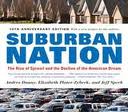
Ironically, it was in Atlanta (in 2000) that our wasteful way of living was brought to my attention for the first time — by Andres Duany, author of Suburban Nation: The Rise of Sprawl and the Decline of the American Dream. After being introduced to a civic group of about 500 by Charles Brewer (founder of Mindspring), Duany congratulated the Atlanta crowd for having one of the highest standards of living in the world. We all applauded. Then he quickly brought us down to Earth when he said that we also have one of the worst qualities of life in the western world.

Mr. Duany's book

He went on to compare our lifestyle to that of the office worker in Italy who could walk to the market, play with his kids in the park after work, walk to efficient mass transit, buy fresh vegetables and flowers for the dinner table on the way home and walk to an outdoor concert after dinner — all totally foreign to the Atlanta super commuter who drives 100 miles a day to work from his sprawling neighborhood. A neighborhood where his kids might be able to see a school playground from their house but would have to be driven three miles by their parents to get there.

Like the way we eat, the way we live is harmful, wasteful and unsustainable and will come to an abrupt end when our gasoline prices surge beyond $10 a gallon and never get cheap again. Everyone knows that oil is a finite resource, yet we consume it like it will last forever — at the current rate of 88 million barrels per day.

In my lecture last week, I said that it would be great if people would change what they eat and the way they live for the right reasons: health, environment, world hunger, energy consumption and animal suffering. But, while they all talk a good game, I have concluded that most humans don’t really care about all those things. Oh, they may give a few hundred dollars to worthy charities from time to time, but when it comes to changing the way they live or eat, they’re simply not even interested in talking about it.

But we all will eventually be forced to change — when the era of cheap oil ends. And we may be in the very final stages right now. Sure, we’ll have oil for probably another few hundred years, but the days of $2 to $4 gasoline are just about over for us Americans. And then what?

Perhaps you live in one of those houses like the ones above and drive 75 miles a day to work…and five miles to get groceries. With $10 gasoline, what would happen to your neighborhood? Oh, you say, “I could still afford the added expense and would cut back on something else.” But, with $10 gasoline, your home is no longer attractive to many would-be buyers. With expensive fuel, people are now thinking smaller, more efficient, denser housing, mass transit, etc. So, if your house is now worth $200k and you owe $170k, what do you think will happen to the value of your home in this scenario?

Once you figure it out, you may want to start thinking about changing the way you live AND the way you eat — NOW. It will be much easier and less expensive to do it now rather than wait until your home value plunges to near zero. The good news here is that all that sprawl will be gradually converted to organic farms producing healthy vegetables very efficiently and locally — consuming about 95% less fossil fuel per calorie as compared to meat and dairy calories.

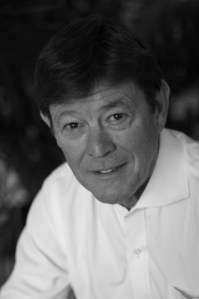
J. Morris Hicks, the "big picture guy"

The great news is that one hundred years from now, our overall quality of life will be better. Don’t believe me? Let me ask you a question. Where would you rather spend your vacation, Houston or Paris?

For more reading on this topic:

High gas prices — the silver lining…

What is the future of food? — Take a look at the past.

High gas prices — the silver lining…

Worried about gas prices? You ain’t seen nuthin’ yet.

If you like what you see here, you may wish to join our periodic mailing list. Also, for help in your own quest to take charge of your health, you might find some useful information at our 4-Leaf page. From the seaside village of Stonington, Connecticut – Be well and have a great day.

If you’d like to order our book on Amazon,  visit our BookStore now.

—J. Morris Hicks…blogging daily at HealthyEatingHealthyWorld.com

PS: Occasionally an unauthorized ad may appear beneath a blog post. It is controlled by WordPress (a totally free hosting service). I do not approve or personally benefit whatsoever from any ad that might ever appear on this site. I apologize and urge you to please disregard. 

Posted in Big Picture, Energy | 1 Comment