Cheese; not a health food…4th in a series of 6

Continuing with our list of the six n0t-so-healthy foods in our book, this blog is devoted to the most ubiquitous food of our generation — CHEESE. As you probably know, most s0-called vegetarians even eat cheese as they, like almost everyone else, truly believe that it is a healthy product with lots of calcium and protein. Plus, no animal has to die for you to eat your cheese. So what’s the problem? Here’s what we had to say in Chapter 10 of our book:
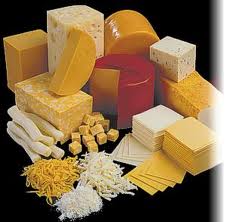
Cheese, one of America’s all-time favorite foods

Cheese is the most universally accepted animal product by persons who consider themselves vegetarian.  But cheese is not a vegetable and shares many more characteristics with meat than it does with spinach.

As reported by Dr. Fuhrman inEat to Live,” its consumption per capita in the USA increased 140 percent between 1970 and 1996 to become the primary source of saturated fat in our diet.   It is touted as being a healthy product and a good source of protein and calcium.

Sadly it has also become an integral part of every kids menu. Cheese is not good for you and it’s not good for your children—too much fat, too much cholesterol and too much animal protein.
“Cheese for the Children” — the pathway to obesity, diabetes, heart disease and cancer.

The saddest part of our obsession with this deadly product is that it is prominently featured on every single “kids menu” in the Western world. Cheeseburger, Mac & Cheese, Grilled Cheese, Fried Cheese, Cheese & Crackers, Cheese Pizza, Chuck E. Cheese and on and on. (More on feeding the children)

As with cigarettes and alcohol, someday it will be illegal to sell harmful products like cheese to our children. But for now, cheese (along with nuggets, fries & burgers) constitute the “four major food groups” on every kids menu in America. Is there any wonder why we have such an epidemic of obesity and type 2 diabetes among our nation’s young people? It would not surprise me if the single biggest driver of those two deadly trends can be explained in one word — CHEESE.
Cheese is not recommended in our 4-Leaf Program

Do yourself and your family a favor; get the cheese out of your house and never buy it again. Learn to like healthy plant-based foods like hummus, vegetable pate’, couscous, tapenade, salsa, and many other tasty food items that can be a routine part of your4-Leaf meals of the future. Next post in the series…

Yogurt; not a health food…5th in a series of 6

Handy 5-piece take-charge-of-your-health kit—from Amazon.com

Why should we be eating mostly plants? The “big picture” in 4 minutes.

Want to find out how healthy your family is eating? Take our free 4Leaf Survey. It takes less than five minutes and you can score it yourself. After taking the survey, please give me your feedback as it will be helpful in the development of our future 4Leaf app for smartphones. Send feedback to jmorrishicks@me.com

International. We’re now reaching people in over 100 countries. Follow us on Facebook and Twitter or get daily blog notices by “following” us in the top of the right-hand column. For occasional updates, join our periodic mailing list.

J. Morris Hicks, working daily to promote health, hope and harmony on planet Earth.

To order more of my favorite books—visit our online BookStore now

For help in your own quest to take charge of your health, visit our 4Leaf page and also enjoy some great recipes from Lisa’s 4Leaf Kitchen.

Got a question? Let me hear from you at jmorrishicks@me.com. Or give me a call on my cell at 917-399-9700.

SHARE and rate this post below.

—J. Morris Hicks, board member, T. Colin Campbell Foundation
Posted in Dairy, cow's milk, Healthy Eating 101 | 2 Comments

“Natural” Diet — Exactly what do I mean by natural?

Let’s begin with a question: “What did nature intend for us to eat?”

Within our book and on this blog-site, we frequently refer to the natural diet for our species. A reader has asked me to clarify exactly what I mean by “natural,” as that word can mean different things to different people. For example, we see many highly processed, packaged, and very unhealthy foods with the two words “All Natural” on the label. So, it’s understandable that many might wonder, as did Frances, exactly what do I mean when I talk about the “natural diet for our species. Here is what she wrote:

I am troubled by your use of the word “natural” in your phrase “natural diet for our species”.  I would prefer you to replace it with the word “optimal” or perhaps “healthful”.  The term “natural” does not have a very precise meaning and I fear that your headline use of the word exposes Colin Campbell’s message to needless criticism.  We all have our own idea of what is natural.

Every species has its “natural” diet. The strongest animals in the world eat nothing but raw plants. We humans have drifted far, far away from our “natural” diet.

My reply: You are so right; I should have made this clarification long before. When I say natural diet, I am talking about what Mother Nature intended for us to eat. All species were designed by nature to consume the kind of food that will promote their own health and enable them to survive and reproduce. No one has to tell animals in the wild what they should be eating; it comes natural for them.

In other words, all animals have a natural diet. Lions and wolves naturally consume other animals after they chase them down and kill them. Predator fish consume many species of smaller fish. Some amphibians eat nothing but insects, and so on.

But the strongest animals in the world: the elephant, hippo, rhino, horse, zebra, giraffe and gorilla — consume almost nothing but raw plants. Because that’s what nature intended for them to eat.

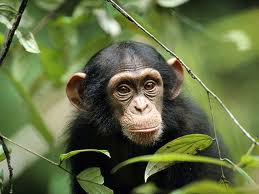
This little guy, whose DNA is almost identical to ours, is a herbivore and eats nothing but raw plants — in his natural habitat.

And that last one (along with the chimpanzee) has a DNA that is almost identical to that of humans — giving us a real big clue as to what we should be eating or, in other words, the “natural” diet for our species.

Instead, because of our cognitive niche, we have chosen to eat other foods, like meat — that we first hunted and later domesticated. We would not have been able to survive in the colder climates if we depended only on plants. But that doesn’t mean we evolved to that unnatural diet for our species.

That “cave man” diet consisting of an occasional piece of meat from a hunted and killed animal has morphed (not evolved) into a grossly unnatural diet for our species — with lots of meat, dairy, eggs, fish and/or highly processed foods with almost every meal.We now know from a preponderance of evidence that our typical Western diet is extremely harmful (to us and the planet), incredibly wasteful (land, water, & energy), and frighteningly cruel to billions of innocent “food” animals. Finally, in addition to all of the above…

We now know that this way of eating is grossly unsustainable.

How so? Not enough land, not enough water, not enough fossil fuel resources to continue producing it and not enough money to pay for the horrendous toll it has taken on our health. Regardless what humans have been eating for the past few thousand years, we have never eaten meat and dairy at the grossly unsustainable pace that we are eating it today in the Western world. And I certainly don”t believe that we have “evolved” to that typical Western diet.

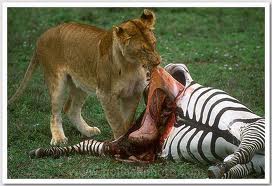
A true “carnivore” dining on a freshly killed zebra, one of the many animals forming the “natural” diet for the lion.

One clue: That “unnatural” diet is literally killing us — cancer, heart disease, obesity, diabetes, etc. And, even if we had evolved to that diet, there is no way we can return to that quaint, small farm, feeding model; it’s simply unsustainable in a world full of seven billion people.

To me, after learning about all of this madness back in 2003, I experienced a “blinding flash of the obvious” — We’re eating the wrong food!

After 4 billion years of life on this planet and millions of species; humankind has distinguished itself as the ONLY species in history to eat a diet that nature did not intend for us to eat. Of course, now we have many other species eating an unnatural diet as well: all of those animals that we have domesticated for our food — and our pets.

So what’s it going to take to get us back on track? I figure we’re about one billion blinding flashes away from turning around the deadly trend that the human race has established in the past century (a mere blink of history.)

J. Morris Hicks and J. Stanfield Hicks, authors enjoying nature on the trail to Tuckerman Ravine in New Hampshire

As the 2009 movie HOME pointed out in the message that Glenn Close so movingly reported: “In just the past fifty years, the human race has inflicted more damage on the fragile harmony of nature than did all of the humans on this planet for the past 200,000 years COMBINED.”

Now, all of that damage wasn’t caused by what we’re eating, but a very hefty portion of it was: You see, our meat-based diet (per calorie) requires 20 times more land, 20 times more energy and 20 times more water than a diet consisting of whole, plant-based foods.

If some of this information disturbs you, maybe you’ll soon have your own blinding flash; if you do, please share your experience and your knowledge with others that you care about. Click here to read about My own “blinding flash of the obvious” in 2003.

Finally, if you would like to hear more about how we got into this ridiculous mess in the first place, you might enjoy my 2007 article describing what I would have told my loved ones about this topic if I had only thirty minutes to live. It is featured on the “Big Picture” page of this website and is entitled:

Give me thirty minutes and I’ll give you thirty years. 

If you like what you see here, you may wish to join our periodic mailing list. Also, for help in your own quest to take charge of your health, you might find some useful information at our 4-Leaf page. From the seaside village of Stonington, Connecticut – Be well and have a great day.

Handy 4-piece take-charge-of-your-health kit—from Amazon.com

Want to find out how healthy your family is eating? Take our free 4Leaf Diagnostic Survey. It takes less than five minutes and you can score it yourself. After taking the survey, please give me your feedback as it will be helpful in the development of our future 4Leaf app for smartphones. Send feedback to jmorrishicks@me.com

International. We’re now reaching people in over 100 countries. Follow us on Facebook and Twitter or get daily blog notices by “following” us in the top of the right-hand column. For occasional updates, join our periodic mailing list.

To order more of my favorite books—visit our online BookStore now

J. Morris Hicks, working daily to promote health, hope and harmony on planet Earth.

For help in your own quest to take charge of your health, you might find some useful information at our 4Leaf page or some great recipes at Lisa’s 4Leaf Kitchen.

Got a question? Let me hear from you at jmorrishicks@me.com. Or give me a call on my cell at 917-399-9700.

SHARE and rate this post below.

Blogging daily at hpjmh.com…from the seaside village of Stonington, Connecticut – Be well and have a great day.

—J. Morris Hicks, board member, T. Colin Campbell Foundation

Posted in Big Picture | Tagged | 1 Comment

Granola; not a health food…3rd in a series of 6

Just as with other “not-so-healthy” foods like olive oil and cow’s milk, granola is synonymous with “healthy eating” for most people in the Western world. But again, when we take a closer look, we realize that “all that glitters is not gold.” Here’s what we said about granola in Chapter 10:

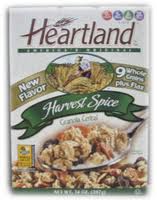
How could granola not be good for you?  Two clues: added sugar and too much fat content. Remember, you’re looking for an average of less than 20% of your calories from fat and you’re looking for near zero added sugar. One serving of a home-made granola cereal on nutritiondata.com contains 24 grams of sugar and a whopping 264 calories from fat—accounting for 44% of the total of 597 calories per serving.

When checking Nutrition Facts labels, divide fat calories by total calories to get % fat for the meal. Also look for the # of grams of added sugar; today almost all packaged goods have it.

While granola is nowhere near as harmful for you as cow’s milk and other dairy products, it is not a powerful health-promoting food like many other options that you might choose for your breakfast. Links to two of my favorites are shown here for your convenience; my very own “Sailors Oatmeal” at mid-morning or my all-time favorite for the first 250 calories that I put in my body each day: Eating healthy in the morning…first course is fresh fruit only.

Both of these meals are high in the 4-Leaf range of our simple scoring system. The key to vibrant health is just two words: WHOLE PLANTS, with lots of variety among the choices of greens, beans, grains, vegetables, fruits, nuts and seeds.

To be fair, if you loaded up a small portion of your favorite granola with several hundred calories of fresh fruits, you might be able to turn it into a 2-Leaf or 3-Leaf meal. The choice is obviously yours, we’re just trying to help you establish your new eating habits at the healthiest possible level that you can maintain. Ready for #4? Cheese; not a health food…4th in a series of 6

Handy 5-piece take-charge-of-your-health kit—from Amazon.com

Why should we be eating mostly plants? The “big picture” in 4 minutes.

Want to find out how healthy your family is eating? Take our free 4Leaf Survey. It takes less than five minutes and you can score it yourself. After taking the survey, please give me your feedback as it will be helpful in the development of our future 4Leaf app for smartphones. Send feedback to jmorrishicks@me.com

International. We’re now reaching people in over 100 countries. Follow us on Facebook and Twitter or get daily blog notices by “following” us in the top of the right-hand column. For occasional updates, join our periodic mailing list.

J. Morris Hicks, working daily to promote health, hope and harmony on planet Earth.

To order more of my favorite books—visit our online BookStore now

For help in your own quest to take charge of your health, visit our 4Leaf page and also enjoy some great recipes from Lisa’s 4Leaf Kitchen.

Got a question? Let me hear from you at jmorrishicks@me.com. Or give me a call on my cell at 917-399-9700.

SHARE and rate this post below.

—J. Morris Hicks, board member, T. Colin Campbell Foundation

Posted in Healthy Eating 101 | Leave a comment