Why does it all have to be so confusing? A reader asks…

Many people throughout the world are probably asking that question — and will be for a long time. In the CNN special on Sunday night, there were totally opposite viewpoints by experts regarding the nation’s #1 killer of men and women — heart disease. It’s going to be a long time before that whole process gets sorted out; meanwhile, you are free to choose the approach that makes the most sense to you. You can choose the approach that treats the symptoms or you can choose the non-invasive, inexpensive approach that eliminates the disease completely. As for disagreement among the experts, read on….
Leveraging the simple, yet powerful concept of maximizing the percent of your calories from whole plant foods -- still in nature's package

Even among the “veggie docs,” there is a fair amount of disagreement on a few details of plant-based eating, need for supplements, use of fish oil, nutrient density, etc. But there is a lot of common ground too. And it’s that common ground on which we have focused in our book, on this blog and in our 4-Leaf Health Promotion Program.

As a “big picture guy,” I like to keep things as simple as possible. And I wish to thank Sal from New York, who posted this comment on yesterday’s blog. It inspired me to try to better explain the thinking behind our 4-Leaf Program. Sal asks…

Where did the 20% non-plant food concept come from?  What is the rationale for 20%, why not 15%, 10%, 5%.  Who is right, MacDougall, Fuhrman, Barnard, Hicks?  It’s all confusing.

My Response. Sal, thanks for your question. First of all, it is not 20% non-plant food; it is 20% for all foods (including plant foods) — that are not WHOLE plants. Our entire 4-Leaf concept (See our 4-Leaf Page) was created to simplify and consolidate all of the confusing advice that was floating around out there. So we decided to base our program on the “common ground” on which all of the “veggie docs” seemed to agree.

Therefore, the foundation of 4-Leaf was based on the “common ground” nutritional wisdom of Campbell, Esselstyn, Ornish, Fuhrman, McDougall and Barnard. And while they may disagree among themselves on a few minor points, they all agree that we should maximize the percent of our calories from whole, plant-based foods. Best, J. Morris Hicks

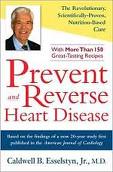
All of the "veggie docs" love this book. In it, Dr. Campbell says, "The closer we get to a diet of whole, plant-based foods, the better off we will be."

So why did we choose 80% as the threshold for our 4-Leaf Level? Primarily to remove the “all or nothing” mentality from our thinking and adding a bit of flexibility to the equation. There is nothing magic about 80% or 85%; we just thought that 80% was a reasonable number and most people are already familiar with the old 80-20 rule. Since most people simply don’t like the “all or nothing” approach to anything, we were striving to create something that would seem reasonable to everyone, while still comprising a powerful, health-promoting diet-style.

By shooting for 80% or more of your calories from whole plants, you will be getting fifteen times as much of these nutritious foods than the average American, you will be eating a health-promoting diet, and your body will seek its ideal weight. As for the 20% non-plant, we have never recommended consuming ANY animal products. The 20% is for all calories that are not WHOLE plants (still in nature’s package).

So the 20 percent would include all bread, pasta, potato chips, tofu, olive oil, cookies, breath mints, sugary cereals, wine, beer and scotch — anything with calories that’s not a whole plant. So why not whole grain bread and pasta? We’re not saying that they’re harmful like meat or dairy, we’re just saying that they’re not as nutritious as the whole, unprocessed plant — with all the water, fiber, vitamins, minerals and phytonutrients intact. Further, we have observed that vegetarians who load up on these type of foods never seem to achieve the results they were seeking.

So what about the guy that chooses to eat a little cheese and salmon in his 20%? He will still be eating a health-promoting diet that is far superior to that of his fellow American. He will very likely reverse whatever heart disease he has and will improve his overall well-being in countless ways. And I believe that all of the doctors mentioned above would agree with that statement. Even most vegetarians are likely to dramatically improve their diet if they follow our simple guidelines.

Even Dr. McDougall doesn’t like the “all or nothing;” saying that he has a little turkey on Thanksgiving; therefore he is not a vegetarian. As for me, I never “plan” to eat any animal products; I don’t buy any animal products and I never order any from a restaurant menu. But I did have a few bites of salmon at the sit-down luncheon at the Harvard Club in New York, where I was the guest speaker at the New York Rotary. The main thing is to maximize your calories from whole plants; and not worry too much about an occasional bite of meat or cheese.

Living in Naples, Florida, I imagine that Hunter and Suzi are buying much of their whole plant foods from the legendary organic farmer, Frank Oakes.

A new friend, Hunter, in Florida likes to call our 4-Leaf Program the “80-20 diet.” Take a look at his comment dated 8-29-11 on our Comments Page. Right now, it is the first comment listed, followed by a comment by Dr. Campbell. In Hunter’s case, if I had told him that he needed to be 100% vegan, he would probably not have found that prospect very attractive for him and his wife Suzi and would have made no changes in his diet; and would have had a zero increase in whole plant calories. By going the “80-20” route, he has increased his consumption of these most-nutritious foods by at least ten fold.

The Bottom Line. Our 4-Leaf Program is supposed to be simple. Based on the “common-ground” beliefs of many experts, the 4-Leaf level of eating can be explained very succinctly:

Over 80% of your calories from whole plants — still in nature’s package. One caveat: Less than 20% of your calories from fat – regardless of the source.
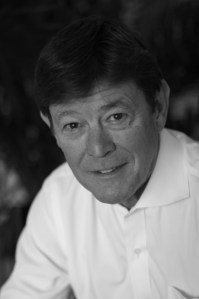
J. Morris Hicks, working daily to promote health, hope and harmony on planet Earth.

Dr. Esselstyn likes to see his heart patients get below 10%. We just thought that under 20% would be a vast improvement over the average American’s fat consumption (now approaching 40% of calories) and that it would be a “reasonable” number that most people could achieve. Our original goal was the old K.I.S.S. principle. Hopefully we made it as simple as possible.

One more thing, this great video illustrates that “common ground” that I am talking about.

“Common Ground” among medical experts…VegSource video

*****************

If you like what you see here, you may wish to join our periodic mailing list. Also, for help in your own quest to take charge of your health, you might find some useful information at our 4-Leaf page. From the seaside village of Stonington, Connecticut – Be well and have a great day.

If you’d like to order our book on Amazon,  visit our BookStore now.

—J. Morris Hicks…blogging daily at HealthyEatingHealthyWorld.com

PS: Occasionally an unauthorized ad may appear beneath a blog post. It is controlled by WordPress (a totally free hosting service). I do not approve or personally benefit whatsoever from any ad that might ever appear on this site. I apologize and urge you to please disregard. 
Posted in 4Leaf for Life, Medical Experts | 4 Comments

What is the best food for lowering cholesterol?

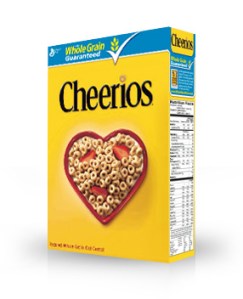
If you’re thinking Cheerios, think again.

If you ask the average American on the street to name the best food for lowering cholesterol, my guess is that 50% or more would say Cheerios. That’s because General Mills has built that brand as the heart-healthy, cholesterol-lowering brand — I mean, look at the carton. And they have spent a lot of money producing some terrific ads — emotional scenes with children that we all remember.

Now, I am not picking on Cheerios, because compared to most of the “junk food” on the cereal aisle these days, it’s really not that bad. But it is a processed food, even though they use whole grain oats. And the ingredient list also includes the following in addition to the oats: modified corn starch, sugar, salt, tripotassium phosphate, wheat starch, and mixed tocopherols. By contrast, my Old Fashioned Oatmeal has one ingredient: whole grain rolled oats.

One ingredient: Whole grain rolled oats. Just look at the ingredient list; there are many brands that have that same single ingredient. Cheerio's is not one of them.

The problem is that most people get virtually all of their nutritional information from their TV’s and from the front of the food packages they buy. But, with the latest CNN Special, “The Last Heart Attack,” more books like The China Study, and informational videos like the one described below; the word is beginning to get out there about the ultra-simplicity of the most nutritious diet possible. It can be summed up in two words: whole plants. And if you eat enough of them, you can protect yourself against virtually all diseases and reverse most of the ones you might already have.

CNN recently produced a video about foods that lower cholesterol best, citing information from a recent study in Canada that was published in the Journal of the American Medical Association (JAMA). There is a link to that short video below (it does have a 30-second ad at the beginning.) But here’s the primary information:

  • There were two groups of people in the study; all had cholesterol levels between 243 and 263.
  • One group was told to eat a low fat diet that included dairy as well as fruits and vegetables.
  • The other group was told to eat foods that were known to reduce cholesterol: a list that included ONLY plant-based foods, mostly whole and unprocessed.
  • The “Low Fat” group reduced their bad cholesterol 3%.
  • The “Whole Plant-based” group was almost five times as successful in reducing theirs: an average of 14%.

Leveraging the simple, yet powerful concept of maximizing the percent of your calories from whole plant foods -- still in nature's package

In our own 4-Leaf Program, we have build on the simplicity of maximizing the percent of your calories from whole, unprocessed, plant-based foods. Since we established 80% or better as the “4-Leaf Level,” some people call it the 80-20 diet.

But whatever you call it, if you’re getting over 80% of your calories from a broad range of whole plant-based foods, you will be eating a very healthy diet. And even though you can eat all you want, your body will take care of finding it’s ideal weight. 

If you like what you see here, you may wish to join our periodic mailing list. Also, for help in your own quest to take charge of your health, you might find some useful information at our 4-Leaf page. From the seaside village of Stonington, Connecticut – Be well and have a great day.

If you’d like to order our book on Amazon,  visit our BookStore now.

—J. Morris Hicks…blogging daily at HealthyEatingHealthyWorld.com

PS: Occasionally an unauthorized ad may appear beneath a blog post. It is controlled by WordPress (a totally free hosting service). I do not approve or personally benefit whatsoever from any ad that might ever appear on this site. I apologize and urge you to please disregard. 

Posted in 4Leaf for Life, Heart Disease | 3 Comments

Obesity, diet and the CEO of the American Heart Association

Still no electrical power in Stonington; so here I am at my favorite Mystic Starbucks — with fresh coffee, electricity, music and the all-important internet connection. For those of you who still haven’t seen the CNN Special, I provided a link to the entire piece in my post yesterday. 

Leading up to the “heart attack” special on CNN, I referenced several online articles in my blogs; one by Dr. Sanjay Gupta and the other by David S. Martin of CNN. In the latter one, he quoted the CEO of the American Heart Association who boldly stated that:

Ms. Brown doesn't seem to understand that what we eat might have something to do with the obesity epidemic sweeping the Western world.

“Diet alone is not going to be the reason that heart attacks are eliminated” says Nancy Brown, CEO of the American Heart Association….”Other key factors include physical activity, cholesterol, blood pressure and weight,” she says.

In this statement, she seems to make no connection between what we eat and 3 out of the other 4 factors she says are necessary to eliminate heart attacks. Clearly even the least educated and the least informed among us already realize that what we eat definitely has something to do with our cholesterol, blood pressure and weight. And, almost everyone knows that we need to eat more fruits and vegetables in order to improve our numbers in all three.

Your mother probably told you a million times that you should eat more fruits and vegetables, your doctor has probably told you the same thing. But the problem is that we have steadily eaten less and less of those healthy foods for the past 60 or 70 years. And, like over 90% of our population, it is very likely that even your mother and your doctor are now eating meat and/or dairy three meals a day. What’s going on here?

It all gets back to confusion over clarity. And we love to hear good news about our bad habits. We also like to have someone or some “disease” to blame for the problems of high cholesterol, high blood pressure or obesity that we have created for ourselves. We like to think of obesity as a “disease” that struck us randomly and there was nothing we could do about it.

When are going to accept the fact that obesity is NOT a “disease;” it’s the direct result of eating the wrong foods that we have learned to crave — foods that our FDA, USDA, American Heart Association, American Cancer Society and all of the other members of the “system” are still telling us that those foods are part of a healthy diet? We now know that they are not. See related post:

Michelle, it’s time to tell the world about “meat & dairy.”

What’s the latest on obesity? Here are a few stats that I just lifted from the CDC website (See link below):

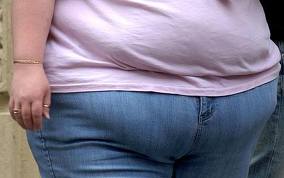
Not sure if this is a man or a woman; but I can tell you there are many of these poor souls walking around out there these days.

  • Obesity is common, serious and costly. About one-third of U.S. adults (33.8%) are obese.
  • Not a single state has met the nation’s Healthy People 2010 goal to lower obesity prevalence to 15%.
  • Obesity-related conditions include heart disease, stroke, type 2 diabetes and certain types of cancer, some of the leading causes of death.
  • In 2008, medical costs associated with obesity in the USA were estimated at $147 billion; the medical costs paid by third-party payors for people who are obese were $1,429 higher than those of normal weight.
  • Non-Hispanic blacks have the highest rates of obesity (44.1%) compared with Mexican Americans (39.3%), all Hispanics (37.9%) and non-Hispanic whites (32.6%).

If our adults don't care about themselves, maybe they will care about what is happening to their children.

The Bottom Line. It is time for our government to start telling the innocent public exactly what they should be eating to promote health and prevent/reverse chronic disease. While most of them won’t follow that advice until they can no longer afford the toxic foods they crave, we should be telling our citizens the truth. We should also be telling them that their obesity is a direct result of their own eating habits.

One more thing, of the five factors (mentioned by Ms. Brown) affecting our ability to eliminate heart attacks, only one of them is not driven by what we eat: our level of physical exercise. But Dr. Esselstyn has proven that we can eliminate with a change in diet alone. Read on…

This book tells you "exactly" what you need to do to reverse heart disease.

For all of the hundreds of patients that have reversed their heart disease following his guidelines, none of them were advised to change their exercise habits. While he encourages exercise as a part of a healthy lifestyle, he did not make it a measurable part of the formal regimen. When he began his initial study in 1980 with 17 terminal heart patients, he was carrying a full surgical workload at the time and wasn’t equipped to monitor a second variable like exercise.

Back to Ms. Brown and her statement that “Diet alone is not going to be the reason that heart attacks are eliminated.” As long as her own agency and our own government continue to tell us that meat, cow’s milk, cheese, eggs, oil and fish can be included as routine parts of a healthy diet; she may very well be right.

But imagine what would happen if ALL of those “system” agencies started endorsing a 4-Leaf type of diet-style, with over 80% of our total calories coming from whole, plant-based foods. Like I said earlier, the masses would still not change overnight but a lot more people would heed the advice. As a result, millions of lives would be saved and the cost health-care in this country would go down by the billions overnight. Once again, kudos to Dr. Sanjay Gupta and CNN for opening the door of change.

By opening that door, the traffic to my website hit an all-time high yesterday; with almost triple the normal amount of traffic. And at least half of the articles viewed were related to heart disease — specifically the CNN special and the prospects of seeing “last heart attack” in our future — in the USA and throughout the world.

J. Morris Hicks, working daily to promote health, hope and harmony on planet Earth.

*****************

If you like what you see here, you may wish to join our periodic mailing list. Also, for help in your own quest to take charge of your health, you might find some useful information at our 4-Leaf page. From the seaside village of Stonington, Connecticut – Be well and have a great day.

If you’d like to order our book on Amazon,  visit our BookStore now.

—J. Morris Hicks…blogging daily at HealthyEatingHealthyWorld.com

PS: Occasionally an unauthorized ad may appear beneath a blog post. It is controlled by WordPress (a totally free hosting service). I do not approve or personally benefit whatsoever from any ad that might ever appear on this site. I apologize and urge you to please disregard. 

Posted in Activism & Leadership, Heart Disease, Medical Experts, Obesity | Tagged , , , , , | Leave a comment