CONFUSION. Too many diets, too little clarity

A reader asked me to take a look at the Low GI Diet recently; saying that she had gained some useful information from their website “even though they still recommend three portions of dairy a day, a moderate amount of meat/fish, and ‘healthy’ oils, nuts and seeds.”

Personally, I am not interested in learning about any diet that recommends three portions of dairy per day. That fact alone would make me suspect of almost anything else they had to say. When I first started studying about the incredible importance of what we eat, I was looking at everything I could find — and there were hundreds of theories out there. But gradually I moved in the direction of simplicity, clarity and practicality. I was also seeking a hefty dose of credibility, authenticity and legitimacy.
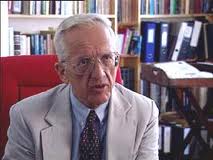
Dr. T. Colin Campbell of Cornell, author of The China Study

I found all of the above with the independent work of Dr. T. Colin Campbell and Dr. Caldwell Esselstyn — of Cornell and The Cleveland Clinic respectively. Dr. Campbell stated his case for the optimal diet very simply, “The closer we get to a diet of whole plant foods, the better off we will be.”

Then Dr. Esselstyn proved that heart disease is completely reversible in nearly 100% of the cases — with an intervention that consisted of nothing more than a shift to a diet of whole plant foods — with no meat, dairy or eggs EVER.

As for practicality. Before deciding that the Campbell-Esselstyn approach was “right for me,” I was searching for the absolute “optimal” diet for humans. And it very well could be a diet consisting of 100% whole plants — eaten raw. But, I don’t know that for sure, but I know that it wouldn’t be very practical for most of us. So I finally concluded that any diet that could reverse heart disease nearly 100% of the time was good enough for me.
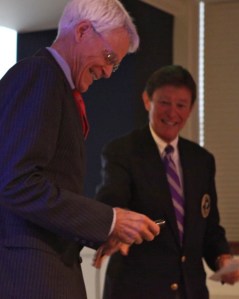
J. Morris Hicks introduces Dr. Caldwell Esselstyn at the Stonington Harbor Yacht Club

Our 4Leaf Program was built on the foundation of knowledge that we gained from Campbell, Esselstyn and four more M.D.’s who had experience reversing disease using only food as a medicine — the same way Hippocrates did thousands of years ago.

So we focus on the positive: maximizing the percent of calories from whole plants, still in nature’s package. This approach builds in some flexibility that makes the concept even more practical for most people. We’ve found that very few people find the “all or nothing” approach very practical for them.

As for optimal.  My inclination is to always embrace simplicity as much as possible. Dr. Esselstyn likes to talk about the diet-style of the Tarahumara peoples in northern Mexico. They enjoy great health, incredible longevity, and an almost total absence of all of our chronic diseases in the “developed” world. What do they eat? Corn, beans and squash. The fact is that there has not been enough scientific study to tell us exactly what we should be eating; but in the meantime, the superior health of the Tarahumara should give us a pretty good idea of something very close to optimal.

More study is needed. The debate will go on forever, even after we have more scientific proof. The Low GI people are still recommending three portions of dairy per day even though science has proven that it is one of the most deadly substances we can put in our body. So if Steve Jobs was a vegan, why did he die so young of pancreatic cancer? Responding to my blog about the early death of Steve Jobs, Dr. Campbell offered the following:

Jim, About 25 years ago, we reported on the effects of dietary fat on experimental pancreatic cancer in laboratory rats and published our results in the Journal of the National Cancer Institute, who featured our results on the cover of their journal. Finally, the associations of animal protein and fat with pancreatic cancer are beginning to make news and your help in publicizing this observation is gratifying.

You may recall my long time interest in doing a professional study of the effects of a whole food plant based diet, not only to determine how comprehensive it is but also to learn something about why some individuals doing all the wrong things fail to get the expected diseases and why other individuals doing all the right things (presumably) still get one of these diseases. I have found it very difficult to get people to understand this need. Keep up the great reporting! Colin
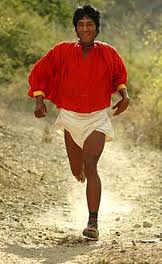
The Tarahumara are famous for their long-distance running, their superb health and their longevity.

The Bottom Line. When in doubt, keep it simple. How much simpler could it be than the corn, beans and squash of the Tarahumara? As for simplicity, when one considers the “big picture” regarding the dietary choices of humans — and not just the health of humans — there is no doubt in my mind that we’re currently eating the wrong food in the Western world.

Our Western diet requires too much land, too much water, too much energy; it is grossly unsustainable, it is destroying our environment and it requires that we continue the despicable practice of eating other animals — well on our way to 100 billion per year.

I had my “blinding flash of the obvious” in 2003; have you had yours yet? Want to see more information on “sustainability?” See the drop-down list of categories near the top of the right column; this is the 29th post that includes that topic.

The following five books and one DVD can be purchased on Amazon for a grand total of less than $60—and will enable you to understand the overwhelming challenges we face—along with the single most-powerful solution of all.

Six-Pack from Hicks—for health, hope & harmony on planet Earth

  1. Healthy Eating, Healthy WorldThe “big picture” about food (our book)
  2. A life changer for millions, including James Cameron. Forks Over Knives DVD 
  3. An essential scientific resource: The China Study by Dr. T. Colin Campbell; the primary book that influenced Bill Clinton to adopt a whole food, plant-based diet.
  4. What have we done to our planet? Full Planet, Empty Plates by Lester Brown
  5. A horrifying wake-up call for leaders. TEN BILLION by Dr. Stephen Emmott
  6. Food choices are the primary cause of our environmental problems, yet our world leaders, scientists & experts are Comfortably Unawareby Richard Oppenlander.

Why should we be eating mostly plants? The “big picture” in 4 minutes.

Want to find out how healthy your family is eating? Take our free 4Leaf Survey. It takes 2 or 3 minutes and you can score it yourself. After taking the survey, please give me your feedback as it will be helpful in the development of our future 4Leaf app for smartphones. Send feedback to jmorrishicks@me.com

International. We’re now reaching people in over 100 countries. Follow us on Facebook and Twitter or get daily blog notices by “following” us in the top of the right-hand column. For occasional updates, join our periodic mailing list.

J. Morris Hicks, working daily to promote health, hope and harmony on planet Earth.

To order more of my favorite books—visit our online BookStore now

For help in your own quest to take charge of your health, visit our 4Leaf page and also enjoy some great recipes from Lisa’s 4Leaf Kitchen.

Got a question? Let me hear from you at jmorrishicks@me.com. Or give me a call on my cell at 917-399-9700.

—J. Morris Hicks, board member since 2012; click banner for more info:
Nutrition Certificate

Posted in Big Picture, Sustainability | Leave a comment

World Hunger. It takes a village.

Thinking of the entire world as a village may help us make better choices.

Within walking distance of all 1,000 citizens, our Stonington Free Library serves everyone -- not just the wealthiest 30%. It takes a village.

Sunday morning, lying in bed after hitting the snooze button at 0515, I began thinking about donating a half-dozen copies of our book to our very own Stonington Free Library — an effort on my part to be a good citizen of our little village by the sea.

That triggered a thought about the use of the phrase, It takes a village, in our book. Here is an excerpt from Chapter 6 entitled “Mouths to Feed” and focusing on the ever-growing issue of world hunger:

Living in a small coastal community in Connecticut, I understand the meaning of the phrase “It takes a village.” The quality of life for everyone is enhanced by the interests and actions of their neighbors; the whole can be greater than the sum of the parts. Located on a densely populated peninsula, my quaint New England village is almost like a small college campus where everyone eventually gets to know one another.

Let’s imagine that our village of 1,000 residents has 1,000 acres of arable land within walking distance. The citizens and their leaders must decide what to produce on that land: grain, cows, vegetables, chickens, fruit, and/or pigs? If they proceed according to the model in the world of today, they will use over 900 acres to produce lots of meat and dairy products for the 300 wealthiest residents. That will leave fewer than 100 acres to provide food for the remaining 700 people—clearly not enough land to survive, no matter what kind of food they are eating. Sounds absurd, right? But that is the direction we are headed in the early part of the twenty-first century.

That’s right, with roughly 8 billion acres of arable land on the planet, we have seven billion people with “mouths to feed.” With a little over one acre per person, what’s the problem? The problem is that the extremely wasteful Western diet requires over 3 acres to feed just one person. If you passed the third grade, you can clearly understand the problem. We (the wealthiest 30%) are using three times more than our share of the land.

This is how much arable land is lost to land degradation in the world every year.

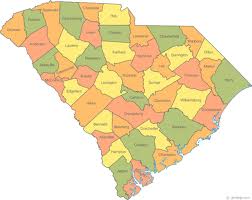
To compound the problem, more people in the developing world are choosing our wasteful diet-style every day. Not only that, we are losing a big chunk of that 8 billion acres every year to degradation and erosion — a chunk about the size of South Carolina. And let’s not forget that our world population continues to grow — adding almost 200,000 people every day — a number equal to a city the size of Grand Rapids, MI.

So, by now you may be thinking that you’ll just get all of your animal protein from the vast oceans of the world. Think again. Then consider the alarming facts in this “FISH” blog, much of which was covered in Chapter 4 of our book, “Running Roughshod.” FISH…the natural diet for humans? A “big picture” view

The Bottom Line. Even if you still believe that you “need” to eat animal protein to be healthy, the simple fact is that there will never be enough so that everyone can partake. This realization was part of my “blinding flash of the obvious” that I experienced in the spring of 2003. We’re eating the wrong food. Not only is is destroying our health, but it is grossly unsustainable (for many reasons) for very much longer. Now for the good news:

With the world population expected to reach 9 billion by 2050, we could easily feed everyone on far less than one-half of those 8 billion acres; and the other 4 or 5 billion acres could be returned to forests and meadows — where they could go to work repairing the environment over which humankind has been running roughshod for the past century.

Authors J. Stanfield Hicks and J. Morris Hicks, working daily to promote health, hope and harmony on planet Earth.

Maybe if more of us thought of living in a small village where over 70% of the people was going hungry, we would find it easier to make better choices in what we eat. It really does take a village. 

If you like what you see here, you may wish to join our periodic mailing list. Also, for help in your own quest to take charge of your health, you might find some useful information at our 4-Leaf page. From the seaside village of Stonington, Connecticut – Be well and have a great day.

If you’d like to order our book on Amazon,  visit our BookStore now.

—J. Morris Hicks…blogging daily at HealthyEatingHealthyWorld.com

SHARE and rate this post below…One more thing, occasionally an unauthorized ad may appear beneath a blog post. It is controlled by WordPress (a totally free hosting service). I do not approve or personally benefit whatsoever from any ad that might ever appear on this site. I apologize and urge you to please disregard.

Posted in Sustainability, World Hunger | Tagged , , | 1 Comment

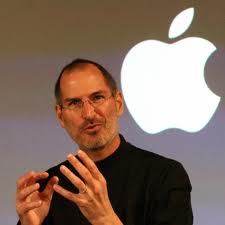
Steve Jobs. Vegan? Early death from pancreatic cancer?

What’s going on here? A look at the possible cause of pancreatic cancer and a plan for sharing that information with the entire world

AZ jpg Book Ad

2015 book by Kerry Graff, MD and J. Morris Hicks. Lots of 5-star reviews from medical professionals.

I heard long ago that Steve Jobs was a vegan, which means eating no foods of animal origin. But I have not promoted that information in my blogs because I also knew that he had pancreatic cancer. I feared that some people would simply assume that the plant-based diet-style couldn’t be that great if a well-known vegan like Steve Jobs could die of cancer at just 56 years of age. Now that he has passed away, I felt that it was time to address the topic more directly.

For a later post on this topic (1-23-12) Vegan Diet, Steve Jobs and Pancreatic Cancer—Revisited

First of all, while I have heard and read that Steve Jobs had been eating vegan for a long time, there are a few key things about his background that I do not know:

  • I do not know if his version of vegan was a truly health-promoting version. As I stated in our book, one could eat nothing but potato chips and Diet Coke and call himself a vegan.
  • I do not know exactly when he began his vegan lifestyle and for what reasons. In my case, I didn’t adopt my current near-optimal 4-Leaf diet-style until I was 58 years old. And we all know that it can take decades for cancer to spread enough to even be detectable.
  • And, finally, I do not know if he strayed from his vegan lifestyle very often since the time that he began it. But I did notice in Thursday’s New York Times article (see link below), that he liked sushi, but I don’t know how much he ate it or how often or whether or not it contained any fish.

Eating sushi? So maybe he wasn’t a vegan after all. Regarding the consumption of fish sushi (loaded with animal fat and protein), I call your attention to the following video by Dr. Michael Greger; he cites a huge NIH AARP study (500,000 people) that tightly associates the consumption of all fat AND protein of animal origin with pancreatic cancer. On the other hand, plant-based fat had no association. Take three minutes and watch the video; it may help to save the life of someone you love.

Comment from Dr. T. Colin Campbell after reading this post.  (10-8-11). 

Jim, Your statement is very good. Michael Greger’s video is excellent. About 25 years ago, we reported on the effects of dietary fat on experimental pancreatic cancer in laboratory rats and published our results in the Journal of the National Cancer Institute, who featured our results on the cover of their journal. Finally, the associations of animal protein and fat with pancreatic cancer are beginning to make news and your help in publicizing this observation is gratifying. Keep up the great reporting! Colin

Order “Steve Jobs” biography by Walter Isaacson on Amazon

"People who are crazy enough to believe that they can change the world, are the ones who do."

“People who are crazy enough to believe that they can change the world, are the ones who do.”

When it comes to cancer, we know from many studies that a lifelong diet of whole, plant-based foods will greatly lower the odds of one ever being stricken by this deadly disease. We also know that the further progression of many cancers can be slowed or even stopped with a superior diet. But there’s still a lot we don’t know about Steve Jobs — hopefully we’ll learn more about his diet-style when his biography by Walter Isaacson comes out on October 24. Already it is #1 on Amazon.

Maybe the passing of Steve Jobs will be a much-needed vehicle for the world to learn the dirty little secrets of our food industry — the secrets about how our love affair with meat, dairy and eggs — coupled with a lack of whole plant foods in our diet — is literally killing us. Maybe more people will take notice of the scientific facts reported by Dr. Michael Greger in the video above. Maybe Steve’s death will help the world realize that the the elusive “cure” for cancer, heart disease, diabetes and other chronic diseases was discovered several decades ago.

The next question is why hasn’t our government, our schools of nutrition and medicine, and our vast media complex told us these deadly facts? The answer to that question takes up over 100 pages in The China Study and is covered in detail in Chapter 8 of  our book. The short answer is one word: MONEY. Speaking of which, maybe a portion of Steve’s estate could be used to help overcome the single biggest impediment to a rapid and widespread adoption of a whole foods, plant-based diet:

95 percent of the world’s brightest and best educated citizens still truly believe that humans actually “need” to eat animal protein in order to be healthy.

How much would it cost to run a media campaign to tell the proven, simple truth about animal protein to every person over 18 in the entire world? Whatever the cost, a mere fraction of Steve’s wealth of over almost seven billion dollars should cover it easily. How about starting out with an ad campaign featuring Bill Clinton who is recognized all over the world? He is perfect for this role. He has personal knowledge of the power of plant-based nutrition and he has a powerful, possibly unequaled ability to influence billions of people. He also has his Clinton Global Initiative up and running. Just think what he could do with a $2 billion grant from his estate.

Imagine Bill Clinton with the following message on billboards, subways, busses, Youtube, emails, magazines, newspapers, podcasts, websites — all over the world.  Repetitively, for months and years…

“Listen to me carefully. We humans do not “need” to eat animal protein of any kind to be healthy. In fact, it is killing us — it is associated with chronic diseases of all kinds, including cancer, diabetes and heart disease — and it is not what Nature intended for us to eat. Health-promoting whole plants deliver all the protein we need.”

I am thinking that we could tell this message to two billion people (ten times) for less than two billion dollars. The great Steve Jobs was loved and respected around the world; what better way to remember and honor him than by telling the world the truth about all these horrible diseases, including the one that killed him? What better way could there be for Steve Jobs to make another HUGE difference in the lives of people everywhere? How insanely great would that be?

The following blog post features a video by Dr. John McDougall and was added to this blog on 12-3-11. Why Did Steve Jobs Die?

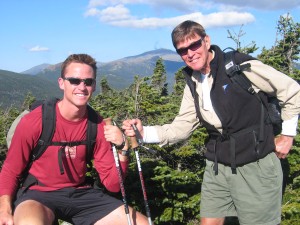
Authors J. Stanfield Hicks and J. Morris Hicks hiking the White Mountains of New Hampshire

As for cancer and sushi, here are a few earlier posts that might shed more light on this subject:

Cancer is big business: Oz shares colon story; “cancer screening $$ business” gets bigger

Another way to make money: Drugs for preventing cancer — everyone can be a customer!

As for Steve’s fondness of sushi: FISH…the natural diet for humans? A “big picture” view

Steve was also featured prominently in Rainbows – Reviews – Reality — and Making a Difference (posted 10-6-11) and in Steve Jobs — passion, vision and excellence (posted 9-8-11)

Finally, I do recommend that you read the New York Times article mentioned earlier: With Time Running Short, Steve Jobs Managed His Farewells – NYTimes.com.

Handy 5-piece take-charge-of-your-health kit—from Amazon.com

Why should we be eating mostly plants? The “big picture” in 4 minutes.

Want to find out how healthy your family is eating? Take our free 4Leaf Survey. It takes less than five minutes and you can score it yourself. After taking the survey, please give me your feedback as it will be helpful in the development of our future 4Leaf app for smartphones. Send feedback to jmorrishicks@me.com

International. We’re now reaching people in over 100 countries. Follow us on Facebook and Twitter or get daily blog notices by “following” us in the top of the right-hand column. For occasional updates, join our periodic mailing list.

J. Morris Hicks, working daily to promote health, hope and harmony on planet Earth.

To order more of my favorite books—visit our online BookStore now

For help in your own quest to take charge of your health, visit our 4Leaf page and also enjoy some great recipes from Lisa’s 4Leaf Kitchen.

Got a question? Let me hear from you at jmorrishicks@me.com. Or give me a call on my cell at 917-399-9700.

—J. Morris Hicks, board member since 2012; click banner for more info:

Nutrition Certificate
Posted in Activism & Leadership, Cancer, Celebrities, Vegan or vegetarian? | Tagged , , | 45 Comments