Federal guidelines & Michelle Obama—not getting it done

When it comes to school lunches—just leading to more confusion

Until our government decides to tell us EXACTLY what we should be eating for the best possible health, all “official” efforts to improve dietary habits will fall way short of expectations. An article in the New York Times describes this latest round of confusion (See link below).

It’s pretty scary when the vast majority of our dietary and educational authorities see the above as a healthy lunch. Fries, milk, white bread, beef and cheese.

In a nutshell, here are some elements of the lame and ineffective dietary advice that are being implemented. From the article:

  • “All milk must be 1% or non-fat.”
  • And although they say that they’re being served less frequently, “School staples like chicken nuggets are typically baked, not tossed in the fryer, and hot dogs are more likely to be made of turkey.”

To be clear, the new guidelines do stipulate that there be more fresh fruits and vegetables offered and that the serving sizes be larger. And that is a good thing. But just because they serve them, that doesn’t necessarily mean that the kids will eat them. One school official in Arkansas fears that there will be a lot of waste as much of those healthier foods will just be left on the tray.

Adam Simmons, the child nutrition director for the public school system in Fayetteville, Ark., said that while the new rules were well intentioned, he worried that sodium limits and expanded servings of fruits and vegetables could result in more food being left on the tray.

Certainly, if all of the above leads to a few more kids consuming a few more calories of whole, plant-based foods, then that is a good thing. But the confusion caused by implying that cow’s milk of any fat level or hot dogs made from turkey meat is healthy for our children is negating all of the benefits. Eating “baked” chicken nuggets and turkey dogs is not going to help our kids and their parents learn how to be healthy.

Unless their parents a health-promoting dietary regimen in the home, there is no way the average child is going to opt for more fruit and vegetables—when offered the choice of chicken nuggets, turkey dog or french fries.

Is that a carton of cow’s milk in her right hand? Hopefully, it’s soy, but I bet it’s the real thing. What do you think?

Michelle to the rescue? This is where Michelle Obama could have a huge impact if she simply told everyone the truth about EXACTLY what constitutes a truly health-promoting diet. But first, she has to learn what that is.

And when she does, the mighty beef and dairy industries will make damn sure that her husband does not get a second term. See my earlier post on this topic. Michelle, it’s time to tell the world about “meat & dairy.”

But just think what Michelle could do in the next four years if she got on board with helping us “dispel the protein myth.” Even the President might join her in the effort—since he wouldn’t have to worry about getting elected again. Wouldn’t it be great if Michelle bought the 4-piece kit shown below and started a new program of “straight talk about food?”

So where does Michelle currently score on our 4Leaf Survey? My guess is that she is a 1Leaf at best (over 20% of calories from whole plants). Food writer Marian Burros followed her around for while and reported:

“Burros discovers and celebrates that Michelle does eat vegetables. But that’s like saying a murderer sometimes commits burglaries. The problem is with Michelle’s core diet, much of which seems to be fried, sitting on a bone, or infested with sucrose. (See source website)

Handy 4-piece take-charge-of-your-health kit—from Amazon.com

Want to find out how healthy your family is eating? Take our free 4Leaf Diagnostic Survey. It takes less than five minutes and you can score it yourself. After taking the survey, please give me your feedback as it will be helpful in the development of our future 4Leaf app for smartphones. Send feedback to jmorrishicks@me.com

International. We’re now reaching people in over 100 countries. Follow us on Facebook and Twitter or get daily blog notices by “following” us in the top of the right-hand column. For occasional updates, join our periodic mailing list.

To order more of my favorite books—visit our online BookStore now

J. Morris Hicks, working daily to promote health, hope and harmony on planet Earth.

For help in your own quest to take charge of your health, you might find some useful information at our 4Leaf page or some great recipes at Lisa’s 4Leaf Kitchen.

Got a question? Let me hear from you at jmorrishicks@me.com. Or give me a call on my cell at 917-399-9700.

SHARE and rate this post below.

Blogging daily at hpjmh.com…from the seaside village of Stonington, Connecticut – Be well and have a great day.

—J. Morris Hicks, board member, T. Colin Campbell Foundation
Posted in Celebrities, Children, Dairy, cow's milk | Tagged , | 2 Comments

Weight-loss pills. Miracle solution or just more confusion?

I’m betting on the latter. Now that we have two new weight-loss drugs after a 13-year hiatus, what is the medical community saying about who should take them, for how long, at what cost, what results can be expected and what are the risks?

Deborah Kotz of The Boston Globe, in search of answers to the above questions, interviewed Dr. Richard Siegel, co-director of the Diabetes Center at Tufts Medical Center about the new medications. The 7-23-12 article (See link below) began:

The approval last week of a new weight loss pill called Qsymia means that doctors will soon be able to prescribe two new drugs to help overweight people shed pounds. Last month, the US Food and Drug Administration approved the pill Belviq, the first drug approved for obesity in 13 years. Both drugs will hit pharmacies later this year and their cost, yet to be determined, will probably be about $100 to $200 a month.

My summary of the article. In short, the two new drugs yield an expected weight-loss of 5% for one and 10% for the other. That means a 250 pound woman can expect to lose between 12 and 25 pounds, but may have to take the drugs for up to two years to achieve those modest results. With an expected price tag of $100 to $200 per month for this regimen, we’re talking about an cash outlay of $1200 to $4800—for an opportunity to lose between 12 and 25 pounds.

That works out to a price per pound lost of somewhere between $100 and $400. So, if an obese woman of 250 pounds loses 25 pounds, she is still obese. What’s the point? Is it worth the risk and the cost? Here’s what Dr. Siegel had to say about that?

Q. What side effects are associated with these new drugs?

A. Belviq (lorcaserin hydrochloride) has been associated with attention and memory problems, according to the FDA, and may cause low blood sugar in diabetics. Qsymia (a combination of phentermine and another older drug, the anticonvulsant topirimate) can increase a patient’s heart rate, and the FDA said it is not known whether this has any detrimental effect on those at high risk of having a heart attack and stroke. Qsymia can also cause tingling in the hands and feet and shouldn’t be taken during pregnancy because it increases the risk of birth defects.

Both drugs, like many others, can cause headaches, dizziness, fatigue, and nausea, and the FDA is requiring both manufacturers to conduct longer-term studies to assess heart and stroke risks.

To his credit, Dr. Siegel points out that he would encourage his patients to not just take the pills but to also  “join a support group, meet with a nutritionist to map out a new eating plan, and start exercising.”

Do you think a 5 to 10% weight-loss would make much of a difference in the lives of these two women?

The Bottom Line. Obesity pills are not the answer to our obesity epidemic. Neither are support groups or “mapping out a new eating plan with a nutritionist.” How many nutritionists do you need to tell your patients directly that they’re now eating the wrong food? How long does it take–and how much does it cost to tell them the two-word solution—whole plants?

The nutritionist or dietitian would likely tell them to eat a balanced diet with lean cuts of meat and low-fat dairy and to watch the portion sizes, don’t snack between meals and keep their total daily calories under a certain level. Then, of course, they have to keep track of their risk factors for a plethora of diseases. None of this is going to work.

We’re never going to solve the obesity epidemic until we face the cold hard fact that we’re eating the wrong food for our species. These two new drugs will bring us no closer to the solution—they simply add to the confusion.

This reminds me of the old joke about change. How many psychologists does it take to change a lightbulb? Answer: Only one, but the light bulb has to “want to change.”

For your convenience, I have provided the Boston Globe source article below, along with a few of my earlier posts on the topic of obesity.

Handy 4-piece take-charge-of-your-health kit—from Amazon.com

Want to find out how healthy your family is eating? Take our free 4Leaf Diagnostic Survey. It takes less than five minutes and you can score it yourself. After taking the survey, please give me your feedback as it will be helpful in the development of our future 4Leaf app for smartphones. Send feedback to jmorrishicks@me.com

International. We’re now reaching people in over 100 countries. Follow us on Facebook and Twitter or get daily blog notices by “following” us in the top of the right-hand column. For occasional updates, join our periodic mailing list.

To order more of my favorite books—visit our online BookStore now

J. Morris Hicks, working daily to promote health, hope and harmony on planet Earth.

For help in your own quest to take charge of your health, you might find some useful information at our 4Leaf page or some great recipes at Lisa’s 4Leaf Kitchen.

Got a question? Let me hear from you at jmorrishicks@me.com. Or give me a call on my cell at 917-399-9700.

SHARE and rate this post below.

Blogging daily at hpjmh.com…from the seaside village of Stonington, Connecticut – Be well and have a great day.

—J. Morris Hicks, board member, T. Colin Campbell Foundation

Posted in Prescription Drugs, Weight-Loss | Leave a comment

Mark Bittman on global warming—NY Times

Entitled “The Endless Summer.” An excellent read and call to action

Appearing on the Opinion pages of the New York Times (See link below to 7-18 article), this was an exceptionally well-written article that you should read in its entirety. The only thing that disappointed me was that Mark never did mention the #1 cause of global warming—which happens to be livestock. Scientists with the World Bank are now estimating that livestock now account for 51% of all greenhouse gases—compared to a mere 14% for ALL transportation combined.
But in Mark’s defense, his article wasn’t about the many sources of greenhouse gases, it was all about the American “exceptionalism” when it comes to our lack of recognition for this crucial problem. Mark began by saying:

Here’s what American exceptionalism means now: on a per-capita basis, we either lead or come close to leading the world in consumption of resources, production of pollutants and a profound unwillingness to do anything about it. We may look back upon this year as the one in which climate change began to wreak serious havoc, yet we hear almost no conversation about changing policy or behavior. President Obama has done nicely in raising fuel averages for automobiles, but he came into office promising much more, and Mitt Romney promises even less. (There was a time he supported cap and trade.)

It has been well over 100 years since the phenomenon called the greenhouse effect was identified, 24 years since the steamy summer of ’88, when many of us first took notice, and, incredibly, 15 years since the Kyoto Protocol. That agreement stipulated that signatories would annually reduce their emissions of greenhouse gases and was ratified (and even acted upon) by almost every country in the world, including every industrialized nation but one. That would be the United States. Now that’s exceptionalism. (Bill Clinton signed Kyoto; George W. Bush, despite an election pledge, repudiated it.)

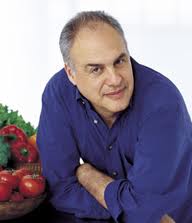
Mark Bittman — New York Times

No conversation about changing policy or behavior? Ain’t that the truth. Even though the grim reality of what lies ahead is frightening, most people just continue to live their lives as if global warming didn’t exist. Meanwhile, Mark points out some pretty scary information in his article:

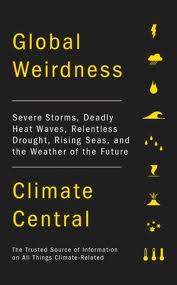
Climate Central’s projections show that the biggest cities in Florida, and a great deal of the Northeast coastline (including New York City), will be underwater by 2100, when almost everyone now alive will have “managed” to leave the scene. Of course, the calamities won’t be limited to North America, nor is 2100 some magical expiration date; the end isn’t in sight.

Yet, as Mark points out, “The only sane people who don’t see this as a problem are those whose profitability depends on the status quo, people of money and power like Romney (“we don’t know what’s causing climate change”), most of his party, and Rex Tillerson, the Exxon chairman, who called the effects of climate change “manageable.”

So why are we so complacent about this looming catastrophe? I think it’s a combination of two things:

  1. Widespread ignorance about the cause of global warming. Most people are not aware that our animal foods industry is by far the #1 driver.
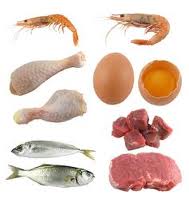
  2. The protein myth. Even if people were aware of the primary cause of global warming, they would be reluctant to stop eating animal foods because 95% of our population still believes that we “need” to eat animal protein to be healthy.

Most of us have been taught that we “need” to eat animal protein to be healthy.

That “protein myth” is the more formidable obstacle of the two. That’s because that 95% includes the best, brightest and most educated people in the world. It includes includes most of our scientists, physicians, business leaders, politicians, media executives and world leaders. And, because of that “protein myth,” the powerful—yet simple, world-changing, plant-based solutions never even make it to the table for consideration.

What about leadership? Mark goes on to talk about the need for a carbon tax to limit the use of fossil fuels as well as a need for superb leadership in the office of President of the United States. As he states:

If we can force our next president to turn his attention to a problem that may well dwarf the economy in scale, perhaps American exceptionalism will come to mean leadership in the right direction.

No doubt that would be a wonderful thing, but I simply don’t see it happening anytime soon. In a world of special interests, unemployment figures, approval ratings and obsession with short-term financial performance, I just don’t think a new president could get elected on such a platform. And if he spent his first term leading the painful changes needed to even slow down global warming, then he/she would almost certainly not get elected for the second term.

The Bottom Line. We simply must dispel the “protein myth” if we’re ever to get any traction when it comes to making any headway in the effort to dramatically reduce the #1 cause of global warming—livestock for our dinner tables. And I don’t think that we can depend on our elected officials to get this done. That’s because there is far too much money and far too many jobs at stake.

Please check out my special page, Dispelling the “Protein Myth.” It includes a summary of all the issues involved along with at least fifteen of my previous posts on this topic. It also  reveals how I know that we’re on the right track. For example, even the United Nations has stated it publicly:

United Nations. “A global shift towards a vegan diet is vital to save the world from hunger, fuel poverty and the worst impacts of climate change,” according to a UN report, June 2, 2010. “As the global population surges towards a predicted 9.1 billion people by 2050, western tastes for diets rich in meat and dairy products are unsustainable,” says the report from United Nations Environment Programme’s (UNEP) international panel of sustainable resource management. (See link to my post on this topic)

But stating the problem and the solution in some obscure document every few years is not going to get the job done. We must have committed leadership to tackle this monster—and I truly believe that the superb vision and leadership that we need will come from the private sector. Although it could come from a second term president who doesn’t have to worry about getting re-elected.

In the final analysis, the planet will be fine. It is the human race and our fellow “Earthlings” who may no longer be able to survive in the aftermath of the human-driven climate change. Other creatures will probably evolve to live in the new environment; but our descendants may not be among them.

One curious footnote. Mark Bittman is primarily known as a food writer and has written numerous books, columns and blogs on the subject of “all things food related.” He’s probably written more than ten million words about food during his career, yet in this latest 858-word article about global warming, he didn’t mention food a single time. Even though our food choices are the single biggest driver of the problem.

Book referenced by Mark Bittman

Handy 4-piece take-charge-of-your-health kit—from Amazon.com

Want to find out how healthy your family is eating? Take our free 4Leaf Diagnostic Survey. It takes less than five minutes and you can score it yourself. After taking the survey, please give me your feedback as it will be helpful in the development of our future 4Leaf app for smartphones. Send feedback to jmorrishicks@me.com

International. We’re now reaching people in over 100 countries. Follow us on Facebook and Twitter or get daily blog notices by “following” us in the top of the right-hand column. For occasional updates, join our periodic mailing list.

To order more of my favorite books—visit our online BookStore now

J. Morris Hicks, working daily to promote health, hope and harmony on planet Earth.

For help in your own quest to take charge of your health, you might find some useful information at our 4Leaf page or some great recipes at Lisa’s 4Leaf Kitchen.

Got a question? Let me hear from you at jmorrishicks@me.com. Or give me a call on my cell at 917-399-9700.

SHARE and rate this post below.

Blogging daily at hpjmh.com…from the seaside village of Stonington, Connecticut – Be well and have a great day.

—J. Morris Hicks, board member, T. Colin Campbell Foundation

Posted in Climate Change | Leave a comment