Grotesque cancer images on cigarette packs in Australia

Wonder when we’ll have similar images on meat & dairy in the USA?

Our friends in Australia are way ahead of us when it comes to ending the deadly habit of smoking in their country. In a story that broke earlier this week (8-15-12; see link below), the Washington Post article began:

CANBERRA, Australia — Australia’s highest court upheld the world’s toughest law on cigarette promotion Wednesday, prohibiting tobacco company logos on cigarette packs that will instead show cancer-riddled mouths, blinded eyeballs and sickly children.

Here are the some of the images they plan to use:

Can you imagine these kinds of images on packages of hot dogs, Happy Meals or cartons of milk?

Starting in December, packs will instead come in a uniformly drab shade of olive and feature dire health warnings and graphic photographs of smoking’s health effects. The government, which has urged other countries to adopt similar rules, hopes the new packs will make smoking as unglamorous as possible.

Bravo for the citizens of Australia for having the courage to put the health of children ahead of profits. Bravo for telling the truth about the horrible consequences of smoking.

But what about the horrible consequences of consuming the typical western diet? That’s the diet that is consumed by most of the world’s wealthiest people—the meat & dairy diet that is consumed in the USA, Australia, Europe and other developed areas of the globe.

Although a deadly habit, the collective damage of smoking pales in comparison to the incredibly harmful typical western diet.

Maybe we’ll see the day when similar grotesque images will appear on packages of hot dogs, burgers and frozen beef patties—throughout the western world. And why shouldn’t they? Compared to the consequences of consuming a meat & dairy western diet, the consequences of smoking cigarettes are minor. Consider:

When you smoke, you really hurt no one but yourself—as long as you’re smoking outside or in your own home.

But by consuming the western diet, you’re not only promoting chronic disease for you and your family, but you’re also contributing heavily to global warming, world hunger, water shortages and a host of other environmental horrors that will affect every living creature on this planet.
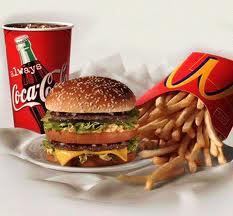
The typical western diet; a disaster for your health, your environment and the long-term sustainability of the human race.

Your children. And by teaching your harmful, wasteful and unsustainable diet-style to the next generation, you’re contributing heavily to the long-term unsustainability of the human race. 

Toward the end of the source article, Attorney General Nicola Roxon told reporters after the court ruling, “Many other countries around the world … will take heart from the success of this decision today. Governments can take on big tobacco and win and it’s worth countries looking again at what the next appropriate step is for them.”

The Bottom Line. Without a doubt, our current western diet style is unsustainable for very much longer—for a host of reasons. The question is this:

Which country will be the first to “take on big food and win?”

Fortunately, you don’t have to wait for the grotesque images on the “Happy Meals,” before you decide to take charge of your own health and give your children and all future generations the gift of life.

Handy 4-piece take-charge-of-your-health kit—from Amazon.com

Want to find out how healthy your family is eating? Take our free 4Leaf Diagnostic Survey. It takes less than five minutes and you can score it yourself. After taking the survey, please give me your feedback as it will be helpful in the development of our future 4Leaf app for smartphones. Send feedback to jmorrishicks@me.com

International. We’re now reaching people in over 100 countries. Follow us on Facebook and Twitter or get daily blog notices by “following” us in the top of the right-hand column. For occasional updates, join our periodic mailing list.

To order more of my favorite books—visit our online BookStore now

J. Morris Hicks, working daily to promote health, hope and harmony on planet Earth.

For help in your own quest to take charge of your health, you might find some useful information at our 4Leaf page or some great recipes at Lisa’s 4Leaf Kitchen.

Got a question? Let me hear from you at jmorrishicks@me.com. Or give me a call on my cell at 917-399-9700.

SHARE and rate this post below.

Blogging daily at hpjmh.com…from the seaside village of Stonington, Connecticut – Be well and have a great day.

—J. Morris Hicks, board member, T. Colin Campbell Foundation
Posted in Activism & Leadership, Big Picture, Sustainability | Tagged | 4 Comments

Why are the “world’s greatest thinkers” missing the boat…

When it comes to fighting world hunger, global warming, etc.?

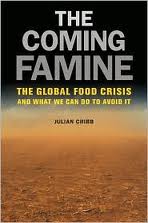
Mr. Cribb’s book, one that we researched extensively for our book

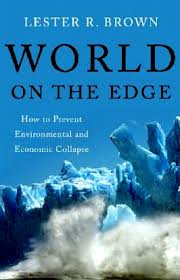
Let’s take world hunger. Julian Cribb wrote a great book called The Coming Famine. Lester Brown wrote World on the Edge. Both authors are brilliant men and both books are masterpieces. They are both very well written and contain a great deal of information. Yet neither of the authors focus clearly on the number one cause (and obvious solution) of the problem. Why is that?

They both probably know that you can feed well over ten times as many plant-eaters on the same amount of land that is required to feed one meat-eater. Just think of the implications. With an aggressive shift toward plant-based eating—by 2050, we’d be able to feed the world’s nine or ten billion humans on less than half the land that we’re currently using to feed seven billion.

So why aren’t they talking about this obvious solution? One of my readers, Linda Dale, posted a comment recently that inspired this blog. First, her comment, then my response.

Jim, I so appreciate your good intentions and dogged determination, but I still don’t think that trying to convince people that they don’t “need” animal protein is the answer. There are many, many things people don’t need, and they know they don’t NEED them, they just WANT them.

Americans, in particular, aren’t willing to deny themselves the things they WANT as long as they can afford to buy them. Everybody I know who eats meat eats it because they like the taste, not because they think they need protein. The problem is, as I see it, is that the vast majority of people haven’t heard or read often enough how bad animal products are for their health. THAT is the information that needs to get out. Most people do care about themselves (if not the animals) and want to live longer and healthier lives. Maybe they can be motivated if we direct our efforts to their selfish concerns.

J. Morris Hicks, always focusing on the “blinding flash of the obvious” solution to the world’d most pressing issues: food, water, and global warming.

Hi Linda, Thanks for your comment. You’re right, most people don’t want to hear about what they don’t “need.” They just care about what that want. But the point I am trying to make is more subtle.

As you know, there are many global issues that are driven by what we eat. For example: Cost of healthcare, global warming, adequate water supply and enough land to feed the world’s steadily increasing population. There are many very smart (and very educated) people out there who are are spending their entire lives working on these critical global issues—but they appear to be missing the most powerful solution to all of them.

I have concluded that they don’t even consider this “obvious solution” because of their collective perception about our need for protein. You’ve no doubt heard this age old question a zillion times, “If you don’t eat meat or dairy, where do you get your protein?”

Just one of Mr. Brown’s fifty books; this one is endorsed by Bill Clinton and Ted Turner.

One of those highly educated and extremely influential people is Lester Brown. Like most of our elected officials, great thinkers and world leaders—he never even mentions the “plant based solution” to the host of environmental and social problems that he has spent his life researching.

My whole point is that until we “dispel this protein myth,” then we’ll not enjoy the benefit of great thinkers like Mr. Brown when it comes to promoting—and leading—an aggressive shift toward a plant-based diet for humans. Right now, there’s only a few hundred of us out spreading the word about plant-based solution, and we’re going to need millions more to change the world. Mr. Brown would be a great guy to have on our team.

From Wikipedia: Lester Brown. Noted author with over 50 books, the founder of WorldWatch Institute, Founder & President of the Earth Policy Institute, the recipient of 26 honorary degrees and a MacArthur Fellowship; Mr. Brown has been described by the Washington Post as “one of the world’s most influential thinkers.”

Enjoy this 5-minute video of Mr. Brown and just imagine how many people he could reach if he started promoting the “blinding flash of the obvious” plant-based solution.

My message is not new. The world-saving message that I am broadcasting every single day is not something new. And I’m not the only one that believes this message is the most important message in the history of the human race. The United Nations and Albert Einstein agree.

United Nations. “A global shift towards a vegan diet is vital to save the world from hunger, fuel poverty and the worst impacts of climate change,” according to a UN report, June 2, 2010. “As the global population surges towards a predicted 9.1 billion people by 2050, western tastes for diets rich in meat and dairy products are unsustainable,” says the report from United Nations Environment Programme’s (UNEP) international panel of sustainable resource management. (See link to my post on this topic)

Albert Einstein. “Nothing will benefit human health and increase chances of survival for life on earth as much as the evolution to a vegetarian diet.”

If the U.N. is saying it and Albert Einstein said it; then why are there not more of the world’s greatest thinkers now urgently talking about the obvious solution?

During the past year, I have spoken at 20 or 30 mainstream venues. By mainstream, I mean that these audiences had no predisposition to favoring a plant-based diet. Based on their questions, it is painfully obvious that 95% of them still think that we “need” to eat animal protein to be healthy.

And until we dispel that myth, we’ll never get the world’s greatest thinkers on board—with regards to the “obvious” solution to many of the world’s greatest problems. How could any of our problems be more important than having enough food and water?

Handy 4-piece take-charge-of-your-health kit—from Amazon.com

Want to find out how healthy your family is eating? Take our free 4Leaf Diagnostic Survey. It takes less than five minutes and you can score it yourself. After taking the survey, please give me your feedback as it will be helpful in the development of our future 4Leaf app for smartphones. Send feedback to jmorrishicks@me.com

International. We’re now reaching people in over 100 countries. Follow us on Facebook and Twitter or get daily blog notices by “following” us in the top of the right-hand column. For occasional updates, join our periodic mailing list.

To order more of my favorite books—visit our online BookStore now

J. Morris Hicks, working daily to promote health, hope and harmony on planet Earth.

For help in your own quest to take charge of your health, you might find some useful information at our 4Leaf page or some great recipes at Lisa’s 4Leaf Kitchen.

Got a question? Let me hear from you at jmorrishicks@me.com. Or give me a call on my cell at 917-399-9700.

SHARE and rate this post below.

Blogging daily at hpjmh.com…from the seaside village of Stonington, Connecticut – Be well and have a great day.

—J. Morris Hicks, board member, T. Colin Campbell Foundation
Posted in Big Picture, Climate Change, Harmony Project, Sustainability, Video Included, World Hunger | Tagged | 7 Comments

Forget “saving the planet.” Think great grandchildren.

And the Longterm Sustainability of the Human Race

The planet is going to be just fine—no matter what we do. There has been life on this Earth for 4 billion years; whereas, humans have been here for only about 5/1000th of one percent of that time—just 200,000 years. To look at it differently:

If we look at the 4 billion years that the Earth has been supporting life as just one year, our human species has been around for just the last 26 minutes.

Mother Earth has seen mass extinctions before and she will see more in her future. What’s really at stake for us is the long-term sustainability of the human race. And at the rate we’re going, we may be down to our last couple of hundred years.

To be sure, it’s a good thing to be as kind to our environment as possible. In fact, it’s essential to our longterm survival. Let’s start with global warming.

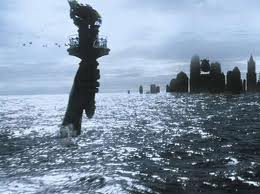
It won’t likely be this bad in the year 2100, but it will be headed in that direction.

What do we know about global warming and the problems it is likely to cause? How about this for starters? “Climate Central’s projections show that the biggest cities in Florida, and a great deal of the Northeast coastline (including New York City), will be underwater by 2100.” (See Endless Summer article below).

What does that mean to the average American? For those who live inland, they’re thinking—lucky for us, we’re going to be just fine. NOT! If they lived on a self-sufficient island, maybe so. But everything is now connected in our world. It’s a global economy and we all depend on each other. What will happen to our global economy once people come to grips with the fact that a sizable piece of New York City will be underwater in less than 90 years?

In the second half of 2008, we saw just how fragile our global economy really was. Many experts at the time were fearing a total collapse, followed by riots, wars, chaos, famine and extensive starvation. And that was driven by just a mortgage crisis? What will happen when some of the most important cities of the world start disappearing into the sea? What are we leaving to our children? And their children?

Although the raising of livestock is by far the number one cause of global warming, we almost never hear any world leaders talk about reducing it—or eliminating it.

Cooper James Hicks, August 2012

Putting things into perspective. We’re not talking about some apocalypse that may happen in a few thousand years. We’re talking about something that is happening now and will wreak havoc with the lives of family members that we already know…

Here is a picture of my youngest grandson, Cooper James Hicks (the middle name came from me and he calls me GranBuddy). He is nine years old and will turn 97 during the year 2100, when many of the world’s great cities will be underwater. At that time, his children will be about my age and his grandchildren will probably be in their 30’s.

Right now, this young man doesn’t have a care in the world. But what’s going to be happening when he’s my age? What kind of world are we leaving to the generations that follow us? And it’s not just about the rising sea levels in New York City.

It’s all about the long-term sustainability of the human race. It’s about enough land to feed our growing population, it’s about enough clean water and it’s about the unknown environmental disasters that will be driven by our reckless lifestyle that continues to inflict great damage on the harmony of nature.

Besides the fact that there are simply too many of us humans, the problems that we have created for ourselves stem from how we live—broken down into four categories:

  • The homes in which we live (Too big, inefficient and far apart)
  • How we move about for work, war and play (Working, vacationing, shopping, etc.)
  • How we move products around the world (Not much local trade happening right now)
  • The food that we choose to eat (A toxic diet of meat & dairy three meals a day)

All of the above activities consume a great deal of fossil fuels and contribute to global warming, species extinction and many other problems. And even if we started now with urgency, it would take fifty years or more to change the first three in any significant way.

Promoting health, hope and harmony on planet Earth

What’s good for our health, is also good for the planet — and all of her creatures.

But the good news is that the 4th one is not only the easiest to change, it can deliver by far the biggest bang for the buck. By simply changing to a whole foods, plant-based diet, we humans can:

  • Reduce our total energy consumption by as much as 30 percent.
  • Eliminate the single biggest cause of global warming.
  • Cut our global water consumption by over 50 percent.
  • Feed the world’s seven billion people on less than half the land that we’re now using.

As an added bonus for switching to plant-based eating, we will be able to take charge of our health and cut our cost of health care by up to 80%—saving trillions of dollars and billions of lives.

The Bottom Line. The problem is that none of our most powerful authorities are even talking about this topic—and the extremely powerful, beautifully simple and logical plant-based solution to world hunger, global warming, our water and our energy crises.

Most of our elected officials, great thinkers and world leaders still believe that we “need” to eat animal protein, so the obvious plant-based solutions never even make it to the table for discussion. As I said before, the planet is going to be just fine, the question is how much longer our environment will be able to support the human race?

In the 5-minute video below (from 2011), Lester Brown does a great job of describing our dilemma, but even he (one of the world’s greatest thinkers) doesn’t mention the obvious plant-based solution. Why not? I would love to ask him that question.

Lester Brown.  Noted author with over 50 books, the founder of WorldWatch Institute, Founder & President of the Earth Policy Institute, the recipient of 26 honorary degrees and a MacArthur Fellowship; Mr. Brown has been described by the Washington Post as “one of the world’s most influential thinkers.”

One final thought. Among a zillion problems that will result from rising sea levels, how about the problem of moving the millions of grave-sites that are located within 10 or 15 feet of today’s high water levels? As for me, young Cooper James and the rest of my family won’t have to worry about moving my grave.

My ashes will have already been re-cycled into the Atlantic Ocean off Stonington, Connecticut. Which brings up another thought—not only do we not “live” in harmony with nature, most of us don’t even “die” in harmony with our environment.

Handy 4-piece take-charge-of-your-health kit—from Amazon.com

Want to find out how healthy your family is eating? Take our free 4Leaf Diagnostic Survey. It takes less than five minutes and you can score it yourself. After taking the survey, please give me your feedback as it will be helpful in the development of our future 4Leaf app for smartphones. Send feedback to jmorrishicks@me.com

International. We’re now reaching people in over 100 countries. Follow us on Facebook and Twitter or get daily blog notices by “following” us in the top of the right-hand column. For occasional updates, join our periodic mailing list.

To order more of my favorite books—visit our online BookStore now

J. Morris Hicks, working daily to promote health, hope and harmony on planet Earth.

For help in your own quest to take charge of your health, you might find some useful information at our 4Leaf page or some great recipes at Lisa’s 4Leaf Kitchen.

Got a question? Let me hear from you at jmorrishicks@me.com. Or give me a call on my cell at 917-399-9700.

SHARE and rate this post below.

Blogging daily at hpjmh.com…from the seaside village of Stonington, Connecticut – Be well and have a great day.

—J. Morris Hicks, board member, T. Colin Campbell Foundation

Posted in Big Picture, Children, Harmony Project, Sustainability, Video Included | Tagged | 2 Comments