Bill Clinton in “TIME” — Has his moment of truth arrived?

With his views on sustainability and his communitarian view of our future

The October 1 issue of TIME Magazine arrived at my doorstep on Friday (9-21-12). And with Bill Clinton’s picture on the cover, my heart leapt when I saw the title of his article:

“5 IDEAS THAT ARE CHANGING THE WORLD” (for the better)
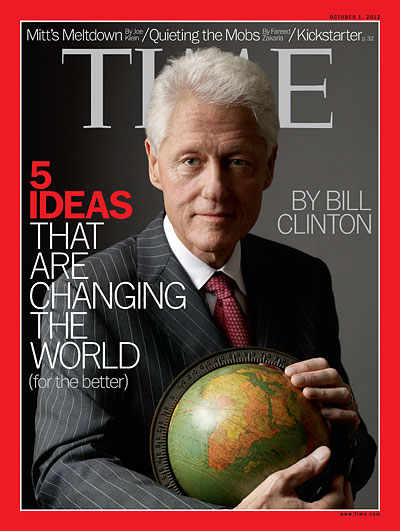
This man has first-hand knowledge of the power of plant-based nutrition to reverse chronic disease—and his appearance suggests that his near-optimal vegan diet seems to working in more areas than just his formerly clogged arteries. Maybe he really does hold the world in his hands.

I was thinking—Oh my God, he’s about to tell the world about the extremely harmful, inefficient, cruel, unfair and grossly unsustainable typical western diet.

Having adopted a near optimal vegan diet himself a couple of years ago—to reverse his heart disease, he’s now about to tell the world about the incredibly important “big picture” of what we eat.

I was still hopeful after reading the first paragraph and the first sentence of the second paragraph. I especially liked his use of the last word in that sentence:

Our world is more interdependent than ever. Borders have become more like nets than walls, and while this means that wealth, ideas, information and talent can move freely around the globe, so can the negative forces shaping our shared fates. The financial crisis that started in the U.S. and swept the globe was further proof that–for better and for worse–we can’t escape one another.

There are three big challenges with our interdependent world: inequality, instability and unsustainability.

Mr. Clinton is “the man.” Regardless what you may think about his politics and some of his other qualities, you should know that Bill Clinton is the most-prominent proponent of a vegan lifestyle in the world. More popular now than ever, he is also one of the most recognizable names and and one of the most respected leaders in the world.

So why is all of that so important when it comes to how he is now eating? It’s because of the powerful message it sends—when a man of his prominence, power, wealth, influence and access to all of the greatest scholars in the world—chooses an unconventional diet for himself.

What does it tell you when a former president of the United States rejects the collective knowledge of the thousands of nutritional scientists who recommend our continued consumption of meat, dairy and/or eggs at almost every meal? It tells me that he drew the same conclusion as the lone scientist who stated in his book,

“You can at least know that you, as a reader and a person, have finally been told something other than hogwash” about nutrition. — T. Colin Campbell
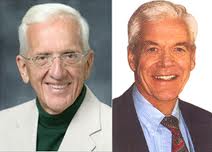
Along with Dr. Dean Ornish of UCSF, Mr. Clinton was influenced by the works of Cornell’s T. Colin Campbell, PhD, and Dr. Caldwell Esselstyn of The Cleveland Clinic.

A little background. So Mr. Clinton chose to follow the no-nonsense advice of that renegade nutritional scientist and two pioneering medical doctors who had also rejected the conventional wisdom of our elite schools of nutrition. He talked about his decision on CNN in 2010 when he told the world he had become vegan after reading the works of T. Colin Campbell, Caldwell Esselstyn, Jr. and Dean Ornish. (all three endorsed our book)

And because of that decision, I have mentioned Mr. Clinton’s name more frequently in my first 596 blog-posts than anyone else—with the possible exception of my good friend and colleague, Dr. T. Colin Campbell. When people ask me why they should ignore the dietary advice of their doctor, their dietitian and their friends who have advanced degrees in nutritional science—I give them a two-word answer. Bill Clinton.

I absolutely love having Bill Clinton as our international role model of how we should be eating—for promoting our own health and for reversing any chronic disease we might have. Yet, I keep wondering when Mr. Clinton will leverage his unequaled influence to tell the world the rest of the story. Maybe that time is now. The article continues:

The fact that half the world’s people live on less than $2 a day and a billion people on less than $1 a day is stark evidence of inequality, which is increasing in many places. We’re feeling the effects of instability not only in the global economic slowdown but also in the violence, popular disruptions and political conflicts in the Middle East and elsewhere. And the way we produce and use energy is unsustainable, changing our climate in ways that cast a shadow over our children’s future.

But I firmly believe that progress changes consciousness, and when you change people’s consciousness, then their awareness of what is possible changes as well–a virtuous circle. So it’s important that the word gets out, that people realize what’s working. That where there’s been creative cooperation coupled with a communitarian view of our future, we’re seeing real success. That’s the reason I try to bring people together every year for the Clinton Global Initiative (CGI). Here are five areas in which there has been concrete, measurable and reproducible progress.

Reading the TIME article by Bill Clinton — while overlooking Little Narragansett Bay toward Rhode Island

At this point, I am thinking—one of those five areas is going to be what the United Nations has already stated publicly: “A global shift towards a vegan diet is vital to save the world from hunger, fuel poverty and the worst impacts of climate change…As the global population surges towards a predicted 9.1 billion people by 2050, western tastes for diets rich in meat and dairy products are unsustainable.”

A sneak peek. Sitting on a large piece of driftwood overlooking Little Narragansett Bay a few blocks from my home, I excitedly flipped through the remaining pages. Looking for the FIVE AREAS of good things that are happening in our world. Is one of them going to be the “Emerging Truth About the Global Importance of What We Eat?”

No—–Not yet.

But I am confident that the day will come when Mr. Clinton’s Global Initiative will play a pivotal role in helping the world quickly learn the truth about our food choices. He may be the only person alive that can reach as many people with this planet-saving truth—before it’s too late. He may be our only chance—as it will probably take fifty years or more to change the mindsets of our nutritional scientists.
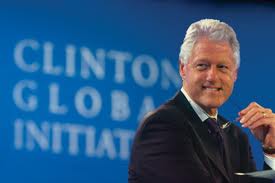
Bill Clinton went vegan in 2010 and it probably saved his life. He remains our most prominent spokesman for eating plant-based.

The Bottom Line. We’re not talking about just saving the planet; we’re talking about preserving the planet’s ability to provide for the longterm sustainability of the human race. As for those “5 Areas” in his article, they are:

  1. Phones Mean Freedom
  2. Healthy Communities Prosper
  3. Green Energy Equals Good Business
  4. Women Rule
  5. The Fight for the Future Is Now

All good things for sure, and all would be in harmony with a well-planned, deliberate move toward a plant-based diet for humans. If you’re a TIME subscriber, you can read the entire article below by clicking the source article link below. If you’d like to read more about the “sustainability of the human race,” I have provided a few other links to earlier blogs:

Consecutive daily blogs (Numerals from an auto tag in Luxembourg)

Doing your part. Want to be a huge part of preserving our planet’s ability to sustain life for your human descendants of the 22nd century and beyond? It all begins with what you choose to put on the end of your fork. Find out exactly what that is in this handy kit—then share your new knowledge with everyone you know. The lives of your future great-great grandchildren may depend on it.

Handy 4-piece take-charge-of-your-health kit—from Amazon.com

Want to find out how healthy your family is eating? Take our free 4Leaf Diagnostic Survey. It takes less than five minutes and you can score it yourself. After taking the survey, please give me your feedback as it will be helpful in the development of our future 4Leaf app for smartphones. Send feedback to jmorrishicks@me.com

International. We’re now reaching people in over 100 countries. Follow us on Facebook and Twitter or get daily blog notices by “following” us in the top of the right-hand column. For occasional updates, join our periodic mailing list.

To order more of my favorite books—visit our online BookStore now

J. Morris Hicks, working daily to promote health, hope and harmony on planet Earth.

For help in your own quest to take charge of your health, you might find some useful information at our 4Leaf page or some great recipes at Lisa’s 4Leaf Kitchen.

Got a question? Let me hear from you at jmorrishicks@me.com. Or give me a call on my cell at 917-399-9700.

SHARE and rate this post below.

Blogging daily at hpjmh.com…from the seaside village of Stonington, Connecticut – Be well and have a great day.

—J. Morris Hicks, board member, T. Colin Campbell Foundation
Posted in Big Picture, Celebrities, Sustainability | Tagged , | 3 Comments

How many PhDs does it take to figure out what we should eat?

With thousands working on it already; maybe we should challenge their methodology of study—because what they’re telling us is not working.

Three articles caught my attention this week and my immediate reaction was to blog about each one of them separately. But then I decided to focus on the overriding theme of all three—the overall confusion over clarity when it comes to what we should be eating.

The first article in Forbes was all about a new “Manhattan type project to end the obesity epidemic.” And although they describe the project as “the best scientists from all corners of the country working as a team,” Dr. T. Colin Campbell of Cornell University was conspicuous in his absence. Here’s how they describe their mission:

The Nutrition Science Initiative (NuSI) is dedicated to dramatically reducing the economic and social burden of obesity and obesity-related diseases by significantly improving nutrition science. NuSI seeks to unambiguously clarify the relationship between diet and obesity and its related diseases as a result of a growing acceptance that nutrition science is – and historically has been – significantly substandard as compared to other scientific disciplines such as chemistry, biology, or physics.

NuSI will be successful because we are bringing together the best scientific minds and giving them the time and resources they require to find the answers we all need.”

Dr. Campbell as he appeared in the movie, "Forks over Knives," on the farm where he was raised.

Dr. T. Colin Campbell as he appeared in the Forks Over Knives movie.

The best scientific minds? Yet they make no mention of Dr. T. Colin Campbell or his world-changing book, The China Study. Then, a few days later, an article in the Wall Street Journal featured him in an article that focused on the health benefits of a vegan diet. He summarized his “pro” opinion:

When I began my experimental research program on the effects of nutrition on cancer and other diseases, I assumed it was healthy to eat plenty of meat, milk and eggs. But eventually, our evidence raised questions about some of my most-cherished beliefs and practices.

Our findings, published in top peer-reviewed journals, pointed away from meat and milk as the building blocks of a healthy diet, and toward whole, plant-based foods with little or no added oil, sugar or salt.

Dr. Nancy Rodriguez, University of Connecticut

The article then shifted to another nutritional scientist, Dr. Nancy Rodriguez of the University of Connecticut who delivered the pro meat & dairy rebuttal. After seeing her a few years ago with Dr. Campbell on Larry King Live, I knew that she would essentially disagree with everything that Dr. Campbell said. I was right. For example, she states:

There is scientific evidence that low-fat or fat-free dairy and lean meat, as part of a balanced diet, produce specific health benefits such as reducing blood pressure. Fat-free, low-fat and reduced-fat options are widely available, as are lactose-free milk and milk products. Many of the most popular beef cuts are lean, including top sirloin, tenderloin, T-bone steak and 95% lean ground beef.

Very confusing. So how is the average citizen supposed to know who is right and which PhD they should believe? Should they adopt a vegan diet or should they continue to eat meat, dairy, and eggs? Do they “need” to eat any animal products whatsoever? Even though our schools of nutrition stand strongly on the side of the meat & dairy folks, and are not likely to change anytime soon—each citizen should do their own homework and ask themselves a few questions:

  • Has heart disease ever been reversed by recommending more consumption of meat and dairy?
  • What do the strongest animals in the world eat, and what do the chimps and the gorillas eat? (the animals whose DNA is closest to ours)
  • How does meat and dairy stack up to plant-based when it comes to water consumption/pollution and energy consumption?
  • Is the American diet (heavy in meat and dairy) sustainable in a world that will soon have 9 billion people? Is there enough land?

I’m not sure what questions President Clinton asked himself; but I do know that he went against the conventional wisdom of our elite schools of nutrition and opted for a whole foods, plant-based diet. He has candidly described it as “vegan” on TV and reports that he followed the advice of T. Colin Campbell, Caldwell Esselstyn, Jr., and Dean Ornish.

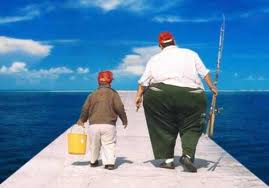
They say obesity runs in the family—so do unhealthy diets that cause obesity, heart disease, diabetes and cancer.

Back to the PhDs. Regardless of how many thousands of studies that Dr. Rodriguez can quote, the war on cancer is 41 years old, heart disease is still our number one killer and obesity & diabetes are totally out of control. The work of our nutritional PhDs is simply not working.

As for obesity, here is the latest word from the Robert Wood Johnson Foundation. (See last article below)

In 1990, the U.S. obesity average was 12 percent. By 2005, the U.S. average almost doubled, with 23 percent of Americans considered obese. Five years later, that amount doubled again with the U.S. obesity rate weighing in at 35.7 percent between 2009 and 2010.

If America’s obesity trend continues at its current pace, all 50 states could have obesity rates above 44 percent by 2030, according to a new report from Trust for America’s Health and the Robert Wood Johnson Foundation.

I urge you to take a look at these three articles. Although painful to read, they do illustrate the need for you to do your own homework and choose the diet-style that seems to make the most sense for you and your families.

Consecutive daily blogs (Numerals courtesy of Fiat)

The Bottom Line. Our nutritional education system is not working. They are not providing clarity when it comes to what we should be eating to promote our health and prevent or reverse chronic disease. They’re also ignoring the sustainability and environmental issues involved with the continuation of our harmful, inefficient and totally unsustainable typical western diet.

When I did my own study beginning in 2002, it was like a “blinding flash of the obvious” as to what we should be eating. I summarize all of that study in our book below. Also, there are also almost 600 well-researched blog-posts on this site that will help you find clarity on many topics related to what you choose to eat.

And none of it is confusing. In fact, it can all be summarized in two words: Whole Plants. And since I am not a PhD, maybe now you know the answer to my question in the title of this article.

Handy 4-piece take-charge-of-your-health kit—from Amazon.com

Want to find out how healthy your family is eating? Take our free 4Leaf Diagnostic Survey. It takes less than five minutes and you can score it yourself. After taking the survey, please give me your feedback as it will be helpful in the development of our future 4Leaf app for smartphones. Send feedback to jmorrishicks@me.com

International. We’re now reaching people in over 100 countries. Follow us on Facebook and Twitter or get daily blog notices by “following” us in the top of the right-hand column. For occasional updates, join our periodic mailing list.

To order more of my favorite books—visit our online BookStore now

J. Morris Hicks, working daily to promote health, hope and harmony on planet Earth.

For help in your own quest to take charge of your health, you might find some useful information at our 4Leaf page or some great recipes at Lisa’s 4Leaf Kitchen.

Got a question? Let me hear from you at jmorrishicks@me.com. Or give me a call on my cell at 917-399-9700.

SHARE and rate this post below.

Blogging daily at hpjmh.com…from the seaside village of Stonington, Connecticut – Be well and have a great day.

—J. Morris Hicks, board member, T. Colin Campbell Foundation

Posted in Big Picture, Obesity, Scientific Integrity | 3 Comments

“Forget BMI, just measure your waist and height”

Say British scientists and reported in the Telegraph

No doubt you’ve heard about many problems with our present method of the Body Mass Index (BMI) to determine whether someone is overweight or obese. Oftentimes, some of the best-trained athletes in the world score in the obese range for BMI—even though they might be very well built and look physically fit.

Even in his prime, they say Arnold’s  BMI was over 30; in the obese range.

Most people probably don’t know their exact BMI score, even though they may remember in which range they fall. Here are the ranges:

  • Below 18.5   — Underweight
  • 18.5 to 24.9 — Normal
  • 25.0 to 29.9 — Overweight
  • 30.0 to 39.9 — Obese
  • 40.0 or over — Morbidly obese

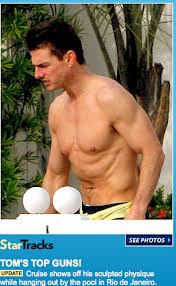
So what’s the problem? Sometimes people who look fit and attractive may have a BMI that falls in the overweight or obese range. People like Tom Cruise or Arnold Schwarzenegger for example. From the Telegraph article (See link below) advising people not to worry about the BMI:

People concerned about heart disease and diabetes should simply take their height and waist measurements to figure out their risk, say British researchers. Ideally, all should aim to keep their waist measurement less than half that of their height, found the scientists.

The team, who analysed the health of some 300,000 people, found this ratio was a better predictor of high blood pressure, diabetes and cardiovascular events like heart attacks and strokes than body mass index.

While BMI is used almost universally in the medical profession, most people are unfamiliar with it, partially because it is not a straightforward calculation. BMI is calculated by taking one’s mass in kilograms and dividing it by the square of one’s height in metres.

While BMI was a useful indicator, it failed to take into account the distribution of fat throughout the body.

Abdominal fat, around the heart, liver and kidneys, has been found to be worse than that on the bottom and hips, in terms of heart disease and diabetes.

They also say that Tom Cruise’s BMI is over 25, in the overweight range.

What about me? Well, for starters, the BMI works well for me because I don’t have as much muscle mass as do Tom and Arnold. At nutritiondata.com, I used the BMI calculator and entered my numbers: 72 inches tall with a weight of 155 pounds. Those numbers yielded a 21.0 score which is almost exactly in the middle of the normal range.

I did a little more research and discovered some additional drawbacks of the BMI. Another article pointed out three problems (See second article below):

1. BMI does not differentiate between the Michelin Man and The Terminator. I have heard countless times how one buff celebrity or another would be classified as overweight or obese according to their BMI due to their excess amount of muscle.

2. BMI does not differentiate between apples and pears For over 60 years, we have known that independent of how heavy a person is, the distribution of their body weight, or more generally the shape of their body is a key predictor of health risk. It is now well established that individuals who deposit much of their body weight around their midsection, the so called apple-shaped, are at much greater risk of disease and early mortality in contrast to the so called pear-shaped, who carry their weight more peripherally, particularly in the lower body. Thus, two individuals with a BMI of 32 kg/m2 could have drastically different body shapes, and thus varying risk of disease and early mortality.

3. BMI does not always budge in response to lifestyle change I would argue this is the biggest drawback of using BMI: it doesn’t always change even though you may be getting healthier. This is particularly so if you adopt a physically active lifestyle, along with a balanced diet, but are not necessarily cutting a whole lot of calories.

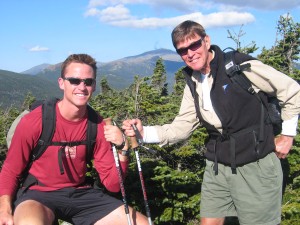
Hicks & Hicks. Here are two guys that score in the healthy range of both indicators—the young Hicks scoring better than the older model. He’s taller and has a smaller waist.

The Bottom Line. Why not try both? If you score as overweight using the BMI, then you should also try the height to waist measurement ratio. In my case, I am 72 inches tall and have a 33 inch waist measurement. 2 x 33 = 66. And that is less than 72. So I am in the healthy or normal range.

If I started working out and loading up on a lot of extra “plant protein,” I might gain some muscle and some extra weight even though my waist might remain the same. But with enough weight-gain, I would eventually cross into the “overweight” range of the BMI scale.

Keeping it simple. Just divide your height in inches by two. Your waist should be less. If you’re 66 inches tall, your waist should be less than 33 inches. The experts in the first article explain further:

They have found that the easy-to-calculate ratio between the two is a better predictor of risk than the most widely measure of obesity, called body mass index (BMI).

The team, who analysed the health of some 300,000 people, found this ratio was a better predictor of high blood pressure, diabetes and cardiovascular events like heart attacks and strokes than body mass index.

Dr Margaret Ashwell, former science director of the British Nutrition Foundation, and now an independent consultant, spearheaded the study. She is presenting the research at the European Congress on Obesity in Lyon, France, on Saturday. “Keeping your waist circumference to less than half your height can help increase life expectancy for every person in the world,” she said.

Consecutive daily blogs. (Numerals today come from my native state of Mississippi.)

Want to move into the healthy range of both indicators, just follow the simple instructions in this handy kit:

Handy 4-piece take-charge-of-your-health kit—from Amazon.com

Want to find out how healthy your family is eating? Take our free 4Leaf Diagnostic Survey. It takes less than five minutes and you can score it yourself. After taking the survey, please give me your feedback as it will be helpful in the development of our future 4Leaf app for smartphones. Send feedback to jmorrishicks@me.com

International. We’re now reaching people in over 100 countries. Follow us on Facebook and Twitter or get daily blog notices by “following” us in the top of the right-hand column. For occasional updates, join our periodic mailing list.

To order more of my favorite books—visit our online BookStore now

J. Morris Hicks, working daily to promote health, hope and harmony on planet Earth.

For help in your own quest to take charge of your health, you might find some useful information at our 4Leaf page or some great recipes at Lisa’s 4Leaf Kitchen.

Got a question? Let me hear from you at jmorrishicks@me.com. Or give me a call on my cell at 917-399-9700.

SHARE and rate this post below.

Blogging daily at hpjmh.com…from the seaside village of Stonington, Connecticut – Be well and have a great day.

—J. Morris Hicks, board member, T. Colin Campbell Foundation

Posted in Obesity | Tagged , | Leave a comment