80-20 Rule. When it comes to the cost of health care.

According to information published by the U. S. Department of Health and Human Services:

Half of the population spends little or nothing on health care, while 5 percent of the population spends almost half of the total amount.

According to the published data (See link below), the average cost of healthcare in the United States in 2004 was $6,280. Updated to 2011 data, which included a 40%+ increase in overall healthcare spending, the average annual cost for every man, woman and child in the United States is now $8,485.

That number is about 20% lower than the average cost per employee in businesses—now around $11,000. Why the difference? Because the employers are also paying medical bills for the employees’ families.

Older people take more drugs for chronic diseases. But on the TV ads, you would think that it’s only the beautiful people who take most of the popular drugs.

Devil in the details. According the Department of HHS, “actual spending is distributed unevenly across individuals, different segments of the population, specific diseases, and payers.”

  • Five percent of the population accounts for almost half (49 percent) of total health care expenses.
  • The 15 most expensive health conditions account for 44 percent of total health care expenses.
  • Patients with multiple chronic conditions cost up to seven times as much as patients with only one chronic condition.

Those struggling to develop strategies to reduce or contain costs consider whether efforts should be targeted broadly across the entire health care system or more narrowly at specific areas or aspects of care. For example, is the continuing rise in health care expenses due to:

  • The increased cost of treatment per case?
  • The growth and aging of the population?
  • The rise in the number of people treated for the most expensive conditions?

Let’s first take a look at the distribution of health-care costs by age group:

The under 65 (working age) group accounts for 57% of the total cost of healthcare in the United States.

Chronic Conditions Contribute to Higher Health Care Costs

Twenty-five percent of the U.S. population reportedly have one or more of five major chronic conditions:

Prozac; one of the better known drug for mood disorders

  • Mood disorders.
  • Diabetes.
  • Heart disease.
  • Asthma.
  • Hypertension.

What about obesity? According to the report:

“Especially important is the increase in the number of people treated for conditions clinically linked to obesity. From 1987 to 2002, the proportion of the population treated increased 64 percent for diabetes

A number of factors might explain the substantial increase in treatment rates for conditions linked to obesity. These factors include a rise in the number of people with obesity-related conditions, a rise in the number of more seriously ill patients, a greater emphasis on preventive care, and the introduction of broader treatment options.”

Consecutive daily blogs (numerals from the L.A. freeway system)

The Bottom Line. We know that the cost of health care will continue to rise unless there are some huge, fundamental changes in the way we view health and the treatment of disease.  We also know that the average cost of health care rises as we get older and fatter—a continuing process for most Americans.

As most Americans age, their bodies have had more years to endure the damage inflicted by our toxic western diet—and they eventually resort to the use of various drugs for relief.

But our 100,000 miles of arteries start getting clogged long before we have our first heart attack. Further, most cancers are not even detectable until they’ve been growing for 15 or 20 years. For all of our chronic, food-driven diseases, the damage begins long before that damage can be detected by our healthcare professionals.

The good news. We know that a whole foods, plant-based diet can quickly clean out the clogged arteries—and it can also prevent the spread of cancer. (See Ornish piece below) Finally, one thing we know for sure is that everyone gets older every day. The best way to control the cost of healthcare for older people is to teach them how to promote their health with food while they are young.

For your convenience, the source information from the HHS, along with a few of my earlier blogs on this topic.

Handy 4-piece take-charge-of-your-health kit—from Amazon.com

Want to find out how healthy your family is eating? Take our free 4Leaf Diagnostic Survey. It takes less than five minutes and you can score it yourself. After taking the survey, please give me your feedback as it will be helpful in the development of our future 4Leaf app for smartphones. Send feedback to jmorrishicks@me.com

International. We’re now reaching people in over 100 countries. Follow us on Facebook and Twitter or get daily blog notices by “following” us in the top of the right-hand column. For occasional updates, join our periodic mailing list.

To order more of my favorite books—visit our online BookStore now

J. Morris Hicks, working daily to promote health, hope and harmony on planet Earth.

For help in your own quest to take charge of your health, you might find some useful information at our 4Leaf page or some great recipes at Lisa’s 4Leaf Kitchen.

Got a question? Let me hear from you at jmorrishicks@me.com. Or give me a call on my cell at 917-399-9700.

SHARE and rate this post below.

Blogging daily at hpjmh.com…from the seaside village of Stonington, Connecticut – Be well and have a great day.

—J. Morris Hicks, board member, T. Colin Campbell Foundation

Posted in Corporate Wellness, Cost of Health Care | Leave a comment

FIVE arguments in support of the typical western diet…

…and my single word of rebuttal for all of them: UNSUSTAINABLE!

The Williams sisters—veggie eating champions

Despite the fact that multiple professional football and tennis stars thrive on a whole foods, plant-based diet, despite the fact that heart disease and type 2 diabetes are reversed in 95% of the patients eating whole plants, despite the fact that entire cultures of people who eat plant-based from their birth rarely ever get any of our chronic diseases (including cancer), despite the fact that the strongest animals in the world eat nothing but plants….

Despite all of that evidence, people who want to continue eating meat, dairy, eggs and seafood will continue to do so and will use any number of lame arguments to support their wasteful, harmful and unhealthy habit. I choose to take the high road and avoid arguments that prove them wrong. I take the position of:

“Okay, let’s assume you’re right about all of your arguments—it really doesn’t matter, because the rich Western diet is simply not sustainable for very much longer.”

Secretariat, and all other champion race horses, eat nothing but raw plants.

You see, humans have existed on this planet for for roughly 5/1000th of one percent of the life of the planet herself. And it took us almost 200,000 years to grow our population to one billion people.

Up until then, no matter what we ate, we could only damage ourselves and could simply eat whatever we could grow, find, catch or kill. It really didn’t affect the other creatures that much and had little, if any impact on the environment or the ability of our fellow Earthlings to find enough food.

But things have tightened up in the past few hundred years as our numbers swelled from one billion to seven billion in a mere blink in the eye of planetary history. With about one billion humans going hungry all the time, we now find ourselves in trouble. Quite simply, there’s just not nearly enough land for all of us to eat a inefficient diet, like meat, dairy and/or eggs three meals a day.

This is how much arable land is lost in the world every year.

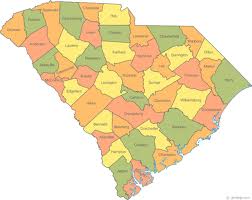
To exacerbate the problem, we’re losing a South Carolina-sized chunk of arable land every year to harmful farming methods and development—as we steadily go about increasing the global human population at the rate of 197,000 people every single day.

It gets worse—millions of people in China and India are switching from plant-based to the western diet each year–because it tastes good and it is what wealthy people have always eaten.

And that’s just the “land shortage” piece of this unsustainability equation. There’s also the loss of species and destruction of our ecosystem that is being driven by our incredibly harmful lifestyle. We’re now burning forests in the Amazon so that we can grow soybeans to ship to China to feed pigs. That’s so the Chinese don’t have to depend on the developed nations for their all important pork industry.

Five common arguments for meat. So what are all those pro-meat & dairy arguments that I alluded to earlier? Here you go:

  1. Humans have always been hunters and gatherers.
  2. Our brains would have never developed had we not eaten meat.
  3. Even the Bible mentions eating meat and fish.
  4. We cannot get the quality and quantity of protein that we need from just plants.
  5. We need meat & dairy in order to get vitamin B12 and enough calcium & vitamin D.

The Bottom Line. I choose not to argue with any single one of the above reasons and will just say, “even if all of them were legitimate—the incredibly wasteful, harmful and cruel western diet that we consume is grossly unsustainable.”

It’s not about “saving the planet,” which is twenty thousand times as old as we are, it’s about preserving her ability to provide for the longterm sustainability of the human race. If you care about the quality of life of your great-grandchildren and beyond, stop eating meat, dairy, eggs & fish today.

In closing, let’s hear that big picture one more time from our friend, Philip Wollen, in Australia. Take just ten minutes to watch this powerful video.

For your convenience, I have provided a few of my earlier blogs on the topic of sustainability:

Consecutive daily blogs (numerals today from N.J.)

Handy 4-piece take-charge-of-your-health kit—from Amazon.com

Want to find out how healthy your family is eating? Take our free 4Leaf Diagnostic Survey. It takes less than five minutes and you can score it yourself. After taking the survey, please give me your feedback as it will be helpful in the development of our future 4Leaf app for smartphones. Send feedback to jmorrishicks@me.com

International. We’re now reaching people in over 100 countries. Follow us on Facebook and Twitter or get daily blog notices by “following” us in the top of the right-hand column. For occasional updates, join our periodic mailing list.

To order more of my favorite books—visit our online BookStore now

J. Morris Hicks, working daily to promote health, hope and harmony on planet Earth.

For help in your own quest to take charge of your health, you might find some useful information at our 4Leaf page or some great recipes at Lisa’s 4Leaf Kitchen.

Got a question? Let me hear from you at jmorrishicks@me.com. Or give me a call on my cell at 917-399-9700.

SHARE and rate this post below.

Blogging daily at hpjmh.com…from the seaside village of Stonington, Connecticut – Be well and have a great day.

—J. Morris Hicks, board member, T. Colin Campbell Foundation

Posted in Big Picture, Celebrities, Sustainability | Tagged , | 8 Comments

Life on Mars? What lessons can we learn from that news?

One of the big stories in the news this week—after the NFL referees, the breast-cancer “breakthrough” and the Netanyahu “red line” bomb—was news of possible life on the Red Planet.

Our space rover, Curiosity, has been probing Mars since 8-9-12 and has just come up with pictures of a rock formation that scientists claim could only have been created by fast-flowing water. This new information, of course, raises many more questions:

  1. What kind of life was there? Plants, animals, insects?
  2. Was there ever intelligent life on Mars?
  3. When did life begin on Mars and when did it end?
  4. Why did life end on Mars?

Published by BenBella — October 2011

That’s the big question in my mind, “Why did life end on Mars?” If we knew what caused life to end on Mars, what valuable lessons might we learn from that information?

What steps can we take to give our planet the best possible chance of sustaining life indefinitely? I touched on these thoughts in the Introduction to our book:

The primary objective of this book is to outline in simple, everyday terms the extent of the problems we face, how we got ourselves into trouble, and what each of us can do to make things better. Fortunately, despite the incredible complexity of our current dilemma, the solution is refreshingly simple.

All we have to do is educate ourselves, start making better choices about what we eat, and then share all that we have learned with everyone we care about. I am convinced that there has never been anything more important in the history of the world.

The history of the world? No. I have since revised my thinking on that statement. We know that our planet was formed roughly 4 billion years ago (as was Mars) and that the world was already 3. 8 billion years old before humans arrived. We’ve been here only about 5% of the time that our planet has been in existence.

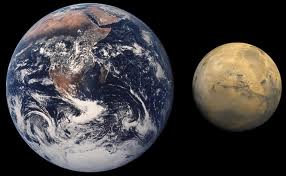
The Planet Mars

During the previous 95%, the 3.8 billion years before our arrival, our planet experienced a number of mass extinctions—and survived every one of them. We can only wonder about Mars in terms of the history of life on that planet. But we can be sure of one thing—the planet itself survived—but not the “life” that once existed there.

My point here is that it is almost certain that our planet will survive for billions of more years. The big question is: How long will “life” continue on this planet and how long will humans be a part of that life?

And to what extent do our actions today affect the Earth’s ability to sustain human life indefinitely? Hence my revised statement is that this is the most important topic in the history of the human race—not the history of the world. 

What damage have we inflicted? We learned in the movie HOME, that in just the past fifty years, the human race has inflicted more damage on the fragile harmony of our planet than all previous generations of humans for the last 200,000 years. A big part of the problem is our numbers. It took our human population almost 200,000 years to reach one billion; since then, we’ve added another six billion in just a few hundred years. And we continue to add to our population at the rate of a new billion people every fifteen years.

What can we learn from our smaller sister planet that might bode well for the sustainability of the human race?

And while we were busy multiplying, we were also straying away from the natural plant-based diet for our species to a modern western diet that requires ten times more water, ten times more land and ten times more energy for the same amount of calories.

Not only that, we humans are also the big culprits behind species extinction and global warming. And let’s not forget the 2 billion sentient beings that we “civilized” humans torture and kill every single week for our dinner tables.

The Bottom Line. We’ve got some serious problems on our own planet. Perhaps we can learn some lessons from previous life forms on other planets—lessons that will bring us to our senses before it’s too late.

Take-charge-of-your-health (and your planet) kit—from Amazon.com

Consecutive daily blogs (numerals today from “super swing state” Ohio)

Want to find out how healthy your family is eating? Take our free 4Leaf Diagnostic Survey. It takes less than five minutes and you can score it yourself. After taking the survey, please give me your feedback as it will be helpful in the development of our future 4Leaf app for smartphones. Send feedback to jmorrishicks@me.com

International. We’re now reaching people in over 100 countries. Follow us on Facebook and Twitter or get daily blog notices by “following” us in the top of the right-hand column. For occasional updates, join our periodic mailing list.

To order more of my favorite books—visit our online BookStore now

J. Morris Hicks, working daily to promote health, hope and harmony on planet Earth.

For help in your own quest to take charge of your health, you might find some useful information at our 4Leaf page or some great recipes at Lisa’s 4Leaf Kitchen.

Got a question? Let me hear from you at jmorrishicks@me.com. Or give me a call on my cell at 917-399-9700.

SHARE and rate this post below.

Blogging daily at hpjmh.com…from the seaside village of Stonington, Connecticut – Be well and have a great day.

—J. Morris Hicks, board member, T. Colin Campbell Foundation

Posted in Activism & Leadership, Sustainability | Leave a comment