Oxymoron of the week: Healthy School Lunches

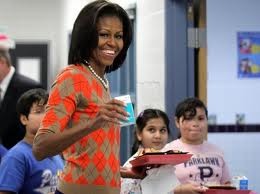
Michelle still doesn’t “get it.” Here she is with a carton of milk as she role models “healthy” eating in our schools.

Everyone praises Michelle Obama for working diligently to improve the quality of school lunches across the land. But is it really doing any good? And will it ever do any good as long as our government fails to acknowledge EXACTLY what constitutes a health-promoting diet?

I actually think all of this focus on improving school lunches may be doing more harm than good. For one thing, we have the cart before the horse in terms of “getting it right” about what we should be eating. Secondly, all of this excitement about Michelle working on the school lunches may create the false illusion that our nation is taking care of business when it comes to the health of our children.

How about this for promoting healthy eating in schools?

Students revolt. Well, we’re not taking care of business—-and the the children are not the least bit happy. Now, by refusing to eat the “healthier items” the schools are being forced to serve, we’re just creating more waste of food—meanwhile, one billion people in this world go hungry every day. From a 10-5-12 New York Times article (see link below):

Outside Pittsburgh, they are proclaiming a strike, taking to Twitter and Facebook to spread the word. In a village near Milwaukee, hundreds staged a boycott. In a small farming and ranching community in western Kansas, they have produced a parody video. And in Parsippany, N.J., the protest is six days old and counting.

They are high school students, and their complaint is about lunch — healthier, smaller and more expensive than ever.

One group of high school students in Kansas even produced a video entitled “We are hungry” and it had over 900,000 views in the first three weeks. I don’t recommend that you waste time watching all of it, but they do make a good point.

The Bottom Line. I posted a blog a few months ago about “doing things right” as compared to “doing the right things.” Although we’re beginning to “do some things” better, we’re never going to fix health care in this country until we “fix the food.” And we’re not going to fix the food until our government, nutritional scientists and medical doctors accept the simple wisdom of a lone renegade scientist from Cornell University:

The closer we get to eating a diet of whole, plant-based foods, the better off we will be. — T. Colin Campbell, PhD

Consecutive Daily Blogs (numerals today from the “Bayou State” of Louisiana)

The five medical doctors in our book agree, and it’s that common ground of knowledge that forms the foundation of our 4Leaf Health Promotion Program.

Handy 4-piece take-charge-of-your-health kit—from Amazon.com

Want to find out how healthy your family is eating? Take our free 4Leaf Diagnostic Survey. It takes less than five minutes and you can score it yourself. After taking the survey, please give me your feedback as it will be helpful in the development of our future 4Leaf app for smartphones. Send feedback to jmorrishicks@me.com

International. We’re now reaching people in over 100 countries. Follow us on Facebook and Twitter or get daily blog notices by “following” us in the top of the right-hand column. For occasional updates, join our periodic mailing list.

To order more of my favorite books—visit our online BookStore now

J. Morris Hicks, working daily to promote health, hope and harmony on planet Earth.

For help in your own quest to take charge of your health, you might find some useful information at our 4Leaf page or some great recipes at Lisa’s 4Leaf Kitchen.

Got a question? Let me hear from you at jmorrishicks@me.com. Or give me a call on my cell at 917-399-9700.

SHARE and rate this post below.

Blogging daily at hpjmh.com…from the seaside village of Stonington, Connecticut – Be well and have a great day.

—J. Morris Hicks, board member, T. Colin Campbell Foundation
Posted in Activism & Leadership, Celebrities, Food Policy | Tagged | 4 Comments

Riding the cancer train to fame and fortune

A privileged few get filthy rich—while innocent millions suffer

The cancer train has no signs of slowing down.

Two news stories caught my attention this week. One from Boston, the other from Los Angeles. Both were stories about how big money is being made in the cancer industry. The richest man in Los Angeles owes his vast wealth to the 41-year war on cancer and the never-ending search for the cure.

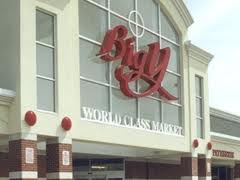
Meanwhile, at my local Big-Y supermarket during the entire month of October, all customers are greeted with the same cheery question from the cashier:

“Would you like to donate a dollar for breast cancer research?”

From the super rich to the bottom rung of the middle class, everyone gets a chance to participate in the cancer industry. And it has become so ubiquitous, that one tends to feel a pang of guilt if she doesn’t pony up that dollar when asked by the cashier. After all, what would her neighbor in line next to her think if she was too cheap and/or too uncaring to help fight cancer?

But are we really fighting cancer? Or are we just all participating in an incredibly complex process of producing drugs to treat symptoms, providing jobs for millions, and creating vulgar levels of wealth for a privileged, and very shrewd, few? From L.A. to Boston; let’s take a look.

In Los Angeles. Mr. Patrick Soon-Shiong (part owner of the Lakers) made the news this week after announcing a joint venture to create a nationwide system for sharing DNA and other data on cancer patients.

The richest man in Los Angeles

So is L.A.’s richest man doing this out of the goodness of his heart or is he just pumping more energy into the industry that has made him one of the wealthiest people on the planet? Exactly where did all that wealth come from? From Reuters (See link below):

By 2008, Patrick Soon-Shiong controlled 82 percent of APP Pharmaceuticals, the company he started to develop injectable drugs to treat cancer and other illnesses. Soon-Shiong sold the company for $5.6 billion to Germany’s Fresenuis Kabi Pharmaceuticals, netting him $4.6 billion.

In 2010, he sold Abraxis BioScience, which he had spun off from APP in 2007, to pharmaceutical company Celgene Corp. for $2.9 billion. His 82 percent stake was worth $2.4 billion.

Question: How rich would Mr. Soon-Shiong be without the cancer industry?

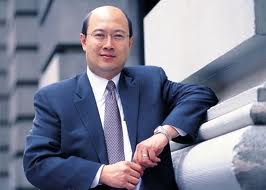
Andrew Lo of MIT; helping investors earn money on cancer.

In Boston, another story about making money on the cancer train. An MIT finance professor and hedge fund manager (Andrew Lo), wants to bring Wall Street-style financial­ engineering to curing cancer. From the Boston Globe article:

Named this year as one of Time magazine’s 100 most influential people in the world, Lo runs an investment firm in Cambridge called AlphaSimplex Group, with $3 billion in assets. He is known for his “adaptive markets” financial theory, which maintains that prices and investors are not always rational.

Now he is proposing an idea that would go beyond his own firm, creating a “megafund” that would flood early-stage research in cancer drugs with $30 billion. By supporting as many as 150 experimental compounds at any one time and bringing in large numbers of investors, he argues, the risk would be spread over a much larger base. Even if just a few of the treatments prove effective, Lo estimates the fund would be profitable, earning equity investors annual returns of 7 to 10 percent.

“Only with massive scale can you reduce the risk of this early-stage research,’’ said Lo, who pitched his megafund idea in a paper published Sunday in the journal Nature Biotechnology. “Finance is a means to an end. It’s a way to allow us to collaborate on problems of unprecedented scale,” he said.

Results? With all of this “collaboration on problems of unprecedented scale,” what kind of progress has been made?  How are we doing with our “war on cancer” that was famously launched by President Nixon—41 years ago?

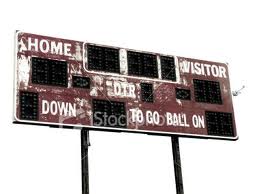
The Scoreboard (As I see it—using football scores)

  • 91 points (13 touchdowns) for raising awareness of the disease
  • 77 points (11 touchdowns) for raising money (billions)
  • 56 points (8 touchdowns) for creating jobs (millions)
  • 49 points (7 touchdowns) for increasing the nation’s GDP (driving up the cost of health care)
  •   3 points (one field goal) for finding the cure (and this may be generous)
  •   2 points (one safety) for explaining the leading cause of cancer and the simple steps that people can take to either prevent, slow, stop or reverse most cancers.

Those simple steps, of course, are simply teaching everyone the importance of returning to the natural, health-promoting, diet for our species. But, there’s no money to be made by preventing cancers.

The big money is being made in treating cancers—and with the cancer genome atlas just beginning to gather momentum, the cost of these personalized treatments will continue to spiral out of control and will soon bankrupt our entire nation. Current score:

Cancer Industry: 259 —– Innocent Public: 5

Consecutive Daily Blogs

You think this is lopsided? It’s going to get a lot worse if our government doesn’t start telling all citizens about the leading cause of cancer and the simple steps to control it.

Even when they ever tell us the truth, only a small percentage will follow the health-promoting advice. But it will be a much-needed step in the right direction.

Handy 4-piece take-charge-of-your-health kit—from Amazon.com

Want to find out how healthy your family is eating? Take our free 4Leaf Diagnostic Survey. It takes less than five minutes and you can score it yourself. After taking the survey, please give me your feedback as it will be helpful in the development of our future 4Leaf app for smartphones. Send feedback to jmorrishicks@me.com

International. We’re now reaching people in over 100 countries. Follow us on Facebook and Twitter or get daily blog notices by “following” us in the top of the right-hand column. For occasional updates, join our periodic mailing list.

To order more of my favorite books—visit our online BookStore now

J. Morris Hicks, working daily to promote health, hope and harmony on planet Earth.

For help in your own quest to take charge of your health, you might find some useful information at our 4Leaf page or some great recipes at Lisa’s 4Leaf Kitchen.

Got a question? Let me hear from you at jmorrishicks@me.com. Or give me a call on my cell at 917-399-9700.

SHARE and rate this post below.

Blogging daily at hpjmh.com…from the seaside village of Stonington, Connecticut – Be well and have a great day.

—J. Morris Hicks, board member, T. Colin Campbell Foundation

Posted in Cancer | Tagged | 7 Comments

Are corporate wellness programs working?

In my opinion, they’re not even scratching the surface.

What’s missing? Even though almost ALL large companies have some kind of formalized wellness program in place, the average health care cost per employee continues to increase at about 6% a year; now standing at roughly $11,000, most of which is paid by the company.

From HealthAffairs.org. The larger the company, the more likely it was to offer a wellness program; in fact, almost all companies with 1,000 or more employees offered one. Larger employers usually run wellness programs themselves. For small companies, wellness programs are typically run by the same firms that administer the employer’s health benefits plan or by another entity referred to as a third-party administrator.

So what’s going on? Even though studies show that there’s about a 300% return on every dollar spent on wellness initiatives, the global health care numbers remain dismal. What’s missing? The “big three” workplace wellness initiatives are: physical activity, tobacco cessation and weight management. Some also focus on disease prevention and advice about healthier food choices.

What about the food?

A simple, flexible and powerful “self-health-promotion” concept for teaching employees EXACTLY what they must do to take charge of their own health.

I only know of one corporate wellness program (Whole Foods) in America that is offering a true self-health-promotion component—one that teaches every interested employee EXACTLY what they must do in order to take charge of their own health—teaching them:

  • How to prevent, slow, stop or reverse any chronic disease they might have (including heart disease, type 2 diabetes, some cancers and a host of others)
  • How to sharply reduce, if not eliminate all prescription medications
  • How to effortlessly and permanently lose weight
  • How to greatly help the planet at the same time they’re helping themselves

Most wellness programs are missing the single most powerful weapon. They’re missing out on the huge benefits of simply helping employees learn how to eat a health-promoting diet. So, what are they doing when they talk about “disease prevention?” They’re focusing on screenings, early detection and drug regimens instead of true prevention.

From a May 10, 2012 Health Policy Brief at HealthAffairs.org. Typical features of wellness programs are health-risk assessments and screenings for high blood pressure and cholesterol; behavior modification programs, such as tobacco cessation, weight management, and exercise; health education, including classes or referrals to online sites for health advice; and changes in the work environment or provision of special benefits to encourage exercise and healthy food choices, such as subsidized health club memberships.

Keys to Success. We strongly agree with the first key as cited below by the Wellness Council of America (WELCOA). Support from senior-level management (especially the CEO) is of paramount importance and will have a huge impact on the overall results achieved.

We estimate that for any organization—the total cost of health care can be cut by 10 to 50% or more. Why the wide difference in the estimate? In a word–-leadership. That’s the big variable.

The question is: How important will this health promotion initiative be in your organization?

For your convenience, here are the seven best practices as reported by WELCOA on their website. They call them “The 7 C’s of Building a Well Workplace:”

    1. Concentrating on senior-level support Like all programs your company initiates, receiving support from senior-level management is critical to the success of an employee wellness program.
    2. Creating cohesive wellness teams Relying on one or two people from the HR department to facilitate the wellness program doesn’t typically yield the best results.  Key personal from each department should be selected to create a team or teams to promote and maintain the program.
    3. Collecting data to drive health efforts Wellness programs typically require a significant investment by the company.  Make sure that investment pays off!  Implement an effective system to collect, analyze, and report critical program data.
    4. Crafting the annual operating plan Like any other company-sponsored initiative, an employee wellness program requires careful consideration, thought, and planning.  Be sure to map out the program from A-Z in an operating plan.  It will become the foundation for the success (or failure) of the program.
    5. Selecting the right employee wellness program The rise of employee wellness awareness has resulted in an explosion of different wellness plan providers.  If you decide to allow a third-party to administer the program, take the time to evaluate a number of different options.
    6. Creating supportive environments Your company’s wellness program is not a ‘set-it-and-forget-it’ solution.  Positive change in the workplace results from a supportive, engaged environment.  Why should employee wellness be any different?
    7. Consistently evaluating outcomes Evaluation results in positive change.  Your wellness program will only be as effective as the adjustments made to it as a result of consistent evaluation.

Associates who eat a near-optimal 4Leaf diet will save their company a lot of money. Many employers provide incentives to help their people choose to participate.

What about incentives? Most companies are using them now and we agree that they should be creatively employed when convincing people to volunteer for this new self-health-promotion component. According to HealthAffairs.org, here’s what companies are doing now:

 Although almost all workplace wellness programs are voluntary, employers are increasingly using incentives to encourage employee participation. These incentives range from such items as t-shirts or baseball caps to cash or gifts of significant value. Studies indicate, moreover, that financial incentives do prompt more employees to participate in wellness programs.

Employers are also linking participation in wellness programs to employees’ costs for health coverage–for example, by reducing premium contributions for workers who are in wellness programs, or by reducing the amounts they must pay in deductibles and copayments when they obtain health services.

More calories from whole plants; less from everything else. How simple is that? The concept is simple but the transition will take time and your associates will need some help, support, guidance and incentives.

The Bottom Line. Investing in the health of the workforce is a good idea, but the vast majority of companies are missing the boat when it comes to really helping people take charge of their health and reduce the overall cost of health care. A large company might invest one million to save three million—while their annual health care bill goes up $30 million a year.

We believe that big savings are possible for companies who choose to take the crucial step of adding a food-driven self-health-promotion component to their wellness programs.

In an earlier blogpost, I described our vision in much more detail. It is entitled Slashing health care costs in businesses and includes a 13-minute video that describes what kind of results are attainable. Please see links below to sources of data presented earlier in this blog.

Handy 4-piece take-charge-of-your-health kit—from Amazon.com

Consecutive daily blogs (numerals from Canada)

Want to find out how healthy your family is eating? Take our free 4Leaf Diagnostic Survey. It takes less than five minutes and you can score it yourself. After taking the survey, please give me your feedback as it will be helpful in the development of our future 4Leaf app for smartphones. Send feedback to jmorrishicks@me.com

International. We’re now reaching people in over 100 countries. Follow us on Facebook and Twitter or get daily blog notices by “following” us in the top of the right-hand column. For occasional updates, join our periodic mailing list.

To order more of my favorite books—visit our online BookStore now

J. Morris Hicks, working daily to promote health, hope and harmony on planet Earth.

For help in your own quest to take charge of your health, you might find some useful information at our 4Leaf page or some great recipes at Lisa’s 4Leaf Kitchen.

Got a question? Let me hear from you at jmorrishicks@me.com. Or give me a call on my cell at 917-399-9700.

SHARE and rate this post below.

Blogging daily at hpjmh.com…from the seaside village of Stonington, Connecticut – Be well and have a great day.

—J. Morris Hicks, board member, T. Colin Campbell Foundation
Posted in Corporate Wellness, Cost of Health Care, Vibrant health | Tagged | 1 Comment