Celebrating the official “registration” of 4Leaf for Life

Featuring a subtle approach to educating the carnivorous masses
Mark Bittman, New York Times

Mark Bittman, New York Times

Over the past few months, I have mentioned that my priorities were shifting and that I was working on a new business venture involving a new kind of healthy and convenient fast food. Last week, Mark Bittman published a great piece about healthy fast food in the New York Times, covering many of the areas that we had been studying (See link below.)

In short, the food must taste good. That is essential for a commercial success, which is essential for promoting a large scale change of eating habits in the American public. A key part of our business plan is the subtle education of that consumer who would never even consider becoming a vegetarian or vegan.

As we attract that new customer with attractive, tasty and healthy alternatives—we will make it our business to gradually get to know that new customer and continually help her make better food choices over time. A key part of that education process will involve our 4Leaf for Life approach to healthy eating.

And today, I am pleased to announce a slight revision in our 4Leaf trademark. Notice that the former TM designation has now been replaced with an official registration “R” with the circle around it.
Leveraging the simple, yet powerful concept of maximizing the percent of your calories from whole plant foods -- still in nature's package

Leveraging the simple, yet powerful concept of maximizing the percent of your calories from whole plant foods — still in nature’s package.

As you may know, the 4Leaf concept was first introduced in our book in October of 2011. Later, in the spring of 2012, the 4Leaf Survey was launched on our website. Since then, that survey has been taken over 5,000 times and the reaction has been 99.98% positive. Everybody loves the simplicity and the flexibility—and most really like the idea that it’s not necessarily vegetarian or vegan.

Circle R trademarIf you’ve not taken our survey, you should do so now. We made few minor revisions lately and would like to continue to get your feedback. Click here to take the survey.

Logo designed by Thomas Mitchell of Lindberg Marketing & Media of Stonington, CT

On Mark Bittman. As I have stated many times on this blog-site, I have great respect for him and have concluded that he is the most knowledgeable prominent food reporter in the world. His latest piece was a great summary of all the reasons why we must provide healthier options for people in convenient places. While I recommend that you read the entire piece, here are a few of the first paragraphs:

When my daughter was a teenager, about a dozen years ago, she went through a vegetarian phase. Back then, the payoff for orthodontist visits was a trip to Taco Bell, where the only thing we could eat were bean burritos and tacos. It wasn’t my favorite meal, but the mushy beans in that soft tortilla or crisp shell were kind of soothing, and the sweet “hot” sauce made the experience decent enough. I usually polished off two or three.

I was thinking of those Taco Bell stops during a recent week of travel. I had determined, as a way of avoiding the pitfalls of airport food, to be vegan for the length of the trip. This isn’t easy. By the time I got to Terminal C at Dallas/Fort Worth, I couldn’t bear another Veggie Delite from Subway, a bad chopped salad on lousy bread. So I wandered up to the Taco Bell Express opposite Gate 14 and optimistically asked the cashier if I could get a bean burrito without cheese or sour cream. He pointed out a corner on the overhead display where the “fresco” menu offered pico de gallo in place of dairy, then upsold me on a multilayered “fresco” bean burrito for about 3 bucks. As he was talking, the customers to my right and left, both fit, suit-wearing people bearing expressions of hunger and resignation, perked up. They weren’t aware of the fresco menu, either. One was trying to “eat healthy on the road”; the other copped to “having vegan kids.” Like me, they were intrigued by a fast-food burrito with about 350 calories, or less than half as many as a Fiesta Taco Salad bowl. It wasn’t bad, either.

My experience at the airport only confirmed what I’d been hearing for years from analysts in the fast-food industry. After the success of companies like Whole Foods, and healthful (or theoretically healthful) brands like Annie’s and Kashi, there’s now a market for a fast-food chain that’s not only healthful itself, but vegetarian-friendly, sustainable and even humane. And, this being fast food: cheap. “It is significant, and I do believe it is coming from consumer desire to have choices and more balance,” says Andy Barish, a restaurant analyst at Jefferies LLC, the investment bank. “And it’s not just the coasts anymore.”

I’m not talking about token gestures, like McDonald’s fruit-and-yogurt parfait, whose calories are more than 50 percent sugar. And I don’t expect the prices to match those of Taco Bell or McDonald’s, where economies of scale and inexpensive ingredients make meals dirt cheap. What I’d like is a place that serves only good options, where you don’t have to resist the junk food to order well, and where the food is real — by which I mean dishes that generally contain few ingredients and are recognizable to everyone, not just food technologists. It’s a place where something like a black-bean burger piled with vegetables and baked sweet potato fries — and, hell, maybe even a vegan shake — is less than 10 bucks and 800 calories (and way fewer without the shake). If I could order and eat that in 15 minutes, I’d be happy, and I think a lot of others would be, too.

This just in. What a coincidence; Taco Bell just announced that they have jumped on the healthier eating bandwagon. Maybe they’re listening to Mark, but I’ve got a feeling that this news has been in the works for awhile. See link below for article.

Want more from Bittman? If you’d like to read more of what I have written about Mark Bittman, try googling “Mark Bittman J Morris Hicks.” I just did so and got 4300 results. And I guarantee you that ALL of them were written by me—for I am not aware of anything that Mark has written about J. Morris Hicks. Maybe someday he will—after he’s sampled some of our “healthy fast food” at one of our convenient 4Leaf for Life locations.

Handy 4-piece take-charge-of-your-health kit—from Amazon.com

Want to find out how healthy your family is eating? Take our free 4Leaf Survey. It takes less than five minutes and you can score it yourself. After taking the survey, please give me your feedback as it will be helpful in the development of our future 4Leaf app for smartphones. Send feedback to jmorrishicks@me.com

International. We’re now reaching people in over 100 countries. Follow us on Facebook and Twitter or get daily blog notices by “following” us in the top of the right-hand column. For occasional updates, join our periodic mailing list.

To order more of my favorite books—visit our online BookStore now

J. Morris Hicks, working daily to promote health, hope and harmony on planet Earth.

For help in your own quest to take charge of your health, you might find some useful information at our 4Leaf page or some great recipes at Lisa’s 4Leaf Kitchen.

Got a question? Let me hear from you at jmorrishicks@me.com. Or give me a call on my cell at 917-399-9700.

SHARE and rate this post below.

—J. Morris Hicks, board member, T. Colin Campbell Foundation
Posted in 4Leaf for Life, Healthy Eating 101 | Tagged , | 4 Comments

Slaughterhouses. New York Times article misses the point.

Unnecessary suffering. Part of a miserable process that need not exist

Over a four-day span last week, I spoke to several hundred sixth graders at a middle school in New London, CT. (See links below for details). Prior to the presentations, I had been warned by a senior educator and colleague to stay away from delicate topics like animal suffering or the implication that we must never eat meat or dairy. God forbid that we should tell our kids what’s really going on behind the scenes.

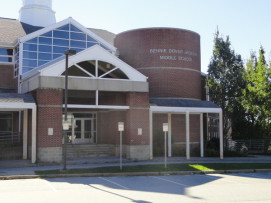
The first class to hear the Food Math 101 message in the United States---at Bennie Dover Jackson Middle School in New London, CT

The first class to hear the Food Math 101 message in the United States—at Bennie Dover Jackson Middle School in New London, CT

So, I was a good boy and chose “sustainability” as my primary focus. Of course, I emphasized the potential for disease-reversing, whole foods, plant-based eating to lower our health care costs in the United States—but I also stressed that I wasn’t necessarily talking about a vegetarian or vegan way of eating.

Rather, I emphasized the maximization of “whole plants” in the diet—as a percent of calories. I told them early in my talk that if they were unsure about the correct answer to a question—that it was probably whole plants. 

The title of my presentation was Food Math 101. The overriding message was that we’d all need to add a lot of whole plants to our daily routine so that the numbers behind what we’re eating would enable Mother Earth to sustain our species. Since she has a finite amount of arable land, water and fossil fuel, we must learn to live within those natural and permanent restrictions to our lifestyle. And right now, we are failing miserably in three ways: The size of our population, the way we live and the way we eat.

Of course, the primary focus was on the latter—the way we eat. As I told those twelve-year-olds, changing the way we eat will be far easier to change quickly—and would have a greater impact in the near term—the next fifty years. To clarify, I showed those kids the “big picture” about the consequences of our food choices and didn’t even have to tell them about the miserable suffering of animals in order to make my point. And I do believe that most of them actually grasped that big picture.

So what has all of this got to do with slaughterhouses?

Our wasteful western diet is the number one driver of world hunger.

The other 4 billion people who cannot eat the typical western diet—there’s simply not enough land.

One word answer. Unnecessary. There will be no suffering in slaughterhouses if there are no slaughterhouses. Those sixth graders understand that there’s not enough land and water for everyone in the world to eat our totally unsustainable Standard American Diet (S.A.D.). They understand that if all seven billion humans on the planet tried to eat the way we Americans do—that four billion of us would starve to death.

They also saw a pretty powerful visual (see below) of the fecal waste material that is generated by our animal food industry in the United States—at the rate of 87,000 pounds per second or 1.37 billion tons a year. Those kids know that it just isn’t going to work for us to continue eating the way we do—the numbers behind Food Math 101 just don’t work.

Semi-liquid fecal waste on a dairy farm in the USA.

Semi-liquid fecal waste on a dairy farm in the USA.

What about health? Even if the American diet of meat & dairy three meals a day was healthy for humans, the numbers simply don’t work from a sustainability standpoint. Conveniently, it’s not healthy for humans—in fact it’s killing us and is responsible for driving $2 trillion of our annual $2.8 trillion cost of healthcare in this country.

Meanwhile, the good folks at the New York Times and the animal rights organizations are missing the point. They’re putting a great amount of time and energy into making living conditions more humane for the ten billion animals that we raise per year for our dinner tables in the USA.

Quite frankly, it’s distracting our attention from the underlying problem—we’re eating the wrong food for our species. If we start eating the right food, many HUGE problems associated with the food production process will simply disappear.

NY Times LogoNo doubt you’ve heard about the Ag-Gag laws springing up around the nation—making it illegal to report ANYTHING negative about our nation’s disgusting process of producing meat and dairy products. The article began:

IN 1999, as a writer for The American Prospect, I went into a slaughterhouse undercover, with the help of some rebellious employees. The floor was slick with the residue of blood and suet, and the air smelled like iron. A part of my brain spent the whole time trying to remember which of Dante’s circles this scene most resembled.

Today, under legislation being pushed by business interests, that bit of journalistic adventure could earn me a criminal conviction and land me on a registry of “animal and ecological terrorists.” So-called ag-gag laws, proposed or enacted in about a dozen states, make, or would make, criminals of animal-rights activists who take covert pictures and videos of conditions on industrial farms and slaughterhouses. Some would even classify the activists as terrorists.

The agriculture industry says the images are unfair. They seem to show cruelty and brutality, but the eye can be deceiving. The most humane way of slaughtering an animal, or dealing with a sick one, may look pretty horrible. But so does open-heart surgery. The problem with making moral arguments by appealing to revulsion is that some beneficial and indispensable acts can also be revolting. With gruesome shots of cadavers, a skilled amateur could make a strong emotional case against using them to teach anatomy in medical school.

You get the point, right? All of this debate about a process that need not exist—indeed one that WILL NOT exist one hundred years from now. I say, let’s not waste our time and energy trying to make slaughterhouses humane (as if that were possible)—let’s get rid of them.

Focusing on what we should be eating, not on what we''re trying to avoid.

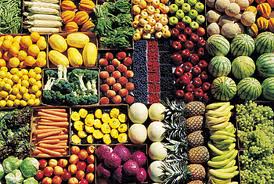
Whole Plants. This is the picture I used to illustrate what we humans should be eating.

As for the health benefits of the S.A.D., almost every one of those sixth graders raised their hands when asked if they knew anyone with diabetes or heart disease. And they now know the two-word answer for how to get rid of both—WHOLE PLANTS.

We need to focus on the “blinding flash of the obvious” necessity of moving aggressively in the direction of whole foods, plant-based eating. Many years ago, Paul McCartney said, “If slaughterhouses had glass walls, we’d all be vegetarians.” Well, they don’t have glass walls—in fact, they’re moving in the opposite direction, as reported by the Times article.

Bennie Dover Jackson Middle School of New London, CT

Bennie Dover Jackson Middle School

The Bottom Line. Let’s focus on the glaring necessity of plant-based eating—and how it relates to Sustainability and Human Health. Let’s put the slaughterhouses out of business.

So far, only a brief introduction to Food Math 101 has been shared with one grade in one small school in one small state of our entire country. What would happen if we began teaching some form of Food Math 101 in all levels of public education from K through 12 and college—in all fifty states?

Maybe Connecticut will be the state with the courage to get this started. One state senator, Mr. Andrew Maynard, attended my first presentation last week, and he is now taking steps to bring this crucial information to other schools in his district. Stay tuned.

Handy 4-piece take-charge-of-your-health kit—from Amazon.com

Want to find out how healthy your family is eating? Take our free 4Leaf Survey. It takes less than five minutes and you can score it yourself. After taking the survey, please give me your feedback as it will be helpful in the development of our future 4Leaf app for smartphones. Send feedback to jmorrishicks@me.com

International. We’re now reaching people in over 100 countries. Follow us on Facebook and Twitter or get daily blog notices by “following” us in the top of the right-hand column. For occasional updates, join our periodic mailing list.

To order more of my favorite books—visit our online BookStore now

J. Morris Hicks, working daily to promote health, hope and harmony on planet Earth.

For help in your own quest to take charge of your health, you might find some useful information at our 4Leaf page or some great recipes at Lisa’s 4Leaf Kitchen.

Got a question? Let me hear from you at jmorrishicks@me.com. Or give me a call on my cell at 917-399-9700.

SHARE and rate this post below.

—J. Morris Hicks, board member, T. Colin Campbell Foundation

Posted in Children, Suffering of Animals, Sustainability | 18 Comments

Eats, Peeps and the science of oral processing

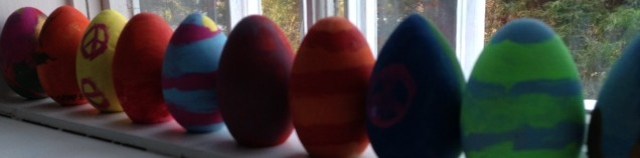
Environmentally-friendly, hand-decorated, wooden Easter Eggs at the Hicks household in Holden, MA

Environmentally-friendly, hand-decorated, wooden Easter Eggs at the Hicks household in Holden, MA

A combination of venting and science on this Easter morning

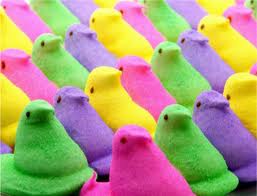
Peeps photoFirst the venting. NBC really disappointed me last evening when the last 2.5 minutes of their Nightly News featured a “story” about the Easter Peeps candy and their manufacturer. With all the news today about the dangers of sugar, one of our nation’s leading news organizations provides “free advertising” for a company that sells packaged sugar to children.

Not a single word about nutrition in NBC’s entire story and not a single word in the manufacturer’s website that I reviewed this fine Easter morning. So I consulted Wikipedia for more info. Check out the “ingredient list highlighted below.

Peeps are marshmallow candies, sold in the United States and Canada, that are shaped into chicks, bunnies, and other animals. There are also different shapes used for various holidays. Peeps are used primarily to fill Easter baskets, though recent advertising campaigns market the candy as “Peeps – Always in Season”, as Peeps has since expanded to include Halloween, Christmas and Valentine’s Day. They are made from marshmallow, corn syrup, gelatin, and carnauba wax.

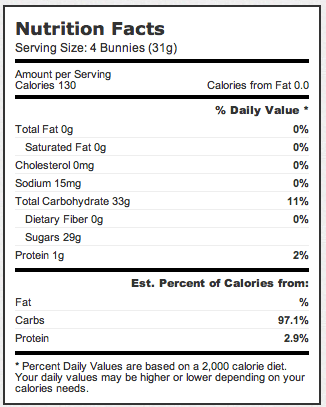
Here is the Nutrition Facts about Peeps. Thanks to NBC, our children will be eating more of this garbage in the future.

Here is the Nutrition Facts about Peeps. Thanks to NBC, our children will be eating more of this garbage in the future.

At first blush, you would think that these little Peeps contain no animal products. But what about gelatin? A quick internet search reveals the ingredient list that includes the collagen extracted from an animal’s skin and (mostly) bones.

There you have it: sugar, animal skin and wax—not something we should be feeding to our children and not something that should be “advertised for free” for 2.5 minutes on prime time by one of our premier news organizations. Shame on you NBC.

Now the science. I have included a link to an interesting article that I found during my Easter morning reading of the New York Times. It’s all to do with learning more about how humans chew and eat—the study of oral processing. As the article reported,

It’s about the entire “oral device” — teeth, tongue, lips, cheeks, saliva, all working together toward a singular revolting goal, bolus formation.

The word “bolus” has many applications, but we are speaking of this one: a mass of chewed, saliva-moistened food particles. Food that is in, as one researcher has put it, sounding like a license plate, “the swallowable state.”

News for me. Be honest, have you ever thought about all the things that go on prior to swallowing your food? I had not—until this morning. Occasionally, I have thought about the lack of saliva in food (like smoothies) that might detract a bit from the health benefits of those foods, but I’ve never really given it much thought. For the record, I do like some “mushy” foods like smoothies and hummus but also make sure I get much of the crunchier foods as well. I was fascinated by what the article had to say about the mushy foods:

The safest foods, of course, are those that arrive on the plate pre-moistened and machine-masticated, leaving little for your own built-in processor to do. They are also, generally speaking, the least popular. Mushy food is a form of sensory deprivation. In the same way that a dark, silent room will eventually drive you to hallucinate, the mind rebels against bland, single-texture foods, edibles that do not engage the oral device.

Leveraging the simple, yet powerful concept of maximizing the percent of your calories from whole plant foods -- still in nature's package

Leveraging the simple concept of maximizing the percent of your calories from whole plants.

The Bottom Line. There’s a lot we don’t know about the way the human body works when it comes to food. And, quite frankly, we really don’t need to know how it all works. Just like we don’t really need to know anything about the incredibly complex physics of catching a batted ball—to actually catch the ball. Similarly, we don’t need to know about the millions of chemical processes that take place during our simple process of feeding ourselves. But we do need to know what we should be eating.

And I’ve written about a million words on that topic—between our book and this blog. But you don’t need to read all those words to know that it all boils down to two words—and neither one of them are Peeps or Eggs. Those two words are whole plants. We should be deriving the majority of our calories from whole plants. Period. The average American gets less than 10% from this natural diet for our species. At the 4Leaf level, you’ll be deriving over ten times as much.

In closing, think about this blog before you buy that disgusting combination of sugar, animal skin and wax for your children next Easter. Give them some tasty whole plants instead—I believe that’s what Jesus would do. See links to source article and related blogs blow the photo.

Jason and Lisa Hicks high above beautiful Sunapee Lake in New Hampshire. They even look a little bit like "Peeps."

Jason and Lisa Hicks high above beautiful Sunapee Lake in New Hampshire. They even look a little bit like “Peeps.”

Happy Easter from Sunapee Mountain and Lake in New Hampshire

Handy 4-piece take-charge-of-your-health kit—from Amazon.com

Want to find out how healthy your family is eating? Take our free 4Leaf Survey. It takes less than five minutes and you can score it yourself. After taking the survey, please give me your feedback as it will be helpful in the development of our future 4Leaf app for smartphones. Send feedback to jmorrishicks@me.com

International. We’re now reaching people in over 100 countries. Follow us on Facebook and Twitter or get daily blog notices by “following” us in the top of the right-hand column. For occasional updates, join our periodic mailing list.

To order more of my favorite books—visit our online BookStore now

J. Morris Hicks, working daily to promote health, hope and harmony on planet Earth.

For help in your own quest to take charge of your health, you might find some useful information at our 4Leaf page or some great recipes at Lisa’s 4Leaf Kitchen.

Got a question? Let me hear from you at jmorrishicks@me.com. Or give me a call on my cell at 917-399-9700.

SHARE and rate this post below.

—J. Morris Hicks, board member, T. Colin Campbell Foundation

Posted in Children | Tagged | Leave a comment