Just ONE powerful leader and a few caring billionaires

That’s all we need to save our ecosystem, our civilization and our species.

There are millions of species of creatures living on this planet. All are living in harmony with Nature—except for ONE. That would be US: the human species and all of the other species that we use for our food, our pets and our entertainment.

Danielle Nierenberg

Danielle Nierenberg

In just the past two hundred years, our population has exploded from ONE to over SEVEN billion. At the same time, we’ve built a global economy based on unlimited consumption in a finite world. Now we’re rapidly approaching environmental tipping points and must take urgent action soon.

Today’s blog features an invitation to collaborate that I sent to Danielle Nierenberg, one of the movers and shakers in the world of sustainable agriculture.

The president of FoodTank and a very well-connected activist in this arena, I am confident that, working together, we could find and influence that one powerful leader and a few caring billionaires to “catch the vision” and help us create positive change quickly. This was emailed to her on May 24, 2014.

Dear Danielle,

My name is J. Morris (Jim) Hicks, author of “Healthy Eating, Healthy World,” and I was introduced yesterday to you on Twitter by my friend Paul Peacock (who I copied on this message). Then, I saw just this morning that I am now one of the 110,000 that you are following. My Twitter handle is @jmorrishicks. And I’m now proud to be one of your nearly 10,000 favorites.

FoodTankWith your astronomical volume of tweeting and following, my guess is that you must have a staff to assist you with tweets, research, follow-up and dealing with an incredibly large amount of email traffic. So, if this message finds its way to one of your staffers, I sincerely hope that it will soon find its way to you.

For our ecosystem, for our civilization and for our future as a species.

The remainder of this first email to you contains three concise sections which will only take you a few minutes to read. After you walk through it, I would like to suggest that we schedule a visit—in Washington, New York, Chicago—wherever you choose.

1. Discovery

Twitter LogoAfter cruising around the internet for a bit, I discovered a few things about you, beginning with my first introduction to you on your Twitter page. (@DaniNierenberg)

  1. You have 114,000 Twitter followers. Impressive.
  2. You joined Worldwatch Institute in 2001 about the same time that Lester Brown was leaving.
  3. You’ve been a vegetarian since you were a teenager. (Wikipedia)
  4. You’ve got a MS degree from Tufts in agriculture, food and environment.
  5. On your LinkedIn page, I noticed you have ONE shared “connection,” Dr. Connie Sanchez, who also appears on the MD Help page of my website: a place where people can find medical advice from a doctor who “gets it” about the health-promoting power of whole, plant-based foods.
  6. Your “Happier Meals” paper caught my attention and, as I perused through this impressive piece of work, I was wondering if your opinion has changed during the past nine years…as the livestock industry has continued to explode around the world and hundreds of millions of acres of rainforest have been destroyed to produce them.
  7. After reading all about you for an hour or so, I found myself thinking that you are probably among the five most knowledgeable people in the world—on the topic of the urgent need for sustainable agriculture.
  8. As a vegetarian you know that eating meat, dairy, eggs and fish is unnecessary and, as an environmentalist, you know that it is grossly unsustainable for much longer.

The question is how do we change it soon enough to make a difference? To avoid the collapse of our civilization that is predicted by many?

2. The way I see things
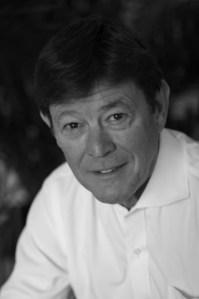
J. Morris Hicks, promoting health, hope and harmony on planet Earth.

J. Morris Hicks, promoting health, hope and harmony on planet Earth.

Here is a list outlining my thought process and conclusions about the single most important topic in the history of humankind. Not sure if you have looked at any of my work yet, but you can quickly see from my home page (hpjmh.com) that my primary emphasis is on sustainability. What could be more important than that? For without sustainability, there is no health, no wealth and no peace.

It all began with my study of industrial engineering, my career as a strategic business consultant, as a senior corporate executive, as an executive recruiter and most recently as a writer, speaker, and activist promoting health, hope & harmony on planet Earth.

Working in business by day, I have spent most of my free time over the past 12 years studying all about the consequences of our food choices: on our health, our ecosystem and our future. My engineering and business background coupled with my dozen years of studying the global human feeding model has yielded a rare “big picture” understanding of this crucial topic that is shared by few people. It has also enabled me to envision a difficult, yet workable, plan of action for moving humankind swiftly back in the direction of living in harmony with Nature.

Just for you on Memorial Day weekend, I drafted this 31-point summary of my understanding of “the big picture” issues we face and the urgent action needed.

  1. On average, meat, dairy, egg and fish (MDEF) calories require over ten times as much land, water and energy as do plant-based calories.
  2. The two billion most affluent people in the world eat over 70% of the MDEF in the world. And well over half of them live in five regions: China, Europe, USA, Russia and Brazil. But the other five billion are moving in that direction.
  3. After doing a bit of extrapolation, I computed that for every American or European moving in the direction of more plant-based eating, there are ten people in the developing world moving in the other direction.
  4. During the past 8 months, I met with two authors who have written alarming books about the gross unsustainability of our current way of life. Stephen Emmott (Ten Billion) and Lester Brown (Full Planet, Empty Plates).
  5. Neither author advocated trying to drive the human feeding model away from animals, but when they heard my premise—(from me in person), both agreed that it would result in a HUGE benefit to the Earth’s ecosystem.
  6. My premise: We must encourage, educate, motivate and empower those two billion wealthiest people out there to begin replacing as many of their MDEF calories with plant-based as possible. (I explain how we get that done later.)
  7. When I saw your Happier Meals piece, I was reminded of the last piece ever written by Dr. Robert Goodland of the World Bank, it was also entitled Happier Meals.
  8. A few months ago (in February), I attended Robert’s funeral in Washington, DC, where I heard the U.N.’s Achim Steiner deliver a eulogy and where I met Lester Brown.
  9. I also met Jeff Anhang that night (World Bank climate specialist), who was Robert’s co-writer on most of his recent work. I now consider Jeff a good friend and ally when it comes to promoting the ecosystem-saving benefits of eating much more plant-based foods.
  10. Together, Goodland and Anhang published this 2009 article in Worldwatch. Livestock and Climate Change. What if the key actors in climate change are cows, pigs and chickens?
  11. In the above piece, they concluded that the raising of livestock accounts for AT LEAST 51% of human-induced GHG. That means that all those animals we choose to eat are by far the leading cause of global warming—LARGER than ALL other causes combined.
  12. A few months ago, I dedicated a blog to Dr. Goodland. Food Choices. The primary cause of global warming?
  13. In February, I saw an advance version of Cowspiracy, a powerful documentary that will be released next month. The trailer can be seen at conspiracy.com
  14. The two young producers in that film focus on the not-so-well-known fact that the largest environmental groups in the world are not telling us the truth about the #1 cause of global warming. Because, as Michael Pollan explains in the movie, “it’s a political loser to be identified as anti-meat, and it would hurt their fundraising.”
  15. So, rather than tell the world how ALL of us can easily fight the #1 cause of global warming, they quietly take our donations, pay their own salaries and work on a host of projects that pale in comparison to the elephant in the room—what humans are eating.
  16. What we choose to eat determines how the Earth is used. And the way we’re eating is a HUGE waste of Mother Nature’s finite resources. Emmott and Brown predict the collapse of our civilization before the end of this century. And I agree with them unless we take URGENT action soon.
  17. Climate change has upped the stakes in this deadly game of sustainability and has shortened the time we have remaining to get back on the right track to living in harmony with nature. My website tagline reads: Promoting health, hope and harmony on planet Earth.
  18. To my knowledge, there is only ONE prominent researcher/writer/environmentalist who is completely focusing on the grossly unsustainable global depletion of choosing to eat trillions of animals (if you count the fish). Richard Oppenlander writes about it extensively in his two books; the first of which is “Comfortably Unaware: What we choose to eat is killing us and our planet.” This book is featured in a blog that I posted about him last summer. The TERRIFYING repercussions of our DEMAND for meat
  19. From a sustainability standpoint, we have four big problems. Three of them will take many decades, if not centuries to fix and we simply don’t have that much time. (1) Overpopulation (2) Over-consumption and (3) Our fossil fuel energy model.
  20. The Good News. The fourth HUGE problem, in fact, the one causing more damage than the other three combined is our collective choice to eat MDEF three meals a day, a diet-style that is becoming more and more popular around the world.
  21. Why is that good news? Because what we choose to eat can be changed quickly. Any meat-eater can choose to change what they eat overnight. And the markets will respond—and our ecosystem will begin getting healthier everyday.
  22. Sure, millions of jobs are lost, but there will be millions of new jobs replacing them. And by attacking this single biggest problem first, we can buy enough time to work on the other three for the next 100 years.
  23. Incredibly simple solution. All we have to do is work on the “demand” side of the food business and do our best to begin taking the animals of the equation when it comes to the human feeding model. How do we do that?
  24. Massive Global Awareness Campaign. We have to educate the world’s people in a big way and this is exactly what I want to talk about with you when we meet.
  25. For an event that I initiated with a well-known billionaire, a group of 21 of us met in Santa Barbara this past November. The group included many names that you may know (a photo of that group is provided below): T. Colin Campbell, John Robbins, Eric Pooley, Craig McCaw, Caldwell Esselstyn & son Rip, Dean Ornish, John McDougall, Richard Oppenlander and others, including the billionaire and his wife.
  26. I was hoping that the 11-24-13 meeting would result in the URGENT launch of that MASSIVE campaign. So far, it hasn’t.
  27. In February, I met with the daughter of a VERY well-known billionaire. My blog about him now appears on his own website at tedturner.com. (Check the Newsroom tab). There was interest there, but still not much action.
  28. The ONLY solution in my opinion. And until someone else comes up with a better workable plan, I am going with mine.
  29. Recruit one globally recognized powerful leader who “catches the vision.” With his/her help, bring in a few “caring billionaires” and begin to plan the biggest awareness campaign in history. And with the unprecedented way that the world’s most affluent two billion are connected electronically, there’s never been a better time in history to get this done.
  30. This campaign would be never ending and would probably cost hundreds of billions of dollars, maybe a trillion or more. It would almost certainly take tens of billions just to cover the legal fees required to defend ourselves from the large number of special interest groups that would not like what we’re doing.
  31. Whatever it costs is a bargain. Even if we spent two or three trillion on this campaign for the next five years, it would be a bargain. For if our civilization collapses, there is ZERO money anywhere and our planet becomes a pure hell for all remaining humans as they fight with each other for food and water. A thriving civilization collapsed on Easter Island one thousand years ago; it can happen again.

3. Invitation to Collaborate.

Danielle, people everywhere talk about taking URGENT action but none of them are attacking the single biggest problem in any kind of meaningful way. My engineering and business background tells me that what is happening today is simply not going to get the job done. That being the case, what I have outlined above is what I believe to be our only chance.

I sincerely believe that you and I can get this done! Let’s talk about it.

Dr. Robert Goodland (1939 to 2013)---climate specialist with World Bank for 23 years.

Dr. Robert Goodland (1939 to 2013)—climate specialist with World Bank for 23 years.

After posting over 800 blogs (on many food related topics) on my blog since early 2011, in the past year have I shifted my singular focus to sustainability. I explain why in this blog, posted on 1-25-14. Since then, I’ve posted another 20+ blogs on this crucial topic.

NOTHING is more important than SUSTAINABILITY!

In April, I started an ongoing campaign to attract the attention of Bill & Melinda Gates. I have been posting comments on Bill’s blog and have included a link to my March 21 letter to them  So far no response. In fact, their moderator has now started removing my comments.

Perhaps with your help, we can get through to the power and money needed to save our civilization. I look forward to hearing from you real soon about getting together for an initial visit.

Be well, Jim

PS: I heard back from Danielle two days later and we may be able to meet in June.

J. Morris Hicks
writer. speaker. activist. 

The following five books and one DVD can be purchased on Amazon for a grand total of less than $60—and will enable you to understand the overwhelming challenges we face—along with the single most-powerful solution of all.

Six-Pack from Hicks—for health, hope & harmony on planet Earth

  1. Healthy Eating, Healthy WorldThe “big picture” about food (our book)
  2. A life changer for millions, including James Cameron. Forks Over Knives DVD 
  3. An essential scientific resource: The China Study by Dr. T. Colin Campbell; the primary book that influenced Bill Clinton to adopt a whole food, plant-based diet.
  4. What have we done to our planet? Full Planet, Empty Plates by Lester Brown
  5. A horrifying wake-up call for leaders. TEN BILLION by Dr. Stephen Emmott
  6. Food choices are the primary cause of our environmental problems, yet our world leaders, scientists & experts are Comfortably Unawareby Richard Oppenlander.

Why should we be eating mostly plants? The “big picture” in 4 minutes.

Want to find out how healthy your family is eating? Take our free 4Leaf Survey. It takes 2 or 3 minutes and you can score it yourself. After taking the survey, please give me your feedback as it will be helpful in the development of our future 4Leaf app for smartphones. Send feedback to jmorrishicks@me.com

International. We’re now reaching people in over 100 countries. Follow us on Facebook and Twitter or get daily blog notices by “following” us in the top of the right-hand column. For occasional updates, join our periodic mailing list.

J. Morris Hicks, working daily to promote health, hope and harmony on planet Earth.

To order more of my favorite books—visit our online BookStore now For help in your own quest to take charge of your health, visit our 4Leaf page and also enjoy some great recipes from Lisa’s 4Leaf Kitchen. Got a question? Let me hear from you at jmorrishicks@me.com. Or give me a call on my cell at 917-399-9700.

—J. Morris Hicks, board member since 2012; click banner for more info:
Nutrition Certificate

Posted in Activism & Leadership, Sustainability | Tagged | 4 Comments

Why are you doing what you do? Why is it not depressing?

Two questions I was asked recently by one of my readers

Industrial Engineering, always looking for "the biggest bang for the buck."

Industrial Engineering, always looking for “the biggest bang for the buck.”

The short answer to the first one is that I have chosen to focus my efforts where I think I can make the most difference. When I was a corporate executive with junior managers reporting to me, I always coached them to devote most of their time to tasks that ONLY they could do. To do what others could do would only be a waste of their special talents.

There are millions of people involved in trying to promote the widespread adoption of the whole food, plant-based diet for humans, but only a very small handful have a background that enables them to grasp the “big picture” problem, develop a workable solution and organize a global process for change. I am grateful for my special background and would only be depressed if I chose not to leverage it to the fullest extent.

So what am I trying to do? I am trying to garner the support of a handful of super-wealthy individuals who “catch the vision” and are willing to bankroll a MASSIVE global awareness campaign to facilitate an urgent shift in the direction of a whole food, plant-based diet for humans.

Why am I doing that? Because I have concluded that it’s the only viable pathway to the longterm sustainability of the human species. Whether my ultimate fate is success or failure, I will die with the satisfaction of knowing that I gave it my best shot.

A little background. I graduated from Auburn University in 1968 with a degree in Industrial Engineering, where I learned that ANY process can be improved. But, the real trick is to focus on the processes that deliver the biggest bang for the buck. We want to dedicate our brightest minds and our heaviest financial investment to improving our most important processes.

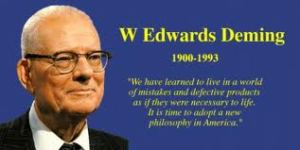
The late, great quality guru, Dr. W. Edwards Deming, was famous for this simple philosophy during the final years of his life—and he wrote it on my paper (that I still have) following one of his lectures that I attended at George Washington University over twenty years ago.

Keep on learning, study optimization of a system.

The great man made a big impact on my learning during those days, but sadly, he went to his grave without learning about the greatest process improvement opportunity in the history of the world—the global feeding model for the human species. Were he alive today, he’d be one of my strongest allies in URGENTLY improving that feeding model.

Dr. Deming taught me all about the importance of "optimizing" the most important systems.

Dr. Deming taught me all about the importance of “optimizing” the most important systems.

This blog is my story of process improvement and the role it has played in my life. Now, after a lengthy career as a corporate executive AND after studying all aspects of that global feeding model, I now seek to leverage my entire background to “optimizing” that system that will ultimately determine whether Mother Nature has a place for the human species in her future.

Process Improvement 101, a simple example. After graduation from college, my first process improvement project in the real world was reducing the time and cost of taking the monthly inventory at U.S. Coast Guard Base retail store in Honolulu in 1969. I noticed right away that the process seemed very cumbersome. First they would count each item and write the count next to its SKU number. Then, they would look up the purchasing record to find the cost of the item. Then they would multiply the cost per unit by the number of units to get the inventory value (at cost).

My three years in the Coast Guard were spent at USCG Base Honolulu in the shadows of Aloha Tower.

My three years in the Coast Guard were spent at USCG Base Honolulu in the shadows of Aloha Tower.

As the 24-year old “boot ensign” in charge of our retail operations in Hawaii, I noticed that the most time-consuming element of the entire inventory-taking process was looking up the cost of each item.

Then, while thinking of ways to “improve the process,” I suddenly realized that everything in the store had the same mark-up (cost + 15%). Hence, if I knew the retail price per unit, I could easily compute the cost of the item by multiplying by 0.8696 (1.0/1.15).

So, I simply had them completely eliminate the task of looking up the cost. We began taking the inventory at the “marked retail selling price” and then multiplying that total number by 0.8696. That simple “process improvement” ended up reducing the labor cost of taking inventory by over 50 percent, and also generated more sales because we didn’t have to close the store anymore to take inventory.

My career since the Coast Guard store. During the 45 years since that first process improvement example, I have spent a career “looking at the big picture” and improving processes in a wide variety of industries and situations. A few examples:

  1. The worldwide quality inspection process at Holiday Inns.
  2. The national sales force of Jockey International (underwear and sportswear)
  3. Customer returns reduction program at Sears in Chicago.
  4. Teaching “process improvement” at the ITT Night Vision Group in Virginia.
  5. Improving the off-price sales margins at Polo Ralph Lauren in New York.

Our client in Roanoke in 1994, where I taught the Deming Method of TQM (total quality management) or continuous process improvement.

In every one of these five examples listed above, the savings were in the millions of dollars per year. When you’re dealing with huge numbers in the tens or hundreds of millions, simple improvements can lead to saving millions of dollars.

What about projects saving billions or trillions of dollars? I have never had the opportunity to work on a project with potential savings of more than one billion dollars — much less one trillion dollars — until NOW.

I am talking about the improvement of the “human feeding model” in the Western world. For starters, by cycling our grain through livestock, we’re wasting 90% of the protein, 96% of the calories, 100% of the carbohydrates and 100% of the fiber. After adding up all of the staggering facts, I realized that I had stumbled upon the…

Largest improvement opportunity ever. After studying the way we eat since 2002, there is no doubt in my mind that the “human feeding model” of the Western world represents, by a huge margin, the greatest process improvement opportunity in the history of our planet. Here are my top six categories of savings:

There's not a lot of money to be made by everyone getting healthy.

Potential global healthcare savings somewhere north of five trillion dollars and billions of lives.

1. Cost of health care. With up to 80% of our health care dollars driven by our food choices, the potential savings are two trillion dollars a year….just in the United States. Throw in Europe, Australia and the rest of the West and you’re looking at over $5 trillion. This is backed up by many decades of scientific and clinical proof.

2. Fossil Fuel. Food production accounts for one-third of our total energy consumption in the USA. Plant-based calories can be produced with 90% less energy than animal-based foods; yielding an overall 30 percent reduction of the total fossil fuel consumption in the USA. Not sure of the total dollar savings here on a global basis, but I am confident that the number is well into the trillions and would probably dwarf that $5 trillion potential dollar savings for health care.

3. Water. When you’re talking about water, you’re not talking as much about saving money as you are talking about saving lives and the ecosystem. Once again, our Western diet is grossly inefficient; requiring over ten times more water per calorie of animal foods compared to plant-based foods.

4. World Hunger. Our Western diet requires over ten times as much arable land per person than does a plant-based diet. A shift to plant-based eating makes it possible to feed an ever-growing population while returning millions of acres to Nature.

It all boils down to harmony---all of the compelling reasons for plant-based eating.

It all boils down to harmony—all of the compelling reasons for plant-based eating.

5. Fragile ecosystem. Comprised of water, land, trees, plants, air and millions of species of creatures—in our ecosystem, everything is connected. Nature had a plan for everything to live in harmony with the rest of nature. In the past few hundred years, we humans have strayed far from the harmony that nature requires.

As we rapidly destroy the lungs and arteries of the planet—rainforest and oceans, we’re rapidly destroying nature’s ability to sustain us. It’s not about saving the planet, she is going to be just fine. It’s really about preserving her ability to sustain us as a species.

6. Climate Change. Without a doubt, the raising of livestock is the number one human-generated contributor to the greenhouse effect. Recent studies from scientists at the World Bank indicate that livestock account for over 51% of GHG produced by human activity—more than ALL other causes COMBINED. Unlike the task of trying to reduce the use of automobiles and trucks, the #1 cause of global warming could be totally eliminated with a widespread move to plant-based eating. In this category, it’s not about saving money—it’s about saving the ecosystem, our civilization and ultimately, the human species.

A Return to Harmony…the net effect of all of the above. In just the past fifty years, humankind has inflicted more damage on the fragile harmony of nature than ALL previous generations of humans combined — for the past 200,000 years. Plant-based eating won’t solve this problem overnight, but it is the single most powerful opportunity that we have to get things moving in the right direction quickly.

Promoting health, hope and harmony on planet Earth

Promoting health, hope & harmony on planet Earth

Total savings? Obviously the savings go way beyond dollars that can be quantified. When we’re talking about world hunger, water, climate change and biodiversity, we’re talking about the future livelihood of all of the millions of species that call this planet home. We’re talking about our long-term survival on this planet.

So why is there no concentrated, globally-orchestrated effort underway to get this crucial project moving? Four reasons:

  1. Lack of knowledge. At least 90% of the people (including the smartest and best-educated) in the Western world truly believe that we “need” to eat animal protein to be healthy. In reality, nothing could be further from the truth.
  2. Resistance to change. People grew up eating a certain way and simply do not want to change. They like what they eat and it’s very important to them. With more knowledge about the consequences of those traditional food choices, many people will begin to change quickly.
  3. Money. Too many special interests riding on the status-quo. For if our global feeding model began to move quickly away from animal-based foods, many individuals and businesses in the health care, pharmaceutical, livestock, fishing, restaurant and food processing industries would lose a great deal of money.
  4. Lack of leadership. Among the less than 5% who know the complete truth about the power of a plant-based diet; no one has emerged as a leader on the global stage.
That leader could be Ted Turner, a man of great integrity who has not yet caught the vision for what I'm talking about.

That leader could be Ted Turner, a man of great integrity who has not yet caught the vision for what I’m talking about.

When that leader emerges, and the requisite funding is acquired, I sincerely believe that the “lack of knowledge” problem can be addressed with a MASSIVE global awareness campaign aimed at the most affluent two billion people.

What about the funding? To get things moving quickly enough to avoid the upcoming climate change tipping points, we will likely need to spend hundreds of billions of dollars over the next few years. Where is that money going to come from? From billionaires who know, care and are ready to apply a sizable portion of their personal wealth to this campaign. A seven-word sentence describes their mission in a nutshell:

Billionaires gather, plan, pull together, planet saved. — Paul Peacock

The Bottom Line. By simply shifting to a whole food, plant-based diet—we can all take charge of our health while averting climate change, easing the water crisis & soil erosion, ending world hunger, and buying us enough time to work on the big three remaining sustainability issues that future generations must address:

  • Solving our overpopulation dilemma.
  • Switching our global energy system from fossil fuels to renewables.
  • Creating a new economic model that enables us to live in harmony with nature.

Perseverance over depression. Armed with my “big picture” understanding of what we must do, I persevere in doing my best to attract the attention of enough of those caring billionaires to get it done. And even though my efforts may not prove successful, it is not depressing. It would be only be depressing if I wasn’t giving it my best shot.

Blog inspired by Dr. Nivien Saleh, Thunderbird School of Global Management

A few of my earlier blogs on this topic:

The following five books and one DVD can be purchased on Amazon for a grand total of less than $60—and will enable you to understand the overwhelming challenges we face—along with the single most-powerful solution of all.

Six-Pack from Hicks—for health, hope & harmony on planet Earth

  1. Healthy Eating, Healthy WorldThe “big picture” about food (our book)
  2. A life changer for millions, including James Cameron. Forks Over Knives DVD 
  3. An essential scientific resource: The China Study by Dr. T. Colin Campbell; the primary book that influenced Bill Clinton to adopt a whole food, plant-based diet.
  4. What have we done to our planet? Full Planet, Empty Plates by Lester Brown
  5. A horrifying wake-up call for leaders. TEN BILLION by Dr. Stephen Emmott
  6. Food choices are the primary cause of our environmental problems, yet our world leaders, scientists & experts are Comfortably Unawareby Richard Oppenlander.

Why should we be eating mostly plants? The “big picture” in 4 minutes.

Want to find out how healthy your family is eating? Take our free 4Leaf Survey. It takes 2 or 3 minutes and you can score it yourself. After taking the survey, please give me your feedback as it will be helpful in the development of our future 4Leaf app for smartphones. Send feedback to jmorrishicks@me.com

International. We’re now reaching people in over 100 countries. Follow us on Facebook and Twitter or get daily blog notices by “following” us in the top of the right-hand column. For occasional updates, join our periodic mailing list.

J. Morris Hicks, working daily to promote health, hope and harmony on planet Earth.

To order more of my favorite books—visit our online BookStore now For help in your own quest to take charge of your health, visit our 4Leaf page and also enjoy some great recipes from Lisa’s 4Leaf Kitchen. Got a question? Let me hear from you at jmorrishicks@me.com. Or give me a call on my cell at 917-399-9700.

—J. Morris Hicks, board member since 2012; click banner for more info:
Nutrition Certificate

Posted in Activism & Leadership, Big Picture, Sustainability | 6 Comments

The most courageous documentary EVER!

COWSPIRACY—and they need your support—NOW!

Earlier this year, I learned about this new feature-length documentary from my friend and colleague, Dr. Richard Oppenlander, who helped produce this extremely important film and appears in it. Today, I am officially going public in my endorsement of this project, providing the latest 5-minute trailer and soliciting your support.

Cowspiracy

We’re talking about the sustainability of our ecosystem, our civilization and, ultimately, the human species. Yet, none of the “establishment” is talking about the most powerful driver of most of Earth’s environmental problems—our toxic western diet consisting of some combination of meat, dairy, eggs and fish at almost every meal.

I have been writing, speaking and blogging about this subject for years and have most recently begun the most important executive search project in the history of humanity—the search for wealthy, powerful and highly influential leaders who’ve got the courage to take this civilization-saving message to the most affluent two billion humans. They’re the ones doing most of the damage AND are influencing the other five billion people to adopt our incredibly harmful and grossly unsustainable diet—just as soon as they can afford it.

This important film can help change all of that! 

After studying the human feeding model of the world since 2002, I recently summarized my conclusions in one concise statement. It all boils down to our survival as a species. What could be more important to any human than that?

An urgent shift in the direction of a whole food, plant-based diet will do more to ensure the longterm survival of the human species than ALL other possible initiatives combined. J. Morris Hicks

Meet the COWSPIRACY producers—Kip Andersen and Keegan Kuhn


Please go to their CrowdFunding site now and make your contribution. I just made mine. They’ve already met their modest, initial goal but will need millions more to reach the billions of people that need to see this film. Heck, they’ll need tens of millions just for their legal fees and body guards once BIG AG starts feeling the heat from this BOLD, truthful campaign to save our ecosystem.

One more thing. Send this blogpost to everyone you know. I love these guys!

The following five books and one DVD can be purchased on Amazon for a grand total of less than $60—and will enable you to understand the overwhelming challenges we face—along with the single most-powerful solution of all.

Six-Pack from Hicks—for health, hope & harmony on planet Earth

  1. Healthy Eating, Healthy WorldThe “big picture” about food (our book)
  2. A life changer for millions, including James Cameron. Forks Over Knives DVD 
  3. An essential scientific resource: The China Study by Dr. T. Colin Campbell; the primary book that influenced Bill Clinton to adopt a whole food, plant-based diet.
  4. What have we done to our planet? Full Planet, Empty Plates by Lester Brown
  5. A horrifying wake-up call for leaders. TEN BILLION by Dr. Stephen Emmott
  6. Food choices are the primary cause of our environmental problems, yet our world leaders, scientists & experts are Comfortably Unawareby Richard Oppenlander.

Why should we be eating mostly plants? The “big picture” in 4 minutes.

Want to find out how healthy your family is eating? Take our free 4Leaf Survey. It takes 2 or 3 minutes and you can score it yourself. After taking the survey, please give me your feedback as it will be helpful in the development of our future 4Leaf app for smartphones. Send feedback to jmorrishicks@me.com

International. We’re now reaching people in over 100 countries. Follow us on Facebook and Twitter or get daily blog notices by “following” us in the top of the right-hand column. For occasional updates, join our periodic mailing list.

J. Morris Hicks, working daily to promote health, hope and harmony on planet Earth.

To order more of my favorite books—visit our online BookStore now For help in your own quest to take charge of your health, visit our 4Leaf page and also enjoy some great recipes from Lisa’s 4Leaf Kitchen. Got a question? Let me hear from you at jmorrishicks@me.com. Or give me a call on my cell at 917-399-9700.

—J. Morris Hicks, board member since 2012; click banner for more info:
Nutrition Certificate

Posted in Activism & Leadership, Sustainability, Video Included | Tagged | 3 Comments