Without dairy, where do we get our calcium?

A reader in the UK requested that I write a blog about calcium in a 4-Leaf diet — a topic that is almost as misunderstood as protein; particularly the best food sources for each.
All Whole Plants -- a great source of calcium; and just about everything else that we humans need.

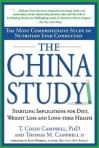
Most of us grew up believing that the best source was meat for the protein and dairy for the calcium. We addressed both of these topics in Chapter 2 (Your Health — At Risk) of our upcoming book. A quote from The China Study in that chapter:

Researchers have found that animal protein, unlike plant protein, increases the acid load in the body. The body does not like this acid environment and begins to fight it.  In order to neutralize the acid, the body uses calcium, which acts as a very effective base.  This calcium must come from somewhere.  It ends up being pulled from the bones, and the calcium loss weakens them, putting them at greater risk for fracture.

Also in Chapter 2 we covered the statistics about osteoporosis and where it is most prevalent — in the countries that consume the most dairy. As a natural plant-eating species, our bodies were designed to get everything they need from whole plants — and that includes plenty of protein and calcium. Some of the MD’s in our book disagree on the topic of supplements or “fortification,” but, personally, I Dr. Campbell’s conclusion; that it might be a good idea to take a little B12 and, if you don’t get out in the sun year-round — perhaps a Vitamin D supplement. That’s it; he said nothing about calcium supplementation.

My friend, Dr. Joel Fuhrman in his office in New Jersey

Last night, in preparation for this blog, I was thinking that virtually ALL whole plants have calcium in them. So I went to nutritiondata.com and examined the calcium content of the first ten fruits and vegetables that came to mind. ALL of them had calcium. As Dr. Joel Fuhrman says in the article on his blog (see link below):

Any healthy diet containing a reasonable amount of unrefined plant foods will have sufficient calcium without milk. Fruits and vegetables strengthen bones. Researchers have found that those who eat the most fruits and vegetables have denser bones.

He adds that “green vegetables, beans, tofu, sesame seeds, and even oranges contain lots of usable calcium, without the problems associated with dairy.” He also talks about the problem with our toxic western diet relative to calcium; “Keep in mind that you retain the calcium better and just do not need as much when you DON’T consume a diet heavy in animal products and sodium, sugar, and caffeine.”

In closing, I would like to mention the Tarahumara Indians in Mexico; a group of people that enjoy startling longevity, physical endurance and a virtual complete absence of our typical chronic diseases. And their diet consists of nothing but corn, squash and beans. I first learned about these people from Dr. Esselstyn and included them in our book as well. 

J. Morris Hicks, getting his daily dose of Vitamin D -- and getting calcium from every single whole plant that he eats every day

If they can thrive on such a limited variety of food, people everywhere should be able to thrive on the 4-Leaf Program — aimed at helping you maximize the percent of your calories from whole plant foods. And, unlike the Tarahumara, we are blessed with the opportunity to enjoy a plethora of 4-Leaf choices — 365 days a year.

If you like what you see here, you may wish to join our periodic mailing list. Also, for help in your own quest to take charge of your health, you might find some useful information at our 4-Leaf page. From the seaside village of Stonington, Connecticut – Be well and have a great day.

If you’d like to order our book on Amazon,  visit our BookStore now.

—J. Morris Hicks…blogging daily at HealthyEatingHealthyWorld.com

PS: Occasionally an unauthorized ad may appear beneath a blog post. It is controlled by WordPress (a totally free hosting service). I do not approve or personally benefit whatsoever from any ad that might ever appear on this site. I apologize and urge you to please disregard. 

Posted in Dairy, cow's milk, Osteoporosis, Vitamins & Supplements | 1 Comment

Biofuels, politics and feeding the world…

On the surface, one might think that making fuel for internal combustion engines from corn seems like a good idea. We all know that our supply of fossil fuels are are finite — and not renewable; so the more fuel we can make from “renewable” sources like corn, the better, right? Wrong.

Corn-powered automobiles; not such a good idea

In a New York Times Op-Ed by Steven Rattner (6-25-11), he describes what an absolute disaster our Federal government has made out of the corn industry. He summarizes:

Washington has managed simultaneously to help drive up food prices and add tens of billions of dollars to the deficit, while arguably increasing energy use and harming the environment.

Let’s back up for a minute and look at the big picture. In doing research for our book, we found that the earth’s surface has roughly 8 billion acres of arable land; and with 7 billion humans, that works out to be just over one acre per person. That sounds okay until you consider that the amount of land required to feed one human being the typical western diet is 3.25 acres. So obviously, that diet is not the answer in terms of feeding it to the entire world. What about the plant eater?

He can survive quite nicely on one-sixth of an acre — about five percent of the amount of land required to feed the omnivore who eats meat and dairy three meals a day.

Now with that in perspective, we know arable land is at a premium now and will be even more so in the future — as more and more of the developing world tries to adopt our highly inefficient typical western diet. Meanwhile, our government is devoting much of that precious (non-renewable land) into the production of “renewable”fuels like ethanol.

Corn fields in Nebraska

Mr. Rattner pointed out some interesting statistics about corn, America’s single largest crop — “dwarfing wheat and soybeans:”

  • 40% of that massive corn crop in the United States is now being used for ethanol. (up from only 10% in 2004)
  • Another 40% goes to feed the “cows, pigs, turkeys and chickens,” key ingredients of our meat & dairy diet.

That leaves only 20% for all direct human consumption — and a huge part of that 20% is the production of high fructose corn sweetener that we now find in practically packaged product on our grocery shelves. As if all of this were not enough, the government now spends $11 billion or our tax dollars each year to provide subsidies for the corn growers. To me, this entire situation is maddening; so what’s the explanation? Politics. From the article:

To some, the contours of the ethanol story may be familiar. Almost since Iowa — our biggest corn-producing state — grabbed the lead position in the presidential sweepstakes four decades ago, support for the biofuel industry has been nearly a prerequisite for politicians seeking the presidency.

Key quote from above, “Support for the biofuel industry has been nearly a prerequisite for politicians seeking the presidency.” I suggest you read the entire article at the link below. It’s just mind-boggling how the politicians have made such a mess out of something that should be so simple.

  • We’re eating the wrong food for our species and using twenty times more land than we would if we all ate our natural diet of whole plants.
  • With the the world running out of land to feed humans, we take a large part of that land (in the USA) and devote it to a highly inefficient process of producing biofuels.
  • This action, of course, drives up the price of food.
  • Further, ethanol production is an environmental disaster. Rattner reports “The Congressional Budget Office found that reducing carbon dioxide emissions by using ethanol costs at least $750 per ton of carbon dioxide, wildly more than other methods. What is more, making corn ethanol consumes vast quantities of water and increases smog.”

My 5-horse Mercury for getting home when the wind dies.

That’s not all. Rattner further explains: “Ethanol packs less punch than gasoline and uses considerable energy in its production process. All told, each gallon of gasoline that is displaced costs the Treasury $1.78 in subsidies and lost tax revenue.

The bottom line.  From the article, “Then there’s energy efficiency. Studies reach widely varying conclusions on that issue. While some show a small saving in fossil fuels, others calculate that ethanol consumes more energy than it produces.”

Not only that, I have found that with ethanol mixed with the gasoline here in CT, my seldom-used outboard motor on my sailboat doesn’t run nearly as well as before. If you like what you see here, you may wish to join our periodic mailing list. Also, for help in your own quest to take charge of your health, you might find some useful information at our 4-Leaf page. From the seaside village of Stonington, Connecticut – Be well and have a great day.

If you’d like to order our book on Amazon,  visit our BookStore now.

—J. Morris Hicks…blogging daily at HealthyEatingHealthyWorld.com

PS: Occasionally an unauthorized ad may appear beneath a blog post. It is controlled by WordPress (a totally free hosting service). I do not approve or personally benefit whatsoever from any ad that might ever appear on this site. I apologize and urge you to please disregard. 

Ethanol Production Wastes Corn – NYTimes.com.

Posted in Energy, Food Policy | Leave a comment

Our brand new “4Leaf” logo — representing the world’s first…

That’s right, “the world’s first” healthy eating regimen based on the maximization of whole plant foods — still in nature’s package

Positive, simple, flexible and powerful!

We don’t just call it plant-based, because that would include many unhealthy items like white bread, potato chips, and cookies.

We call it the “world’s first for two reasons:

Reason #1. We know of no other eating program based on the simple concept of focusing ONLY on what you ARE eating — maximizing the percent of calories from the healthiest of foods; those whole plant foods that are still in nature’s package. 

Reason #2. As with other eating programs based on a certain concept, i.e. the Atkins Diet, there will be many other copy-cats down the road that will present our simple concept with their own “spin.” But no matter how many there are in the future, the 4Leaf Program will always be the original.

If you’ve spent more than five minutes on this site in the past, you are probably already familiar with 4Leaf; since there are over 20 posts on this site dedicated to helping you take charge of your health using this simple concept. This new logo is a big help toward bringing that concept to life.

J. Morris Hicks and J. Stanfield Hicks -- Creators of 4-Leaf

Since creating this concept in 2009, it has been met with overwhelmingly positive acceptance. Everyone likes the simplicity and flexibility and a great majority of the people like the fact that it isn’t called vegan or vegetarian.

They all seem to like the “80-20” concept that puts each individual in charge of how far up the 4Leaf scale they want to go — and at what pace. We all know that the very best diet for each individual is “the healthiest diet that they can stick with.”

From the scientific and clinical standpoint, this great book has educated millions of people about what we should be eating.

We felt that it was our responsibility to define in the simplest of terms what constitutes the optimal diet for humans. Based on a large amount of scientific and clinical evidence coupled with the endorsement from many prominent experts in those fields, we based our concept on the simple statement by Dr. T. Colin Campbell…

“the closer we get to eating a whole foods, plant-based diet, the better off we will be.”

So one would naturally conclude that the optimal percentage from whole plants would be 100%; and if we were still living in the wilds of nature, that’s where we would be — like our closest DNA cousins, the chimpanzee and the gorilla. But we’re not living in the wild and most of us enjoy eating many plant-based food products that are not still in nature’s package — our favorite “adult” beverages come to mind.

So we concluded that we simply must build in a little flexibility; establishing our near optimal 4Leaf threshold at “over 80%” of our calories from whole plants. But that doesn’t mean that everyone will start at that level. Many will benefit greatly from the 4-Leaf concept without ever getting above the 2-Leaf or 3-Leaf level.

Within this range, you will be consuming at least THREE times the amount of whole plants as the average American.

We must remember that the average American derives far less than ten percent of their calories from whole plants, in nature’s package. To just get to the 1-Leaf level will be a major improvement for many.

Some people will start out by adding more whole plants to their daily routine and others will decide to get real serious and shift to the 4Leaf level immediately. Our book and our future 4Leaf website will help you decide which path is best for you. In the meantime, you can take charge of your health by climbing aboard the 4-Leaf train now — just visit our content-rich 4Leaf page on this site to begin your journey to vibrant health.

What about weight-loss? Notice that we have not mentioned weight-loss a single time; that’s because the goal here is vibrant health. If you give your body what it needs to be healthy, it will naturally and effortlessly seek its ideal weight. My good friend Carl has lost 45 pounds in five months eating 4Leaf for optimal health. He told me recently that it’s the first time he has ever lost 45 pounds; he adds that he has lost 25 pounds about umpteen times. But this time there was no weight-loss goal; this time there was a lifelong commitment to eating for health.

Before concluding today, I want to recognize my two good friends that created our fabulous new logo, one that will hopefully make its way around the world in the next few years. Those friends are Erica Lindberg and Thomas Mitchell and they both live right here in Stonington, Connecticut.

May you enjoy "vibrant health" for the rest of your life.

If you like what you see here, you may wish to join our periodic mailing list. Also, for help in your own quest to take charge of your health, you might find some useful information at our 4Leaf page. From the seaside village of Stonington, Connecticut – Be well and have a great day.

If you’d like to order our book on Amazon,  visit our BookStore now.

—J. Morris Hicks…blogging daily at HealthyEatingHealthyWorld.com

PS: Occasionally an unauthorized ad may appear beneath a blog post. It is controlled by WordPress (a totally free hosting service). I do not approve or personally benefit whatsoever from any ad that might ever appear on this site. I apologize and urge you to please disregard. 

Posted in 4Leaf for Life | 4 Comments