Exactly what is the protein myth?
The widespread belief that humans actually “need” to eat animal protein to be healthy.
 Despite overwhelming scientific and clinical evidence to the contrary, this myth is alive and well in the Western world—where the vast majority of the population believe it to be true. And that myth creates a huge barrier in terms of solving some of the world’s most urgent issues—-like water shortage and pollution, world hunger and the conservation of our finite supply of fossil fuels.
Many of our most educated scientists, environmentalists and humanitarian leaders are among that vast majority who believe the protein myth. Yes, that myth is standing in the way of creative thinking from many of the best and brightest minds in the world.
Here’s the main problem. Since they don’t think it’s possible for us to be healthy without eating animals—a plethora of plant-based solutions to the world’s most crucial problems never even make it to the table for consideration. And without those plant-based solutions, there is no chance for the human race to return to living in harmony with the rest of the planet.
That’s because we’re running out of land, we’re running out of water, and we’re running out of energy—while at the same time, we’re adding another 200,000 human beings to the planet, every single day. With a well-planned shift to a plant-based diet for the entire world, we could:
- Feed at least ten times as many people on the same amount of land.
- Completely eliminate the world’s largest user, and polluter, of water—the livestock industry.
- Reduce the worldwide consumption of fossil fuels by 30 percent.
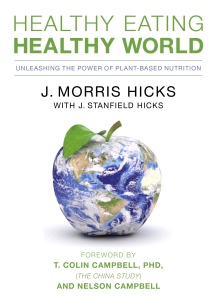
Promoting health, hope and harmony is the overall theme of our book.
A Return to Harmony(from our book’s final chapter). Ultimately, our decision is a simple matter of health, hope, and harmony. As each of us begins to take charge of his or her own health, we simultaneously plant the seeds of hope, accelerating the pace with which the human race can return to living in harmony with nature. Since we consider ourselves smarter than all the other creatures, we should be able to figure out how to make our world a better place. The time for that action is now.
The single biggest step that humankind can take in bringing us back into harmony with the rest of the planet—is to begin an aggressive move in the direction of a whole foods, plant-based diet. It will save water, reduce water pollution, free-up land, restore biodiversity and reduce global warming—while at the same time, reducing our consumption of fossil fuels by up to 30 percent.
Dispelling the “protein myth.” But before we can enlist the support of the best and the brightest to get serious about helping us move toward that plant-based diet, we must first dispel the “protein myth” that is believed by almost everyone. The latest chapter of our Harmony Project is a campaign to dispel that myth. And, as we do, we shall free up those brilliant minds—releasing them to create plant-based solutions beyond our wildest dreams.
We know we’re right. We already know for certain that we’re on the right track. One of the most prominent figures in the world, President Bill Clinton has personal knowledge of the power of plant-based eating to reverse chronic disease—and he has talked about it frequently on CNN and other major networks. In addition, two prominent organizations have endorsed plant-based eating; the United Nations from a “big picture” global perspective and the ADA from a health standpoint.
 United Nations. “A global shift towards a vegan diet is vital to save the world from hunger, fuel poverty and the worst impacts of climate change,” according to a UN report, June 2, 2010. “As the global population surges towards a predicted 9.1 billion people by 2050, western tastes for diets rich in meat and dairy products are unsustainable,” says the report from United Nations Environment Programme’s (UNEP) international panel of sustainable resource management. (See link to my post on this topic)
 ADA (American Dietetic Association) Even the USDA-controlled ADA knows that we don’t “need” animal protein; from a 2009 position paper. “Vegetarian diets are often associated with health advantages including lower blood cholesterol levels, lower risk of heart disease, lower blood pressure levels and lower risk of hypertension and type 2 diabetes, according to ADA’s position. “Vegetarians tend to have a lower body mass index and lower overall cancer rates.” From an ADA 2009 position paper.
The Bottom Line. Many people in science, medicine, industry, government and academia know that all of the above is true, but they’re trapped in a system that prevents them from changing it. But we don’t need the approval of “the system” to change it. We just need to inform the the general public. And we need to inform them with an abundance of clarity; something they’re not used to seeing when it comes to what they should eat. It all boils down to having the right combination of:
Message — Messenger — Sufficient Repetition
So here’s our message. As outlined in great detail in my various blogs on this topic (scroll down), our goal is to reach the wealthiest one billion people in the Western world with this simple message — dispelling the “protein myth:”
Plant-Based Eating – Providing ALL the nutrition that you need for your health — while, at the same time — doing some wonderful things for your environment, your fellow man, and all living creatures. While eating in a manner that prevents or reverses heart disease, diabetes and cancer; each of us can reduce our total water consumption by 90 percent, free up three acres of land, and cut our total energy consumption by 30 percent. The positive implications on global water scarcity, energy crisis and world hunger are staggering.
With a powerful organization already in place, who better than Bill Clinton as the messenger to dispel the protein myth?
And the messenger? The most recognizable name in the world coupled with knowledge, authenticity and integrity. With President Bill Clinton’s personal knowledge of the power of plant-based nutrition to reverse his own heart disease, I can’t think of a better-suited individual. A few Questions: How could we get Mr. Clinton to support this mission? Is there a better messenger out there? Who is the best person to present this “protein myth” campaign to the former president?
Repetition. We’re talking about conducting a comprehensive media campaign (print, TV, radio, internet, billboards, etc.) that will repeat the above message enough times so that hardly anyone will question its validity. It will be almost like the well-known negative health consequences of smoking. Once this simple message is understood by everyone, the great minds of the world will know what to do, and the ensuing benefits will be enormously supportive, if not essential, to the continuation of life on this planet as we know it.
Thinking Differently. The eventual return to the natural diet for our species is inevitable — but our current pace is not nearly fast enough. Unless we start urgently managing the transition soon, we’ll leave Mother Nature no other choice but to do it herself. And that won’t be very pretty. Here is a listing of the fourteen blogs that document the evolution of the thinking to date on this crucial topic:
- As Jobs would say, “Let’s get crazy enough to change the world.”(posted on 10-25-11; features Dr. Joel Cohen — mathematical biologist — from Columbia University.)
- “Thinking differently” and changing the world…(posted on 10-28-11; cartoon, effective advertising frequency, Lester Brown, Ted Turner and Bill Clinton)
- Topping 7 billion on Halloween — Very scary indeed. (Posted 11-1-11; summary of what’s at stake, more on the “protein myth)
- Bill Clinton, the natural leader for the “great food revolution” (posted 10-16-11; international credibility, knowledge of plant-based, etc.)
- Clinton Foundation seeks ideas to change the world…(posted 11-3-11; a letter to President Clinton)
- Blinding flash of the obvious; my 20-minute speech outline. (posted 11-10-11; health, hope and harmony)
- Reaching the 95% who still eat meat; a plan (posted 11-16-11; scientific, clinical and ADA — more on protein myth.)
- What does it take to change the world? Maybe less than you think. (posted 11-17-11; one scenario of reaching one billion people, including one million of world’s brightest)
- Apple CEO Tim Cook and Me — Two Auburn Industrial Engineers. (posted 11-26-11; assessment of process improvement opportunity)
- Project “Harmony” from Ithaca, New York (posted on 11-21-11; outline of meeting with Dr. T. Colin Campbell)
- Dispelling the “protein myth” and beyond; a report from Ithaca (posted 11-22-11; a report on the Ithaca meeting)
- A tiny few eating a perfect diet? — or truly changing the world? (posted 12-14-11; we need to get the masses moving in the right direction)
- Where is Warren Buffett? In the 5% or the 95%? (posted 1-21-12; based on a TIME article that revealed Buffett’s diet and his conscience…95% think we need to eat animal protein.)
- Where is McKinsey & Company? In the 5% or the 95% (posted 1-22-12; continuing with the “protein myth” theme, featuring the world’s larges brain trust)
 Want to receive some occasional special news from us? You may wish to join our periodic mailing list. Also, for help in your own quest to take charge of your health, you might find some useful information at our 4-Leaf page.
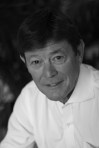
J. Morris Hicks, author and activist. Working daily to promote health, hope and harmony on planet Earth.
If you’d like to order our book on Amazon, visit our BookStore now.
And if you like what 4-Leaf eating is doing for you and your family, you might enjoy visiting our new “4-Leaf Gear” store. From the seaside village of Stonington, Connecticut – Be well and have a great day.
—J. Morris Hicks…blogging daily at HealthyEatingHealthyWorld.com
SHARE and rate this post below…One more thing, occasionally an unauthorized ad may appear beneath a blog post. It is controlled by WordPress (a totally free hosting service). I do not approve or personally benefit whatsoever from any ad that might ever appear on this site. I apologize and urge you to please disregard.



 Although I am certified in Plant-Based Nutrition by the T. Colin Campbell Foundation and eCornell, I don’t consider myself an expert in nutrition. As you know, I call myself “the big picture guy” when it comes to how our food choices affect not only our health but many other troubling global issues as well.

 J. Morris Hicks, engineer. writer. big picture guy.