Health spending still going up—with no end in sight.

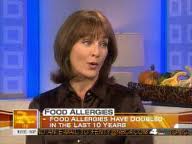
Nancy Snyderman on NBC, reports the latest “disease care” message of confusion to morning and evening viewers alike.

And “confusion over clarity” is king

Every major television network has a health-related story every single day of the year. Half of the stories are about problems created by our love affair with meat and dairy and the other half focus on possible solutions, magic-bullet breakthroughs or the genome mapping health care of the future.

The pieces that deal with the “problems” are usually accurate. The other ones, not so much. With the exception of CNN’s “Last Heart Attack” and a rare appearance by Dr. T. Colin Campbell on a network program—you will get a steady does of confusing information. What you hear one night will likely be contradicted by another piece within a week.

Meanwhile our cost of “health care” (disease care) continues to rise. Here’s the latest report from Medicare released on 6-12-12 (link to source below):

Bethesda, MD — New estimates released today from the Office of the Actuary at the Centers for Medicare and Medicaid Services (CMS) project that aggregate health care spending in the United States will grow at an average annual rate of 5.7 percent for 2011 through 2021, or 0.9 percentage point faster than the expected growth in the gross domestic product (GDP). The health care share of GDP by 2021 is projected to rise to 19.6 percent, from its 2010 level of 17.9 percent.

By 2021, government spending at all levels for health care is projected to reach nearly 50 percent of total national health expenditures, with the federal government accounting for approximately two-thirds of that share.

That means for every $1,000 of health care expense, our federal government (us taxpayers) will be paying $333, state and local governments paying $167—with the remaining $500 shared by employers and individuals.
Probably the most powerful major health “special” EVER. Congrats to Dr. Sanjay Gupta.

Insurance companies? Don’t kid yourself about them; they’re not paying for anything. They just spread out the bill among all their customers—they get a piece of the “health care pie” and, the bigger the pie, the more they get. So, as the cost of health care goes up, the more profitable the giant health insurance business.

In our book, we reported on the skyrocketing cost of health care for the past fifty years:

In 1960, the cost of health care in the Unites States was 5.2 percent of the gross domestic product (GDP). In less than fifty years, it tripled to 16 percent, and U.S. officials now project that it will double again to 31 percent within the next twenty-five years. This cost is simply unsustainable, and we all know it, but we haven’t yet figured out what can be done.

Standing at 18% now, the latest government numbers seem to be right on track to hit 31% of GDP by 2035. A dire forecast to be sure, and one that the economy can’t afford to sustain.

After reading through several thousand words from the government, I was not surprised to notice that there was no mention of the obvious solution to our problem. It was all about the Affordable Care Act (Obama Care), all about who pays what, and all about bureaucratic red tape. No mention whatsoever of teaching all of our citizens exactly how to take charge of their health. Source article: Health Affairs Web First Article; 6-12-12

The Bottom Line. We need to teach people exactly what they need to do to take charge of their own health. How much would that cost? With roughly 115 million households in the USA, how much would it cost the government to give every one of them this packet below? At about $50 each, it would cost $5.75 billion. As a percent of our $2.7 trillion cost of health care, it would be a mere 2/10th of one percent.

This wouldn’t solve our health care crisis overnight, but it would be a pretty good start. Maybe it would get one or two million of those households moving in the right direction.

Handy 4-piece take-charge-of-your-health kit—from Amazon.com

Want to find out how healthy your family is eating? Take our free 4Leaf Diagnostic Survey. It takes less than five minutes and you can score it yourself. After taking the survey, please give me your feedback as it will be helpful in the development of our future 4Leaf app for smartphones. Send feedback to jmorrishicks@me.com

International. We’re now reaching people in over 100 countries. Follow us on Facebook and Twitter or get daily blog notices by “following” us in the top of the right-hand column. For occasional updates, join our periodic mailing list.

To order more of my favorite books—visit our online BookStore now

J. Morris Hicks, working daily to promote health, hope and harmony on planet Earth.

For help in your own quest to take charge of your health, you might find some useful information at our 4Leaf page or some great recipes at Lisa’s 4Leaf Kitchen.

Got a question? Let me hear from you at jmorrishicks@me.com. Or give me a call on my cell at 917-399-9700.

SHARE and rate this post below.

Blogging daily at hpjmh.com…from the seaside village of Stonington, Connecticut – Be well and have a great day.

—J. Morris Hicks, board member, T. Colin Campbell Foundation
Posted in Uncategorized | Leave a comment

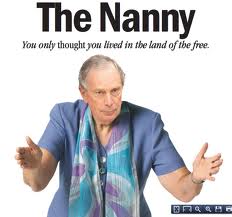
“Nanny state in NYC”—for banning giant sugary drinks?

So what’s wrong with that? Nothing, in my opinion.

As I’m sure you’ve heard, Mayor Michael Bloomberg is already famous for banning smoking in bars and trans-fats from restaurant food. He’s also created more biking lanes in his administration than all others combined and has forced the posting of calorie counts in fast food restaurants.

On CBS This Morning with Charlie Rose, the mayor chuckled about his “nanny” image, calling it just the story of the week that will soon fade away.

In a city that leads the nation in type 2 diabetes, he’s simply doing what he can to force some positive change. It’s still a free country—you can still feed your child 32 ounces of soda at one sitting, you just can’t buy it in one bottle or cup. He’s simply making it a little more difficult to consume empty calories—devoid of all nutrition. Mark Bittman weighs in (New York Times, 6-5-12):

If you believe government has no role in helping people — including encouraging us to act in our own best interests by doing things like not smoking, wearing seat belts and getting exercise — you’re probably no fan of New York’s mayor, Michael R. Bloomberg.

The arguments against this ban mostly come from the “right.” (There actually is no right and left here, only right and wrong.) We’re told, as we almost always are when a progressive public health measure is passed, that this is “nanny-statism.” (The American Beverage Association also argues that the move is counterproductive, but the cigarette companies used to market their product as healthful, so as long as you remember that, you know what to do with the A.B.A.’s statements.) On a more personal level, we hear things like, “if people want to be obese, that’s their prerogative.”

Certainly. And if people want to ride motorcycles without helmets or smoke cigarettes that’s their prerogative, too. But it’s the nanny-state’s prerogative to protect the rest of us from their idiotic behavior. Sugar-sweetened beverages account for a full 7 percent of our calorie intake, and those calories are not just “empty,” as is often said, but harmful: obesity-related health care costs are at $147 billion and climbing.

Where does it end? As long as someone makes it, Americans will buy almost any size drink—as long as it’s got a lot of sugar in it.

I seriously doubt that Mayor Bloomberg knows much about true health-promoting nutrition, but he does know that sugary drinks are not good for anyone and he’s just trying to make it a little less convenient and maybe a little more expensive for his citizens to buy them. In that regard, I applaud all of his efforts.

The mayor appeared on CBS This Morning with Charlie Rose on 6-13-12 and had this to say when Charlie challenged him about imposing his health ideas on the public:

“If government’s purpose is not to improve the health and longevity of its citizens, then I don’t know what its purpose is.”

As for adopting a truly healthy diet, I am convinced that most people will eventually need to to be forced to make the change. And that force will happen someday–but not by legislation. Either they will not be able to afford the unhealthy meat, dairy, eggs, highly processed carbs AND sugary drinks—or those foods will no longer be available.

Taming the health care monster all boils down to just two words: WHOLE PLANTS. Click on the image to check out our new stand-alone website at http://www.4leafprogram.com

The Bottom Line. As for doing what we can to force change now, I am all for it. My feeling is that our $2.7 trillion cost of health care is everyone’s business—that’s because everyone is being forced to pay for it. Check out this new data released this week by Medicare:

By 2021, government spending at all levels for health care is projected to reach nearly 50 percent of total national health expenditures, with the federal government accounting for approximately two-thirds of that share.

That’s right, the government will soon be paying for a full one half of all our health care costs. Even us 4Leaf eaters who never go to the doctor and rarely get sick—are charged outrageous premiums for health insurance. We’re being forced to pay for all those people who think it’s their business if they choose to be obese.

Mark Bittman’s article: What Is Food? – NYTimes.com.

If the mayor really wants to promote health for his citizens, maybe he should have the city donate the following package to every single household in all five boroughs of the great city of New York.

Handy 4-piece take-charge-of-your-health kit—from Amazon.com

Want to find out how healthy your family is eating? Take our free 4Leaf Diagnostic Survey. It takes less than five minutes and you can score it yourself. After taking the survey, please give me your feedback as it will be helpful in the development of our future 4Leaf app for smartphones. Send feedback to jmorrishicks@me.com

International. We’re now reaching people in over 100 countries. Follow us on Facebook and Twitter or get daily blog notices by “following” us in the top of the right-hand column. For occasional updates, join our periodic mailing list.

To order more of my favorite books—visit our online BookStore now

J. Morris Hicks, working daily to promote health, hope and harmony on planet Earth.

For help in your own quest to take charge of your health, you might find some useful information at our 4Leaf page or some great recipes at Lisa’s 4Leaf Kitchen.

Got a question? Let me hear from you at jmorrishicks@me.com. Or give me a call on my cell at 917-399-9700.

SHARE and rate this post below.

Blogging daily at hpjmh.com…from the seaside village of Stonington, Connecticut – Be well and have a great day.

—J. Morris Hicks, board member, T. Colin Campbell Foundation
Posted in Beverages (all) | 2 Comments

Do you think you’re a pretty decent person?

It turns out that most of us are—even though we all cheat just a little.

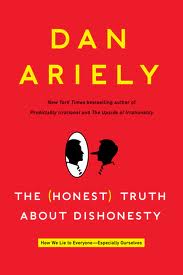
On June 7, 2012, the New York Times published a David Brooks article that caught my attention—The Moral Diet. But it turns out that the article had very little to do with food; that was just an analogy that David used to talk about Dan Ariely’s new book, The (Honest) Truth About Dishonesty.

The article was all about morality and doing the right thing. The good news is that most of us try to do the right thing. But, as David put it, we all tend to permit ourselves to cheat a little bit—kind of like dieting. I liked this example about the blind taxi passenger (from the article):

The author had one blind colleague and one sighted colleague take taxi rides. The drivers cheated the sighted colleague by taking long routes much more often than they cheated the blind one, even though she would have been easier to mislead. They would have felt guilty cheating a blind woman.

David went on to say, “You can buy a weight scale to get an objective measure of your diet. But you can’t buy a scale of virtues to put on the bathroom floor. And given our awesome capacities for rationalization and self-deception, most of us are going to measure ourselves leniently: I was honest with that blind passenger because I’m a wonderful person. I cheated the sighted one because she probably has too much money anyway.”

And that’s what got me thinking about the morality involved with what we choose to eat—morality that goes far beyond what our bathroom scales are telling us about the correctness of our diet. Just like the taxi driver, we all know that it is not good character for us to take advantage of the less fortunate. So consider what would happen if everyone knew about the moral responsibilities that go along with our choices of food.

The morality behind our food choices

The basic problem is a  lack of knowledge. How much would the eating habits change in the western world if the answer to all of these “what if” questions was a unanimous YES?

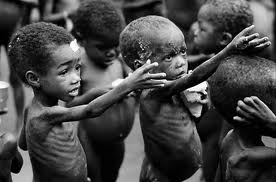
  1. Land and world hunger? What if everyone knew that it takes twenty times as much land to feed someone the meat & dairy-based diet compared to the person who eats mostly plants? (3.25 acres for the meat-eater vs. 1/6 of an acre for the vegan) What if everyone knew that there’s only about one acre available for every human? What if everyone knew that if half of the world’s 7 billion people ate our western diet, that the other 3.5 billion people would starve to death?
  2. Water pollution and consumption. What if everyone knew that the 10 billion animals we raise for our dinner tables in the United States produce 130 times as much excrement as the entire human population? What if everyone knew how much that animal excrement was polluting our waters? What if everyone knew that our meat and dairy-based diets require about twenty times more water per calorie than does a plant-based diet? What if everyone knew that our selfish and wasteful way of eating in the West is the primary reason billions of people in the world do not have access to fresh water?
  3. Eating seafood and our biodiversity issues. What if everyone knew that we’ve already removed 90% of the predator fish in the oceans? What if everyone knew that at the current pace, virtually all fish will be extinct by 2048? What if everyone knew the horrible environmental consequences that lack of fish in the ocean would cause for future generations of all species of creatures—including humans?

I could go on and list another dozen or more “what ifs” that are riding on what we put at the end or our forks. But you get the point. There are so many things that the average person simply doesn’t know about the consequences of the way we eat. Knowing that we humans generally want to do the right thing—even though we all cheat a little…

What if everyone knew all of the above and then some?

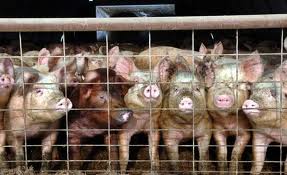
Let’s not forget the lifetime suffering of billions of animals in factory farms so that we may eat their flesh.

What if “the big picture” about food were taught to children at home and in every year of formal public education across the land? What kind of behavior change could we expect to see? Oh we still might cheat just a little, but as David said in the article:

Most of us think we are pretty wonderful. We can cheat a little and still keep that “good person” identity. Most people won’t cheat so much that it makes it harder to feel good about themselves.

So, how would you like to eat a diet that ensured that you would be doing your part to save our trees, waters and farmlands, doing your part to feed the world’s hungry, to curb global warming, to conserve our dwindling supply of fossil fuels and doing your part to end the needless lifelong suffering of over 60 billion factory-farm animals a year?

And what’s in it for you? How about a clear conscience, vibrant health, a trim figure and not much chance of ever ending up in the old nursing home?

Here’s a link to the David Brooks article in the New York TimesThe Moral Diet And here is an easy way you can help your family become much more knowledgeable about food—and the fact that what you eat affects far more than just your own health. As a bonus, that knowledge will help you become an even better person than you thought you were.

Handy 4-piece take-charge-of-your-health kit—from Amazon.com

Want to find out how healthy your family is eating? Take our free 4Leaf Diagnostic Survey. It takes less than five minutes and you can score it yourself. After taking the survey, please give me your feedback as it will be helpful in the development of our future 4Leaf app for smartphones. Send feedback to jmorrishicks@me.com

International. We’re now reaching people in over 100 countries. Follow us on Facebook and Twitter or get daily blog notices by “following” us in the top of the right-hand column. For occasional updates, join our periodic mailing list.

To order more of my favorite books—visit our online BookStore now

J. Morris Hicks, working daily to promote health, hope and harmony on planet Earth.

For help in your own quest to take charge of your health, you might find some useful information at our 4Leaf page or some great recipes at Lisa’s 4Leaf Kitchen.

Got a question? Let me hear from you at jmorrishicks@me.com. Or give me a call on my cell at 917-399-9700.

SHARE and rate this post below.

Blogging daily at hpjmh.com…from the seaside village of Stonington, Connecticut – Be well and have a great day.

—J. Morris Hicks, board member, T. Colin Campbell Foundation

Posted in Big Picture | 1 Comment