
I recommend LEADERSHIP!
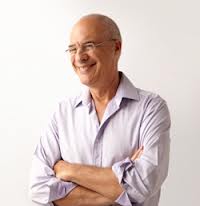
Mark Bittman, New York Times
Once again, let me say it up front—when it comes to our food system, Mark Bittman is the most knowledgeable journalist on the planet. He totally “gets it” about the health, environmental and sustainability issues. But like all other journalists, he doesn’t take a stand; he provides no leadership, he is not a role model himself and he is inconsistent.
In his New Years Day article, Fixing Our Food Problem (see link below), he does a magnificent job of describing the problem but comes up way short when describing a viable solution. Here’s what he had to say about the problem:
Nothing affects public health in the United States more than food. Gun violence kills tens of thousands of Americans a year. Heart disease, cancer, stroke and diabetes kill more than a million people a year — nearly half of all deaths — and diet is a root cause of many of those diseases.
And the root of that dangerous diet is our system of hyper-industrial agriculture, the kind that uses 10 times as much energy as it produces.
Mark covers ALL of the food issues—including the needless suffering of billions of animals.
We must figure out a way to un-invent this food system. It’s been a major contributor to climate change, spawned the obesity crisis, poisoned countless volumes of land and water, wasted energy, tortured billions of animals… I could go on. The point is that “sustainability” is not only possible but essential: only by saving the earth can we save ourselves, and vice versa.

How about that? He covers everything in those three paragraphs. He begins with the millions of lives lost due to food driven diseases, then he covers poisoned land and water, wasted energy, suffering animals—he even covers the longterm sustainability of the human race. (Maybe he’s been reading my stuff). But when it comes to his proposed solution, his recommendations are laughable. His two-point program for saving the world—word for word:
- Reducing the consumption of sugar-laden beverages.
- Improving the living conditions of livestock
Are you kidding me? When I first read his article on January 2, I was thinking of the movie HOME, when the scientists reported that the human race has inflicted more damage on the fragile harmony of nature—in just the last fifty years—than all previous generations of humans combined for the past 200,000 years. AND, they projected in 2009, that we had better dramatically change that trend by 2019—or it may very well be too late—as we may have passed the tipping point of no return.

Important? Yes. But shrinks to insignificance when compared to sustainability of the human race.
Mr. Bittman, on the other hand, talks about the abolition movement beginning 200 years before the civil rights movement—making it sound like we’ve got a few centuries to work on our food problem. So why not start with a few easy issues first?
The problem is that we’re talking about the sustainability of the human race—a problem that our very own great grandchildren may experience. All other human issues of our entire existence as a species—shrink to insignificance in comparison.
Sorry, Mark, but we don’t have a couple of hundred years to get serious about this world-wide problem of epic proportions. What we have is a perfect storm kind of emergency—regarding our health, our environment and the sustainability of the human race. What could be more important than that? And that perfect storm requires decisive leadership. My first leadership choice would be the dynamic duo of…
Obama and Clinton. The combination of these two U.S. presidents who never have to be elected again—working together to simply educate the world about our perfect storm would be incredibly formidable. They both already have the knowledge (See links below) about what our food is doing to our health and they have a pretty good idea what it is doing to our environment.

“The Barry and Bill Show” explaining what we should be eating—would yield millions of converts every week.
They wouldn’t have to worry about getting a single law passed. Even if they did nothing but GET REAL CLEAR about what we should be eating and why—millions of people would follow their lead.
Clinton has already chosen to ignore the conventional dietary wisdom of our USDA, and I am sure that Obama would do the same if he really spent some quality time thinking about the longterm repercussions about the way we’re eating.
But let’s be real. The Barry and Bill Show is not likely to happen—even though it makes perfect sense—and they’re the right people, with the right knowledge, at the right time—with a level of rarified global recognition that has never been enjoyed by two humans at the same time.

Boehner’s reaction to the defeat of his “Plan B.”
But I do have a Plan B. Let’s hope it works out better than John Boehner’s did last week. My Plan B is for corporate CEOs in some of the world’s largest companies to get serious about reducing the cost of health care in their organizations. They’re the only prominent leaders in the world who have a huge financial incentive for us to be healthy.
How huge? The average Fortune 100 company pays well over one million dollars a day for healthcare. GM and Ford pay more for healthcare than they do for steel. With serious leadership from the CEO, the average Fortune 100 company could trim their annual cost of healthcare by over $100 million. Wal-Mart could probably lower theirs by more than one billion dollars.
To be sure, my Plan B is not just a philosophical exercise—it is my #1 Priority for 2013 and beyond. I am prepared to leverage my own consulting, general management and “big picture” food knowledge to help those CEOs out there who might be receptive to my message.
My entire approach is documented extensively in this blog post: Slashing the cost of health care in businesses. And I am now paying referral fees for introductions that lead to consulting work. Reaching the leaders who save $$ when we get healthy
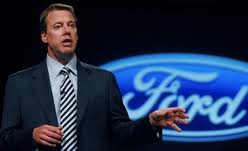
William Clay (Bill) Ford, Jr. — Executive Chairman of the Ford Motor Company. I sent him a letter (and a copy of our book) last month, but have not received a reply.
Meanwhile, what do you think Mark Bittman would say about my Plan B? Probably something like the way he ended his own article:
The point is that no major food issue will be resolved in the next 10 years. As pioneers, we must build upon incremental progress and not be disheartened, because often there isn’t quick resolution for complex issues.
Pardon me, Mark. But I strenuously disagree with your pessimistic projection. Maybe if you exhibited some real leadership yourself and started “being the change you want to see,” the global process of fixing our food problem might move along much more expeditiously.
- Source article. Fixing Our Food Problem – NYTimes.com.
Handy 4-piece take-charge-of-your-health kit—from Amazon.com
- The movie that’s changing the lives of millions: Forks Over Knives DVD
- Healthy Eating, Healthy World, The “big picture” about food (our book)
- An essential scientific resource: The China Study by Dr. T. Colin Campbell
- Dr. McDougall’s new book, The Starch Solution, with lots of great recipes.
Want to find out how healthy your family is eating? Take our free 4Leaf Diagnostic Survey. It takes less than five minutes and you can score it yourself. After taking the survey, please give me your feedback as it will be helpful in the development of our future 4Leaf app for smartphones. Send feedback to jmorrishicks@me.com

 International. We’re now reaching people in over 100 countries. Follow us on Facebook and Twitter or get daily blog notices by “following” us in the top of the right-hand column. For occasional updates, join our periodic mailing list.
To order more of my favorite books—visit our online BookStore now

J. Morris Hicks, working daily to promote health, hope and harmony on planet Earth.
For help in your own quest to take charge of your health, you might find some useful information at our 4Leaf page or some great recipes at Lisa’s 4Leaf Kitchen.
Got a question? Let me hear from you at jmorrishicks@me.com. Or give me a call on my cell at 917-399-9700.
SHARE and rate this post below.
Blogging daily at hpjmh.com…from the seaside village of Stonington, Connecticut – Be well and have a great day.
—J. Morris Hicks, board member, T. Colin Campbell Foundation
 An idea for a New Year’s Resolution. As for all of those 700 blogs—they’re all still here are and waiting to be shared with others. The information is still relevant: we’re eating the wrong food and it’s taking a toll on our health, our planet and the longterm sustainability of the human race.

 The first African American head of the EPA, Lisa P. Jackson, is stepping down at the end of President Obama’s first term.
 Mr. Obama has supported broad climate change legislation, financed extensive clean energy projects and pushed new regulations to reduce global warming emissions from cars and power plants. But neither he nor Mr. Romney has laid out during the campaign a legislative or regulatory program to address the fundamental questions arising from one of the most vexing economic, environmental, political and humanitarian issues to face the planet.
 What does the EPA really do? While reading a number of these articles, I began to wonder about the official mission of the EPA. As you might expect, it deals with all aspects of the environment but focuses most of its efforts on the natural resources of the United States.


 J. Morris Hicks, engineer. writer. big picture guy.