Merry Christmas from J. Morris Hicks

And Season’s Greetings to all who don’t celebrate Christmas!

My son and his family cutting their own Christmas  tree last year.

My son and his family cutting their own Christmas tree last year.

2013 has been a very big year for me. After eleven years of study, I have now shifted my primary interest to sustainability and away from the physical health of humans. I suddenly realized that if we humans don’t address our urgent sustainability issues soon, it won’t really matter how healthy we are if Mother Nature is no longer able to keep us alive.

Don’t get me wrong; I am still enjoying a powerful, health-promoting 4Leaf kind of lifestyle and will continue to do so for the rest of my life. It’s just that my primary message is now about what we must do to sustain our civilization and our species longterm. So, during 2013, I have repackaged myself as a sustainability guy for two reasons:

  1. It’s much more important that we survive as a species longterm than that we are healthy now.
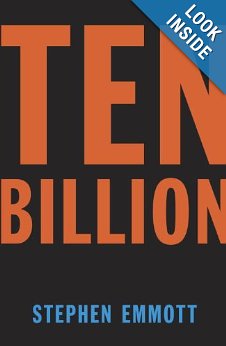
  2. I think that more people are receptive to a sustainability message; particularly when all the science supports the unprecedented planetary emergency described by Dr. Stephen Emmott in his 2013 book, TEN BILLION.

Season's Greetings from New England; we're now decorated for the holidays and ready for that White Christmas.

This has been one of my favorite Christmas pictures for years now—one of my own photos of my home in Stonington for the past nine years. I am now living in Stamford, CT.

As a sustainability guy, that’s where most of my public presentations are now focused. I have also signed a contract with an environmental speakers agency. My agent (Paul Zemitzsch) is the founder of Explore Green in St. Louis, MO. Click here to view my page on his site. For more information on my public speaking, visit my Speaking page by clicking here.

So as 2013 draws to a close, I am now primarily recommending that people read three books by three different authors, all of whom I met with in person during the past few months. They are Dr. Stephen Emmott, Lester Brown and Richard Oppenlander. You can read about all three of these books at: Three books every world leader must read NOW!!! And within that blog, there are convenient Amazon links to each of them.

Ending on a very THANKFUL note. 2013 has indeed been a very big year for me. I have expanded my horizons, narrowed my focus and have forged some extraordinary new relationships. By virtue of all of the above, we’re now in a position to develop and launch a well-funded massive global initiative (in 2014) aimed at changing the eating habits of the two billion most affluent humans.

Most of them live in just five areas of the world and are consuming over 70% of the world’s meat. Those areas are: China, Europe, USA, Russia and Brazil. We’ve concluded that if we can get the top two billion people moving in the right direction that the other five billion will follow.

I should note that there are many things that we humans should and must do eventually to preserve Mother Nature’s longterm ability to sustain us. The problem is that many of those actions will take decades, if not centuries, to make much of an impact.

Will be our best year ever.

Will be our best year ever.

And with the urgency of climate change and water shortages already happening, it turns out that changing what the world eats is by far the most powerful AND the most expedient when compared to all of the other possible initiatives. You can read about that topic in some of the blogs below.

Scroll down for my favorite Christmas photo of all time. Taken four years ago by my friend Doug Mola of Stonington, CT.

For your convenience, I have provided a few of my recent blogs that focus on the theme of this Christmas Eve message.

Merry Christmas from Stonington, CT

From Wadawanuck Square in Stonington, CT (by Doug Mola)

Handy 5-piece take-charge-of-your-health kit—from Amazon.com

Why should we be eating mostly plants? The “big picture” in 4 minutes.

Want to find out how healthy your family is eating? Take our free 4Leaf Survey. It takes less than five minutes and you can score it yourself. After taking the survey, please give me your feedback as it will be helpful in the development of our future 4Leaf app for smartphones. Send feedback to jmorrishicks@me.com

International. We’re now reaching people in over 100 countries. Follow us on Facebook and Twitter or get daily blog notices by “following” us in the top of the right-hand column. For occasional updates, join our periodic mailing list.

J. Morris Hicks, working daily to promote health, hope and harmony on planet Earth.

To order more of my favorite books—visit our online BookStore now

For help in your own quest to take charge of your health, visit our 4Leaf page and also enjoy some great recipes from Lisa’s 4Leaf Kitchen.

Got a question? Let me hear from you at jmorrishicks@me.com. Or give me a call on my cell at 917-399-9700.

SHARE and rate this post below.

—J. Morris Hicks, board member, T. Colin Campbell Foundation
Posted in Big Picture, SOS (Saving Our Species) | 2 Comments

The CERTAINTY of global warming and water scarcity…

And the worst catastrophes that can be avoided—if we act NOW!

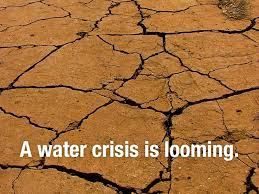
Water CrisisMainstream scientists and environmentalists now agree that human-driven climate change is happening and that today’s water shortages around the world are only going to get worse. Most of those same experts also know that the number one cause of BOTH is the raising of livestock. So why aren’t they talking more about the latter? Two reasons:

  1. Most of those experts believe that we “need” to eat animal protein to be healthy and therefore don’t even consider suggesting that we drastically cut—or even eliminate—our demand for animal-based foods.
  2. It would not be a popular stance. With the vast majority of people in the Western world eating meat & dairy at every meal (including our physicians and nutritional scientists), such a stance might be detrimental to their careers.

Hastening the process of getting mainstreamers onboard

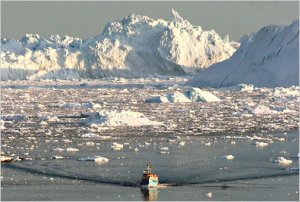
Scientists are now in almost complete agreement that human-driven global warming is happening.

Scientists are now in almost complete agreement that human-driven global warming is happening.

The Problem. By far, the leading cause of global warming AND water scarcity is the raising of livestock. Yet the global production of meat & dairy calories continues to rise—even though it has leveled off in some countries. (See 12-2-13 link to Scientific American article below.)

The Opportunity. By influencing billions of people to replace most of their meat & dairy calories with plant-based calories, we still have time to avoid the worst consequences of global warming and water shortages. How can we cause those meat & dairy calories to drop sharply in the next few years?

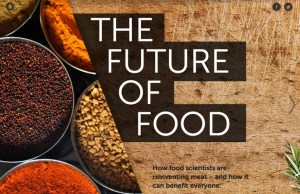
The Good News. The mainstreamers are beginning to promote the replacement of meat calories with plant-based calories. The most prominent name is Bill Gates. From his “Future of Food” piece at GatesNotes.com (see link below), here is Bill’s Introduction:

Meat consumption worldwide has doubled in the last 20 years, and it is expected to double again by 2050. This is happening in large part because economies are growing and people can afford more meat. That’s all good news. But raising meat takes a great deal of land and water and has a substantial environmental impact. Put simply, there’s no way to produce enough meat for 9 billion people. Yet we can’t ask everyone to become vegetarians. We need more options for producing meat without depleting our resources.

Over the past few years I’ve come across a few companies that are doing pioneering work on innovations that give a glimpse into possible solutions. To be sure, it’s still very early, but the work these companies are doing makes me optimistic. I wanted to share with you a look at their work on creating alternatives to meat and eggs that are just as healthful, are produced more sustainably, and taste great.

Read on to learn how their work can benefit everyone.

Later in the “Future of Food” piece (see link below), Bill asks popular author and food activist, Michael Pollan, a question:

Bill Gates: Why should people consider replacing meat in their diets?

Michael Pollan: Three principal motivators: health, because we know high consumption of red meat correlates with higher chances of certain cancers; and the environment, because we know that conventional meat production is one of the biggest drivers of climate change, as well as water and pollution; and ethics, since the animal factories that produce most of our meat and milk are brutal places where animals suffer needlessly.

Future of FoodNow all we need is URGENCY. I am thrilled to see mainstreamers like Gates and Pollan supporting the reduction of meat & dairy calories in our diets. But, without a HUGE global initiative promoting that dietary shift, it will take many decades before we see much results.

During those “many decades,” global warming tipping points will be passed, water shortages will increase dramatically and billions of people will suffer and/or die unnecessarily. So, how can we ratchet up the URGENCY on tackling the most crucial problems in the history of humankind? Two Things:

1. A well-funded MASSIVE global awareness campaign. In order to have an actual drop in meat & dairy calories produced worldwide in 2015, we must reach the world’s two billion most affluent people in 2014. We must take this world-changing message directly to the people—it would take far too long to go the conventional route—through governments, universities, environmental groups, and journalists. Why just 2B? Those are the people consuming most of the meat & dairy calories and, when they reduce meat consumption, the other 5B will follow.

2.Concurrent appeal to mainstream leaders. Also, during 2014, we will leverage the planned global awareness campaign to enlist the ACTIVE support of the top twenty most influential organizations in the world in each of the following nine categories: environmental, sustainability, scientific, food producers, medicine, government, faith-based, philanthropic and media. This is all about giving all interested parties a courtesy “heads up” regarding what’s about to happen. Hopefully, they will then find it in their best interests to URGENTLY begin sharing this message with those who support them.

Promoting the same global message: In order to avoid the worst effects of global warming and water shortages, we encourage EVERYONE to start trying to replace at least 75% of their meat & dairy calories with plant-based calories. ANY plant-based calories.

Not the healthiest of plant-based calories, but are much better for the environment than animal-based.

Not the healthiest of plant-based calories, but are much better for the environment than animal-based.

Why not tell everyone to shift to the healthiest possible calories? Those derived from whole, plant-based foods?

Two reasons:

1. ANY plant-based calorie that replaces an animal-based calorie will do wonderful things for the environment; particularly global warming and our water supply.

2. We want to replace the maximum number of animal based calories (meat, dairy, eggs and fish) in the world—with plant-based calories. To do that, we must reach the maximum number of people. The more plant-based options we have, the more people there will be who start replacing those animal-based calories.

Expected Results. With enough support from the “mainstream leaders” mentioned above, the net effect of the above two concurrent initiatives could very well be a slight reduction in the global production of animal-based calories in 2015, a ten percent reduction in 2016 followed by a further twenty percent reduction in 2017.

2018Happy New Year 2018. If we’re able to achieve the above results in the next four years, the notion that we “need” to eat animal protein to be healthy will no longer be so ubiquitous. Secondly, as with the demise of smoking, the prevailing opinion may be that eating meat, dairy, eggs and fish is simply no longer cool.

And when that shift takes place, we’ll be well on our way to the near elimination of all animal-based foods long before 2040. Hopefully by then, we will have also started similar initiatives aimed at tackling our dual problems of overpopulation and over-consumpiton. While changing our  food choices is the most powerful (and quickest) step we can take—for a truly sustainable future for our great grandchildren, we must also reduce our numbers AND our grossly unsustainable levels of consumption.

Short Video on Global Warming from Robert Goodland. The only way to begin curbing global warming quickly is to address the #1 cause—and that would be livestock. This video explains the simple big picture in less than three minutes.

Robert Goodland presents the cold hard facts of the certainty and URGENCY of global warming in this 17-minute video (Sept. 2013). Goodland was environmental advisor to the World Bank for 23 years.

Please see link below to Robert Goodland’s website on global warming. 

For your health, it's best to maximize the percent of your calories from whole plants. Our 4Leaf level begins at 80%.

For your health, it’s best to maximize the percent of your calories from whole plants. Our 4Leaf level begins at 80%.

Closing Comment re Health. I began my study of the consequences of our food choices in 2002—primarily driven by my curiosity about the optimal diet for humans. That curiosity has led to far more issues and opportunities than I ever imagined. Along the way, I discovered that the optimal diet for our health was whole, plant-based foods. I also discovered that most people don’t want to give up ALL of their meat, dairy, eggs and fish (MDEF). Not yet, anyway.

So, for your health and for slashing the cost of health care in the wealthiest nations—whole,  plant-based foods is definitely the way to go. But for avoiding the worst effects of global warming and water scarcity, we humans (on a global basis) simply must consume far less animal-based foods. So by all means, load up on all the plant-based foods that you can. Even consuming nothing but potato chips and Diet Coke would be great for the environment. For your health? Not so much.

Handy 5-piece take-charge-of-your-health kit—from Amazon.com

Why should we be eating mostly plants? The “big picture” in 4 minutes.

Want to find out how healthy your family is eating? Take our free 4Leaf Survey. It takes less than five minutes and you can score it yourself. After taking the survey, please give me your feedback as it will be helpful in the development of our future 4Leaf app for smartphones. Send feedback to jmorrishicks@me.com

International. We’re now reaching people in over 100 countries. Follow us on Facebook and Twitter or get daily blog notices by “following” us in the top of the right-hand column. For occasional updates, join our periodic mailing list.

J. Morris Hicks, working daily to promote health, hope and harmony on planet Earth.

To order more of my favorite books—visit our online BookStore now

For help in your own quest to take charge of your health, visit our 4Leaf page and also enjoy some great recipes from Lisa’s 4Leaf Kitchen.

Got a question? Let me hear from you at jmorrishicks@me.com. Or give me a call on my cell at 917-399-9700.

SHARE and rate this post below.

—J. Morris Hicks, board member, T. Colin Campbell Foundation
Posted in Big Picture, Climate Change, SOS (Saving Our Species), Water Pollution & Usage | Tagged , , | 6 Comments

Three books every world leader must read NOW!!!

Before Mother Nature can no longer sustain us as a species.

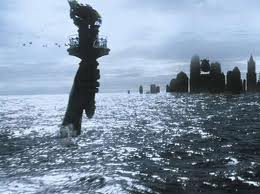
Global warming could be the single biggest problem ever faced by the human species.

Global warming could be the single biggest problem ever faced by the human species.

There are now seven billion people on this planet and we’re adding another 240,000 every day. We’re running out of land, we’re running out of water and the number one driver of global warming (eating animals) continues to strengthen. What’s wrong with this picture?

What’s wrong is that we’re rapidly moving down the road toward the end of our civilization and, ultimately, the end of our species. So why are none of our leaders talking about it? The short answer is that they’re all “comfortably unaware” of the extent of the problems we face. I have concluded that it is our job (average citizens like us) to make them aware. And that’s what I am doing here.

During the past year, I have read—and recommended often—three powerful books about global depletion and the unprecedented planetary emergency we face if we don’t take decisive action VERY soon. All three of these books appear on my STORE page and are available on Amazon in either paperback or Kindle.

Why not send the trilogy to your friends who call themselves environmentalists this holiday season? Even most environmentalists are completely unaware of the single biggest cause of global warming and water scarcity. It’s our harmful, wasteful and totally unsustainable food choices of meat, dairy, eggs or fish (MDEF) three meals a day.

I should add that two of the three books featured below make no mention of the plant-based solution to so many of our environmental problems. Emmott and Brown do a great job of describing the problem, but only Oppenlander paints a clear picture of the obvious solution.

Ten BillionTEN BILLION by Stephen Emmott, PhD. As of late 2013, this is my most recommended book—for people who are interested in learning more about the sustainability of humankind. I recommended it to James Cameron on 9-14-13 and he and wife Suzy read it the next day.
I first read about this powerful book in July, 2013; then purchased a Kindle copy when it was published in early September. Dr. Emmott is a scientist who heads up computational for Microsoft in the UK. He is also a visiting professor at the University of Oxford. Wanting his message to be a wake-up call to leaders everywhere, he paints a bleak (almost hopeless) picture in this book.

But I am more optimistic because I see a plant-based solution out of the global mess that he so brilliantly describes. I visited with him in London on 10-9-13 and reviewed my plan with him. He agreed that it was the best plan that he had heard. Click here to order on Amazon.

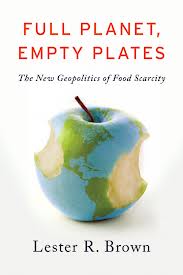
Full Planet, Empty PlatesFull Planet, Empty Plates by Lester Brown. After writing over fifty books, Mr. Brown has hit a home run with this one. One of the most prolific environmental writers in history, Brown describes a host of alarming issues—none of which are getting better.
Like Emmott in TEN BILLION, he describes an almost impossible situation as it relates to global depletion of our essential natural resources. Also, like Emmott, he offers no plausible solution for dealing with the dilemma that he describes so powerfully in his book. So I reached out to him recently and scheduled a visit with him in his Washington, DC office.

Instead, we ended up having a phone interview on 11-21-13—and I got the chance to ask him the all-important question about a possible plant-based solution to the dilemma he portrayed. “What would be the global environmental impact if the most affluent two billion people in the world replaced 75% of their meat, dairy, egg and fish calories with plant-based calories?”

He replied that it would take a research study to accurately predict but then added, “It would be a substantially positive impact.” Click here to order on Amazon.

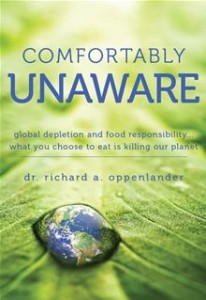
Comfortably UnawareComfortably Unaware by Dr. Richard Oppenlander. The single biggest problem that humankind faces is the rapid pace with which we are consuming our finite natural resources—with land and water topping the list. Richard begins by defining the URGENCY in great detail.

He then tackles Problem #2. Virtually all of our citizens, including our world leaders and environmental experts, are comfortably unaware of the extent of the problem, the most powerful driver of the problem and the obvious solution.

Like me, Oppenlander sees the plant-based solution out of the mess described in his book, Emmott’s book and Brown’s book. But, as he points out, our leaders are not aware of the plant-based solution and seem to have no interest in learning about it. I got to know Richard earlier this year and co-presented with him at an environmental summit in California on 11-24-13; I highly recommend his book. Click here to purchase on Amazon. Also, I highly recommend Richard’s latest book, published 11-19-13. Food Choice and Sustainability: Why Buying Local, Eating Less Meat, and Taking Baby Steps Won’t Work

For your convenience, I have provided a few links to earlier blogs.

Handy 5-piece take-charge-of-your-health kit—from Amazon.com

Why should we be eating mostly plants? The “big picture” in 4 minutes.

Want to find out how healthy your family is eating? Take our free 4Leaf Survey. It takes less than five minutes and you can score it yourself. After taking the survey, please give me your feedback as it will be helpful in the development of our future 4Leaf app for smartphones. Send feedback to jmorrishicks@me.com

International. We’re now reaching people in over 100 countries. Follow us on Facebook and Twitter or get daily blog notices by “following” us in the top of the right-hand column. For occasional updates, join our periodic mailing list.

J. Morris Hicks, working daily to promote health, hope and harmony on planet Earth.

To order more of my favorite books—visit our online BookStore now

For help in your own quest to take charge of your health, visit our 4Leaf page and also enjoy some great recipes from Lisa’s 4Leaf Kitchen.

Got a question? Let me hear from you at jmorrishicks@me.com. Or give me a call on my cell at 917-399-9700.

SHARE and rate this post below.

—J. Morris Hicks, board member, T. Colin Campbell Foundation

Posted in Activism & Leadership, Big Picture, Climate Change, SOS (Saving Our Species) | 9 Comments