Using 4Leaf Survey results to improve your diet & health

Identifying opportunities for improvement
Leveraging the simple, yet powerful, concept of maximizing the percent of your calories from whole, plant-based foods.

 in diet and health for you and your family

Now that you have your 4Leaf point score, how do you benefit from it? You can now see where you’re getting most of your non-whole-plant calories and can start making healthier choices in those categories.

Think of each calorie as a fleeting opportunity to do something great for your body. As we noted in our book, the future health of 100 million of your cells is riding on every bite that you put in your mouth. Start trying to make every bite count.

Haven’t taken the survey yet? Click Here
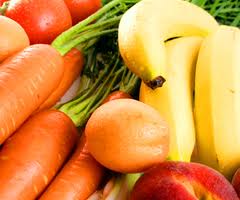
More calories from whole plants; less from everything else. How simple is that?

Questions 1 – 4 are about whole, plant-based foods.

Questions 1 – 4 are about whole, plant-based foods. These are the only questions on the survey where you can score “plus” points. Start with your “routine” meals, the ones that you eat several times a week—take steps to make sure that these meals derive well over 80% their calories from whole plants.

Your fruits and vegetables are best if fresh, your legumes are best if purchased dry and your grains should have only one ingredient listed on the package. If you’re trying to lose weight, go easy on the high-fat foods like nuts, avocado, olives & seeds. Finally, begin working with your favorite restaurants to create some healthy “3” or 4Leaf options that you can order on a regular basis; minimizing oil and white flour.

 Opportunities to improve where you had the most “negative” points.
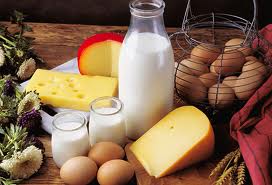
Questions 5-7 are all about dairy and eggs. Most vegetarians still eat cheese, eggs, yogurt, & ice cream and regularly use milk or cream in their coffee or cereal. None of these are health foods and have no place in a health-promoting 4Leaf lifestyle.  It’s time to start some new habits without these unhealthy, animal-based foods.

  1. Start by eliminating cow’s milk; it is not fit for human consumption. Replace it in your coffee or cereal with soy, almond, or rice milk. I even use water & grapefruit juice in my oatmeal from time to time.
  2. Learn to live without cheese. It has become our single biggest source of saturated fat and is just as unhealthy as milk or red meat. Instead, learn to love healthy foods like hummus, quinoa, lentils, etc.
    Added sugar, white flour and all the products made from them should be minimized.

Questions 8-10 are about the “unhealthy” plant-based calories—added sugar, white flour, and the ubiquitous salty snacks and “sweets. Take a look at where you lost points and consider these tips:

  1. Become a sugar-Nazi, get it out of your house and check every label for added sugar. Learn to get your sweet taste from sweet, natural, plant foods. (Honey is not a whole plant)
  2. Say goodbye to the “white” stuff. That means white flour, rice and sugar. Say hello to whole grains and products made from them. If you buy packaged bread, insist on whole grain and avoid breads with more than three ingredients. Good luck with that one.
  3. Become a healthy-snacker. We all need a snack between meals from time to time; so keep some healthy snacks like nuts, fruit, carrots, celery, broccoli, and home-made hummus.

Lovely and tasty, olive oil is 100% fat and, has zero fiber and it is not a whole plant.

Questions 11 & 12 are very important. One is about the widely perceived “need” for animal protein and the final question deals with vegetable oil, which the entire world seems to think is good for you.

  1. Don’t “plan” to include animal flesh in your diet. For, if you do, that means you will be putting it in your shopping cart, ordering it in restaurants and having it when served in friends’ homes.
  2. All oil is unhealthy, including olive. All oil is 100% fat, has no fiber and is associated with heart disease. At least get it out of your cupboard; you can cook and sautee’ in almost any liquid.

Baby Steps — a great way to learn how to walk; not such a great way to make huge changes in the way you eat

Free Advice. If you are serious about healthy eating, we don’t recommend baby steps. Rather, move directly to the 4Leaf level as soon as possible. For changing a habit, it’s actually much easier to go all the way.

Otherwise, you will still be missing your old foods while not getting the full benefit from the new, healthier foods. Not a good formula for success.

Disagree with your 4Leaf Score? Try the Shopping Cart Check. You can definitely tell how healthy a family is eating by looking at their shopping cart. So, before putting those groceries away, take an hour or so, go to nutritiondata.com and add up all of the “calories” of whole plants that you have purchased and divide that by the grand total of calories that you brought home.

If your score is less than 80%, then there is no way you’re going to ever hit 4Leaf on a regular basis. Your best chance of eating healthy is in the home—so you should shoot for over 90% of “whole plant calories” from your shopping cart—giving yourself a little wiggle room for all those meals and snacks outside the home.

 Bottom Line. Embrace and nurture your healthy eating adventure. Find great recipes and prepare some of the most delicious meals that you will ever eat. Avoid the temptation to load up on the fake meats, cheeses and eggs; but rather work on learning to LOVE this new way of eating. If you don’t learn to love it—you are not likely to stick with it.

Follow us on Facebook and Twitter. Want to receive some occasional special news from us? You may wish to Join our periodic mailing listFor daily updates you can choose to “FOLLOW” at the top of the right column>>>>>>>>>>>>

Also, for help in your own quest to take charge of your health, you might find some useful information at our 4Leaf page or some great recipes at Lisa’s 4Leaf Kitchen. Got a question? Let me hear from you at jmorrishicks@me.com.

If you’d like to order our book on Amazon,  visit our BookStore now.

J. Morris Hicks, working daily to promote health, hope and harmony on planet Earth.

From the seaside village of Stonington, Connecticut – Be well and have a great day.

—J. Morris Hicks…blogging daily at HealthyEatingHealthyWorld.com

SHARE and rate this post below…One more thing, occasionally an unauthorized ad may appear beneath a blog post. It is controlled by WordPress (a totally free hosting service). I do not approve or personally benefit whatsoever from any ad that might ever appear on this site. I apologize and urge you to please disregard.

J. Morris Hicks — Member of the Board of Directors — Click image to visit the foundation website.
Posted in 4Leaf for Life | 6 Comments

Mark Bittman. Does he ever take a stand on anything?

A wealth of knowledge—apparently wasted

Since beginning this blog in February of 2011, I have probably mentioned Mark Bittman at least 100 times. As you probably know, he is a writer, speaker, author and columnist for the New York Times.

He writes books about food and he writes columns about food. And he covers all the topics: sustainability, health, waste, cooking and the suffering of animals. On 3-13-12, he wrote another article about that last topic–entitled The Human Cost of Animal Suffering (see link below). He leads off:

Until a couple of years ago I believed that the primary reasons to eat less meat were environment- and health-related, and there’s no question that those are valid reasons. But animal welfare has since become a large part of my thinking as well. And I say this as someone not known to his friends as an animal-lover.

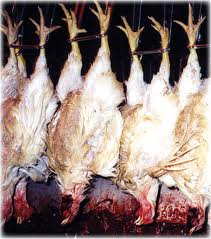
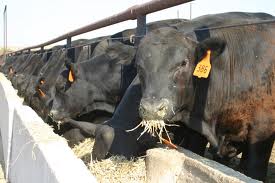
An inside view of our “system” at work — the systematic torture of TEN BILLION animals a year in just the USA

But what really impressed me was that he revealed in this article that he is one of the few “experts” out there who understand that we do not “need” to eat any animal protein whatsoever.

As you know, I have identified that ubiquitous “protein myth” as the single biggest barrier preventing the brightest scientists and thinkers of the world from promoting an aggressive effort to embrace the power of plant-based eating around the world. In his latest article about animal suffering, quoting often from Pachirat’s book, Every Twelve Seconds, Mark talks about the meat eaters’ justification for their carnivorous habit:

Meat-eaters may assert that this (our cruel system) is somehow justifiable, because we “need” to eat meat — just not cats or dogs or goldfish — to live. And even though we don’t (in fact, there’s increasing evidence that too much of it is harmful; more on that later this week), we have more than two million years of tradition to point to, we have bodies that process meat well and even thrive on it in limited amounts and we have a love of eating animal flesh that for most of us may not go away any time soon.

Promoting health, hope and harmony on planet Earth

What’s good for our health, is also good for the planet — and all of her creatures.

In this paragraph, he admits that we don’t actually “need” to eat meat but rather that it is indeed “harmful” for us. But then he defends the continued eating of meat because we’ve been eating it for two million years. If that’s a good reason for continuing a deeply flawed process, then I guess we should plan to continue the process of killing our fellow humans since we’ve also been doing that since the beginning of time.

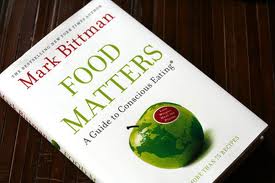
For as long as I have been following Mark Bittman, most of his work has been critical of our wasteful, harmful, cruel and unsustainable diet-style. But then he appears on NPR doing an interview and arguing against vegetarianism. Although, if you watch this 6-minute video about his 2009 book, Food Matters, you’ll see that he’s not really arguing against it, he’s just not taking a stand on anything.

The Bottom Line. When the most knowledgeable people (about food) in the world fail to provide us with clear direction, then they simply add to the confusion. It’s like the steady stream of contradictory stories on the evening news—the consumer is never consistently told the truth about anything. Hence, they all just continue with their bad habits—which is exactly the way the “system” likes it. In Mark’s latest article, I like his last sentence about that system:

When we all know the system, we’ll be even more eager to change it. —Mark Bittman

In closing, there are two links here; the first is my blog post from last year where I summarized Mark Bittman’s great wealth of knowledge about food. The next is the link to today’s feature article.

As for me, I will continue to follow Mark’s work, I will continue to  learn from that work and I will continue to implore him to take a stand—providing the clarity needed for people everywhere to make the right decisions about food—before it’s too late.

Follow us on Facebook and Twitter. Want to receive some occasional special news from us? You may wish to Join our periodic mailing listFor daily updates you can choose to “FOLLOW” at the top of the right column>>>>>>>>>>>>

Also, for help in your own quest to take charge of your health, you might find some useful information at our 4Leaf page or some great recipes at Lisa’s 4Leaf Kitchen. Got a question? Let me hear from you at jmorrishicks@me.com.

If you’d like to order our book on Amazon,  visit our BookStore now.

J. Morris Hicks, working daily to promote health, hope and harmony on planet Earth.

Blogging today from Atlanta, GA – Be well and have a great day.

—J. Morris Hicks…blogging daily at HealthyEatingHealthyWorld.com

SHARE and rate this post below…One more thing, occasionally an unauthorized ad may appear beneath a blog post. It is controlled by WordPress (a totally free hosting service). I do not approve or personally benefit whatsoever from any ad that might ever appear on this site. I apologize and urge you to please disregard.

J. Morris Hicks — Member of the Board of Directors — Click image to visit the foundation website.

Posted in Activism & Leadership, Suffering of Animals, Video Included | 6 Comments

100 million Americans eating more plant-based—Harris Study

Americans are consuming less beef, pork, fish, poultry and milk.

A recent Harris Interactive study (See link below), released December 2011, reports that in addition to self-described vegetarians, roughly “one third of the country are eating vegetarian meals a significant amount of the time.” It clarified that:

Seventeen percent of Americans stated that they “don’t eat meat, fish, seafood, or poultry at many of my meals (but less than half the time)” and 16% don’t eat these foods at more than half of their meals (but not all the time). (Total is 33% or 1/3)

Once again, the study only focussed on what people weren’t eating—and didn’t ask any questions about exactly what they were eating. Were they eating mostly processed foods, white pasta and potato chips? Or were they eating more whole, plant-based foods. My guess is that most of the increase in plant-based eating consisted of highly-processed carbohydrates and fake meats that delivered most of the calories for all of those trendy new “Meatless Monday” and “Tofurkey Tuesdays.”

Egg consumption in USA has been declining for six years.

But the good news is that people are definitely beginning to consume less meat, eggs and dairy. An article in the Huffington post (3-7-12) reported the following news on that front:

Meat & Poultry. According to USDA forecasts, the average American will consume 12.2% less meat and poultry in 2012 than they did in 2007. Beef consumption has been in decline for about 20 years; the drop in poultry and pork has also been steady for about five years. And this phenomenon is not limited to meat.

Milk consumption in sharp decline since 1994.

Eggs & cow’s milk. USDA statistics reveal that per capita egg consumption in the U.S. has been steadily declining for the past six years and average per-capita consumption of cow’s milk fell from 24.3 gallons per person in 1994 to 20.8 gallons per person in 2008. At the same time, total retail sales of soy milk, almond milk, rice milk and other plant milks reached $1.33 billion in 2011.

If you don’t think the growing market for plant-based foods has anything to do with these declining statistics, ask the multi-billion dollar dairy industry! They took the trouble to recently launch an entire ad campaign attacking plant milks.

How are all those new vegetarians doing on the 4Leaf Program?

So how many vegetarians and vegans are there in the U.S.? The Huffington Post article reported on information supplied by the Vegetarian Resource Group the following statistics:

  • Vegetarians — 16 million, 5% of the population
  • Vegans — 8 million (of the above group), 2.5 percent of the population
  • The vegan population in the U.S. has doubled since 2009.

The This means that 7.5 million people in the U.S. now eat diets that do not include any animal products. The study also revealed that 33% of Americans are eating vegan/vegetarian meals more often, though they are not vegan or vegetarian. That is over 100 million people, or one third of the country consciously choosing more plant-based foods!

All of this sounds great and I am glad to see this positive change beginning to happen. But I still want to know what people ARE eating. We know what they’re avoiding, but we’re not sure about the content of all those new vegetarian and vegan meals. If you’d also like to find out what people are eating, ask your friends and family to take our 4Leaf Survey.

It will take less than five minutes and will deliver an approximation of the percentage of their calories are being derived from whole plant-based foods. More importantly, it will also provide precise clarity in terms of “exactly” what is needed to improve their score that will lead to an improvement in their health.

Introducing our 4Leaf Survey (12 questions, 5 minutes)

The 4Leaf Chart for your refrigerator

Tips for Success with 4Leaf — the Why and the How

Follow us on Facebook and Twitter. Want to receive some occasional special news from us? You may wish to Join our periodic mailing listFor daily updates you can choose to “FOLLOW” at the top of the right column>>>>>>>>>>>>

Also, for help in your own quest to take charge of your health, you might find some useful information at our 4Leaf page or some great recipes at Lisa’s 4Leaf Kitchen. Got a question? Let me hear from you at jmorrishicks@me.com.

Harris Interactive Study: How many adults are vegan in the U.S.?

Huffington Post article: Nil Zacharias: Is There a Market for Vegan Food?.

If you’d like to order our book on Amazon,  visit our BookStore now.

J. Morris Hicks, working daily to promote health, hope and harmony on planet Earth.

Blogging today from the beautiful shores of Lake Martin in the great state of Alabama. – Be well and have a great day.

—J. Morris Hicks…blogging daily at HealthyEatingHealthyWorld.com

SHARE and rate this post below…One more thing, occasionally an unauthorized ad may appear beneath a blog post. It is controlled by WordPress (a totally free hosting service). I do not approve or personally benefit whatsoever from any ad that might ever appear on this site. I apologize and urge you to please disregard.

J. Morris Hicks -- Member of the Board of Directors -- Click image to visit the foundation website.

Posted in 4Leaf for Life, Vegan or vegetarian? | Tagged , , , | 2 Comments