Reducing medications; with help from Dr. McDougall

How do you explain what you’re doing to your doctor?

Chances are your doctor will be a little skeptical when you start talking about reducing your medication. Hopefully, this post will help.

For most of us who’ve been eating mostly whole plants for a few years, we take zero medications and very few supplements. But what about the transition?

  • What if you’re on three or four medications?
  • What if your medical doctor doesn’t understand what you’re doing?
  • How do you know when to reduce, or eliminate, those prescriptions?

These are all very good questions and we now have something that you can share with your doctor. To be clear, your medications were prescribed by a doctor and we don’t recommend changing them without consulting with a doctor.

Good News. Dr. John McDougall has published some very handy information in his May 2012 newsletter (See link below) on this topic. His target audience is the other members of the medical community who have not yet been enlightened with regards to the power of plant-based nutrition.
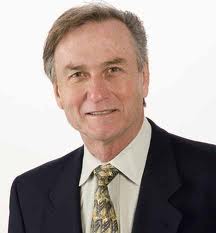
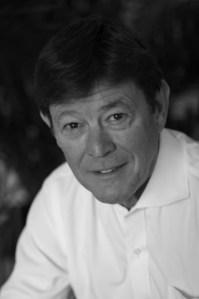
John McDougall, M.D.

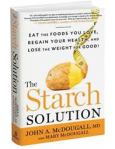
In the newsletter, he talks a lot about the “starch-based” diet that is featured in his new book, The Starch Solution. I am reading that book now and will be writing a review soon.

In the meantime, I want to tell you that the instructions regarding medications that you might want to share with your doctor—are the same for any version of the whole foods, plant-based diet style that you might choose.

Whether you’re following the advice of Fuhrman, Barnard, Esselstyn, Ornish or McDougall—they all promote the maximization of whole, plant-based foods in your diet. And they all have thousands of patients who have successfully reduced or eliminated their prescriptions after they shifted to the health-promoting diet.

But Dr. McDougall is the only one that has shared this kind of information with the public—in a format that makes it easy to share with your own physician. He begins with a few comments about medications in general:

How a patient feels about his/her medications is important: Many want off of them and others are afraid to stop them. The patient’s expectations must be considered seriously when the physician makes a decision. If unsure of the need for continued use of a medication, it is generally better to stop or reduce it (maybe slowly) and to observe the response.
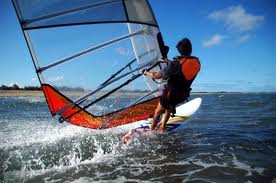
When not promoting the health of his patients, you can usually find Dr. McDougall engaged in his favorite sport.

He then goes on to say how he deals with his own patients when they are about to begin a major shift to a whole foods, plant-based diet. For your convenience, I have posted a portion of Dr. McDougall’s comments on five of the more common ailments. I encourage you to refer to his complete newsletter article at the link near the end of this  post.

1. Hypertension: Typically, I ask patients to stop all medications that are used to treat hypertension on the first day they start the diet. I may recommend a more gradual reduction if the patient’s initial blood pressure in the office is very high (for example 170/110 mmHg or greater) or the patient is on several different brands of medications. Either finding suggests the patient is more severely ill.

2. Type-2 Diabetes: Generally I stop all oral medications (pills) on the first day. If the patient is clearly type-2, I also stop all of his/her insulin on day one….If I am unsure about the patient’s insulin needs (in other words, significant insulin insufficiency may exist), then I am more conservative and cut their insulin dosage by one-half to two-thirds the first day. Type-1 diabetics will always need to take insulin, however, I usually reduce their insulin dosage by one-third with the initiation of the diet.

3. Cholesterol: Taking statins can result in greatly reduced cholesterol numbers. If these medications (statins) are stopped the first day when a patient starts the diet, then he/she will often be disappointed if their cholesterol goes up on the next test. For this reason I often leave them on their current dosage until after the second blood test. Then after the second blood test, they can see the extra cholesterol-lowering benefits of their new diet, and I will stop these medications (especially in otherwise healthy people). However, if they are not healthy—they have a history of serious heart disease, stroke, or other artery disease—I will continue the statins with a goal of lowering their cholesterol number below 150 mg/dl.

4. Indigestion: I usually stop the regular use of antacids on day one. I ask patients to take an antacid only as needed, and then to switch to the milder over-the-counter brands like Zantac or TUMS.

5. Laxatives: Generally these can be stopped and used only as needed. However, it is not unusual for patients to have hard stools from their previous eating habits when they begin their new diet.

What about supplements? I follow the simple advice of Dr. T. Colin Campbell and take a little B12 about twice a week and a little Vitamin D in the winter. That’s it.
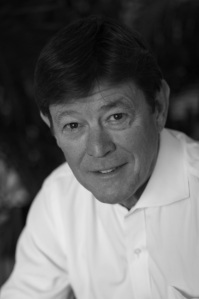
J. Morris Hicks, where the simple and clear advice will always be the same and summed up in two words: Whole Plants.

The Bottom Line. If you switch to a whole foods, plant-based diet, you’re going to soon be saying goodbye to most, if not all, of your current medications. This blog and the McDougall newsletter referenced below should help your current doctor understand what you’re doing.

If you’d rather deal directly with a medical doctor that “gets it” when it comes to plant-based nutrition, you might want to contact Dr. Michael Klaper—and tell him J. Morris Hicks sent you:

The following five books and one DVD can be purchased on Amazon for a grand total of less than $60—and will enable you to understand the overwhelming challenges we face—along with the single most-powerful solution of all.

Six-Pack from Hicks—for health, hope & harmony on planet Earth

  1. Healthy Eating, Healthy WorldThe “big picture” about food (our book)
  2. A life changer for millions, including James Cameron. Forks Over Knives DVD 
  3. An essential scientific resource: The China Study by Dr. T. Colin Campbell; the primary book that influenced Bill Clinton to adopt a whole food, plant-based diet.
  4. What have we done to our planet? Full Planet, Empty Plates by Lester Brown
  5. A horrifying wake-up call for leaders. TEN BILLION by Dr. Stephen Emmott
  6. Food choices are the primary cause of our environmental problems, yet our world leaders, scientists & experts are Comfortably Unawareby Richard Oppenlander.

Why should we be eating mostly plants? The “big picture” in 4 minutes.

Want to find out how healthy your family is eating? Take our free 4Leaf Survey. It takes 2 or 3 minutes and you can score it yourself. After taking the survey, please give me your feedback as it will be helpful in the development of our future 4Leaf app for smartphones. Send feedback to jmorrishicks@me.com

International. We’re now reaching people in over 100 countries. Follow us on Facebook and Twitter or get daily blog notices by “following” us in the top of the right-hand column. For occasional updates, join our periodic mailing list.

J. Morris Hicks, working daily to promote health, hope and harmony on planet Earth.

To order more of my favorite books—visit our online BookStore now

For help in your own quest to take charge of your health, visit our 4Leaf page and also enjoy some great recipes from Lisa’s 4Leaf Kitchen.

Got a question? Let me hear from you at jmorrishicks@me.com. Or give me a call on my cell at 917-399-9700.

—J. Morris Hicks, board member since 2012; click banner for more info:
Nutrition Certificate

Posted in M.D.s---Health-Promoting, Medical Experts, Prescription Drugs | Tagged | 2 Comments

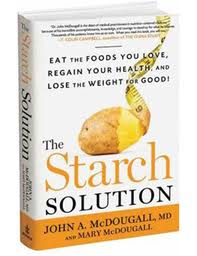
“The Starch Solution” by Dr. John McDougall—My review

Another beacon of information that will help to change the world

Click on book above to read other reviews and to purchase on Amazon.

Since I first began learning about plant-based nutrition in 2002, Dr. McDougall has been one of my heroes. I have learned a great deal from his many books and I attended one of his weekend programs in California a few years ago. His latest book, filled with powerful information, success stories and lots of great recipes—will help to open the eyes of millions of people.

Like the other four pioneering medical doctors featured in our book, he has demonstrated to the world that we should be eating a whole foods, plant-based diet. By eating mostly whole plants, we promote our own vibrant health and prevent or reverse most chronic diseases and do some wonderful things for the planet all at the same time.

Why does he call it starch-based? When you think about the typical western diet, you would call it meat-based. The main course is almost always some kind of meat or fish, and most Americans don’t even consider it a meal if that piece of meat is missing. But Dr. McDougall has known for a long time that the vast majority of the billions of humans that have lived on this plant have eaten very little meat. They have gotten the majority of their calories from the starchy food that was available in their region—whether it was potatoes, beans, grains, squash or some combination.

In this great book, he de-bunks the protein myth and the other myth about our need to limit our intake of starchy foods. He explains how we can get all the calories, protein, fiber and other nutrients from as few as one single plant—the potato (in Chapter 7). While he also recommends a broad array of fruits and green leafy vegetables, his main premise is that we should be eating essentially a starch-based diet.

J. Morris Hicks

It works for me. Some of the pioneering M.D.s may lean toward recommending more fruits and vegetables and less starches. But in my own case, I have ended up with a diet that is closest to what Dr. McDougall is recommending. I did quite a bit of experimenting in the early years from 2002 to 2004 when I was getting started—beginning with more vegetables and fruits and less starches.

In those early days of experimentation, I found that I would often get hungry between meals and began to gradually add more grains, legumes, and potatoes to my diet. Nowadays, almost every meal contains some kind of starch—just like Dr. McDougall is recommending in this book.

Different strokes for different folks. While I have gradually drifted to a starch-based diet myself, I really think it’s all a matter of individual preference. I know some very healthy fruitarians and raw food-ists out there who are very satisfied with their dietary preference. I also know that millions of people who have followed the dietary advice of Esselstyn, Barnard, Fuhrman and Ornish—have reversed their chronic diseases and enjoy vibrant health every day of their lives.

As for individual preference, we intentionally built as much flexibility into our 4Leaf Program as possible. We know that all five of these fine doctors agree with this simple statement by Dr. Campbell, “The closer we get to a whole foods, plant-based diet, the better off we will be.” So in our 4Leaf Program, we encourage people to shoot for 80% or more of their daily calories from whole plants.

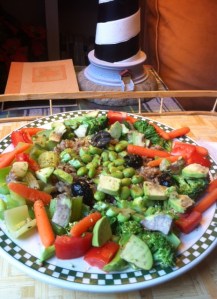
After writing my review, I enjoyed a “McDougall Style” starch-based lunch: beans, rice, carrots, broccoli, tomato, celery, olive, edamame and avocado.

The “big picture.” In Chapter 6, Dr. McDougall covers some widespread global issues that are driven by our ever-growing consumption of the western diet, beginning with our own health and the unsustainable cost of health care. He also covers such environmental issues as global warming, land damage, energy conservation and our ability to feed an ever-growing population. On page 71, he writes:

We are burning the candle at both ends, pushing the extremes of heat and cold, fire and ice. Without intervention, many scientists predict our planet Earth will become inhospitable to human life, and then to any form of life at all.

Answers to Questions. Part II does a great job of dispelling the “protein myth” and the “calcium myth” that most people have had drilled into their heads for their entire lives. He also covers the problems with seafood and points out why many vegans are fat and unhealthy. Like me, he is not a big fan of fake meats or cheeses.

Finally, Part III is chock full of information about how to make this diet-style successful in your home. It contains meal plans, recipes and a great chart on page 204 comparing the cost of fast foods to the bargain-basement cost of various starches. Example: $17.06 for 2500 calories of Taco Bell Chicken Salad compared to $1.52 for the same number of calories of brown rice.

I should point out that I think I found one omission on page 189. In his list of foods to avoid, he didn’t mention fish, although he had made his views very clear earlier—Don’t eat it!! He’ll probably add fish to that list in the second printing.

The Bottom Line. Excellent book that will resonate with millions of people who don’t want to give up the food they love. With this book, they’ll learn how to take charge of their health, enjoy their meals more than ever—while doing magnificent things for the environment—all at the same time.

Click here to purchase The Starch Solution on Amazon

Meet Dr. McDougall in person on YouTube

The following five books and one DVD can be purchased on Amazon for a grand total of less than $60—and will enable you to understand the overwhelming challenges we face—along with the single most-powerful solution of all.

Six-Pack from Hicks—for health, hope & harmony on planet Earth

  1. Healthy Eating, Healthy WorldThe “big picture” about food (our book)
  2. A life changer for millions, including James Cameron. Forks Over Knives DVD 
  3. An essential scientific resource: The China Study by Dr. T. Colin Campbell; the primary book that influenced Bill Clinton to adopt a whole food, plant-based diet.
  4. What have we done to our planet? Full Planet, Empty Plates by Lester Brown
  5. A horrifying wake-up call for leaders. TEN BILLION by Dr. Stephen Emmott
  6. Food choices are the primary cause of our environmental problems, yet our world leaders, scientists & experts are Comfortably Unawareby Richard Oppenlander.

Why should we be eating mostly plants? The “big picture” in 4 minutes.

Want to find out how healthy your family is eating? Take our free 4Leaf Survey. It takes 2 or 3 minutes and you can score it yourself. After taking the survey, please give me your feedback as it will be helpful in the development of our future 4Leaf app for smartphones. Send feedback to jmorrishicks@me.com

International. We’re now reaching people in over 100 countries. Follow us on Facebook and Twitter or get daily blog notices by “following” us in the top of the right-hand column. For occasional updates, join our periodic mailing list.

J. Morris Hicks, working daily to promote health, hope and harmony on planet Earth.

To order more of my favorite books—visit our online BookStore now

For help in your own quest to take charge of your health, visit our 4Leaf page and also enjoy some great recipes from Lisa’s 4Leaf Kitchen.

Got a question? Let me hear from you at jmorrishicks@me.com. Or give me a call on my cell at 917-399-9700.

—J. Morris Hicks, board member since 2012; click banner for more info:
Nutrition Certificate

Posted in M.D.s---Health-Promoting | 3 Comments

Preventive Care—what does that term mean to you?

Why not start with some hardball preventive information?

J. Morris Hicks on a sunset cruise from Watch Hill, Rhode Island back to Stonington, CT, on the last day of May, 2012.

The kind of information that has been proven to reverse chronic disease. I’m talking about the information people need to take charge of their health. We need to talk about the food.

I’m not talking about the “preventive care” things that cost money—the kinds of things featured in last week’s New York Times. That article is all about who pays for what and, if a treatment doesn’t have a price tag, it’s not even considered. Gina Kolata writes:

Could health care costs be reined in by improving access to preventive care? It’s an idea that appeals to policy makers and many public health experts, but the evidence for it is surprisingly hard to pin down.

Of course, preventing diseases is better than waiting for them to occur and then treating them. But there are questions about which diseases can actually be prevented, how effective preventive measures might be, and what they would cost.

We put some of these questions to Dana Goldman, director of the Schaeffer Center for Health Policy and Economics at the University of Southern California and founding editor of the Forum for Health Economics and Policy.

The NY Times article (see link below) is essentially a condensed interview between health writer Gina Kolata and Dana Goldman. And it’s all about spending money for prevention to save money on treatments. They talk a great deal about obesity and tobacco related illnesses which are only a drop in the bucket when you compare their costs to our total cost of healthcare in this country—representing only 7% of our $2.7 trillion cost of healthcare.

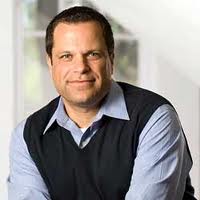
Dana Goldman

But Mr. Goldman did make a few good points during their discussion:

The C.D.C. estimates that 75 percent of health care spending is for chronic diseases that could be prevented.

We think of health care as an expense, but we really should be thinking of health care as an investment. We want to invest where we have the greatest return. I would put prevention in that bucket.

The point of health care reform was essentially to get people insurance. You could say that we would pay for what we really care about, which is health. But health care insurance has not succeeded in giving people health.

Gina Kolata, New York Times

Gina asked him if the term is wrong. “We call it health care, but should we instead call it disease care?” Goldman replied, “Yes. Disease care. I agree completely.”

The article misses the whole point. Although they did get a few things right—like calling our system “disease care,” for the most part, they’re missing the boat when it comes to real prevention. Improving access to preventive care? How about tackling preventive information first?

We won’t have to “pay” for anything if we simply get real clear about exactly what people should be eating to promote vibrant health. And we should start with all those agencies out there that are NOT doing that now.

If there were not a TON of money in our “disease care” system, all of these agencies listed here would be out of business.

Go to all of their websites. If you can find precise, non-contradictory information on exactly how to reverse heart disease or type 2 diabetes, I’ll buy you a new car. That information is not there; that’s because there’s no money to be made if everyone gets healthy.

  • The NIH (National Institutes of Health)
  • American Cancer Society
  • American Heart Association
  • American Diabetes Association

In HBO’s recent Weight of the Nation, there was absolutely ZERO clarity when it came to exactly what we should be eating. In the precious few minutes devoted to diet, they always threw in the “lean meats, fish and low-fat dairy” as part of a healthy diet. NOT. Gina continues:

The question should not be zero sum. We should invest where we make our highest returns. We should put our money wherever there is a very high positive return, and where there isn’t a high positive return, we should think hard about investing.

The bottom line. We desperately need clarity when it comes to what we should be eating and we’re not likely to get that clarity from a “system” whose livelihood depends on us being sick. Too often, our system thinks of prevention as screening—when, in fact, the screening does absolutely nothing to address the root causes of the disease. On the other hand, screening alone generates over $100 billion of revenue for our “disease care” system.

For your convenience, I have provided links to Gina’s NY Times article along with a few of my earlier blog posts on the topic of prevention.

Handy 3-piece take-charge-of-your-health kit—from Amazon.com

Want to find out how healthy your family is eating? Take our free 4Leaf Diagnostic Survey. It takes less than five minutes and you can score it yourself. After taking the survey, please give me your feedback as it will be helpful in the development of our future 4Leaf app for smartphones. Send feedback to jmorrishicks@me.com

International. We’re now reaching people in over 100 countries. Follow us on Facebook and Twitter or get daily blog notices by “following” us in the top of the right-hand column. For occasional updates, join our periodic mailing list.

To order more of my favorite books—visit our online BookStore now

J. Morris Hicks, working daily to promote health, hope and harmony on planet Earth.

For help in your own quest to take charge of your health, you might find some useful information at our 4Leaf page or some great recipes at Lisa’s 4Leaf Kitchen.

Got a question? Let me hear from you at jmorrishicks@me.com. Or give me a call on my cell at 917-399-9700.

SHARE and rate this post below.

Blogging daily at hpjmh.com…from the seaside village of Stonington, Connecticut – Be well and have a great day.

—J. Morris Hicks, board member, T. Colin Campbell Foundation

Posted in Prevention | Tagged , | Leave a comment