Coffee may help us live longer? (Recent Study)

Some good news about one of our bad habits

The Mystic, CT, Starbucks at sunrise — where I normally start my day and the site where a large portion of our book and my blog was created

Drinking coffee may not be as bad for our health as we thought. Until a recent NIH study published in the New England Journal of Medicine last month, any possible health benefits of drinking coffee were clouded by the fact that regular coffee drinkers are also more likely to:

  • Smoke cigarettes
  • Eat fewer fruits and vegetables
  • Exercise less
  • Drink more alcohol

But for those of us do eat lots of fruits & veggies, exercise often, drink moderately and don’t smoke—drinking coffee may actually help us live longer. As reported by the New York Times (See link below):

Once the researchers controlled for those risks (listed above), the data showed that the more coffee a person consumed, the less likely he or she was to die from a number of health problems, including diabetes, heart disease, respiratory disease, stroke, infections and even injuries and accidents.

Over all, the risk of dying during the 14-year study period was about 10 percent lower for men and about 15 percent lower for women who drank anywhere from two cups to six or more cups of coffee a day. The association between coffee and lower risk of dying was similar whether the coffee drinker consumed caffeinated or decaffeinated coffee.

Does this mean you should drink more coffee? Probably not. Since improving my diet-style in 2003, I have been what you would call a light coffee drinker, meaning that I only drink one small cup daily—right here where I publish my daily blog at the crack of dawn. And I will continue to be a light coffee drinker even though the risk of dying was lower for those who drank two to six or more cups a day.

While coffee may have some healthy antioxidants, this should continue to be your preferred source of all essential nutrients.

I remain convinced that what really makes me healthy is what we call our 4 leaves of health:

  1. Whole foods, plant-based diet
  2. Daily exercise
  3. Adequate rest (7 or 8 hours of sleep)
  4. A positive mental attitude

The Bottom Line. Drinking coffee may not be as bad as some thought. And, for me, maybe my daily cup of joe helps a little when it comes to that positive mental attitude. Finally, Howard Schultz (Starbucks CEO) must be pleased with this latest study.

Tall Pike, Black Please

As for Howard, I am sitting in his Mystic, CT, store at this moment—sparkling sunrise, Johnny Cash tunes in the background, and my solo cup of joe about halfway finished. Just last week, there was a great article in TIME about Schultz and how he keeps improving on his enduring business model. And this latest bit of news about coffee helping you live longer didn’t hurt his plan a bit. From that article:

Its future once looked tepid, but Starbucks has become a company that retail analysts say will likely double its footprint over the next two years, in part by replicating the coffee experience in other categories.

That article had one factoid that surprised me. Almost as many Americans (25%) get their coffee at Starbucks as they do at home (29%). And if you combine the top three sources of coffee (Starbucks, Dunkin’ Donuts and McDonalds), they account for a whopping 52% of all coffee consumed in the United States. Amazing.

In closing, have a nice day, enjoy your coffee and make a decision to really take charge of your health.

Handy 4-piece take-charge-of-your-health kit—from Amazon.com

Want to find out how healthy your family is eating? Take our free 4Leaf Diagnostic Survey. It takes less than five minutes and you can score it yourself. After taking the survey, please give me your feedback as it will be helpful in the development of our future 4Leaf app for smartphones. Send feedback to jmorrishicks@me.com

International. We’re now reaching people in over 100 countries. Follow us on Facebook and Twitter or get daily blog notices by “following” us in the top of the right-hand column. For occasional updates, join our periodic mailing list.

To order more of my favorite books—visit our online BookStore now

J. Morris Hicks, working daily to promote health, hope and harmony on planet Earth.

For help in your own quest to take charge of your health, you might find some useful information at our 4Leaf page or some great recipes at Lisa’s 4Leaf Kitchen.

Got a question? Let me hear from you at jmorrishicks@me.com. Or give me a call on my cell at 917-399-9700.

SHARE and rate this post below.

Blogging daily at hpjmh.com…from the seaside village of Stonington, Connecticut – Be well and have a great day.

—J. Morris Hicks, board member, T. Colin Campbell Foundation
Posted in Beverages (all) | Tagged , , | 3 Comments

For your friends and family with type 2 diabetes

Headlines change every day—but “confusion over clarity” remains constant.

“Diabetes Linked to Memory Problems in Older Adults.” That was the headline a few days ago. As someone who has blogged about health for 502 consecutive days, I can tell you that the headlines about disease change every day—yet the emphasis within the articles remains the same. Managing the disease.

Whether diabetes, osteoporosis, heart disease, or COPD—I have never seen a mainstream media article focus on preventing or reversing the disease. A few recent headlines:

  • “Sleep Apnea Linked to Cancer”
  • “Diabetes Linked to Heart Disease.”
  • “Cardiovascular Death Risk Linked With Living Alone”
  • “Psoriasis Linked to Type 2 Diabetes?”
  • “Obesity Linked to Just About Everything.”

In today’s featured New York Times article, they talk about a new study published in Archives of Neurology that suggests that diabetes problems may extend to the brain—causing memory “causing declines in memory, attention and other cognitive skills.” Then comes the money-making disease management. From the article: (See link below)

The more poorly managed their disease, the greater the deterioration in mental function. And the declines were seen not just in those with advanced diabetes. The researchers found that people who did not have diabetes at the start of the study but developed it later on also deteriorated to a greater extent than those without the disease.

“What we’ve shown is a clear association with diabetes and cognitive aging in terms of the slope and the rate of decline on these cognitive tests,” said Dr. Kristine Yaffe, a professor of psychiatry and neurology at the University of California, San Francisco. “That’s very powerful.”

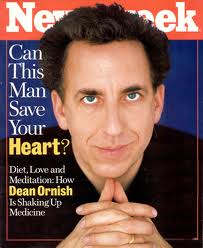
Dean Ornish, M.D. — appearing below with 4 other MDs who show you exactly how to reverse diabetes. See link below.

So what about all those other headlines about cancer, heart disease, stroke, diabetes, obesity and Alzheimer’s disease? How many of them are “linked” to food? What would happen to all of those diseases if everyone simply shifted to an optimal diet? Even some mainstream medical authorities are saying that most of our diseases are preventable, but rarely do they tell you exactly how to do it.

What about prevention or reversal? Although there is a mountain of clinical evidence attesting to the reversibility of some 95% of the cases of type 2 diabetes, there was zero mention of possible reversal of the disease in the article. But to be fair, there was one mention of prevention, “The findings suggest that more aggressive approaches to managing and especially preventing diabetes in midlife or before may help stave off mental declines in large segments of the population.”

No doubt you have family and friends with type 2 diabetes. I wonder how many of them know that the disease is easily reversible for most people. The article stated an alarming statistic, “Nationwide, nearly a third of Americans over the age of 65, or roughly 11 million people, have diabetes. By 2034, about 15 million Medicare-eligible Americans are expected to have the disease.”

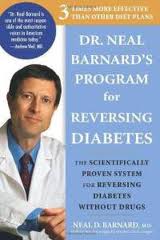
Dr. Neal Barnard wrote an entire book about reversing diabetes—and it’s nothing new.

But those predictions don’t have to come true. With more information, we can make a difference and help a lot of people avoid the pain and suffering associated with so many diseases. As Dr. Campbell explains in The China Study, the same diet that will reverse diabetes will also reverse heart disease, and will prevent cancer, osteoporosis and obesity.

For your convenience, I refer you to an earlier blog that I did on this topic in October of 2012. It features video clips from four medical doctors and begins with what Dr. Dean Ornish wrote on the cover of our book:

“What’s good for you is also good for our planet. Although heart disease and diabetes kill more people worldwide than all other diseases combined, these are completely preventable and often reversible for at least 95% of the people today by changing our diet and lifestyle. This book shows you how.”

Want to make a difference? Share this information with everyone that you think it might help. Reversing Type 2 Diabetes NOW; with video from 4 MDs

Forget about managing your disease. Get rid of it! The link above begins with a message from Dr. Ornish (consulting physician in the Clinton White House) and includes a total of ten minutes of video from four other medical doctors who’ve seen thousands of patients completely get rid of their diabetes. Also, for your convenience, here is a link to the New York Times article: Diabetes Linked to Memory Problems in Older Adults

Handy 4-piece take-charge-of-your-health kit—from Amazon.com

Want to find out how healthy your family is eating? Take our free 4Leaf Diagnostic Survey. It takes less than five minutes and you can score it yourself. After taking the survey, please give me your feedback as it will be helpful in the development of our future 4Leaf app for smartphones. Send feedback to jmorrishicks@me.com

International. We’re now reaching people in over 100 countries. Follow us on Facebook and Twitter or get daily blog notices by “following” us in the top of the right-hand column. For occasional updates, join our periodic mailing list.

To order more of my favorite books—visit our online BookStore now

J. Morris Hicks, working daily to promote health, hope and harmony on planet Earth.

For help in your own quest to take charge of your health, you might find some useful information at our 4Leaf page or some great recipes at Lisa’s 4Leaf Kitchen.

Got a question? Let me hear from you at jmorrishicks@me.com. Or give me a call on my cell at 917-399-9700.

SHARE and rate this post below.

Blogging daily at hpjmh.com…from the seaside village of Stonington, Connecticut – Be well and have a great day.

—J. Morris Hicks, board member, T. Colin Campbell Foundation

Posted in Alzheimer's Disease, Diabetes | Tagged , , | 1 Comment

How important is getting enough sleep?

Maybe a lot more than you know

Sleep, and the lack thereof, has been in the news this week. In two separate news stories, the lack of sleep was implicated as a possible cause of unhealthy eating & obesity as well as elevating the risk of stroke. From a Science Daily article (See link below):
Habitually sleeping less than six hours a night significantly increases the risk of stroke symptoms among middle-age to older adults who are of normal weight and at low risk for obstructive sleep apnea (OSA), according to a study of 5,666 people followed for up to three years.

Everyone knows that sleep plays a huge role in the way we feel. It also plays a key role in our health. In creating our 4Leaf Program, we wanted to keep things as simple as possible. Recognizing that optimal health was not only a function of food choices, we came up with what I call the “4 Leaves of Health: Food, Exercise, Mental Attitude, and Rest (Sleep). Without any one of these four leaves, I do not believe that one can achieve “vibrant health.

So how much sleep do we need? From the website of the National Sleep Foundation:

Sleep experts recommend a range of seven to nine hours of sleep for the average adult. While sleep patterns change as we age, the amount of sleep we need generally does not. Older people may wake more frequently through the night and may actually get less nighttime sleep, but their sleep need is no less than younger adults. Because they may sleep less during the night, older people tend to sleep more during the day. Naps planned as part of a regular daily routine can be useful in promoting wakefulness after the person awakens.

Back to the “4 Leaves of Health.” I also believe that each of them affects the other to a great degree:

  • Lack of sleep can result in unhealthy food choices, lessen your will to exercise and contribute to an overall less-positive mental attitude.
  • An unhealthy, toxic diet can affect affect the quality of our sleep, our physical performance and our overall mental attitude.
  • Lack of exercise also affects our digestive system, our mental attitude and our ability to routinely get a good night’s sleep.
  • Negative thinking, as we all know, can affect all of the above. Perhaps the most important leaf of all, our overall mental attitude provides the drive and the motivation to achieve vibrant health and enjoy a full and happy life.

As for the unhealthy food choices, a Science Daily article (link below) reported on two recent studies that were presented at the SLEEP Medicine Conference last week.

It seems that a loss of sleep can lead to dysfunction in appetite signaling in specific areas of the frontal lobe, which are responsible for making smart and informed decisions regarding food selection. This further adds to the ongoing link between sleep deprivation and obesity, suggesting that lack of sleep prevents people from making smart and healthy food choices.

A formula for enrichment in your life

The Bottom Line. Our 4Leaf philosophy on health can be summed up in one phrase that we all heard from our mothers when we were kids. Eat your veggies, get plenty of sleep and go outside and play. That pretty much covers all that we need. Here are the source articles for today’s blog.

In addition to my standard “healthy eating” kit shown below, there are two other books that are relevant to today’s post: one about being happy and the other about exercise and athletic performance.

Handy 4-piece take-charge-of-your-health kit—from Amazon.com

Want to find out how healthy your family is eating? Take our free 4Leaf Diagnostic Survey. It takes less than five minutes and you can score it yourself. After taking the survey, please give me your feedback as it will be helpful in the development of our future 4Leaf app for smartphones. Send feedback to jmorrishicks@me.com

International. We’re now reaching people in over 100 countries. Follow us on Facebook and Twitter or get daily blog notices by “following” us in the top of the right-hand column. For occasional updates, join our periodic mailing list.

To order more of my favorite books—visit our online BookStore now

J. Morris Hicks, working daily to promote health, hope and harmony on planet Earth.

For help in your own quest to take charge of your health, you might find some useful information at our 4Leaf page or some great recipes at Lisa’s 4Leaf Kitchen.

Got a question? Let me hear from you at jmorrishicks@me.com. Or give me a call on my cell at 917-399-9700.

SHARE and rate this post below.

Blogging daily at hpjmh.com…from the seaside village of Stonington, Connecticut – Be well and have a great day.

—J. Morris Hicks, board member, T. Colin Campbell Foundation

Posted in 4Leaf for Life, Vibrant health | Tagged , | 1 Comment