Managing “risk factors” and reducing “serving sizes”…

As we continue eating the wrong food.

Our entire health care system is based on managing risk factors and the party line for reducing our obesity problem is reducing serving sizes and caloric intake. Neither is ever going to work. Even worse, they both distract us from recognizing the primary driver of practically all of our health-related problems: we’re eating the wrong food.

“The bigger the pie, the more we get.”

The inspiration for this blog. I received a message from a reader offering me information about serving sizes around the world and how that is driving our obesity crisis. It was actually an attempt on his part to get my readers to visit his employer’s website—a health insurance company. That’s a huge red flag. Why?

Because the health insurance companies would be out of business if everyone got healthy. As an insurance rep explained to Dr. John McDougall long ago.

“You don’t understand the business. In the world of health care; we, the insurance company, get a piece of the pie. And the bigger the pie, the more we get.”

That one statement speaks volumes about what’s wrong with our health care system in this country. No one has a financial incentive for us to get healthy. The insurance business is all about risk. If there is no risk, then there is nothing to insure—and their reason for being simply disappears. The “pie” is our $2.7 trillion cost of health care in the USA.

Serving Sizes. So that’s why insurance companies spread around all the confusing information about serving sizes. They know that a confused consumer is a sick consumer and that’s what they need to make money. And as long as we’re eating the toxic western diet, asking people to reduce their serving sizes is simply not going to work. But it creates the illusion that the insurance companies are trying to help us get healthy.
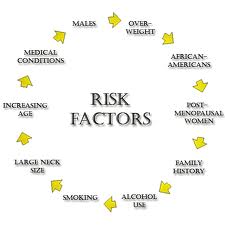
Ten risk factors for “sleep apnea”

Managing risk factors. Within our vast medical system, the name of the game is managing risk factors, which oftentimes means taking prescription drugs to help keep your risk low for various diseases. The message that they want the consumer to hear is that if they control (or have none) all those risk factors, that they can continue to eat whatever they want.

In an earlier blog, I wrote about the fact that we now have 12,000 documented diseases. With an average of ten risk factors each, that means that all we need to do is keep track of 120,000 risk factors, watch our serving sizes and we’ll be fine. NOT. The simple fact is that all of this confusing information on every “disease specific” website in the world can be replaced by two words: Whole Plants.

If we simply shift to a diet of mostly whole plants, we’ll be able to eliminate two trillion dollars worth of our nation’s cost of health care. But that would mean the loss of about 20 million jobs; and of course our health insurance industry would shrink by 80 percent.
As for all those risk factors that we’re supposed to manage, our esteemed medical system doesn’t even tell us about the most dangerous risk factors of all. Example: the American Heart Association has a list of risk factors for heart disease on their website. Our toxic diet is not even among the top ten.

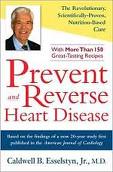
Do they not know that Dr. Caldwell Esselstyn of the Cleveland Clinic has successfully reversed heart disease in over 95% of his patients? And the only thing he changed was their diet.

The Bottom Line. Our extended health care system (medical and insurance) is built on a foundation of confusion. And that maintains the status quo, which means a lot of money in their pockets. If we all get healthy, they’ll be out of business.

Handy 4-piece take-charge-of-your-health kit—from Amazon.com

Want to find out how healthy your family is eating? Take our free 4Leaf Diagnostic Survey. It takes less than five minutes and you can score it yourself. After taking the survey, please give me your feedback as it will be helpful in the development of our future 4Leaf app for smartphones. Send feedback to jmorrishicks@me.com

International. We’re now reaching people in over 100 countries. Follow us on Facebook and Twitter or get daily blog notices by “following” us in the top of the right-hand column. For occasional updates, join our periodic mailing list.

To order more of my favorite books—visit our online BookStore now

J. Morris Hicks, working daily to promote health, hope and harmony on planet Earth.

For help in your own quest to take charge of your health, you might find some useful information at our 4Leaf page or some great recipes at Lisa’s 4Leaf Kitchen.

Got a question? Let me hear from you at jmorrishicks@me.com. Or give me a call on my cell at 917-399-9700.

SHARE and rate this post below.

Blogging daily at hpjmh.com…from the seaside village of Stonington, Connecticut – Be well and have a great day.

—J. Morris Hicks, board member, T. Colin Campbell Foundation
Posted in Activism & Leadership | 2 Comments

How important is checking your cholesterol levels?

That depends on a number of factors.

The study began in 1948. The original cohort included 5209 people and continued through 2011.

We know from the Framingham Heart Study that no one (in the study’s cohort) with a total cholesterol score below 150 has ever died of heart disease. Armed with that number, Dr. Esselstyn decided to make sure that all of his patients got their total cholesterol below 150—primarily through diet. He instructed them to eliminate ALL animal products and other very high-fat, plant-based products like oil, avocado and nuts. If a patient was still over 150, he prescribed a mild statin drug.

But what about a guy like me? A guy that has taken charge of his own health and only goes to the doctor for emergencies? A note from a reader in the UK inspired me to address these questions in this blog. She wrote:

When I started eating the Esselstyn way after seeing the Clinton clip, I was doing it to lower my cholesterol.  I was already in very good health before I started and had been surprised to find my cholesterol quite high.  So I gave up the oil first then, after the China Study had convinced me, I gave up the eggs, fish and yogurt that I had been eating, switched my milk to soy, and simply ate more of the whole grains, pulses and vegetables that I was already eating.  I found it easy to go whole foods, plant-based because I was already eating many whole foods.

In terms of my cholesterol just stopping; the oil had a dramatic effect and I also lost a few pounds. But my point is that I have enjoyed vibrant health all along.  Having raised cholesterol is not something we notice unless we go for a test.

Point taken. Here’s the way I see it. As you may know, I quit going to the doctor on a regular basis about ten years ago. But being curious about cholesterol, I have found ways to learn my score without going to the doctor. The first way is through the American Red Cross, to which  I have donated blood about once a year. If you ask them for your total cholesterol score, they will send it to you in the mail. It takes about a week—for free. They also check your blood pressure and pulse, which you get on the day they draw the blood.

This is the “FirstCheck” kit that we used to measure our total cholesterol.  (Jason calls me Bud and, as you can see, his TC is lower than mine, 120 to 160)

The second way is a home test kit. Recently, my son and I bought one at the drug store and checked our own total cholesterol at his kitchen table. You can read about that test in a blog that I posted a few days after Christmas. In the quest for “vibrant health,” weight-loss is just a bonus. There is also a similar home test kit for checking your diabetes numbers. Both are included in the referenced blog in this paragraph.

So what about going to the doctor? Now that I have found convenient ways to check things like cholesterol and blood pressure, I see no reason to go to the doctor except for emergencies, like when I ruptured my Achilles tendon playing tennis on a grass court for the first time.

Not only am I not going to the doctor anymore, I have also quit checking my cholesterol, my weight or anything else. My diet is consistently at the 4Leaf level so there’s no reason to keep checking things that always remain fairly constant. Another one is my weight.

The “4Leaf level” means getting over 80% of my total calories from whole plants. Visit 4leafprogram.com for more information.

What about the routine colonoscopy for people over fifty? No thanks. My bottom line is this. Over the past decade of eating a near-optimal diet, I have taken charge of my health and I trust my body to tell me when something is wrong. Besides, even if I was tested and knew that I had cancer, I would never let them do the “slash, burn and poison” thing on me.

Disclaimer. Please understand that I am not making any recommendations in this blog on this topic. I am simply sharing my story and my opinion. As stated inside the cover of our book:

The author of this blog or the “Healthy Eating – Healthy World” book is not rendering professional advice or services to the individual reader. The ideas, suggestions and procedures on this blog are not intended as a substitute for consulting with a physician. All matters of health require medical supervision. The author will not be responsible for any loss or damage allegedly arising from any information or suggestion on this blog.

Handy 4-piece take-charge-of-your-health kit—from Amazon.com

Want to find out how healthy your family is eating? Take our free 4Leaf Diagnostic Survey. It takes less than five minutes and you can score it yourself. After taking the survey, please give me your feedback as it will be helpful in the development of our future 4Leaf app for smartphones. Send feedback to jmorrishicks@me.com

International. We’re now reaching people in over 100 countries. Follow us on Facebook and Twitter or get daily blog notices by “following” us in the top of the right-hand column. For occasional updates, join our periodic mailing list.

To order more of my favorite books—visit our online BookStore now

J. Morris Hicks, working daily to promote health, hope and harmony on planet Earth.

For help in your own quest to take charge of your health, you might find some useful information at our 4Leaf page or some great recipes at Lisa’s 4Leaf Kitchen.

Got a question? Let me hear from you at jmorrishicks@me.com. Or give me a call on my cell at 917-399-9700.

SHARE and rate this post below.

Blogging daily at hpjmh.com…from the seaside village of Stonington, Connecticut – Be well and have a great day.

—J. Morris Hicks, board member, T. Colin Campbell Foundation
Posted in 4Leaf for Life, Heart Disease | 7 Comments

So now they tell us…about “secondary cancers.”

Those are the ones caused by the “treatment” of primary cancers.

Robin Roberts

And guess what? These so called “secondary cancers” now make up the sixth-most common group of malignancies—according to a 7-16-12 New York Times article (See link below). It was written by a survivor of testicular cancer who teared up while watching Robin Roberts talk about her cancer ordeal on television last month. He wrote:

Watching Robin Roberts tear up in front of millions of viewers on “Good Morning America” last month, I cried, too.

With equal measures of courage and fear, Ms. Roberts, an anchor of the show and a breast cancer survivor, explained that the life-saving treatment she received five years ago was responsible for a new diagnosis, this time myelodysplastic syndrome (MDS), a rare blood and bone marrow disease once called preleukemia.

MDS is a potentially fatal condition that can be caused by radiation and chemotherapy, both of which Ms. Roberts had in her initial cancer treatment. In medical-speak, it’s a “secondary cancer.”

The article continues: 

Secondary cancers now make up the sixth-most-common group of malignancies, in part because more survivors are living longer. Physicians are better at limiting toxicity from radiation and chemotherapy, so fewer people die from the effects of treatments. The bad news: More people are surviving their original cancers only to be haunted by the prospect of new diagnoses later.

President Richard Nixon signs the National Cancer Act on December 23, 1971.

Earlier this week, I published a blog about the huge cancer industry that has evolved in our country over the past 41 years. President Richard Nixon famously announced our nation’s “war on cancer” in 1971, back when the cost of health care (as a percent of GDP) was far less than ten percent. Now it is close to 20% and is expected to be over 30% by 2035. And  the out-of-control growth of our “cancer industry” is one of the primary reasons.

In my earlier blog (See link below), I explained that our “war on cancer” has now lasted seven years longer than the all of America’s military wars combined—since we won our independence in 1783. Sooner or later, we’re going to have to start telling our citizens about the primary driver of all cancers—our toxic western diet. Otherwise, these sad stories will continue. The author concludes…

For the nearly 14 million cancer survivors, including Ms. Roberts and me, life is a roller coaster of a ride knowing that the treatments administered to us may one day exact a heavy price. Neither the reprieve nor the freedom it brings is permanent — but with more awareness of these mental health issues and new therapeutic interventions, doctors and patients are much better equipped than ever before to fight these demons.

The greatest gift to your children—teaching them how to take charge of their health. Four of my five grandchildren; poolside in Massachusetts.

Meanwhile, at the epicenter of our nation’s “war on cancer” (The American Cancer Society), they continue to pay the CEO over one million dollars a year and spend most of their billions in revenue on administrative expenses. Please see my “war on cancer” blog along with the New York Times source article below:

The Bottom Line. We must begin focusing on eliminating the cause of cancer. Placing all the emphasis on early detection and treatment leads to a miserable experience for millions of patients and it’s bankrupting our nation. It may be too late to protect or reverse cancer for some of us adults, but it’s not too late for our children and grandchildren. Give them the greatest gift of life; teach them how to take charge of their own health while they’re young. 

Handy 4-piece take-charge-of-your-health kit—from Amazon.com

Want to find out how healthy your family is eating? Take our free 4Leaf Diagnostic Survey. It takes less than five minutes and you can score it yourself. After taking the survey, please give me your feedback as it will be helpful in the development of our future 4Leaf app for smartphones. Send feedback to jmorrishicks@me.com

International. We’re now reaching people in over 100 countries. Follow us on Facebook and Twitter or get daily blog notices by “following” us in the top of the right-hand column. For occasional updates, join our periodic mailing list.

To order more of my favorite books—visit our online BookStore now

J. Morris Hicks, working daily to promote health, hope and harmony on planet Earth.

For help in your own quest to take charge of your health, you might find some useful information at our 4Leaf page or some great recipes at Lisa’s 4Leaf Kitchen.

Got a question? Let me hear from you at jmorrishicks@me.com. Or give me a call on my cell at 917-399-9700.

SHARE and rate this post below.

Blogging daily at hpjmh.com…from the seaside village of Stonington, Connecticut – Be well and have a great day.

—J. Morris Hicks, board member, T. Colin Campbell Foundation

Posted in Cancer, Children | Tagged | Leave a comment