
Just saying NO to testing (most of the time)
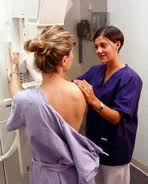 How much testing is needed? It depends on who you ask. My ideal number of tests each year is zero—and that goes for both kinds of medical tests: routine screening and diagnostic tests. A recent (11-28-12) article in the New York Times (See link below) inspired me to post this blog; it led off:
It is no longer news that Americans, and older Americans in particular, get more routine screening tests than they need, more than are useful. Prostate tests for men over 75, annual Pap smears for women over 65 and colonoscopies for anyone over 75 — all are overused, large-scale studies have shown. Now it appears that many older patients are also subjected to too-frequent use of the other kind of testing, diagnostic tests.
The difference, in brief: Screening tests are performed on people who are asymptomatic, who aren’t complaining of a health problem, as a way to detect incipient disease. We have heard for years that it is best to “catch it early” — “it” frequently being cancer — and though that turns out to be only sometimes true, we and our doctors often ignore medical guidelines and ongoing campaigns to limit and target screening tests.
Diagnostic tests, on the other hand, are meant to help doctors evaluate some symptom or problem. “You’re trying to figure out what’s wrong,” explained Gilbert Welch, a veteran researcher at the Dartmouth Institute for Health Policy and Clinical Practice.
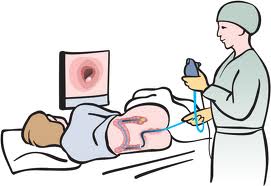
While this procedure may be right for millions, I decided that it was not right for me.
Why have I chosen to have no tests? I used to have tests occasionally, although not nearly as often as the average person; probably because I never went to the doctor very often unless I had a problem.
And I always dreaded the day when I would have to have my first colonoscopy. Well, that day never came. I cruised on by my 50th and 55th birthdays and just never got around to it.
Then, luckily for me, I started learning all about how I could take charge of my own health at age 57. In 2002, I began learning that most chronic diseases can be prevented, stopped or even reversed, if we simply eat an optimal whole foods, plant-based diet. And that includes cancer, heart disease, diabetes, osteoporosis and a host of others.
Armed with that newfound knowledge (that most physicians do not have), I concluded that it didn’t make sense for me to ever have any routine screening. Mainly because I was already pretty darn sure that I would have never followed the recommended treatment paradigm even if I were diagnosed with colon cancer.
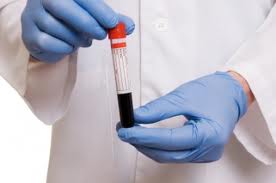
PSA Testing for Prostate Cancer
Diagnostic testing is a different story. If I were to begin suffering from some inexplicable malady, I would eventually want to have someone check it out. But I would seek out a physician who would be most likely to choose the least invasive treatment possible. I would follow the advice that I recently gave a friend. (See second link below for that blog.)
I told her that I had decided long ago what I would do if I had a serious medical condition. I would call the same people that Dr. T. Colin Campbell has called a few times. That would be the professional team at TrueNorth Health Center, Santa Rosa, California. From their website:
TrueNorth Health Center was founded in 1984 by Drs. Alan Goldhamer and Jennifer Marano. The integrative medicine approach they established offers participants the opportunity to obtain evaluation and treatment for a wide variety of problems. The staff at TrueNorth Health Center includes medical doctors, osteopaths, chiropractors, naturopaths, psychologists, research scientists, and other health professionals. The Center is now the largest facility in the world that specializes in medically supervised water-only fasting.
The Bottom Line. Once someone has been eating a health-promoting, whole foods, plant-based diet for more than five years, I really don’t think routine screening for chronic disease makes much sense. I know it doesn’t for me as I explained above.
As for diagnostic tests, the longer we consume an optimal diet, exercise, get adequate rest and have a positive mental attitude—the less frequently we’re ever going to develop a condition that might warrant such a test.
 One more thing, in an earlier blog, I reported on a great idea for an innovative insurance business paradigm—by Dr. John McDougall. One of its features was that FAR fewer tests of all kinds would even be covered. Click on the third link below for more on this topic (includes a Dr. McDougall video). —My 665th consecutive daily blog—
- Source article. Doctor’s Orders? Another Test – NYTimes.com.
- Earlier blog. No medical advice here — just life-saving referrals
- Earlier blog. Health insurance of the future; an idea that can work.
- Earlier blog. Screening for cancer…a very big business
Handy 4-piece take-charge-of-your-health kit—from Amazon.com
- The movie that’s changing the lives of millions: Forks Over Knives DVD
- Healthy Eating, Healthy World, The “big picture” about food (our book)
- An essential scientific resource: The China Study by Dr. T. Colin Campbell
- Dr. McDougall’s new book, The Starch Solution, with lots of great recipes.
Want to find out how healthy your family is eating? Take our free 4Leaf Diagnostic Survey. It takes less than five minutes and you can score it yourself. After taking the survey, please give me your feedback as it will be helpful in the development of our future 4Leaf app for smartphones. Send feedback to jmorrishicks@me.com

 International. We’re now reaching people in over 100 countries. Follow us on Facebook and Twitter or get daily blog notices by “following” us in the top of the right-hand column. For occasional updates, join our periodic mailing list.
To order more of my favorite books—visit our online BookStore now

J. Morris Hicks, working daily to promote health, hope and harmony on planet Earth.
For help in your own quest to take charge of your health, you might find some useful information at our 4Leaf page or some great recipes at Lisa’s 4Leaf Kitchen.
Got a question? Let me hear from you at jmorrishicks@me.com. Or give me a call on my cell at 917-399-9700.
SHARE and rate this post below.
Blogging daily at hpjmh.com…from the seaside village of Stonington, Connecticut – Be well and have a great day.
—J. Morris Hicks, board member, T. Colin Campbell Foundation
 Reuters reported on 11-20-12 that atmospheric volumes of greenhouse hit a new record in 2011. There were lots of numbers describing the problem but precious little describing the solution.
 BUT. The scientists who do all these studies and report on the problems are among the vast majority of highly educated and well-meaing professionals

 J. Morris Hicks, engineer. writer. big picture guy.