

Latest study supported by the Gates Foundation
A new report from a major international study shows that people are living longer all over the world—although the rate of improvement in the United States has stagnated when compared to other countries. Of course, we’d expect some of that stagnation as things like sanitation, malnutrition and infectious diseases are brought under control.
But you wouldn’t expect for the United States to rank 36th in life expectancy (for American women) compared to 22nd in 1990. Everyone knows that we spend far more on health care than any other country, yet our life expectancy lags far behind other nations. The simple answer to that dilemma is that heart disease, cancer and diabetes are now accounting for a greater percentage of deaths—and we have a horrible track record in all three.
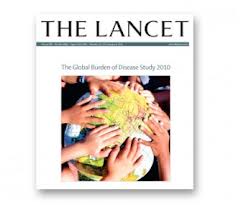 Let’s take a look at the data. Have you heard about the newly released Global Burden of Disease Study? Health experts from more than 300 institutions contributed to the report, which provided estimates of disease and mortality for populations in more than 180 countries. It was published in The Lancet, a British medical journal. From The Lancet Journal (to which you may subscribe for free, see link below):
Publication of the Global Burden of Disease Study 2010 (GBD 2010) is a landmark event for this journal and, we hope, for health. The collaboration of 486 scientists from 302 institutions in 50 countries has produced an important contribution to our understanding of present and future health priorities for countries and the global community.
What is the GBD 2010? Launched in 2007, it is a consortium of seven partners:Harvard University; the Institute for Health Metrics and Evaluation (IHME) at the University of Washington, Seattle; Johns Hopkins University; the University of Queensland; Imperial College London; the University of Tokyo; and WHO. GBD 2010 is the first systematic and comprehensive assessment of data on disease, injuries, and risk since 1990. That initial exercise was commissioned by the World Bank. This latest round was supported by the Bill & Melinda Gates Foundation. The project has dramatically expanded in scope. In 1990, 107 diseases and injuries, together with ten risk factors, were assessed. For 2010, 235 causes of death and 67 risk factors are included.
 What can you learn from this huge study? From the New York Times article (see link below), here are some of the findings that caught my attention:
- Far more of the world’s population is now living into old age and dying from diseases mostly associated with rich countries, like cancer and heart disease.
- Chronic diseases like cancer now account for about two out of every three deaths worldwide, up from just over half in 1990.
- Eight million people died of cancer in 2010, 38 percent more than in 1990.
- Diabetes claimed 1.3 million lives in 2010, double the number in 1990.
- In 2010, 43 percent of deaths in the world occurred at age 70 and older, compared with 33 percent of deaths in 1990.
- American women registered the smallest gains in life expectancy of all high-income countries’ female populations between 1990 and 2010.
- Rising rates of obesity among American women and the legacy of smoking, a habit women formed later than men, are among the factors contributing to the stagnation.
- Globally, AIDS was an exception to the shift of deaths from infectious to noncommunicable diseases. The epidemic is believed to have peaked, but still results in 1.5 million deaths each year.
- Tobacco use is a rising threat, especially in developing countries, and is responsible for almost six million deaths a year globally. Illnesses like diabetes are also spreading fast.
The Bottom Line. Lifestyle habits are now the leading contributor to death around the world and will continue to command a larger share. Directly from the New York Times article; I could not have said it better myself:
Over all, the change means people are living longer, but it also raises troubling questions. Behavior affects people’s risks of developing cancer, heart disease and diabetes, and public health experts say it is far harder to get people to change their ways than to administer a vaccine that protects children from an infectious disease like measles.
 The blinding flash of the obvious solution to bringing unnecessary adult mortality under control is to address the root causes of of chronic disease.
We must eventually start telling everyone EXACTLY what they should be eating to take charge of their health. Since our government and our “health care system” will not be doing that anytime soon, we must take action ourselves. See the handy 4-part kit below. —My 692nd consecutive daily blog—
- Source article. World’s Population Living Longer, New Report Suggests–NY Times
- Source article. Lancet: Global Burden of Disease Study 2010 (187 countries) Subscribe to Lancet for free.
Handy 4-piece take-charge-of-your-health kit—from Amazon.com
- The movie that’s changing the lives of millions: Forks Over Knives DVD
- Healthy Eating, Healthy World, The “big picture” about food (our book)
- An essential scientific resource: The China Study by Dr. T. Colin Campbell
- Dr. McDougall’s new book, The Starch Solution, with lots of great recipes.
Want to find out how healthy your family is eating? Take our free 4Leaf Diagnostic Survey. It takes less than five minutes and you can score it yourself. After taking the survey, please give me your feedback as it will be helpful in the development of our future 4Leaf app for smartphones. Send feedback to jmorrishicks@me.com

 International. We’re now reaching people in over 100 countries. Follow us on Facebook and Twitter or get daily blog notices by “following” us in the top of the right-hand column. For occasional updates, join our periodic mailing list.
To order more of my favorite books—visit our online BookStore now

J. Morris Hicks, working daily to promote health, hope and harmony on planet Earth.
For help in your own quest to take charge of your health, you might find some useful information at our 4Leaf page or some great recipes at Lisa’s 4Leaf Kitchen.
Got a question? Let me hear from you at jmorrishicks@me.com. Or give me a call on my cell at 917-399-9700.
SHARE and rate this post below.
Blogging daily at hpjmh.com…from the seaside village of Stonington, Connecticut – Be well and have a great day.
—J. Morris Hicks, board member, T. Colin Campbell Foundation

 Can it get any worse?
 From Wikipedia on the common cold. It is the most frequent infectious disease in humans with the average adult contracting two to three colds a year and the

 Last week, Charles Blow of the New York Times shared some raw, international data about guns, violence and death in his column. (See chart and link to article below)
 The Bottom Line. We’re not facing the facts when it comes to gun control and we’re not facing the facts when it comes to our food—and millions of cases of needless disease and death are the result.
 J. Morris Hicks, engineer. writer. big picture guy.