Foreword to our book—by T. Colin Campbell and son Nelson

For the last few days of my 737 daily streak, I want to revisit our book, Healthy Eating, Healthy World. While driving to Ithaca this past week to work with Dr. Campbell, I decided to listen to our book on Audio, something I hadn’t done in over a year. While listening to the Foreword, I was thinking: What is missing in our book? What would I add now if I could?

I am going to answer that question on Monday, February 11. But, meanwhile, I am going to share the Foreword with you today. Later this weekend, I will share the Introduction (that I wrote).

Foreword By T. Colin Campbell, PhD, and Nelson Campbell
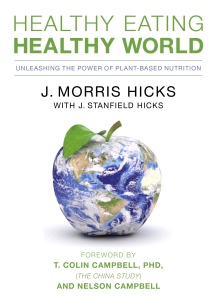
Dr. Dean Ornish wrote the cover endorsement----and we filled the entire book with  a heavy dose of "big picture" CLARITY.

Dr. Dean Ornish wrote the cover endorsement—-and we filled the entire book with a heavy dose of “big picture” CLARITY.

Most of us live apart from Nature, within artificially constructed environments that bear little resemblance to the mountains, meadows, forests and streams experienced by our ancestors. And living apart from Nature, we too often forget that we are part of an interconnected whole.

No matter how hard we try, however, we cannot escape this fact forever. We can construct our material world and engage in individualistic pursuits, but eventually must face the fact that we do not live on islands. We are connected to one another and to the larger natural world of which we are still a part.

There may be no better illustration of this truth than the way we eat. The decision of what to put at the end of our fork is a private decision and one that seems to have no relevance beyond the edges of our dinner plate. But the truth is this: the effects of what we eat ripple round and round the world . . . and this is the story of “Healthy Eating, Healthy World” by J. Morris Hicks.

When Jim approached us about writing the foreword for this book, we did not hesitate to answer his call. Jim is a good friend, but more than a friend—he is an intelligent man whose life experiences have prepared him well for this moment. Trained as a strategy and process improvement consultant, he has spent much of his professional career helping organizations understand and improve the quality of their operations, services and products. He is trained to see the world from a “big picture” systems perspective, so it was not hard for him to grasp the interconnections between what we eat and our broader world and how we might make changes within this system to improve the quality of our lives.

Too often in a field of study, we rely solely on those people who have established themselves as the inside “experts.” Yet, sometimes the most interesting perspectives are those that come from outside the field. And this is the case here—Jim’s perspective has enabled him to tell a story in Healthy Eating, Healthy World that is informative, engaging, and compelling.

While told from a “systems” perspective, this story also is one of personal empowerment. As it turns out, what is best for the system is also best for our individual health. When we consume a whole food plant-based diet, with minimal additions of fat, salt, sugar and other refined ingredients, we optimize a larger system encompassing economics, politics, and the environment, while also optimizing the internal system that gives us life.
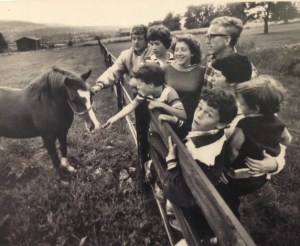
This picture of the Campbell family appeared in

This picture of the Campbell family appeared in People Magazine circa 1982. That is Nelson in the upper left; Colin was in his mid-forties at the time. The co-author of The China Study (Dr. Tom Campbell), is in his mother’s arms.

This is a powerful idea with a bright future. The idea that we can control our health largely by what we eat offers a bright light within a seemingly dimly lit world. We often feel out of control, not always because we are out of control, but because the world we live within feels increasingly out of control. So the idea that we can take charge of what is most precious to us, our personal well-being, is a powerful idea indeed.

And many of us are more open to transformative social change than ever before. Population growth, rapid technological development, environmental destruction, and increasing economic and political control in the hands of people who have forgotten the old-fashioned idea of civic virtue, all have propelled us to a point in human history where the acceptable margin for error has become a thin line. There is an urgency that exists today that did not exist in years past, and it is this sense of urgency that will open people to the story of this book.

J. Morris Hicks and his son have put together an interesting tale that will enlighten you while also giving you great hope. The message of plant-based nutrition already has transformed many lives, including the life of this management consultant and former senior corporate executive. Not only has he put himself and his family on a path to optimal health, he has also become so passionate about the idea that he has launched a new career to share this good news with others. That new career features a blend of speaking, blogging, consulting and writing—all beginning with this powerful book that you hold in your hands.

—T. Colin Campbell, PhD, and Nelson Campbell

Dr. T. Colin Campbell, author of “The China Study,” is the world’s foremost science expert in the field of plant-based nutrition and is working with his son, Nelson, who is coordinating an effort to develop and implement a strategy for promoting the message of plant-based nutrition into the mainstream.

Want to buy a copy of  Healthy Eating, Healthy World in paperback, Kindle or Audio? Click here for the Amazon page. Over 90% of the reviews on Amazon scored our book at 5 Stars out of 5.

On Saturday, February 11, I posted the entire Introduction to our book (written by J. Morris Hicks)
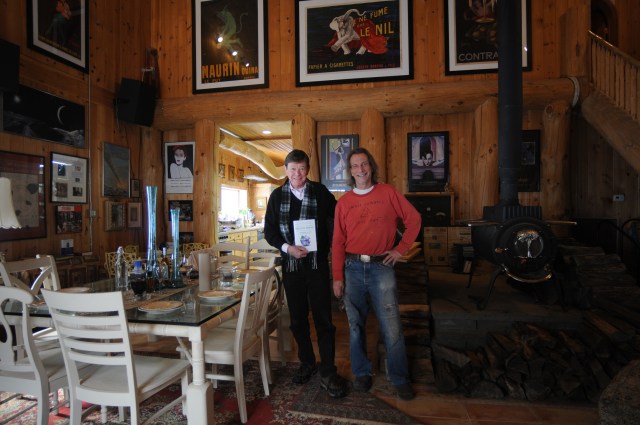
After leaving Ithaca this past Thursday, I stopped by Casper Farms for a bite to eat with owner, Michael Casper.

After leaving Ithaca this past Thursday, I stopped by Casper Farms for a bite to eat with owner, Michael Casper.

After my visit on 2-7-13, Michael was kind enough to re-post an earlier review of our book in his blog. Click here to take a look. 
Consecutive daily blogs

Consecutive daily blogs

My daily streak will end on February 11 with my 737th consecutive daily blog. But don’t worry—hpjmh.com will NOT be going dark. My plan is that it will be around for a very long time—hopefully long after I am gone. In the meantime, I will continue blogging, updating and adding pages that will focus on my mission of promoting health, hope and harmony on planet Earth.

Want to help support our mission? Click here for a few ideas

Handy 4-piece take-charge-of-your-health kit—from Amazon.com

Want to find out how healthy your family is eating? Take our free 4Leaf Diagnostic Survey. It takes less than five minutes and you can score it yourself. After taking the survey, please give me your feedback as it will be helpful in the development of our future 4Leaf app for smartphones. Send feedback to jmorrishicks@me.com

International. We’re now reaching people in over 100 countries. Follow us on Facebook and Twitter or get daily blog notices by “following” us in the top of the right-hand column. For occasional updates, join our periodic mailing list.

To order more of my favorite books—visit our online BookStore now

J. Morris Hicks, working daily to promote health, hope and harmony on planet Earth.

For help in your own quest to take charge of your health, you might find some useful information at our 4Leaf page or some great recipes at Lisa’s 4Leaf Kitchen.

Got a question? Let me hear from you at jmorrishicks@me.com. Or give me a call on my cell at 917-399-9700.

Blogging daily at hpjmh.com…from the seaside village of Stonington, Connecticut – Be well and have a great day.

—J. Morris Hicks, board member, T. Colin Campbell Foundation
Posted in Uncategorized | 3 Comments

Osteoporosis added to “Diseases” tab alphabetical listing

Osteoporosis is most prevalent in countries that consume the most dairy.

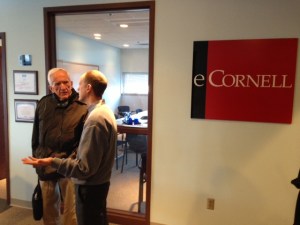
Dr. Campbell and Chris Proulx, the CEO of eCornell in Ithaca, NY

Dr. Campbell and Chris Proulx, the CEO of eCornell

And it’s almost non-existent in cultures who eat mostly whole plants. The simple answer to osteoporosis is the consumption of a whole foods, plant-based diet.

Today’s blog was posted in Ithaca, NY, where I have been working this week with our T. Colin Campbell Foundation. On Tuesday, we visited our online course partners at eCornell. Click here for more information about Chris Proulx (shown here with Dr. Campbell).

If you score 3Leaf or better on our 4Leaf scale, combined with appropriate exercise, I doubt very seriously that you will ever be diagnosed with osteoporosis. But I am not a doctor; therefore, I have included content from several medical doctors on this page. I have also provided you with an opportunity to schedule a private telephone consultation with a “plant-based savvy” medical doctor.

Two big myths about our western diet. Most of us grew up believing that the best source of protein was meat and the best source of calcium was dairy. We addressed both of these topics in Chapter 2 of our book. A quote from The China Study in that chapter:

Researchers have found that animal protein, unlike plant protein, increases the acid load in the body. The body does not like this acid environment and begins to fight it.  In order to neutralize the acid, the body uses calcium, which acts as a very effective base.  This calcium must come from somewhere.  It ends up being pulled from the bones, and the calcium loss weakens them, putting them at greater risk for fracture.

Also in Chapter 2, we covered the statistics about osteoporosis and where it is most prevalent — in the countries that consume the most dairy. As a natural plant-eating species, our bodies were designed to get everything they need from whole plants — and that includes plenty of protein and calcium.

Supplements? Some of the MD’s in our book disagree on the topic of supplements or “fortification,” but, personally, I prefer Dr. Campbell’s conclusion—that it might be a good idea to take a little B12 and, if you don’t get out in the sun year-round — perhaps a Vitamin D supplement. That’s it; he said nothing about calcium supplementation.

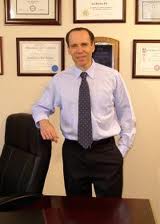
Dr. Joel Fuhrman in his office in New Jersey

Which plants have calcium in them? To find out, I went to nutritiondata.com and examined the calcium content of the first ten fruits and vegetables that came to mind. ALL of them had calcium. As Dr. Joel Fuhrman says in the article on his blog (see link below):

Any healthy diet containing a reasonable amount of unrefined plant foods will have sufficient calcium without milk. Fruits and vegetables strengthen bones. Researchers have found that those who eat the most fruits and vegetables have denser bones.

He adds that “green vegetables, beans, tofu, sesame seeds, and even oranges contain lots of usable calcium, without the problems associated with dairy.” He also talks about the problem with our toxic western diet relative to calcium; “Keep in mind that you retain the calcium better and just do not need as much when you DON’T consume a diet heavy in animal products and sodium, sugar, and caffeine.”

Dr. McDougall with some sound advice on this topic (3-minutes)

In closing, I would like to mention the Tarahumara Indians in Mexico; a group of people that enjoy startling longevity, physical endurance and a virtual complete absence of our typical chronic diseases. And their diet consists of nothing but corn, squash and beans. I first learned about these people from Dr. Esselstyn and included them in our book as well. 

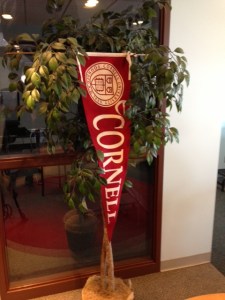
The eCornell pennant

The eCornell pennant

If they can thrive on such a limited variety of food, people everywhere should be able to thrive on 4Leaf for Life — aimed at helping you maximize the percent of your calories from whole plant foods. And, unlike the Tarahumara, we are blessed with the opportunity to enjoy a plethora of 4Leaf choices — 365 days a year.

One-on-one MD Help. Sadly, 95% of our medical doctors are not aware of the power of plant-based nutrition to combat many chronic diseases, including osteoporosis. If you would like a second opinion (about osteoporosis) from a medical doctor who truly “gets it” about food, you may wish to visit our MD Help page and schedule a telephone consultation with one of the MDs listed there.

The primary content of this blogpost now appears on a page in the drop-down list under the “Diseases” tab.

Consecutive daily blogs

Consecutive daily blogs

My daily streak will end on February 11 with my 737th consecutive daily blog. But don’t worry—hpjmh.com will NOT be going dark. My plan is that it will be around for a very long time—hopefully long after I am gone. In the meantime, I will continue blogging, updating and adding pages that will focus on my mission of promoting health, hope and harmony on planet Earth.

Want to help support our mission? Click here for a few ideas

Handy 4-piece take-charge-of-your-health kit—from Amazon.com

Want to find out how healthy your family is eating? Take our free 4Leaf Diagnostic Survey. It takes less than five minutes and you can score it yourself. After taking the survey, please give me your feedback as it will be helpful in the development of our future 4Leaf app for smartphones. Send feedback to jmorrishicks@me.com

International. We’re now reaching people in over 100 countries. Follow us on Facebook and Twitter or get daily blog notices by “following” us in the top of the right-hand column. For occasional updates, join our periodic mailing list.

To order more of my favorite books—visit our online BookStore now

J. Morris Hicks, working daily to promote health, hope and harmony on planet Earth.

For help in your own quest to take charge of your health, you might find some useful information at our 4Leaf page or some great recipes at Lisa’s 4Leaf Kitchen.

Got a question? Let me hear from you at jmorrishicks@me.com. Or give me a call on my cell at 917-399-9700.

Blogging daily at hpjmh.com…from the seaside village of Stonington, Connecticut – Be well and have a great day.

—J. Morris Hicks, board member, T. Colin Campbell Foundation
Posted in Activism & Leadership | 4 Comments

A reader’s question gets to the heart of “4Leaf for Life.”

What does a “health-promoting” vegan diet mean?

Groundhog DaySince this is such a common misunderstanding, I decided to respond to the question in one of  my last few blogs of my 737 daily streak which ends on 2-11-13. The following message from William arrived at just past midnight on February 2—Groundhog Day here in the states.

I replied to his message but it didn’t get delivered, so hopefully, he’ll revisit my site soon. Here is William’s message:

Hello J. Morris, I was led to your blog after reading an article elsewhere on Steve Jobs. I would like to know what you mean by “health promoting” vegan diet? Please explain.

I am a Virtual Vegan–that is, I still have an older car which has leather seats. I eat mainly raw, very little processed, little or no tinned, withdrawing currently from all seeds only sprouted. Regards, William

4-Leaf For LifeAs I said in the title, with his question, William got right to the main issue that led to the creation of the 4Leaf for Life concept. The words vegan and vegetarian do not necessarily mean healthful eating. They only define what one is avoiding, they’re perceived to be extreme, many people think they’re weird—and 95% of our population has decided NOT to be one.

A Marketing Opportunity. If we want to change the world by moving people toward a diet-style of mostly plants, we’d better figure out a more attractive way to package our product. We decided that the world needs a POSITIVE way to define a healthful diet. We also wanted it to be flexible, simple and easy—with no calorie counting, etc.

My response. Hi William, Thanks for your question; it sounds like you’re eating a very healthy diet. As far as my site and our book are concerned, I rarely use the word vegan to describe a near optimal diet. Also, my work is all about diet and health—I pay no attention to the leather coats, shoes, car seats, etc. I figure that they’re by-products of the meat industry and would be outrageously expensive if there were no meat industry. When the meat industry goes away, so will my leather purchases.

The "4Leaf level" means getting over 80% of my total calories from whole plants.

The “4Leaf level” means getting over 80% of my total calories from whole plants.

The near-optimal diet that I talk about is called 4Leaf. At the 4Leaf level, you’d be deriving over 80% of your daily calories from whole plants—and it’s not necessarily vegan as you might occasionally have a cookie that contains a trace of egg and milk in it. Dr. Campbell and I both had a brownie the other night as we exited Moosewood Restaurant in Ithaca, NY.

The main point is that “vegan” does not describe what people ARE eating. It only describes what they’re avoiding—all animal products. After all, you could eat nothing but potato chips and Diet Coke and call yourself a vegan—but you’d be dead in less than 90 days.

AS for “health-promoting,” we have lots of scientific and clinical proof that whole, plant-based foods are health-promoting. So 4Leaf for Life is based on maximizing the whole plant calories in your diet. And we call that diet-style a near-optimal way of eating. It’s not perfect, but it is health-promoting and it is capable of reversing many chronic diseases. The good news is that it’s also simple, flexible, positive—and it’s not got a weird name that most people don’t seem to like.

In 4Leaf, we recommend zero animal products, but the focus is on maximizing whole plants.

In 4Leaf, we recommend zero animal products, but the focus is on maximizing whole plants.

As for animal products, I never buy them, I never order them in restaurants and I never plan to eat any. But in some situations, I do. Therefore I am not a vegan. But as a 4Leaf-er, I figure that my diet is in the top 1% when it comes to healthy eating in the USA.

Further, it has been my observation that many (if not most) vegetarians and vegans do not eat a very healthy diet. That’s because their normal daily routine does not include nearly enough whole plant-based foods—still in nature’s package. Want to find out how well you’re eating on our 4Leaf for Life scale? Take the 4Leaf Survey. From the sound of your description, I bet you score high in the 4Leaf range on our scale.

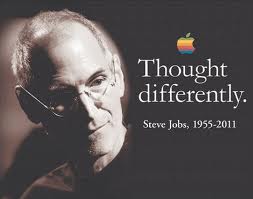
Steve Jobs thought differentlyYou mentioned Steve Jobs in your question. As you probably read in my blog about him (see link below), there’s a lot we simply don’t know about what Steve ate. Apparently, he experimented with vegan, fruitarian and other variations of a mostly plant-based diet.

But did he derive most of his calories from whole, plant-based foods for most of his life? I doubt it—but we’ll probably never know for sure. A clue: I have heard from a friend of mine who worked for Steve—that he loved ice-cream (not the soy kind).

Thanks again for your question, William. I hope this helps.

Be well, J. Morris (Jim) Hicks

Consecutive daily blogs

Consecutive daily blogs

My daily streak will end on February 11 with my 737th consecutive daily blog. But don’t worry—hpjmh.com will NOT be going dark. My plan is that it will be around for a very long time—hopefully long after I am gone. In the meantime, I will continue blogging, updating and adding pages that will focus on my mission of promoting health, hope and harmony on planet Earth.

Handy 4-piece take-charge-of-your-health kit—from Amazon.com

Want to find out how healthy your family is eating? Take our free 4Leaf Diagnostic Survey. It takes less than five minutes and you can score it yourself. After taking the survey, please give me your feedback as it will be helpful in the development of our future 4Leaf app for smartphones. Send feedback to jmorrishicks@me.com

International. We’re now reaching people in over 100 countries. Follow us on Facebook and Twitter or get daily blog notices by “following” us in the top of the right-hand column. For occasional updates, join our periodic mailing list.

To order more of my favorite books—visit our online BookStore now

J. Morris Hicks, working daily to promote health, hope and harmony on planet Earth.

For help in your own quest to take charge of your health, you might find some useful information at our 4Leaf page or some great recipes at Lisa’s 4Leaf Kitchen.

Got a question? Let me hear from you at jmorrishicks@me.com. Or give me a call on my cell at 917-399-9700.

SHARE and rate this post below.

Blogging daily at hpjmh.com…from the seaside village of Stonington, Connecticut – Be well and have a great day.

—J. Morris Hicks, board member, T. Colin Campbell Foundation
Posted in 4Leaf for Life | 4 Comments