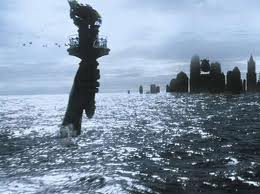
3,650 articles a year on global warming. ZERO clarity.

And not ONE mention of the single biggest cause—food choices

GoogleMy Google account is programmed to send me ten new articles about global warming everyday.  A total of 3,650 articles a year—with most of them contradicting all the others. Many of the articles are skeptical that global warming even exists and none of them ever mention the #1 cause.

Why is that? Money! There are trillions of dollars riding on maintaining the status quo with regards to how we live, reproduce, consume, travel and EAT. The problem is that the future of our ecosystem is riding on kicking that status quo to the ditch—and making some HUGE changes fast. Of course, the easiest, quickest and least expensive change we can make is to replace most of our animal-based food calories with health-promoting, whole, plant-based foods.

As for global warming, listed below are eight of the ten articles that I received yesterday—with one paragraph from each. You can click on each of the links if you want to see more. These articles remind me of the evening news and all the contradictory information you hear everyday about healthcare. In both cases, our news media is failing us—not telling us what we really need to do to promote our own health—and the health of the ecosystem that sustains us.

An almost carbon-free way to breathe fresh air, enjoy the beauty of nature and think about ways to wake up the mainstream masses  who're sleepwalking off a cliff when it comes to the future of our species.

An almost carbon-free way to breathe fresh air, enjoy the beauty of nature and think about ways to wake up the mainstream masses who’re sleepwalking off a cliff when it comes to the future of our species.—J. Morris Hicks

Eight Global Warming Articles

  1. The Oceans Ate Global Warming? (Skeptical) People who are well-informed know that the global warming superstition is based exclusively on computer models. Those models are essentially video games, like virtual reality. You may have heard the saying “garbage in, garbage out.” Speculation put on a computer is still speculation
  2. Fix for global warming is not either/or. (Rational) One of the strongest arguments levied against serious remedies is that we must choose between the environment and our economy. If we move away from fossil fuels and strengthen our commitment to renewable energy sources, we will impede economic growth, hurt business and hamper job creation. That argument — that it’s either/or — is now being refuted by some powerful voices in the economic sphere.
  3. Sorry, Steve Running, Wildfires Are Decreasing with Global Warming (Skeptical) A Billings Gazette article last week quoted University of Montana global warming activist Steve Running claiming major wildfires have quadrupled since 1986, but the facts show wildfires are actually declining.
  4. Honeywell’s Low-Global-Warming Material Insulates Net-Zero Energy Home (Product Promo) Honeywell’s Solstice Liquid Blowing Agent — an ultra low-global-warming-potential foam blowing agent — has been used to help insulate a net-zero energy home project at Purdue University, the company says.
  5. Global Economies Must Decrease CO2 Emissions By 5 Times Current Levels (Rational) Global economies must cut their energy-related carbon emissions for every dollar of GDP by 6.2 percent — more than five times the rate currently achieved — every year from now to 2100 in order to to limit global warming to 2°C, according to a new report by PwC. Scientists agree 2°C of warming is the limit needed to ensure the serious risks of climate change impacts are avoided worldwide.
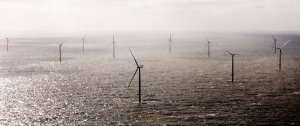
  6. Windmills at seaSun and Wind Alter Global Landscape, Leaving Utilities Behind (NY Times)  Germans will soon be getting 30 percent of their power from renewable energy sources. Many smaller countries are beating that, but Germany is by far the largest industrial power to reach that level in the modern era. It is more than twice the percentage in the United States.
  7. Rich philanthropists urged to invest in ‘saving civilisation’ by putting money into fighting global warming. (Rational) “Climate change has the capacity to overwhelm all efforts in other areas such as poverty and biodiversity. Anyone concerned about improving quality of life or protecting natural areas should know that unless they also act on climate, they are likely to waste their efforts,” said Paul Gilding, an Australian environmentalist. The call to action comes a week before world leaders  are due to attend a UN climate summit in New York.
  8. Fixing Climate Change May Add No Costs, Report Says (NY Times)When the secondary benefits of greener policies — like lower fuel costs, fewer premature deaths from air pollution and reduced medical bills — are taken into account, the changes might wind up saving money, according to the findings of the group, the Global Commission on the Economy and Climate.

Ready for some CLARITY about climate change?

Only one PRAGMATIC way to stop climate change! (My blog of 9-12-14)

Food Choices. The primary cause of global warming? (My blog of 2-4-14)

Ready for some CLARITY about healthcare?

Medicine is not healthcare — Food is healthcare.
Medicine is sick-care — Let’s all get this straight for a change. — Anonymous

The real beauty of this desperate situation is that if we eat the right foods to stop global warming, we’ll also promote the best health for ourselves; thereby slashing the global healthcare bill by trillions of dollars. — J. Morris Hicks

The Isle of Wight -- home of my friend Frances

The Isle of Wight — home of my friend Frances

The Bottom Line. One of my blog readers on the Isle of Wight told me in 2011 that my daily blog was like a relentless drumbeat—a never ending repackaging of the same message.

She was right, and while I no longer publish a blog every single day, my relentless message is now more focused on the single most important issue in the history of humanity—SUSTAINABILITY of our ecosystem and our species. NOTHING is more Important than Sustainability!

Sometimes, all of this can be depressing—especially, when no one in the mainstream is listening; prompting me to publish this blog last month. Relentless Tenacity. Except for occasional bouts of depression

One more thing. I also get ten new articles everyday about water scarcity and world hunger—two more desperate situations that share the same primary cause as global warming and human health issues. WE’RE EATING THE WRONG FOOD! (This is my 866th blog-post since launching this website in February of 2011.)

The following five books and one DVD can be purchased on Amazon for a grand total of less than $60—and will enable you to understand the overwhelming challenges we face—along with the single most-powerful solution of all.

Six-Pack from Hicks—for health, hope & harmony on planet Earth

  1. Healthy Eating, Healthy WorldThe “big picture” about food (our book)
  2. A life changer for millions, including James Cameron. Forks Over Knives DVD 
  3. An essential scientific resource: The China Study by Dr. T. Colin Campbell; the primary book that influenced Bill Clinton to adopt a whole food, plant-based diet.
  4. What have we done to our planet? Full Planet, Empty Plates by Lester Brown
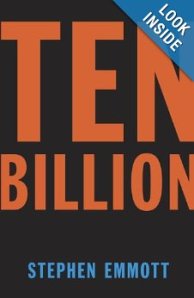
  5. A horrifying wake-up call for leaders. TEN BILLION by Dr. Stephen Emmott
  6. Food choices are the primary cause of our environmental problems, yet our world leaders, scientists & experts are Comfortably Unawareby Richard Oppenlander.

Why should we be eating mostly plants? The “big picture” in 4 minutes.

Want to find out how healthy your family is eating? Take our free 4Leaf Survey. It takes 2 or 3 minutes and you can score it yourself. eCornell is now using our survey in their plant-based nutrition course. Check it out on your smartphone at eCornell.com/4Leaf-Survey. Send feedback to jmorrishicks@me.com

International. We’re now reaching people in over 100 countries. Follow us on Facebook and Twitter or get daily blog notices by “following” us in the top of the right-hand column. For occasional updates, join our periodic mailing list.

J. Morris Hicks, working daily to promote health, hope and harmony on planet Earth.

To order more of my favorite books—visit our online BookStore now For help in your own quest to take charge of your health, visit our 4Leaf page and also enjoy some great recipes from Lisa’s 4Leaf Kitchen.

Got a question? Let me hear from you at jmorrishicks@me.com. Or give me a call on my cell at 917-399-9700.

—J. Morris Hicks, board member since 2012; click banner for more info:

Nutrition Certificate

Posted in Activism & Leadership, Climate Change, Sustainability | Tagged | 2 Comments

Only one PRAGMATIC way to stop climate change!

According to the late Dr. Robert Goodland, World Bank Climate Specialist

Jeff Anhang, environmental specialist and research officer. He advises on managing environmental and social risks and opportunities in investments by the World Bank Group's International Finance Corporation (IFC).

Jeff Anhang, environmental specialist and research officer. He advises on managing environmental and social risks and opportunities in investments by the World Bank Group’s International Finance Corporation (IFC).

My friend Jeff Anhang of the World Bank Group was Dr. Goodland’s co-author for most of his work on climate change; he was kind enough to share this recently “edited” version of his last public presentation before his untimely death in December of 2013.

I have provided the complete document below, complete with all the links, but wanted to start out by stating a few compelling bits of information relating to the piece:

  • Since the Kyoto Protocol (to stop climate change) was drafted in 1990, global greenhouse gas emissions have risen 61%.
  • It may be too late already. The CO2 levels in our atmosphere have risen well above the safe level of 350 ppm—passing the 400 ppm level in April of 2014.
  • Since Kyoto, the UN’s International Panel on Climate (IPCC) has held it’s annual Conference of the Parties in different cities around the world. Lots of political rhetoric, but not nearly enough action and ZERO positive results.
  • Running out of time; Dr. Goodland reported, ” The International Energy Agency has warned that major action by 2017 may be the last real chance to reverse climate change before it’s too late.”
  • The problem is that there has been ZERO international emphasis on altering the way we eat—and that’s the only major contributor to GHG in our atmosphere that can be changed quickly, easily and inexpensively.
  • As you can see below, Goodland and Anhang have estimated that the raising of livestock causes more human-induced GHG than ALL other causes combined.
  • There’s no way you can solve ANY problem without addressing the #1 cause.
  • In the article below, Dr. Goodland outlines what he calls the ONLY pragmatic way to stop climate change.
Dr. Robert Goodland. During his time there, he was frequently described as the "conscience" of the World Bank

Dr. Robert Goodland. During his time there, he was frequently described as the “conscience” of the World Bank

Pragmatic. dealing with things sensibly and realistically in a way that is based on practical rather than theoretical considerations.—Webster

The key words in the above definition are sensibly and realistically—not the kinds of descriptors typically associated with political leaders–or corporate leaders who stand to lose money by doing the right thing for the future of humanity.J. Morris Hicks

Please share Dr. Goodland’s concise paper below with everyone who might be able to make a difference. Sooner or later, our world leaders have got to start getting serious about what’s important.

How to Reverse Climate Change Before It’s Too Late

by Robert Goodland (1939-2013) —- World Bank Climate Specialist

Dr. Robert Goodland (1939 to 2013)---climate specialist with World Bank for 23 years.

Dr. Robert Goodland (1939 to 2013)—climate specialist with World Bank for 23 years.

September 4, 2014, published in full at http://meatonomics.com (excerpted and edited from the last public presentation made by Dr. Goodland in September 2013)

Climatic change is fearsome.  The National Academy of Sciences published a study in 2013 explaining how 1,700 American cities -– including New York, Boston, and Miami –- will become locked into some amount of submersion from rising sea levels unless expensive new dykes and levees can hold back the rising waters.  In fact, the International Energy Agency has warned that major action by 2017 may be the last real chance to reverse climate change before it’s too late.

Elsewhere, the last chance for major action is said to be 2020.  Even with that more generous timeframe, it’s too late to reverse climate change by replacing fossil fuel infrastructure with renewable energy infrastructure.  That’s because doing so is estimated to require at least 20 years to implement at the necessary scale.  Indeed, large-scale implementation of renewable energy infrastructure was the general basis for the Kyoto Protocol when it was drafted in 1990.  But the Kyoto Protocol did not yield a reduction in greenhouse gas emissions as intended;  to the contrary, global greenhouse gas emissions have risen shockingly by 61% from 1990 to 2013.

Now, there seems to be only one remaining pragmatic way to reverse climate change before it’s too late -– and that’s by taking quick and large-scale actions in food, agriculture, and forestry.  When Jeff Anhang and I estimated in 2009 that at least 51% of human-induced greenhouse gas is attributable to livestock, we calculated that replacing 25% of today’s livestock products with better alternatives could almost fully achieve the objective of the Kyoto Protocol.

However, as greenhouse gas emissions and atmospheric carbon have continued to rise, now almost 50% of today’s livestock products must be replaced with better alternatives by 2020 at the latest in order to achieve the objective of the Kyoto Protocol and avert catastrophic climate change.  No other pragmatic worldwide action to reverse climate change has been proposed by anyone…

In fact, the average global concentration of atmospheric carbon continues to increase after it recently rose above 400 parts per million, far above the safe level of 350 parts per million.  The only known way to draw down atmospheric carbon on a large scale in a relatively short timeframe is by growing more trees, which is uniquely possible through our recommendations.  That’s because replacing a substantial amount of today’s livestock products with better alternatives will free up a vast amount of land to permit large-scale reforestation and greenhouse gas sequestration –- at the same time as it will massively reduce greenhouse gas emissions attributable to livestock production.

The dual benefits of reducing emissions and absorbing atmospheric carbon on a large scale at the same time are the key aspect of what makes our recommendations the only pragmatic way to reverse climate change before it’s too late.

To be clear about what we mean by “better alternatives” to livestock products:  We mean everything from grain-based meats to soy milk, nut butters, as well as whole grains and legumes.  This is because any food that comes directly from a plant rather than from livestock will generally be responsible for a much lower level of greenhouse gas emissions than are livestock products…

There is surely no more compelling motivation to act than the knowledge that replacing livestock products with better alternatives may be the only pragmatic way to stop catastrophic climate change from imperiling much of life on earth.

**************************

J. Morris Hicks, promoting health, hope and harmony on planet Earth.

J. Morris Hicks, promoting health, hope and harmony on planet Earth.

Related blogs from J. Morris Hicks:

The following five books and one DVD can be purchased on Amazon for a grand total of less than $60—and will enable you to understand the overwhelming challenges we face—along with the single most-powerful solution of all.

Six-Pack from Hicks—for health, hope & harmony on planet Earth

  1. Healthy Eating, Healthy WorldThe “big picture” about food (our book)
  2. A life changer for millions, including James Cameron. Forks Over Knives DVD 
  3. An essential scientific resource: The China Study by Dr. T. Colin Campbell; the primary book that influenced Bill Clinton to adopt a whole food, plant-based diet.
  4. What have we done to our planet? Full Planet, Empty Plates by Lester Brown
  5. A horrifying wake-up call for leaders. TEN BILLION by Dr. Stephen Emmott
  6. Food choices are the primary cause of our environmental problems, yet our world leaders, scientists & experts are Comfortably Unawareby Richard Oppenlander.

Why should we be eating mostly plants? The “big picture” in 4 minutes.

Want to find out how healthy your family is eating? Take our free 4Leaf Survey. It takes 2 or 3 minutes and you can score it yourself. After taking the survey, please give me your feedback as it will be helpful in the development of our future 4Leaf app for smartphones. Send feedback to jmorrishicks@me.com

International. We’re now reaching people in over 100 countries. Follow us on Facebook and Twitter or get daily blog notices by “following” us in the top of the right-hand column. For occasional updates, join our periodic mailing list.

J. Morris Hicks, working daily to promote health, hope and harmony on planet Earth.

To order more of my favorite books—visit our online BookStore now For help in your own quest to take charge of your health, visit our 4Leaf page and also enjoy some great recipes from Lisa’s 4Leaf Kitchen.

Got a question? Let me hear from you at jmorrishicks@me.com. Or give me a call on my cell at 917-399-9700.

—J. Morris Hicks, board member since 2012; click banner for more info:
Nutrition Certificate

Posted in Activism & Leadership, Climate Change, Sustainability | Tagged | 2 Comments

Victims, challenges and hope for the future of our species

We must get the world talking about what’s most important.

33 Starving 4BThe food choices of roughly two billion people in the world are responsible for causing horrendous problems for themselves, the other five billion less fortunate people, the other creatures who inhabit our planet and for the ecosystem that sustains us all.

In this blog, I have provided a top ten list of those problems. The issues listed below are the combined effect of a horribly inefficient diet-style that is also very unhealthy for all who eat it. On a per calorie basis, animal-based foods require more than ten times as much land, water and energy than plant-based calories.

As a result of this grossly unsustainable diet-style, we’re rapidly using up our natural resources which will ultimately result in the collapse of our civilization. Meanwhile, we’ve created a tremendous amount of suffering along the way—My top ten list of victims.

Who are the Victims of the Typical Western Diet?

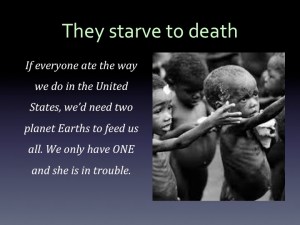
Water CrisisOne. World Hunger. Almost one billion people go to bed hungry every night and forty million children starve to death every year. (Not enough land to grow food for everyone)

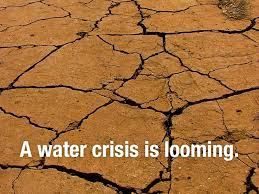
Two. Water Scarcity. 783 million people do not have access to clean water and almost 2.5 billion do not have access to adequate sanitation. (Most of our water being used to grow food for animals that we eat.)

Three. Heart Disease. Approximately four million people suffer and die of heart disease each year—a disease that is 95% reversible with a whole food, plant-based diet.

Four. Type 2 Diabetes. Approximately 200 million people suffer from type 2 diabetes—disease that is 95% reversible with a whole food, plant-based diet.

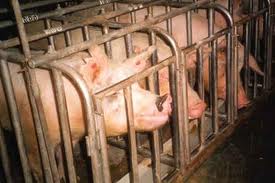
One of the smartest animals, pigs get a bad rap -- most live their complete lives in horrid conditions until they reach their ultimate destiny as part of your breakfast, your pizza topping or your barbecue sandwich.

One of the smartest animals, pigs get a bad rap — most live their complete lives in horrid conditions until they reach their ultimate destiny as part of your breakfast, your pizza topping or your barbecue sandwich.

Five. Animal Suffering. Annually, some 100 billion land animals live their entire lives in horrible conditions until they are brutally killed so that we can eat their flesh.

Six. Oceans in Peril. Over one trillion sea creatures are taken from our oceans each year; some for humans to eat, even more killed by accident (by-kill), and others to feed to other fish in fish farms.

Seven. The World’s Rainforest. Over 30 million acres of rainforest have been destroyed each year since 1970—primarily to use for grazing of farm animals or to grow feed for them to be shipped elsewhere.

Eight. Other Species. The normal rate of species extinction is less than five per year. Scientists estimate that the current rate exceeds 5,000 per year—the dramatic increase driven by human activity; primarily our food choices.

Global warming could be the single biggest problem ever faced by the human species.

Climate change could be the single biggest problem ever faced by the human species.

Nine. Climate Change. Our harmful diet-style is damaging every part of our ecosystem that controls climate: atmosphere, cryosphere, hydrosphere, and biosphere. We’re not even coming close to the international goals and conditions get worse every year—a looming global disaster for everyone.

Ten. Our Children’s Future. Our harmful and wasteful food choices are negatively impacting all 7.2 billion humans alive today AND all future humans—as we accelerate the race to destroy the precious ecosystem that sustains us.

When does the madness end? As our population surges toward ten billion—driving the need to double our food production in the next 40 years, things are only going to get worse. When do ANY of our prominent leaders start URGENTLY addressing the most important issues in the history of humanity?

A few weeks ago, it seemed that everyone in the USA (maybe  the world) was talking about a rare disease that affects 1/100th of one percent of the population of the United States. But NO ONE is talking about the above list of crises that will ultimately affect every single human—including the 30,000 in the USA who have ALS.

I think it’s time for a SERIOUS global “challenge” to help get things moving in the right direction for ALL of us and for ALL of our future children. A challenge to learn how a mostly-plant-based diet can do wonders for your health, your children’s health and for the health of the ecosystem that sustains us.

Take the 4Leaf-4Week Challenge?

The "4Leaf level" means getting over 80% of my total calories from whole plants.

The “4Leaf level” means getting over 80% of my total calories from whole plants.

What is it? Commit yourself to 4 weeks of consuming mostly whole, plant-based foods. At the 4Leaf level of eating, that means deriving over 80% of your calories from those healthiest of foods.

Getting started. Take the 4Leaf Survey at eCornell’s website eCornell.com/4Leaf-Survey  Find out your current level of eating. Read a few books from my store, check out the 4Leaf section of my website, and make a plan. (A printer friendly one-pager of the 4Leaf Survey)

Check out Lisa’s recipes. There are currently two dozen tasty and easy recipes that will help get you started. Lisa’s 4Leaf Kitchen.

Why 4 weeks? That gives you enough time to enjoy the many benefits of this way of eating. If you commit for 4 weeks, you will not want to return to your old way of eating. You will have begun a lifelong healthy habit that will do more to save our civilization than ALL other steps that you could possibly take.

Forget Meatless Mondays. That’s just an exercise in deprivation that will rarely lead to a truly healthy diet—for you or for the planet.

Sadly, this powerful book of truth has not been read by nearly enough people.

Sadly, this powerful book of truth has not been read by nearly enough people.

Not sure you can do this? Take another look at that list of TEN disasters above and think about the future of your children. Also, take just one hour to read TEN BILLION. Although he doesn’t say it in the book, the author agrees with me that changing what we eat is the single most powerful step we could take to avoid the disasters he predicts.

“Call out” your friends and relatives. After you’ve gotten started on your 4 weeks, send this blog to others who you think might have the courage to follow your lead. It’s not as easy as dumping a bucket of ice on your head—but if enough people do it, this simple step will save our ecosystem and our civilization.

The Bottom Line. There are four primary, human-driven issues that threaten the future of our civilization. They are: Over-population, Over-consumption of STUFF, Dependence on Fossil Fuels and Eating the Wrong Food.

Conveniently, the last one is not only the easiest, quickest and least expensive to address—doing so will deliver, by far, the most health AND environmental benefit in the shortest amount of time.

Eventually, we must also deal with over-population, over-consumption and the excessive burning of fossil fuels—but those tasks will take many decades, if not centuries. Taking URGENT action NOW with our food choices can buy us the time we need to address them all.

List of sources. Extrapolation was used to estimate global numbers when only USA numbers were available.

The following five books and one DVD can be purchased on Amazon for a grand total of less than $60—and will enable you to understand the overwhelming challenges we face—along with the single most-powerful solution of all.

Six-Pack from Hicks—for health, hope & harmony on planet Earth

  1. Healthy Eating, Healthy WorldThe “big picture” about food (our book)
  2. A life changer for millions, including James Cameron. Forks Over Knives DVD 
  3. An essential scientific resource: The China Study by Dr. T. Colin Campbell; the primary book that influenced Bill Clinton to adopt a whole food, plant-based diet.
  4. What have we done to our planet? Full Planet, Empty Plates by Lester Brown
  5. A horrifying wake-up call for leaders. TEN BILLION by Dr. Stephen Emmott
  6. Food choices are the primary cause of our environmental problems, yet our world leaders, scientists & experts are Comfortably Unawareby Richard Oppenlander.

Why should we be eating mostly plants? The “big picture” in 4 minutes.

Want to find out how healthy your family is eating? Take our free 4Leaf Survey. It takes 2 or 3 minutes and you can score it yourself. After taking the survey, please give me your feedback as it will be helpful in the development of our future 4Leaf app for smartphones. Send feedback to jmorrishicks@me.com

International. We’re now reaching people in over 100 countries. Follow us on Facebook and Twitter or get daily blog notices by “following” us in the top of the right-hand column. For occasional updates, join our periodic mailing list.

J. Morris Hicks, working daily to promote health, hope and harmony on planet Earth.

To order more of my favorite books—visit our online BookStore now For help in your own quest to take charge of your health, visit our 4Leaf page and also enjoy some great recipes from Lisa’s 4Leaf Kitchen. Got a question? Let me hear from you at jmorrishicks@me.com. Or give me a call on my cell at 917-399-9700.

—J. Morris Hicks, board member since 2012; click banner for more info:

Nutrition Certificate

Posted in Activism & Leadership, Sustainability | Tagged | 1 Comment