500 Blogs in 500 Days—a time of reflection…

And a little celebration! This is my consecutive daily blog #

And those 500 include multiple blogposts in over 50 categories. We’ve also just passed a quarter million visits, are reaching people in 150 countries, and our readers have posted over one thousand comments.

A time of reflection. What does this daily blogging routine mean to me? What difference will it make in my future? What about the future of life on Earth as we know it? How great does it feel to know that you’re making a difference? I refer to the last page in the Introduction to our book:

Published by BenBella — October 2011

The primary objective of this book is to outline in simple, everyday terms the extent of the problems we face, how we got ourselves into trouble, and what each of us can do to make things better. Fortunately, despite the incredible complexity of our current dilemma, the solution is refreshingly simple.

All we have to do is educate ourselves, start making better choices about what we eat, and then share all that we have learned with everyone we care about. I am convinced that there has never been anything more important in the history of the world.
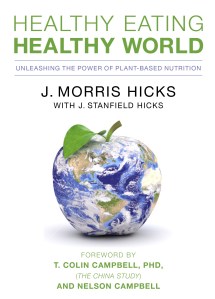
It’s that last sentence that keeps me going. And it’s this blog that provides me with a vehicle to reach people all over the world. But, as my friend Sal Liggieri in New York would say, we’re not reaching nearly enough people soon enough. Sal doubts that much is going to change in his lifetime (he’s 86) or mine (now 67). But I cheerfully disagree with Sal and know that news can travel really fast in this world. We just need to reach that critical mass—and maybe sharing some of these blogs will help us gain some traction.

All of those 500 blogs are still available on this website—and they’re easy to find—by searching the site or by searching on Google. There are two ways to find them on the site and they’re both near the top of the right hand column:

  • A “Search This Entire Site” panel where you can type in whatever you choose
  • Just below that is a drop-down list of over 50 categories.
Then there’s Google. After 500 days of blogging, Google seems to like me. Just try googling any topic along with “J Morris Hicks” and see what you find.

For example, try googling: cancer j morris hicks, steve jobs j morris hicks, diabetes j morris hicks, erectile dysfunction j morris hicks, saving fossil fuel j morris hicks, world hunger j morris hicks, children j morris hicks, suffering animals j morris hicks,water pollution j morris hicks, heart disease j morris hicks, bill clinton j morris hicks, protein j morris hicks, osteoporosis j morris hicks or finally…

humor j morris hicks (yes, one of my 50 categories is humor)

Or maybe you just want to find the blog I did about Michelle Pfeiffer. Try googling “hicks pfeiffer” and my article will be right on top.
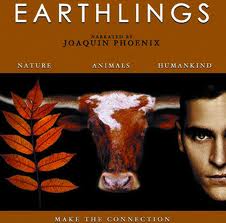
A must-see movie by all responsible citizens of this planet. Narrated by Joaquin Phoenix, it begins with the “three stages of truth.”

The next 500 days. When I reach the 1000-day mark, we will be nearing the end of 2013 and I am confident that this topic will have become much more publicized. We may even be approaching the second stage of truth as revealed in the movie Earthlings. Throughout history, this has been the pattern when new concepts were first explored—even though the thought pioneers were right every time:

Three Stages of Truth

  • Ridicule
  • Violent Opposition
  • Acceptance

We’re in the ridicule stage right now. But, working with Dr. Campbell and our T. Colin Campbell Foundation, I am confident that we’re going to enter the “violent opposition” stage in the next 500 days. And all we can say is, “Bring It On!” That’s because we know we’re right—and when the violent opposition begins, we know that lady truth is well on her way to the rest of the world.
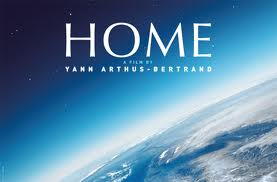
An exceptionally well-done 2009 movie produced in France; has been seen by millions around the world, but not nearly enough Americans. It will leave you feeling differently about your responsibility as a citizen of this planet.

What can YOU do to help? Two things. Go back and watch HOME and Earthlings, even if you’ve already seen them. You can find both of them on this site by clicking here.

For the record, the movie HOME was featured in my 4th blog out of 500. I heard about it from my son, Jason, and remember doing that blog while sitting in the same room where I am now—at the Starbucks of Mystic, CT.

Finally, recognizing the urgency we face, you might want to share this this blog, hpjmh.com, and  this handy kit with everyone you care about.

Handy 4-piece take-charge-of-your-health kit—from Amazon.com

Want to find out how healthy your family is eating? Take our free 4Leaf Diagnostic Survey. It takes less than five minutes and you can score it yourself. After taking the survey, please give me your feedback as it will be helpful in the development of our future 4Leaf app for smartphones. Send feedback to jmorrishicks@me.com

International. We’re now reaching people in over 100 countries. Follow us on Facebook and Twitter or get daily blog notices by “following” us in the top of the right-hand column. For occasional updates, join our periodic mailing list.

To order more of my favorite books—visit our online BookStore now

J. Morris Hicks, working daily to promote health, hope and harmony on planet Earth.

For help in your own quest to take charge of your health, you might find some useful information at our 4Leaf page or some great recipes at Lisa’s 4Leaf Kitchen.

Got a question? Let me hear from you at jmorrishicks@me.com. Or give me a call on my cell at 917-399-9700.

SHARE and rate this post below.

Blogging daily at hpjmh.com…from the seaside village of Stonington, Connecticut – Be well and have a great day.

—J. Morris Hicks, board member, T. Colin Campbell Foundation
Posted in Activism & Leadership | 4 Comments

Calcium & Vitamin D supplements deemed ineffective

Some of the authorities are finally getting it right…

…at least when it comes to supplements. They still haven’t gotten it right about dairy, but this is a pretty good start. This story has been all over the news for the past week: Boston Globe, Fox, NBC Evening News and the New York Times.

Just say NO to calcium pills and ALL dairy as your source of calcium.

A few days ago I blogged on some of the dangers of trying to get our essential nutrients from pills instead of from whole plants as nature intended. That article featured scientific studies questioning the use of folate, vitamin C and omega-3 supplements, to name a few. Now, our own government is telling us a similar story about calcium and vitamin D. From the New York Times: (See link to article below)

The United States Preventive Services Task Force, an influential group that recently recommended against routine P.S.A. tests to detect prostate cancer, issued a draft statement on Tuesday recommending that healthy postmenopausal women should not take low doses of calcium or vitamin D supplements to prevent fractures.

Later in the article they added that there was no evidence that they worked for healthy men or women of any age, adding:

“When you take a vitamin supplement or any therapy for an extended period of time, you have to ask, ‘What is the evidence that it works and what is the evidence of harms?’ ” Dr. Bibbins-Domingo said.

“It is clear that lower doses of calcium and vitamin D do not prevent fractures, and there is a small but measurable risk of kidney stones,” she said. So with no evidence of benefit, there is no reason to risk harm.

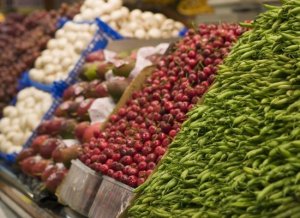
This should be your preferred source of all essential nutrients—the fresh produce section at your grocery or farmers market.

What about diet? It was only mentioned in the last paragraph of the article and they failed to explain exactly what constituted a healthy diet. “For most people, she said, there is no need for these supplements and good reason for many not to take them. “Vitamin D and calcium are part of a healthy diet,” Dr. Bibbins-Domingo said. “Most people can achieve sufficient doses with a healthy diet.”

The “healthy diet” needed is one that features mostly whole plants. And even though they mentioned the need for a healthy diet in the article, I would bet you $100 that if you asked what that meant, those “experts” would give you the old USDA party line: “a balanced diet with lean cuts of meat, poultry, fish and low-fat dairy along with grains, fruits and vegetables.”

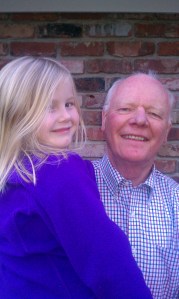
See Nigel’s article on dairy. Shown here with his lovely granddaughter.

The Bottom Line. Forget virtually all supplements except for B12. You’ll get all the calcium you need from a whole foods, plant-based diet and you can get your Vitamin D from the sun. You should not consider dairy of any kind–at any age–for the best source of any nutrients.

Still confused? Study the following with your family for a few weeks; then get back to me with any questions that you might have. It’s really not that complicated; after all, it all boils down to two words: Whole Plants.

Handy 4-piece take-charge-of-your-health kit—from Amazon.com

Want to find out how healthy your family is eating? Take our free 4Leaf Diagnostic Survey. It takes less than five minutes and you can score it yourself. After taking the survey, please give me your feedback as it will be helpful in the development of our future 4Leaf app for smartphones. Send feedback to jmorrishicks@me.com

International. We’re now reaching people in over 100 countries. Follow us on Facebook and Twitter or get daily blog notices by “following” us in the top of the right-hand column. For occasional updates, join our periodic mailing list.

To order more of my favorite books—visit our online BookStore now

J. Morris Hicks, working daily to promote health, hope and harmony on planet Earth.

For help in your own quest to take charge of your health, you might find some useful information at our 4Leaf page or some great recipes at Lisa’s 4Leaf Kitchen.

Got a question? Let me hear from you at jmorrishicks@me.com. Or give me a call on my cell at 917-399-9700.

SHARE and rate this post below.

Blogging daily at hpjmh.com…from the seaside village of Stonington, Connecticut – Be well and have a great day.

—J. Morris Hicks, board member, T. Colin Campbell Foundation

Posted in Dairy, cow's milk, Vitamins & Supplements | 1 Comment

Cancer survivors are on the rise. Is that good news?

And what about prevention?

The American Cancer Society reported this week that the number of Americans with a history of cancer will rise by a third over the next decade, hitting some 18 million by 2022.

What is the definition of a cancer survivor? According to a recent article in Medical News Today (see link below), a cancer survivor is  “anyone still alive after being diagnosed with cancer.” So in order to have more cancer survivors, there must be more people diagnosed with cancer in the first place.

And although the article reported that cancer cases are generally on the decline, it certainly can’t be by very much. Consider this statistic from the article:

Nearly half of all Americans over 70 are cancer survivors, while this number drops to only 5% for those under 40.

But what about preventing cancer? It often takes decades of growth before cancer can even be detected. Given the right conditions; cancers, like heart disease, can start very early in life. But unlike heart disease, which is almost totally reversible in most older patients, cancer is a different story. Which is why we should be thinking about everything we can do to prevent cancer—beginning when we are children, or babies.

So how do you prevent cancer? Although we frequently hear senior health officials state that up to 80% of our chronic diseases are preventable, you almost never hear any clear instructions about how one goes about doing that. On the other hand, Dr. T. Colin Campbell says that our toxic western diet is the single biggest cause of cancer. That gives us a pretty good clue about how we might prevent cancer in the first place.

But you won’t hear a simple dietary message from the American Cancer Society or any other part of our healthcare system. As I have stated many times on this blog, every corner of our vast “medical system” favors confusion over clarity when it comes to promoting health and preventing chronic diseases. Visits to all of the big “disease-specific” websites will reveal the same voluminous, but painfully unclear, information that leaves the reader totally confused.

Early detection continues to trump true prevention—the elimination of the cause.

I’ll show you what I mean. Let’s say that I am a college student who wants to avoid ever having cancer in my life. Hopefully, I am young enough that my poor lifestyle habits during my first twenty years hasn’t already doomed me to a future that includes one or more of our chronic diseases.

Since I am most concerned about cancer, I decide to visit the American Cancer Society website to learn how I can prevent cancer. For your convenience, I have documented my thirteen step search for how to prevent cancer:

  1. I begin my journey at the ACS home page at cancer.org
  2. Here I observe that most of the emphasis is on getting people involved and raising money. I don’t see anything about preventing cancer.
  3. I see a row of tabs across the top and click on “Stay Healthy.”
  4. The first thing I see on that page is “Find Cancer Early.” But that’s not what I want; I want to never have cancer. How do I prevent cancer?
  5. I scroll on down and find a tab that says, “ACS Guidelines on Nutrition & Physical Activity for Cancer Prevention.” I am thinking—now I’m getting somewhere. Wrong.
  6. That page shows me a link to a pdf file, followed by a list of six links on different topics related to diet and physical activity. Since none seem to be the one I am looking for, I click on the last one, “Common Questions about Diet and Cancer.” Maybe other people are asking the same question, “How can I prevent cancer with food?”
  7. Here I find a long list of Questions beginning with Alcohol and ending with Vitamin E. I scroll down the list and have trouble finding any clarity—ANYWHERE.
  8. I pasted the entire list of questions into a Word Doc so I could see how much data there was. There were over 5,000 words—perfectly illustrating the industry specialty of confusion over clarity. (Note that 5,000 words is like reading ten of my daily blogs.)
  9. I found one FAQ about fat in your diet; here’s what they had to say:
  10. Will eating less fat lower cancer risk? Some studies have found that people who live in countries with higher amounts of fat in their diet have higher rates of breast, prostate, colon, and other cancers. But more thorough studies have not found that fat intake increases cancer risk, or that lowering fat intake reduces cancer risk. At this time, there is not much proof that the total amount of fat a person eats affects cancer risk.
  11. Well that wasn’t very helpful, was it? I scroll down further and find a question about fish.
  12. Here’s what their geniuses had to say about that one. Does eating fish protect against cancer? Fish is a rich source of omega-3 fatty acids. Studies in animals have found that these fatty acids may stop cancer from forming or slow its growth, but it is not clear if they can affect cancer risk in humans. Eating fish rich in omega-3 fatty acids is linked with a reduced risk of heart disease, but some types of fish (such as swordfish, tuna, tilefish, shark, and king mackerel) may contain high levels of mercury, polychlorinated biphenyls (PCBs), dioxins, and other pollutants. Some studies have also shown that farm-raised fish may carry more of these harmful substances than fish caught in the wild. Women who are pregnant, planning to become pregnant, or breast-feeding, and young children should not eat these fish, and should limit eating albacore tuna to no more than 6 ounces a week and canned light tuna to no more than 12 ounces a week. People should vary the types of fish they eat to reduce the chance of exposure to toxins.
  13. At this point, I realize that I have grown weary with the ACS Guidelines for Preventing Cancer and go back to writing this blog.

Back to the report. When it comes to the “cancer business,” the primary emphasis continues to be on early detection and treatment options. Both generate a lot of money for the business. Prevention? Not so much. From the article:

The report goes on to give helpful advice on choosing a facility to treat cancer, also includes information on survival, and the most common health concerns of survivors for 11 selected cancers. Also included are sections on the effects of cancer and its treatment, palliative care, long-term survivorship, concerns of caregivers and families, and the benefits of healthy behaviors. Looking into the problems that survivors face the report gives a breakdown of common side effects of cancer treatments. These include pain, fatigue, and emotional distress. Other conditions that may occur months or even years after cancer treatment has been completed are also discussed.

Taking charge of your health can be summed up in two words: Whole Plants. How’s that for clarity?

The Bottom Line. When it comes to true prevention of cancer (not early detection), it’s pretty much a matter of lip service in our entire world of healthcare. And this lip service is not limited to cancer.

Try going to the other disease-specific websites and see what you find about prevention. After digging for it, you’ll find the same worthless dietary advice about consuming a “balanced diet” with lean cuts of meat, poultry, fish, low-fat dairy—along with a few servings of fruit, vegetables and grains.

Are you looking for clarity? Then you need to invest $50 in the kit shown below. That’s because you’re not likely to find much helpful information from ANY part of our formal healthcare system. And it’s sobering to realize that not a single one of the 30 million people working in that system has a financial incentive for us to become disease-free and vibrantly healthy.

Source article: Cancer Survivors To Rise By A Third Over The Next Decade.

Handy 4-piece take-charge-of-your-health kit—from Amazon.com

Happy Fathers Day—This group is coming today for a visit with their GranBuddy.

4 or my 5 grandchildren hiking in the White Mountains of New Hampshire. This is when parents should be doing all that they can to prevent cancer from ever occurring in their children—feeding them a whole foods, plant-based diet.

Want to find out how healthy your family is eating? Take our free 4Leaf Diagnostic Survey. It takes less than five minutes and you can score it yourself. After taking the survey, please give me your feedback as it will be helpful in the development of our future 4Leaf app for smartphones. Send feedback to jmorrishicks@me.com

International. We’re now reaching people in over 100 countries. Follow us on Facebook and Twitter or get daily blog notices by “following” us in the top of the right-hand column. For occasional updates, join our periodic mailing list.

To order more of my favorite books—visit our online BookStore now

J. Morris Hicks, working daily to promote health, hope and harmony on planet Earth.

For help in your own quest to take charge of your health, you might find some useful information at our 4Leaf page or some great recipes at Lisa’s 4Leaf Kitchen.

Got a question? Let me hear from you at jmorrishicks@me.com. Or give me a call on my cell at 917-399-9700.

SHARE and rate this post below.

Blogging daily at hpjmh.com…from the seaside village of Stonington, Connecticut – Be well and have a great day.

—J. Morris Hicks, board member, T. Colin Campbell Foundation
Posted in Cancer, Prevention | Tagged , , , , | 2 Comments