Mainstream journalists continue to miss the main point…

When it comes to the most important topics in the world.

Last week (10-18-12), David Brooks of the New York Times ran a column entitled A Sad Green Story. He chronicled a number of sad scenarios in our brief forty year history of green initiatives. But the saddest part was that he never said a single word about the incredibly wasteful, inefficient, unsustainable and NON-GREEN typical western diet.

One of David’s summary quotes, “All in all, the once bright green future is looking grimmer. Green tech is decidedly less glamorous, tarnished by political and technological disappointments.” Here’s what I posted online under his article. (See link below).

J. Morris Hicks

It’s too bad that many of the most important issues in the world must be politicized—with everyone seemingly split 50-50 on everything. Meanwhile, our planet and our way of life are in serious peril.

There has been life on planet Earth for 4 billion years and we humans have been here only 5/1000th of one percent of that time—a mere 200,000 years. And, as reported in the great movie HOME (2009), “In just the last fifty years, we humans have inflicted more damage on the fragile harmony of nature than all previous generations of humans combined.”

As for politics; the most crucial issue of all is not even being discussed. As you probably know, our food choices basically determine how our planet is used. And what we’re eating today in the western world is a grossly unsustainable diet. The U.N. says that on their website, but Al Gore never mentioned it in his movie.

Plain and simple, we’re eating the wrong food. And it’s driving an impending global calamity, the likes of which the world has never seen. We’re running out of land and we’re running out of water. As Philip Wollen says, “If everyone in the world ate what we eat in the United States, we’d need two planet Earths to feed us all. We only have one, and she is dying.”

The Bottom Line. The planet is going to be just fine, regardless of what we do. The problem is her longterm ability to sustain human life. For the “big picture” regarding this issue, here’s how I see it: Forget “saving the planet.” Think great-grandchildren.

David ended his article with this statement:

This is a story of overreach, misjudgments and disappointment.

David Brooks of the New York Times

Disappointment? The biggest disappointment of all is that our brightest and most knowledgeable journalists and experts continue to miss the single biggest point when it comes to our environment and the single biggest point when it comes to our health. And it’s the same damn point.

We’re eating the wrong food!

I recommend that David walk down the hall and drop in on his colleague at the Times, Mark Bittman. He may very well be the most-knowledgeable prominent journalist in the world when it comes to the havoc being wrought by our typical western diet.

Maybe these two great minds can collaborate and agree to start providing some much-needed clarity on this crucial topic.

626 Consecutive Daily Blogs

626 Consecutive Daily Blogs (Numerals from San Gabriel)

Handy 4-piece take-charge-of-your-health kit—from Amazon.com

Want to find out how healthy your family is eating? Take our free 4Leaf Diagnostic Survey. It takes less than five minutes and you can score it yourself. After taking the survey, please give me your feedback as it will be helpful in the development of our future 4Leaf app for smartphones. Send feedback to jmorrishicks@me.com

International. We’re now reaching people in over 100 countries. Follow us on Facebook and Twitter or get daily blog notices by “following” us in the top of the right-hand column. For occasional updates, join our periodic mailing list.

To order more of my favorite books—visit our online BookStore now

J. Morris Hicks, working daily to promote health, hope and harmony on planet Earth.

For help in your own quest to take charge of your health, you might find some useful information at our 4Leaf page or some great recipes at Lisa’s 4Leaf Kitchen.

Got a question? Let me hear from you at jmorrishicks@me.com. Or give me a call on my cell at 917-399-9700.

SHARE and rate this post below.

Blogging daily at hpjmh.com…from the seaside village of Stonington, Connecticut – Be well and have a great day.

—J. Morris Hicks, board member, T. Colin Campbell Foundation
Posted in Environment, Sustainability | 1 Comment

What does living “green” mean to you?

With over 300,000 employees, GE has its own “green” website; part of its NBC operating unit.

Last week, while meeting with senior executives in a large corporation, we spent some time discussing the powerful “GREEN” advantages of helping all of the company’s associates learn to adopt an earth-friendly plant-based diet. One of my PowerPoint slides began with:

Life began on planet Earth four billion years ago. We humans have been here only 200,000 years—just 5/1000th of one percent of that time. Mother Earth has seen many species come and go and she will be just fine, no matter what we do. The question is this:

“Will we inflict so much damage on the fragile harmony of our planet that she will no longer be able to sustain humans and the other “Earthlings” who live here?”

It’s not about saving the planet, it’s about saving our own great-grandchildren, it’s about preserving the long-term sustainability of the human race. 

That’s what living “green” means to me.

GREEN benefits—order of magnitude. Most large companies everywhere are taking “green” initiatives seriously. It’s good for their public image, it’s good for their business and it’s good for their bottom line. But are they really making a difference? How do they measure the environmental impact of their good intentions? I have a question:

How are these companies doing compared to the maximum amount of environmental benefit that they and all of their employees could have?

My estimate. Consider the fact that meat & dairy-based diets (on a per calorie basis) require over ten times as much land, over ten times as much water and over ten times as much energy—as a plant-based diet. Then consider the implications of 50,000 employees  shifting to plant-based diet. A little math tells me that all of those people would cut their total water consumption by 75%, would cut their total energy consumption by 30% and would free up a total of about 250,000 acres (an area = to about 1/3 of Rhode Island).

My home state of CT; I live in the southeast corner of New London Country, right next door to Rhode Island.

Now, what if ten other large companies did the same thing? Now, we’re talking about 2.5 million acres, almost as much land as all of Connecticut. Just consider the staggering impact on three of our most precious natural resources: water, land and fossil fuels. How does that “staggering impact” compare to the typical “green” initiatives of most companies?

I am guessing that the above “staggering impact” would be at least ten times all the solar panels, clean fuels, green packaging, recycled paper, energy saving lightbulbs, efficient toilets, etc., etc. COMBINED. Just consider the environmental benefit of 2.5 million acres (formerly used for raising and growing feed for food animals) but was now returned to forests and natural habitats for rescuing our declining eco-system.

The Bottom Line. Humankind has been recklessly squandering our natural resources for the past hundred years or so—running roughshod over our planet as if we could all move somewhere else when we’ve completely “used up” our home. Speaking of HOME, the scientists in that movie reported that:

In just the last fifty years, the human race has inflicted more damage on the fragile harmony of nature than all other previous generations of humans for the past 200,000 years.

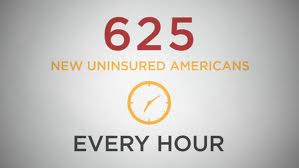
625 Consecutive Daily Blogs (Same number as there are new uninsured Americans every hour)

They also pointed out that unless that trend changes in less than ten years, that we may have reached a tipping point and never be able to fully recover.

And since the movie came out in 2009, their reported deadline is coming up in 2019, about 6.5 years from now. A few of my earlier blogs on this topic:

Handy 4-piece take-charge-of-your-health kit—from Amazon.com

Want to find out how healthy your family is eating? Take our free 4Leaf Diagnostic Survey. It takes less than five minutes and you can score it yourself. After taking the survey, please give me your feedback as it will be helpful in the development of our future 4Leaf app for smartphones. Send feedback to jmorrishicks@me.com

International. We’re now reaching people in over 100 countries. Follow us on Facebook and Twitter or get daily blog notices by “following” us in the top of the right-hand column. For occasional updates, join our periodic mailing list.

To order more of my favorite books—visit our online BookStore now

J. Morris Hicks, working daily to promote health, hope and harmony on planet Earth.

For help in your own quest to take charge of your health, you might find some useful information at our 4Leaf page or some great recipes at Lisa’s 4Leaf Kitchen.

Got a question? Let me hear from you at jmorrishicks@me.com. Or give me a call on my cell at 917-399-9700.

SHARE and rate this post below.

Blogging daily at hpjmh.com…from the seaside village of Stonington, Connecticut – Be well and have a great day.

—J. Morris Hicks, board member, T. Colin Campbell Foundation
Posted in Activism & Leadership, Sustainability | Tagged , | 1 Comment

“Are just a few animal products in my routine meals okay?”

That was the gist of a dilemma that a reader described.

Last week, I received a message from Sara in Melbourne, Australia. She had taken our 4Leaf Survey and had a few questions. She began by sharing her score. Her words are in green italics. And she has already posted a comment that you will see at the end of this blog. 

Sidewalk Chess in Melbourne, Australia

Dear Jim, My total net score was 8 on your 4Leaf Survey. Hi Sara and thanks for writing. That’s actually a pretty good score. That means that you scored near the top of the range for our 1-Leaf level, meaning that you’re probably deriving about 35% of your calories from whole plants. You’re also consuming about five times as much whole plant calories as the average Australian and are probably among your nation’s top 10% when it comes to healthy eating.

I found this very interesting because I have recently started the path to ‘going vegan’ and was under the impression that I was being ‘so healthy’. Yet, it seems I still have a long way to go. Sara, I notice that you lost points on the questions about eggs, added sugar, white flour, sweets/salty snacks, meat/poultry/fish and vegetable oil. (See Survey Form PDF)

A simple, flexible and powerful concept for maximizing the percent of whole, plant-based, health-promoting calories in the diet.

And you are the latest to point out that the terms “vegan” or “vegetarian” are misleading. For a number of reasons:

  • They mean different things to different people.
  • When asked to describe what they eat, they begin with a list of what they DON’T eat.
  • A great many vegans and vegetarians are unknowingly eating a very unhealthy diet.

How could that be? Two words — “Whole Plants.” They’re simply not getting enough whole plants in their diet. How much is enough? I will quote Dr. T. Colin Campbell:

“The closer we get to eating a whole foods, plant-based diet, the better off we will be.”

So we chose that statement as the foundation of our 4Leaf Program and set the top bar at 80% for the 4Leaf level. That simply means deriving 80% or more of your total daily calories from whole, plant-based foods. Sara continues:

This powerful movie has been changing the lives of millions since 2011. See link below to order from Amazon.

I watched “Forks over knives” on an airplane a few months ago and it had a big impact on me, mostly because I felt that it was substantiated by hard science. I have never felt well eating meat and have barely touched it in the last few years.

I decided that I don’t want to wait for a ‘sickness’ to cause me to give my body the best food with the least load. Furthermore, the realization that protein utilizes calcium for its absorption really explains to me why so many people have osteoporosis even though they may have been drinking their milk and eating their yoghurt and cheese all their lives.

Now, I have embarked. I have no problem cutting out the meat, chicken and dairy. However, I find the fish and eggs harder. Eggs, because they are often an ingredient in foods and fish, because I feel it’s the lesser of the evils and when it is before me (if I make it for my kids) I may cheat.

My goal is to cut them out entirely when I get a good handle on eating high protein grains, legumes and generally changing my lifestyle. I am challenged with this: I really really like the milk  in my coffee. Soy, Rice and Oat milk just don’t seem to cut it. How bad is that 1/8 cup milk everyday? I haven’t touched it in 3 weeks but I am missing it. 

Nothing added to my daily “Tall Pike” in over 30 years. Not necessarily good for me but it has virtually no calories and I like to hang out at Starbucks.

Sara, I used to put one cube of sugar in my black coffee—until about thirty years ago. That’s when someone told me that if I drank my coffee with nothing added for 30 to 45 days, that I’d never add that sugar ever again. He was right AND, for the first time, I discovered that I actually liked the taste of coffee. You should be able to do the same with that milk in your coffee.

In general, with all the bad things with these animal proteins, do you think one is only ‘protected’ from their harmful effects if one goes cold turkey? Or, do you think a little (very little) here and there can’t really do harm? 

Sara, Have you read our book? In Chapter 10 I explained that 4Leaf eating should be a “mentality” instead of a diet. A mentality of making every bite count. The human body creates about 10 trillion new cells per year. I did the math, counted my number of bites per day and discovered that the future health of 100 million new cells is riding on every single bite that I put in my mouth. Every bite does make a difference.

Please share with me your insights. I am going to print out your program and increase my efforts to climb my way towards 4 leaf. Best wishes, Sara. Melbourne, Australia. 

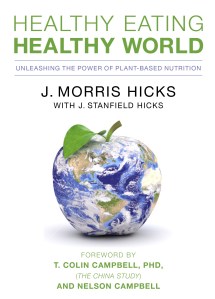
Published by BenBella — October 2011

The Bottom Line. Here’s my deal. I never PLAN to eat ANY animal foods and I never BUY any. But occasionally I might have a few bites as a guest in someone’s home. The key is establishing a health-promoting 4Leaf routine. Make sure that all of your standard “go-to” meals are 4Leaf.

Finally, if you haven’t read our book, you should do so. We devote a lot of attention to “why” you should eat a plant-based diet. With enough compelling reasons, you will have more convictions to do what you know is right.

One more thing, in Chapter 9, we recommend that you avoid baby-steps. In other words, don’t plan to gradually work your way up from 1-Leaf to 2-Leaf and so forth. Make a commitment to eat 4Leaf (with zero animal products) for two months. It will greatly raise your chances of permanent success. And your body will love you for it. Oh, and olive oil is not a whole plant. It is 100% fat and should be avoided in your routine meals. In the 4Leaf Program, we recommend that you keep your fat calories below 20% of your total. That’s a tough goal to hit if you’re using a lot of olive oil. I hope all of this helps. Thanks for writing, Sara; best of luck and be well, Jim Hicks.

PS: I look forward to hearing a report from you in about two months. And, with your permission, I will post that report for my readers.

Consecutive Daily Blogs (numerals from one of the tractors of my youth in Tennessee)

Handy 4-piece take-charge-of-your-health kit—from Amazon.com

Want to find out how healthy your family is eating? Take our free 4Leaf Diagnostic Survey. It takes less than five minutes and you can score it yourself. After taking the survey, please give me your feedback as it will be helpful in the development of our future 4Leaf app for smartphones. Send feedback to jmorrishicks@me.com

International. We’re now reaching people in over 100 countries. Follow us on Facebook and Twitter or get daily blog notices by “following” us in the top of the right-hand column. For occasional updates, join our periodic mailing list.

To order more of my favorite books—visit our online BookStore now

J. Morris Hicks, working daily to promote health, hope and harmony on planet Earth.

For help in your own quest to take charge of your health, you might find some useful information at our 4Leaf page or some great recipes at Lisa’s 4Leaf Kitchen.

Got a question? Let me hear from you at jmorrishicks@me.com. Or give me a call on my cell at 917-399-9700.

SHARE and rate this post below.

Blogging daily at hpjmh.com…from the seaside village of Stonington, Connecticut – Be well and have a great day.

—J. Morris Hicks, board member, T. Colin Campbell Foundation

Posted in 4Leaf for Life | 3 Comments