
Price is no object when it comes to convenient fixes for our bad habits.
As reported by a recent WSJ article (link below), the high tech, pie-in-the-sky solution to our health problems continues to attract the news. Meanwhile, a far more powerful, and amazingly inexpensive solution for up to 80% of our health issues—continues to be ignored by the media. It begins with the simple concept of consuming the right fuel for our species.
 Now, after 641 consecutive days of blogging on this topic, I am reminded of one that I posted about 200 blogs ago (See link below). It was about the absurd behavior of putting the wrong fuel, lubricant and coolant in your brand new $80,000 Mercedes. An excerpt:
2012 Mercedes SL550 Roadster. Like all automobiles, your brand new Mercedes needs fuel, coolant, motor oil, and air in order to run. The air takes care of itself, but you have to decide how to handle the other three. But, instead of using the kinds of products recommended by the manufacturer, you want to be different.
For fuel. Instead of premium gasoline, you choose a mixture of regular gasoline, kerosene, turpentine and paint thinner.
For coolant. You choose a mixture of Gator Aid and cow’s milk.
For motor oil. Instead of the high tech synthetic recommended by MB, you buy a few cases of 10 w 30 at Sam’s Club and decide that you’ll make it last longer by adding only four quarts to your engine instead of the recommended five.
You’re thinking that no one would be that stupid, right? Yet, the vast majority of Americans are being even more stupid. They’re putting the wrong FUEL in their bodies. And unlike a fancy new car, we only get one body per customer. We can’t trade it in for a new one when this one breaks down—we’re stuck with just one body for our entire lives.
 Meanwhile, back to the madness of modern medicine. The latest story (11-1-12) in the Wall Street Journal—featured news about the famous Genomes project that everyone thinks will enable them to continue with their poor habits while getting cured by the magic of genetics. The article began:
In a major step toward an era of personalized medicine, researchers reported Wednesday that they have sequenced the complete DNA material of more than 1,000 people from 14 population groups in Europe, Africa, East Asia and the Americas.
The report from the $120 million 1000 Genomes Project involved 700 scientists from laboratories in the U.S., Canada, China, Japan, Nigeria and Kenya, among others. Their results, published in Nature, offer the closest look yet at the differences in humankind’s biological instruction set, documenting how myriad rare mutations may underpin many diseases and set the people of one locale apart from another in ways that shape their health.

The Bottom Line. What they never tell us about personalized medicine is that it will be incredibly expensive and will not be nearly as effective as simply eating the right food for our species in the first place. They also never tell us the truth about sustainability:
Even if cow’s milk, pig flesh, sea creatures and chicken eggs were the best possible fuel for our human bodies, there simply is not enough land or water on the planet to sustain that horribly wasteful diet for very much longer.
 Whole, plant-based foods for humans is a WIN-WIN for all concerned: the humans, our fellow Earthlings and the longterm ability of planet Earth to sustain life as we know it. (This is my consecutive daily blog #641.)
- Source article WSJ. Personalized Medicine Moves Closer – WSJ.com.
- Source article Fox. 1000 Genomes researchers closer to personalized medicine
- Mercedes article. Searching for the cure—now has a life of its own.
Handy 4-piece take-charge-of-your-health kit—from Amazon.com
- The movie that’s changing the lives of millions: Forks Over Knives DVD
- Healthy Eating, Healthy World, The “big picture” about food (our book)
- An essential scientific resource: The China Study by Dr. T. Colin Campbell
- Dr. McDougall’s new book, The Starch Solution, with lots of great recipes.
Want to find out how healthy your family is eating? Take our free 4Leaf Diagnostic Survey. It takes less than five minutes and you can score it yourself. After taking the survey, please give me your feedback as it will be helpful in the development of our future 4Leaf app for smartphones. Send feedback to jmorrishicks@me.com

 International. We’re now reaching people in over 100 countries. Follow us on Facebook and Twitter or get daily blog notices by “following” us in the top of the right-hand column. For occasional updates, join our periodic mailing list.
To order more of my favorite books—visit our online BookStore now

J. Morris Hicks, working daily to promote health, hope and harmony on planet Earth.
For help in your own quest to take charge of your health, you might find some useful information at our 4Leaf page or some great recipes at Lisa’s 4Leaf Kitchen.
Got a question? Let me hear from you at jmorrishicks@me.com. Or give me a call on my cell at 917-399-9700.
SHARE and rate this post below.
Blogging daily at hpjmh.com…from the seaside village of Stonington, Connecticut – Be well and have a great day.
—J. Morris Hicks, board member, T. Colin Campbell Foundation




 According to KaiserEDU.org (See link below), there are three primary drivers of healthcare cost increases in recent years:
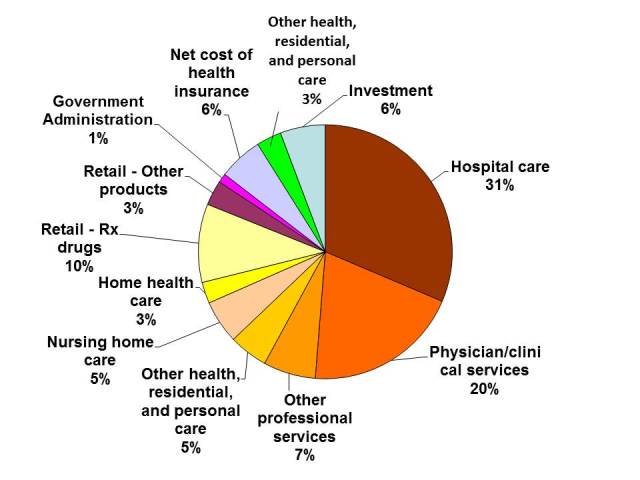
 Therefore, the change will not come from within the system, but from outside. It will come from concerned leaders in business who have a powerful incentive to make their employees healthy.
 J. Morris Hicks, engineer. writer. big picture guy.