
Spreading the word. A dozen questions — a dozen answers.

If you look carefully, you can see Santa in the tree -- taken last night in Old Naples, Florida

Last week, I received a note from an author who is writing a book about vegetarianism. He sent me the following note with an impressive list of questions. Wanting to help in spreading the word about eating more plants, I gladly agreed to participate in his project and thought it worthy of sharing with you:

Dear Mr. Hicks, I saw your recent blog on VegSource re: “Dollars and ‘Sense’ of Plant-Based Eating” and enjoyed it.  I’m currently co-writing a book on vegetarianism that will be published by Sunrise River Press next fall and am wondering if you might like to be interviewed for it. My partner is doing the research and I’m doing the interviews. Basically, we want to learn about your vegetarian experience, what advice you’d give to people thinking about a vegetarian lifestyle, health benefits, etc. Here are the questions, I look forward to discussing your responses by phone next week. Regards, Charles

1)  What type of vegetarian are you and how long have you been one? I don’t really consider myself a vegetarian although my diet is almost totally vegan. I prefer to call myself a 4-Leafer, one who maximizes the percent of his daily calories from whole plant-based foods. Check out the 4-Leaf page on our site. The 4-Leaf level begins at 80% of your calories from whole, plant-based foods, still in nature’s package. Vegan and vegetarian imply what you DON’T eat, while what’s most important is what you ARE eating. I have maintained my current 4-Leaf diet-style for over 8 years.

2)  Why did you decide to become a vegetarian? About nine years ago, I became interested in the optimal diet for humans. After a few weeks of study, there was no doubt in my mind that what Nature intended for us to eat was whole, plant-based foods. It was like a “blinding flash of the obvious” particularly after learning about the environmental impact and the impact on world hunger, fossil fuel conservation and the totally unnecessary suffering of 60 billion animals so that we may dine on their flesh.

3)  Have you found health benefits as a result of your food lifestyle? Absolutely. More energy, better sleep, sharper thinking, zero constipation, NO medications, effortless weight management, fewer doctor visits, lower costs of health care, get sick less often, better sex…the list is endless. Oh, and it costs far less money in the long run.

4)  How does one “unleash the power” of plant-based nutrition? The power of plant-based nutrition goes far beyond our own health as humans. While we make the change to benefit our own health; the entire planet — and all of her creatures — enjoy staggering benefits as well. There are four separate chapters in our book devoted to these “bonus” benefits for the planet.

5)  What do you consider the “Big Picture” is for the planet and vegetarianism? The “big picture” is that we humans of the Western world have strayed far away from what Nature intended for us to eat. Most of us are now eating a totally unsustainable diet of meat, dairy and/or eggs three meals a day. Why is this diet not sustainable? Not enough land, not enough energy and not enough water. Either we’ll make the change voluntarily or leave Mother Nature no other choice but to do it herself. And that is not going to be pretty.

6)  Can you distill down what the “4-Leaf Program” entails? The 4-Leaf Program leverages the simple concept of maximizing the percent of our calories from whole, plant-based foods. It’s simple, positive, flexible, powerful and builds on the great advice that we all heard from our mothers — you should eat more fruits and vegetables.
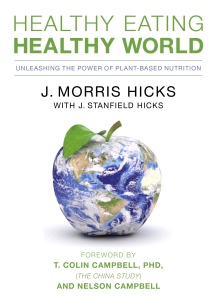
Released by BenBella Books of Dallas Texas in October of 2011

7)  How many books have you written and what’s your favorite? Healthy Eating – Healthy World is my first and only book. And there is no other book planned at the moment except for a possible 4-Leaf companion book with lots of tips, guidelines, meal plans and 4-Leaf recipes. We’ve begun that process at 4leafprogram.com.

I truly feel that our first book has the ability to change the world in a big way — and therefore, deserves my undivided attention for the next few years — getting it in the hands of as many people as possible.

8)  What is the most common misconception people have about vegetarians? By far, the most common misconception is the ubiquitous feeling that we truly “need” to eat animal protein to be healthy. Once we dispel this “protein myth,” the best and brightest minds in the world will be able to consider the awesome power of plant-based nutrition to change the world in so many ways.

9)  I liked your points about meat-eating and vegetarian costs.  What would you say to a meat-eater contemplating going veggie. Read our book, design yourself a few routine breakfasts, lunches and dinners at the 4-Leaf level. Make a commitment to eating 100% 4-Leaf for at least six weeks — and then never look back. Your body, your children and all future generations of your family will be forever grateful for your wisdom and courage. And you will save a lot of money in the long run — while doing your part to save the planet.

10)  Can people still eat small quantities of meat, a la the “flexitarian” route?  Or would you discourage this? As you know, there is 20% of “wiggle room” in our approach. We don’t encourage ANY animal foods whatsoever, but if you’re eating 4-Leaf every single day; a little cheese or fish occasionally in a friend’s home isn’t that big a deal. We’ve found that “all or nothing” simply doesn’t fly for most people.
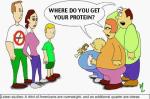
Gotta love this cartoon. Maybe it will help the world's brightest people figure it all out -- before it's too late.

11) Is there any particular question you get asked the most frequently from beginning vegetarians? Where do you get your protein?

12)  Anything at all you’d like to add? Simply that I am very serious about our mission and sincerely believe that there has never been anything more important in the history of the world. The movie HOME (2009), reported that the human race has inflicted more damage on the fragile harmony of nature in just the last fifty years — than ALL previous generations of humans combined for the past 200,000 years. I am totally convinced that our single most powerful step toward reversing that deadly trend is an aggressive and urgent shift in the direction of a whole foods, plant-based diet — the natural diet for our species.
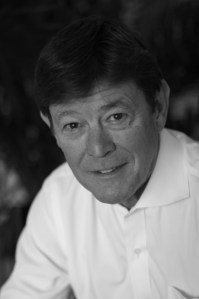
J. Morris Hicks, author and activist. Working daily to promote health, hope and harmony on planet Earth.

NAME: J. Morris (Jim) Hicks

OCCUPATION: My new career is that of writer, blogger, speaker and activist — promoting the benefits of plant-based nutrition. Earlier, I was a management consultant, an executive vice president of Polo Ralph Lauren and a C-Level executive search consultant.

AGE:  I am 66 years old, born February 21, 1945 in Memphis, TN during the Battle of Iwo Jima in the Pacific.

CITY/STATE: Reside in Stonington, CT

CERTIFICATES/CREDENTIALS: Certificate in Plant-based Nutrition from the T. Colin Campbell Foundation AND Cornell University. 2009, BS in Industrial Engineering from Auburn University, Auburn, AL, 1968, MBA from the University of Hawaii, Honolulu, HI 1971

If you like what you see here, you may wish to join our periodic mailing list. Also, for help in your own quest to take charge of your health, you might find some useful information at our 4-Leaf page.

And if you like what 4-Leaf eating is doing for you and your family, you might enjoy visiting our new “4-Leaf Gear” store. From the seaside village of Stonington, Connecticut – Be well and have a great day.

If you’d like to order our book on Amazon,  visit our BookStore now.

—J. Morris Hicks…blogging daily at HealthyEatingHealthyWorld.com

SHARE and rate this post below…One more thing, occasionally an unauthorized ad may appear beneath a blog post. It is controlled by WordPress (a totally free hosting service). I do not approve or personally benefit whatsoever from any ad that might ever appear on this site. I apologize and urge you to please disregard.

Posted in Book Promotion, Testimonials | 1 Comment

A tiny few eating a perfect diet? — or truly changing the world?

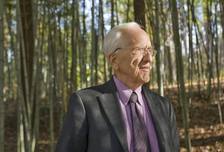
Dr. T. Colin Campbell -- author of The China Study and the world's leading authority on health promoting, plant-based nutrition.

Keeping the “big picture” in mind

Last month, while meeting with Dr. Campbell in his home, he reiterated what he has often said and written:

Our role is to help people understand exactly what comprises a near optimal, health-promoting diet for humans — telling them the goal. What people do with that knowledge is completely up to them.

Upon learning the truth about nutrition for the first time, some will adopt a 100% plant-based diet immediately, more will begin to gradually add more fruits, vegetables, legumes and grains to their diets, but the vast majority will probably do nothing — at least for now. We know from past experience that only a tiny percentage will adopt this seemingly difficult diet-style immediately; but if we convey the message properly, a great many will HEAR and will begin to make some improvements.

Reaching the masses -- like this soccer crowd in Brazil

The huge group that will listen to our message and make modest improvements is exactly who we are trying to reach in our book AND in this blog. Just yesterday, I heard from two readers who summed up my feelings perfectly. They posted the following comments beneath the blog where I admitted to having one cookie and a coke on Delta Airlines — in the middle of a high 3-Leaf or low 4-Leaf day…

First from Jean. Thanks for sharing what you do in the real world. While I realize the earlier comments are true about the unhealthiness of Coke, cookies, etc.; when you are trying to help the masses change to healthier eating, you cannot come across as a fanatic or you turn everyone totally off.

Is it better for a very few to eat pure diets or for a lot of people to eat mostly healthy diets? Thanks for keeping the big picture in mind! Jean

Then from Denise. Life is about choices, not regiments. It is called wiggle room and without some flexibility, we would all bomb out sooner or later. No, Jim you won’t go to H*** because you had one coke and a cookie. If I learned anything from your posts, It’s the Big Picture not the small. Keep up the good work :) Denise.     p.s. It shows that you are human tooooooooo.

These two comments prompted me to revisit an earlier blog on this subject. While walking home this morning, I explained the focus of that blog to my girlfriend, Ruth — here in Naples, FL. I explained that it’s all about the question that Jean asked above, “Is it better for a very few to eat pure diets or for a lot of people to eat mostly healthy diets?” Without a doubt, it would be the latter.

As more people adopt the wasteful Western diet every day, the problems of water shortage and pollution continue to get worse.

My premise for changing the world. There are a great many things riding on our food choices besides our own health:

  • the opportunity to reduce our water footprint by up to 90%
  • the opportunity to reduce our carbon footprint by put to 30%
  • the opportunity to feed up to twenty times as many people on the same amount of land
  • the opportunity to dramatically curtail the suffering of billions of animals in factory farm

How much difference can we make? My premise is that only a very few will quickly go all the way to a near-optimal 4-Leaf kind of plant-based diet. But, the good news is that ten times that number could begin making positive changes if we convey the message properly. Let’s do the math. Two scenarios;

Leveraging the simple concept of maximizing the percent of your calories that are derived from whole, plant-based foods

  • One person goes to the 4-Leaf level (80% from whole plants). They go from 10% of their calories from whole plants 80%. In so doing, they earn 70 GIP’s (global improvement points, computed from 80 minus 10 = 70)
  • Ten people go halfway, moving from 10% of their calories from whole plants to the low end of the 2-Leaf level, or 40%. They quadruple the amount of whole plants and each of them earn 30 GIP’s (40 minus 10 = 30)
  • Who wins? Which group does the planet the most good in the four categories listed above? The Group of Ten of course. They earn 300 GIP’s compared to the Group of One that went all the way and earned 70 points.
  • Bottom Line. By influencing modest improvements in a much larger group, we can promote much more global change. How much? Over 300% (329% to be exact) more beneficial change.

Let’s put all of this in perspective by adding our premise to entire Western world — a population of nearly four billion people. Consider this scenario:

  • 2.5%, or 100 million people, go all the way to to 4-Leaf (80% whole plants) and earn 7.0 billion GIPs (100 million x 70)
  • 25%, or one billion people, go halfway to 2-Leaf (40% whole plants) and earn 30 billion GIP’s (one billion x 30)
  • Combined, both groups earn 37 billion GIP’s out of a possible 280 billion GIP’s; which translates to 37/280 or  13.2 percent.
  • If we had not reached the much larger 2-Leaf group, the improvement would have been only 2.5% (7/280).

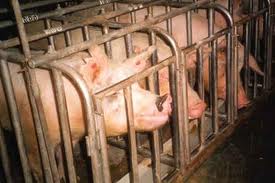
One of the smartest animals, pigs get a bad rap -- most live their complete lives in horrid conditions until they reach their ultimate destiny as part of your breakfast, your pizza topping or your barbecue sandwich.

So what kind of improvements will this action drive? Let’s begin with animal suffering. What about the sixty billion suffering animals in our factory farms? The 4-Leafers only lower it from 60 billion to 58.5 billion — whereas the combined group, including the 2-Leafers, drop the number to 52.1 billion. By adding the 2-Leafers, we eliminate the suffering of an additional 6.4 billion animals.

Similar improvements can also be extrapolated to improvements in water, trees, biodiversity, climate change and world hunger. So, when you consider all of the above, the answer to the title question is like a blinding flash of the obvious:

A tiny few eating a perfect diet? — or truly changing the world? Without a doubt, we must engage greater numbers of people and we’re simply not going to be able to do that with an “all or nothing approach” to the way we should be eating. For more on this concept take a look at this earlier post from October 2011.“All or nothing” doesn’t fly for most people

In Naples, FL this week and enjoying the kind of weather that reminds me of summertime in New England

If you like what you see here, you may wish to join our periodic mailing list. Also, for help in your own quest to take charge of your health, you might find some useful information at our 4-Leaf page.

And if you like what 4-Leaf eating is doing for you and your family, you might enjoy visiting our new “4-Leaf Gear” store. From sunny Old Naples, Florida – Be well and have a great day.

If you’d like to order our book on Amazon,  visit our BookStore now.

—J. Morris Hicks…blogging daily at HealthyEatingHealthyWorld.com

SHARE and rate this post below…One more thing, occasionally an unauthorized ad may appear beneath a blog post. It is controlled by WordPress (a totally free hosting service). I do not approve or personally benefit whatsoever from any ad that might ever appear on this site. I apologize and urge you to please disregard.

Posted in Activism & Leadership, Grassroots Revolution | 1 Comment

OBESITY. What are the primary causes?

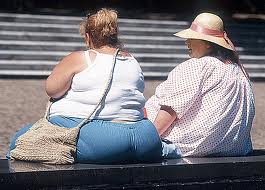
This could be your grandchildren in 20 years. Want to join the FIGHT?

Animal foods or refined carbs?

Why are so many people overweight or obese these days? Probably a combination of four things; two of which are far more important than the other two:

  1. Not enough whole, plant-based calories
  2. Too many calories from meat, dairy, eggs, oil, sugar and other highly-processed carbohydrates.
  3. Not enough physical exercise
  4. Bad luck a.k.a. bad genes

I have ranked the four “fat culprits” in the order of importance — in my opinion. And, we designed our 4-Leaf Program to take care of #1 — which will pretty much negate the fat-producing qualities of the other three. You see, the typical American these days gets far less than ten percent of his/her daily calories from whole plants.

Leveraging the simple, yet powerful concept of maximizing the percent of your calories from whole plant foods -- still in nature's package

And when they move from 7% to over 80% of their calories from whole plants (on the 4-Leaf Program), they will be getting ten times more whole plant calories than they did in the past. Hence, they will be getting at least five times as much fiber and, unless they’re loading up on avocado, olives and nuts; they will be satiated long before they eat too many calories. Without even trying — meaning they can eat all they want — they’ll be consuming far fewer calories in total.

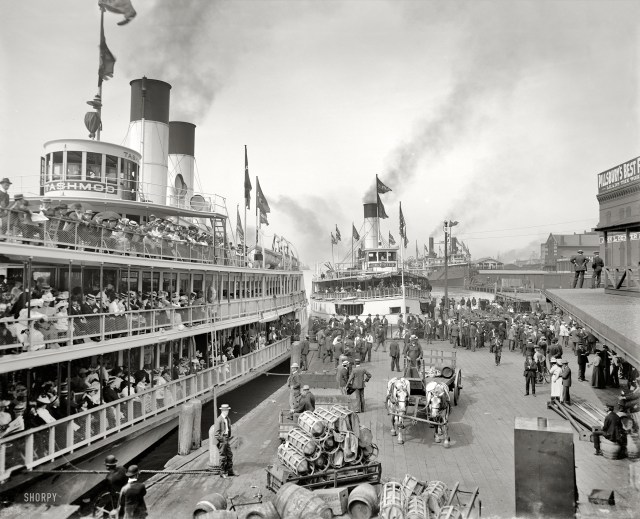
Yesterday, I received an email from Bill K. on the topic of obesity while traveling. He was thoughtful enough to provide photos of early 20th century cruising along with modern-day cruising about one hundred years later. The first photo is from 1901 and he writes:

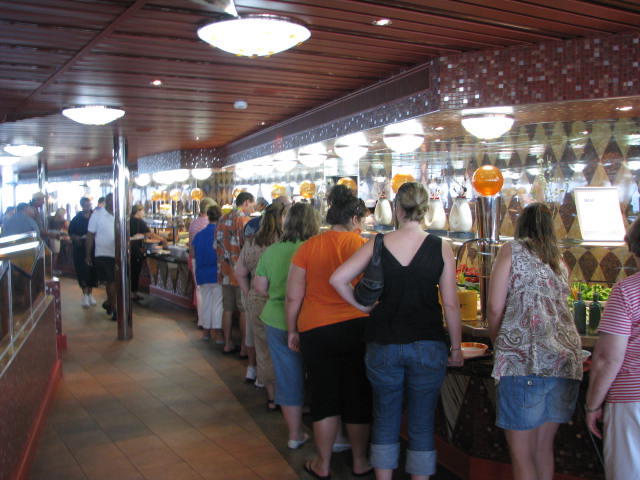
I have this photo set as my background on my computer and probably looked at it 10-15 times before I realized something.  None of the people in this photo are overweight.  I blew the picture up and looked at as many people as I could view and only found one guy who might have a small belly. (Pictured walking toward the camera holding his lapels)  Now either this was a convention of thin people on a boat cruise or something has happened to our diet (and possibly exercise routine – note bicycles in picture) in the last 100 years.  Compare this to the people who are loading onto a Carnival cruise ship today – Yikes. (Photo provided here in full size so you can check out the picture — Scroll down to the next picture for Bill’s photo of the modern day cruiser.)

1901 -- Steamboat Cruising out of Detroit, MI

Bill goes on to make the point that most people in the 1901 photo probably ate some meat, dairy and eggs but had far fewer calories from highly processed carbohydrates loaded with sugar, fat and oil.

It is likely that the people in the 1901 photo ate meat and drank milk so that probably is not the big difference.  My guess is that it is mainly the processing of our foods which has made the biggest difference as most of the foods eaten in 1901 were straight from the garden and their cows were still raised on grass instead of corn.  Not really sure what the full answer is but would be interesting to see what the average diet was in the beginning of the last century.  Personally, I still believe that animal foods are not correct for humans but I am not sure that they represent our biggest threat to obesity. Regards, Bill K.

I agree with what Bill is saying about the animal foods not being the correct foods for us to eat. That’s because there is a preponderance of scientific, clinical and physical evidence that suggests that we have strayed far from what Nature intended for us to eat. We covered all of that evidence in our book and then designed the 4-Leaf Program to make it real simple for people to at least know what a near-optimal diet looks like. And, it’s even got a little flexibility built in — which makes it far more likely to be even considered by the masses; most of whom would never even consider becoming vegetarian or vegan.

As we know, many vegans and vegetarians eat a very unhealthy diet — loading up on anything that they can find that is NOT meat, dairy or eggs. Unfortunately for them, many choose the highly-processed carbs over the whole plant foods. They they try to fight their obesity by going to the gym.

With shows like Biggest Loser, Michelle Obama’s primary emphasis on exercise, and the common belief that working out is the answer to weight-control; it’s no wonder that people are missing the main point. Quite simply, we’re eating the wrong food. We were designed to eat whole plants, and when we do, controlling our weight becomes a thing of the past — along with diabetes, heart disease, osteoporosis, most cancers, and a host of other problems. We also do some marvelous things for the environment, world hunger and the very future of life on this planet as we know it.

Yesterday a reader posed the question, “Is it better for a very few to eat a pure diet or for billions of people to eat a mostly healthy diet?” I think the latter and actually made an attempt to quantify it in this recent post:  “All or nothing” doesn’t fly for most people.

Authors J. Stanfield Hicks and J. Morris Hicks , working daily to promote health, hope and harmony on planet Earth.

If you like what you see here, you may wish to join our periodic mailing list. Also, for help in your own quest to take charge of your health, you might find some useful information at our 4-Leaf page.

And if you like what 4-Leaf eating is doing for you and your family, you might enjoy visiting our new “4-Leaf Gear” store. Blogging today from sunny Naples, Florida – Be well and have a great day.

If you’d like to order our book on Amazon,  visit our BookStore now.

—J. Morris Hicks…blogging daily at HealthyEatingHealthyWorld.com

SHARE and rate this post below…One more thing, occasionally an unauthorized ad may appear beneath a blog post. It is controlled by WordPress (a totally free hosting service). I do not approve or personally benefit whatsoever from any ad that might ever appear on this site. I apologize and urge you to please disregard.

Posted in Obesity | Tagged , , , | 5 Comments